
As the calendar pages turn, sophisticated investors and everyday individuals alike are beginning to cast their gaze towards 2026. Why 2026? Because that year marks a pivotal moment for tax policy in the United States, with significant provisions of the Tax Cuts and Jobs Act (TCJA) of 2017 set to expire. This expiration isn’t just a bureaucratic footnote; it represents a potential seismic shift in the financial landscape, impacting everything from individual income tax rates and deductions to estate taxes and business incentives. For anyone with a stake in their financial future, understanding and preparing for these changes is not merely prudent—it’s essential. This article delves into crucial strategies to help you navigate the 2026 tax changes, focusing on proactive investment approaches that can optimize your portfolio and safeguard your wealth.
The impending expiration of the TCJA provisions creates both challenges and opportunities. On one hand, taxpayers could face higher income tax rates, reduced standard deductions, and altered rules for itemized deductions. On the other, it presents a window for strategic planning, allowing investors to position their assets advantageously before the new rules take effect. Ignoring these potential shifts would be akin to sailing into a storm without checking the weather forecast. Instead, by adopting a forward-thinking mindset and implementing smart investment strategies, you can not only mitigate potential negative impacts but also potentially capitalize on new efficiencies.
Our goal here is to equip you with actionable insights and a clear roadmap. We’ll explore three key investment strategies that are particularly relevant as we approach 2026. These strategies are designed to be adaptable, catering to various financial situations and risk tolerances. From leveraging tax-advantaged accounts to considering the implications of capital gains, we will break down complex concepts into digestible advice. Remember, successful financial management isn’t just about maximizing returns; it’s equally about minimizing liabilities. And in the realm of taxation, foresight is truly 20/20.
Understanding the 2026 Tax Landscape: What’s at Stake?
Before we dive into specific investment strategies, it’s vital to grasp the core elements of the 2026 tax changes. The Tax Cuts and Jobs Act of 2017 brought about sweeping reforms, significantly altering the tax code for individuals and businesses. Key provisions impacting individuals included:
- Individual Income Tax Rate Reductions: The TCJA lowered marginal income tax rates across most brackets. Without legislative action, these rates are set to revert to their pre-TCJA levels, generally meaning higher taxes for many.
- Increased Standard Deduction: The standard deduction was nearly doubled under the TCJA. Its expiration could lead to a substantial decrease, potentially pushing more taxpayers to itemize or increasing their taxable income.
- Elimination or Limitation of Itemized Deductions: Various itemized deductions were either eliminated or capped (e.g., the SALT deduction cap). These could see changes, though the exact nature of their post-2025 status is subject to future legislation.
- Child Tax Credit Enhancements: The TCJA increased the Child Tax Credit and made a portion of it refundable. These enhancements are also scheduled to expire.
- Estate and Gift Tax Exemption: The TCJA significantly increased the estate and gift tax exemption amounts. This is a critical area for high-net-worth individuals, as the exemption is slated to be cut in half, potentially subjecting more estates to federal taxes.
While corporate tax cuts under the TCJA were permanent, the individual provisions were largely temporary. This creates a fascinating and somewhat unpredictable environment. The exact nature of the 2026 tax changes will depend on future legislative decisions, but the baseline expectation is a return to pre-TCJA rules if Congress does not act. This uncertainty underscores the importance of flexible and robust financial planning.
For investors, these changes can have direct implications on net returns. Higher income tax rates mean a larger portion of investment income (interest, dividends, short-term capital gains) will be claimed by the government. A reduced estate tax exemption could necessitate a re-evaluation of estate planning strategies. Understanding these potential shifts is the foundation upon which effective 2026 tax strategies are built.
Strategy 1: Harnessing Tax-Advantaged Accounts for Maximum Growth
One of the most powerful tools in an investor’s arsenal, especially in anticipation of rising tax rates, is the strategic use of tax-advantaged accounts. These accounts offer significant benefits, either by deferring taxes until retirement (tax-deferred) or by allowing tax-free withdrawals in retirement (tax-exempt). Leveraging these vehicles effectively can dramatically reduce your lifetime tax burden and accelerate wealth accumulation.
Traditional IRAs and 401(k)s: The Power of Tax Deferral
Contributions to Traditional IRAs and 401(k)s are typically made with pre-tax dollars, meaning they reduce your taxable income in the year of contribution. The investments within these accounts grow tax-deferred, meaning you don’t pay taxes on dividends, interest, or capital gains until you withdraw the money in retirement. This deferral allows your investments to compound more aggressively over time.
- Why now? If you anticipate higher tax rates in 2026 and beyond, contributing to these accounts now can be particularly beneficial. You get a tax deduction at potentially lower current rates, and you delay paying taxes until a time when you might be in a lower tax bracket in retirement.
- Considerations: Be mindful of contribution limits and income phase-outs for deductibility. Also, withdrawals in retirement will be taxed as ordinary income.
Roth IRAs and Roth 401(k)s: The Appeal of Tax-Free Growth
Roth accounts operate differently. Contributions are made with after-tax dollars, so there’s no immediate tax deduction. However, qualified withdrawals in retirement are entirely tax-free. This includes all earnings and growth.
- Why now? If you believe your tax bracket will be higher in retirement than it is now, or if you expect 2026 tax changes to increase overall tax rates, Roth accounts are incredibly attractive. You pay taxes on your contributions now at potentially lower rates, securing tax-free income later.
- Roth Conversion Strategy: This is a powerful tactic to consider before 2026. If current tax rates are relatively low, converting a portion of a Traditional IRA or 401(k) to a Roth account means you pay taxes on the converted amount now. If rates rise in 2026, you’ve effectively locked in a lower tax payment on that money, and all future growth is tax-free. This strategy requires careful planning and a clear understanding of your current and projected tax situation.
- Considerations: Roth IRA contributions have income limitations. Roth 401(k)s do not have income limitations for contributions, making them accessible to high earners.
Health Savings Accounts (HSAs): The Triple Tax Advantage
HSAs are often overlooked but are arguably the most tax-advantaged account available. If you have a high-deductible health plan (HDHP), you can contribute to an HSA. The benefits are threefold:
- Contributions are tax-deductible (or pre-tax if through payroll).
- Investments grow tax-free.
- Qualified withdrawals for medical expenses are tax-free.
If you don’t use the funds for medical expenses, after age 65, they can be withdrawn for any purpose and are taxed as ordinary income, similar to a Traditional IRA. This makes the HSA an excellent supplemental retirement savings vehicle, especially valuable when considering the impact of 2026 tax changes on overall taxable income.
By maximizing contributions to these accounts, you can shield a significant portion of your income and investment gains from the immediate and future reach of taxes. This foundational strategy should be a cornerstone of your 2026 tax strategies.
Strategy 2: Strategic Capital Gains Management and Tax-Loss Harvesting
Capital gains taxes can significantly erode investment returns, especially for active traders or those with highly appreciated assets. As we approach 2026, understanding and strategically managing capital gains becomes even more critical. The potential for changes in capital gains tax rates, while not explicitly part of the TCJA expiration, is always a consideration in broader tax reform discussions. Even without direct rate changes, higher ordinary income tax rates could indirectly affect the overall tax burden on investments.
Understanding Capital Gains
Capital gains are profits from the sale of an asset, such as stocks, bonds, or real estate. They are categorized as either short-term (assets held for one year or less) or long-term (assets held for more than one year). Short-term capital gains are taxed at your ordinary income tax rate, while long-term capital gains typically receive preferential lower rates.
Tax-Loss Harvesting: Turning Losses into Wins
Tax-loss harvesting is a strategy where you intentionally sell investments at a loss to offset capital gains and, potentially, a limited amount of ordinary income. This strategy is particularly powerful when you have realized significant gains in your portfolio.
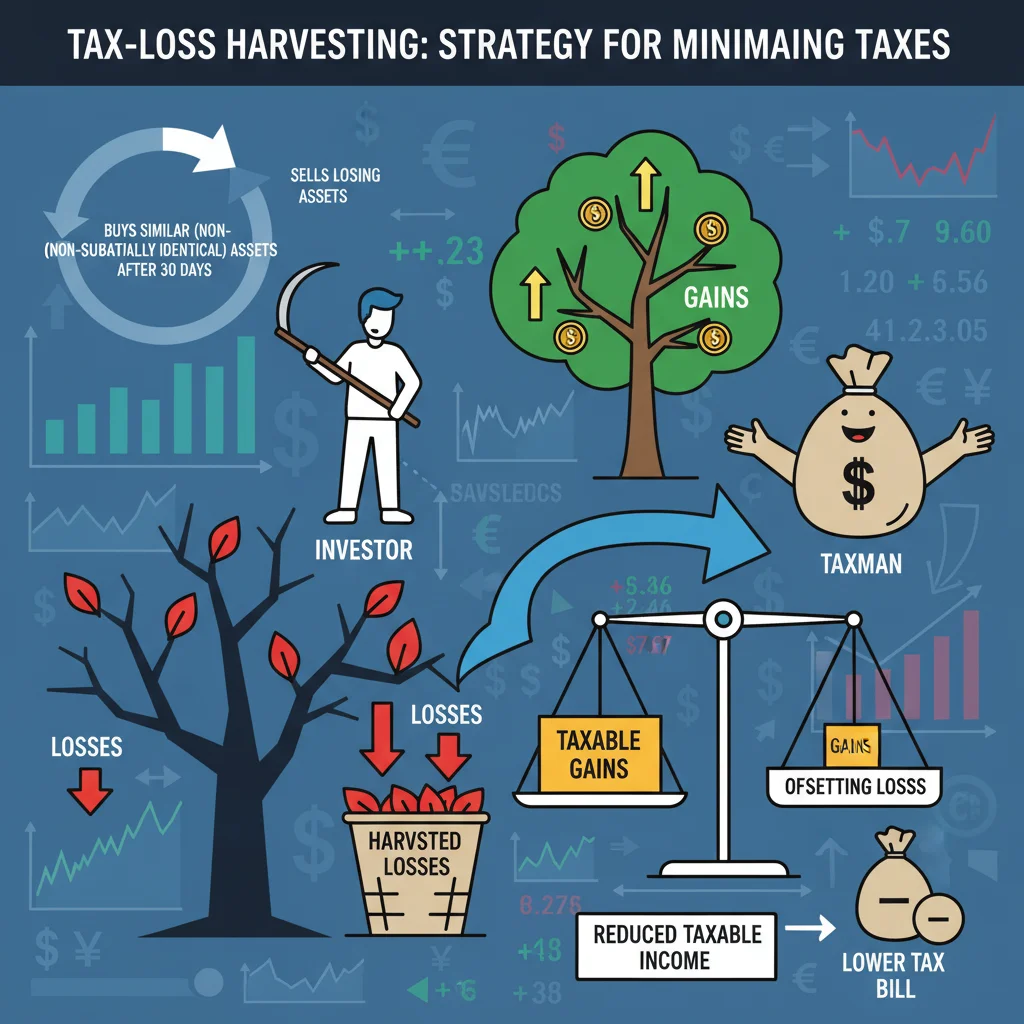
- How it works: You can use capital losses to offset an unlimited amount of capital gains. If your capital losses exceed your capital gains, you can deduct up to $3,000 of the remaining loss against your ordinary income each year. Any unused losses can be carried forward indefinitely to offset future gains or ordinary income.
- Why now? Before potential 2026 tax changes, proactively harvesting losses can be a smart move. If future tax rates on capital gains or ordinary income increase, carrying forward losses could be even more valuable. It’s also a way to rebalance your portfolio while simultaneously generating a tax benefit.
- Wash-Sale Rule: A critical caveat is the wash-sale rule. You cannot repurchase a substantially identical security within 30 days before or after selling it at a loss. Violating this rule disallows the loss.
Timing Capital Gains Realization
If you have highly appreciated assets, consider the timing of their sale. If you anticipate higher capital gains tax rates in 2026, realizing some gains in 2025 might be advantageous, especially if you are currently in a relatively lower tax bracket. Conversely, if you expect to be in a significantly lower tax bracket in 2026 (e.g., due to retirement), delaying the sale might be beneficial.
This strategy requires careful forecasting of your income and potential tax bracket, as well as an understanding of market conditions. Consult with a financial advisor to model different scenarios based on your specific circumstances.
Qualified Dividends and Long-Term Capital Gains
The preferential tax rates for qualified dividends and long-term capital gains are often tied to the ordinary income tax brackets. If ordinary income tax rates rise in 2026, it’s possible that the thresholds for these preferential rates could also shift, or the rates themselves might increase for higher earners. Monitoring these potential changes and adjusting your portfolio’s allocation to dividend-paying stocks or long-term growth assets can be a key part of your 2026 tax strategies.
Strategy 3: Diversification and Rebalancing with a Tax-Conscious Lens
Diversification and rebalancing are fundamental principles of sound investment management, but their importance takes on an added dimension when anticipating significant tax law changes. A tax-conscious approach to these strategies can help minimize liabilities while maintaining an optimal risk-adjusted return.
Strategic Asset Location
Asset location refers to the practice of placing different types of investments in different types of accounts (taxable vs. tax-advantaged) to minimize taxes. This is distinct from asset allocation, which is about choosing the right mix of investments.
- Tax-inefficient assets in tax-advantaged accounts: Investments that generate high current income (e.g., bonds, REITs, actively managed funds with high turnover) or frequently realize short-term capital gains are generally best held in tax-deferred accounts like Traditional IRAs or 401(k)s. This shields their income and short-term gains from annual taxation.
- Tax-efficient assets in taxable accounts: Growth stocks, index funds, and ETFs that have low turnover and primarily generate long-term capital gains are often suitable for taxable brokerage accounts. Their gains are taxed only upon sale, and then at potentially lower long-term capital gains rates.
- Roth Accounts for High-Growth Assets: For assets with significant long-term growth potential, a Roth IRA or Roth 401(k) is ideal. All that growth, no matter how substantial, will be tax-free upon withdrawal in retirement. This can be a cornerstone of your 2026 tax strategies.
As 2026 tax changes loom, reviewing your asset location strategy becomes paramount. Shifting assets to more tax-efficient locations before the new rules take effect can prevent unnecessary tax drag on your portfolio for years to come.
Rebalancing with a Tax Eye
Rebalancing involves adjusting your portfolio back to your target asset allocation when market movements cause it to drift. While essential for risk management, rebalancing can trigger capital gains if you sell appreciated assets. Here’s how to approach it with a tax-conscious lens:
- Utilize Tax-Advantaged Accounts for Rebalancing: Whenever possible, rebalance within tax-deferred or tax-exempt accounts. Selling appreciated assets and buying underperforming ones within a 401(k) or IRA does not trigger a taxable event.
- Consider New Contributions: Instead of selling appreciated assets in a taxable account, use new contributions to buy more of the underperforming asset classes. This allows you to rebalance without realizing capital gains.
- Harvest Losses During Rebalancing: If you need to sell assets that have declined in value to rebalance, consider tax-loss harvesting simultaneously. This can offset gains elsewhere in your portfolio or generate a deduction against ordinary income, as discussed in Strategy 2.
- Delay Gains if Rates are Expected to Fall: If you anticipate being in a lower tax bracket in 2026 or beyond, consider delaying the sale of highly appreciated assets until then, if feasible. This is a nuanced decision and requires careful analysis of market trends and your personal financial situation.

Diversification Beyond Traditional Assets
While stocks and bonds form the core of most portfolios, consider diversifying into other asset classes that might offer different tax treatments or correlation benefits. Real estate, for instance, can offer depreciation deductions, and certain alternative investments might have unique tax implications. Exploring these options with a qualified advisor can add another layer of sophistication to your 2026 tax strategies.
The goal is not just to diversify your investments but to diversify your tax exposure. By spreading your assets across various account types and considering the tax implications of each, you build a more resilient and tax-efficient portfolio capable of weathering future tax changes.
Beyond the Strategies: Holistic Financial Planning for 2026
While the three strategies outlined above—leveraging tax-advantaged accounts, strategic capital gains management, and tax-conscious diversification—form a robust framework, navigating the 2026 tax changes requires a more holistic approach. Tax planning isn’t a standalone activity; it’s intricately woven into your broader financial plan.
Estate Planning Review
The potential reduction in the estate and gift tax exemption is a significant concern for high-net-worth individuals. If the exemption reverts to pre-TCJA levels (approximately half of its current amount), more estates could become subject to federal estate taxes. Now is the time to:
- Review existing wills and trusts: Ensure they are aligned with your current wishes and anticipate potential changes in estate tax laws.
- Consider lifetime gifting: Utilizing the higher exemption amounts before they expire could be a powerful way to transfer wealth tax-free to heirs.
- Explore advanced estate planning techniques: Trusts, charitable giving strategies, and other tools can help mitigate potential estate tax liabilities.
Business Tax Implications
While corporate tax rates were made permanent, small business owners and pass-through entities (S-corps, partnerships, sole proprietorships) benefited from the qualified business income (QBI) deduction under the TCJA. This deduction is also set to expire. Business owners should:
- Assess the impact on their business structure: Re-evaluate whether their current business structure remains the most tax-efficient.
- Plan for changes in taxable income: Understand how the loss of the QBI deduction might affect their personal tax liability.
- Consult with a tax professional: Business tax planning is complex and highly individualized.
Long-Term Financial Projections
The most effective way to prepare for 2026 tax changes is to integrate them into your long-term financial projections. Work with a financial advisor to:
- Model different tax scenarios: Understand how various tax law outcomes could impact your retirement savings, investment growth, and overall net worth.
- Adjust savings and spending plans: If projected tax liabilities increase, you might need to adjust your savings rate or future spending expectations.
- Maintain flexibility: The legislative landscape is dynamic. Your financial plan should be robust enough to adapt to unforeseen changes.
Stay Informed and Seek Professional Advice
Tax laws are notoriously complex and constantly evolving. While this article provides a comprehensive overview of 2026 tax strategies, it is not a substitute for personalized professional advice. The best course of action is always to consult with a qualified financial advisor, tax attorney, or certified public accountant (CPA) who can assess your unique financial situation, risk tolerance, and goals. They can help you:
- Interpret the latest legislative developments.
- Tailor these strategies to your specific needs.
- Ensure compliance with all applicable tax laws.
Conclusion: Proactive Planning is Your Best Defense
The approaching 2026 tax changes represent a significant inflection point for personal and investment finance. While the exact contours of the future tax landscape remain somewhat uncertain, the underlying principle of proactive planning is crystal clear. By understanding the potential shifts, embracing tax-advantaged accounts, strategically managing capital gains, and applying a tax-conscious lens to your diversification and rebalancing efforts, you can position your portfolio for resilience and continued growth.
Remember, your financial journey is a marathon, not a sprint. The decisions you make today, particularly in anticipation of major legislative changes, can have profound long-term impacts on your wealth accumulation and preservation. Don’t wait until the last minute. Start reviewing your financial plan, consulting with professionals, and implementing these 2026 tax strategies now. Your future self will thank you for the foresight and diligence.
The landscape of taxation is always shifting, but with knowledge and strategic action, you can navigate these currents successfully, ensuring your financial goals remain firmly within reach. Prepare for 2026 not with apprehension, but with a well-crafted plan that turns potential challenges into opportunities for optimization and growth.