SEC Climate Disclosure Rules: 2026 Compliance Checklist

Navigating the New SEC Climate Disclosure Rules: A 2026 Compliance Checklist for Public Companies
The financial landscape for public companies is undergoing a seismic shift, driven by an increasing global focus on climate change and its systemic risks. The U.S. Securities and Exchange Commission (SEC) has finalized groundbreaking rules requiring public companies to disclose extensive climate-related information in their annual reports and registration statements. These SEC Climate Disclosure Rules, slated for phased implementation starting in 2026 for large accelerated filers, mark a pivotal moment, demanding rigorous preparation and strategic adjustments from organizations across all sectors. Understanding and meticulously preparing for these regulations is not merely about avoiding penalties; it’s about safeguarding reputation, attracting environmentally conscious investors, and building a more resilient, sustainable business.
This comprehensive guide aims to arm public companies with a detailed SEC climate compliance checklist for the impending 2026 deadline and beyond. We will delve into the core requirements, identify potential challenges, and outline actionable strategies to ensure your organization is not just compliant but thrives in this new era of climate transparency.
The SEC’s decision to mandate climate disclosures stems from a recognition that climate-related risks and opportunities are increasingly material to investors’ financial decisions. From physical risks like extreme weather events impacting supply chains to transition risks associated with policy changes and market shifts towards a low-carbon economy, these factors directly influence a company’s long-term value and operational stability. By compelling companies to disclose this information, the SEC seeks to provide investors with consistent, comparable, and reliable data, enabling more informed capital allocation and risk assessment. This move aligns the U.S. with growing international trends in sustainability reporting, such as those driven by the International Sustainability Standards Board (ISSB) and the European Union’s Corporate Sustainability Reporting Directive (CSRD, though with distinct American nuances.
For many companies, particularly those with complex global operations, the journey to full SEC climate compliance will be intricate. It requires not only a deep understanding of the new rules but also significant internal restructuring, data collection enhancements, and cross-functional collaboration. The 2026 deadline, while seemingly distant, necessitates immediate action to build robust processes, implement appropriate governance structures, and cultivate the necessary expertise. Proactive engagement with these rules will distinguish market leaders from those who lag behind, potentially incurring higher compliance costs and reputational damage.
Understanding the Core SEC Climate Disclosure Requirements
The finalized SEC Climate Disclosure Rules mandate a range of disclosures, many of which align with the Task Force on Climate-Related Financial Disclosures (TCFD) framework. While the SEC significantly scaled back some of its initial proposals, particularly regarding Scope 3 emissions for most filers, the remaining requirements are still substantial and demand careful attention.
Key disclosure areas include:
- Climate-Related Risks: Companies must disclose any climate-related risks that have materially impacted or are reasonably likely to materially impact the company’s business, results of operations, or financial condition. This includes both physical risks (e.g., extreme weather, rising sea levels) and transition risks (e.g., policy changes, technological shifts, market demand for sustainable products). The disclosure must detail the actual and potential material impacts on strategy, business model, and outlook.
- Governance and Oversight: Information regarding the board of directors’ oversight of climate-related risks and management’s role in assessing and managing those risks must be provided. This includes details on relevant committees, expertise, and processes for identifying, assessing, and managing climate-related risks.
- Strategy, Business Model, and Outlook: Companies need to describe how identified climate-related risks have affected or are likely to affect their strategy, business model, and outlook. This includes impacts on expenditures, capital deployment, and financial estimates and assumptions. If a company uses scenario analysis to assess the resilience of its strategy to climate-related risks, it must disclose this.
- Risk Management: Disclosures are required on the processes for identifying, assessing, and managing climate-related risks, and how these processes are integrated into the company’s overall risk management system.
- Greenhouse Gas (GHG) Emissions:
- Scope 1 Emissions: Direct GHG emissions from sources owned or controlled by the company.
- Scope 2 Emissions: Indirect GHG emissions from the generation of purchased electricity, steam, heat, or cooling consumed by the company.
- Materiality: Both Scope 1 and Scope 2 emissions must be disclosed if they are material. The SEC’s final rule removed the ‘accelerated and large accelerated filers’ blanket requirement, making materiality a key determinant for all filers.
- Attestation: For large accelerated filers and accelerated filers, an attestation report from an independent third-party expert on Scope 1 and/or Scope 2 emissions disclosures is required, with a phased-in assurance level (limited assurance initially, moving to reasonable assurance).
- Climate-Related Targets and Goals: If a company has set climate-related targets or goals (e.g., net-zero commitments, renewable energy targets), it must disclose information about these targets, including the scope of activities included, the timeline, and metrics used to track progress.
- Financial Statement Disclosures: Companies must disclose the capitalized costs, expenditures expensed, charges, and losses incurred as a direct result of severe weather events and other natural conditions. Additionally, the impact of climate-related risks and opportunities on the company’s financial estimates and assumptions must be disclosed in the footnotes to the financial statements.
It’s crucial to note that the materiality threshold is a central element of these rules. Companies will need to develop robust processes to determine what climate-related information is material to their investors, a determination that may evolve over time and require careful legal and accounting guidance. The phased implementation schedule is also critical: large accelerated filers will begin reporting in fiscal year 2025 (disclosures in 2026), with accelerated filers and smaller reporting companies having later deadlines.
The 2026 Compliance Checklist for Public Companies
Preparing for SEC climate compliance in 2026 requires a structured, multi-faceted approach. Here’s a comprehensive checklist to guide your organization:
Phase 1: Foundation and Governance (Immediate Action Required)
- Establish a Cross-Functional Task Force: Form a dedicated team comprising representatives from legal, finance, investor relations, sustainability, operations, risk management, and internal audit. This team will be responsible for overseeing the entire compliance process.
- Board and Management Education: Ensure the board of directors and senior management are fully aware of the new rules, their implications, and their oversight responsibilities. Consider specialized training for board members on climate governance.
- Conduct a Materiality Assessment: Perform a thorough assessment to identify climate-related risks and opportunities that are material to your business. This should involve engaging with stakeholders, analyzing industry trends, and evaluating potential impacts on financial performance, strategy, and operations. Document the methodology and findings rigorously.
- Review Existing Climate Disclosures: Evaluate any current voluntary climate disclosures (e.g., CDP, GRI, SASB reports) against the new SEC requirements. Identify gaps and areas needing enhancement to meet the mandated standards.
- Assess Current Data Collection Capabilities: Evaluate existing systems and processes for collecting climate-related data, including energy consumption, GHG emissions, and financial impacts of climate events. Pinpoint deficiencies and areas requiring new data streams or improved data quality.
Phase 2: Data & Systems Development (Next 6-12 Months)
- Develop Robust GHG Emissions Inventory: For material Scope 1 and Scope 2 emissions, establish a rigorous methodology for collecting, calculating, and verifying data. This includes defining organizational and operational boundaries, selecting appropriate emission factors, and ensuring data accuracy and completeness.
- Implement Data Management Systems: Invest in or enhance systems capable of collecting, aggregating, and analyzing climate-related data from various sources across your organization. This might involve ESG software platforms or upgrades to existing enterprise resource planning (ERP) systems.
- Integrate Climate Risks into Enterprise Risk Management (ERM): Formalize the integration of climate-related risks into your company’s existing ERM framework. This ensures that climate risks are assessed, monitored, and mitigated alongside other business risks.
- Refine Financial Impact Analysis: Develop methodologies to quantify the financial impacts of climate-related risks and opportunities on your financial statements. This includes assessing impacts on asset valuations, liabilities, capital expenditures, and revenue streams. Collaborate closely with your finance and accounting teams.
- Engage with Third-Party Attestation Providers: For accelerated and large accelerated filers, begin discussions with independent attestation providers to understand their requirements and timelines for assurance on Scope 1 and/or Scope 2 emissions disclosures.
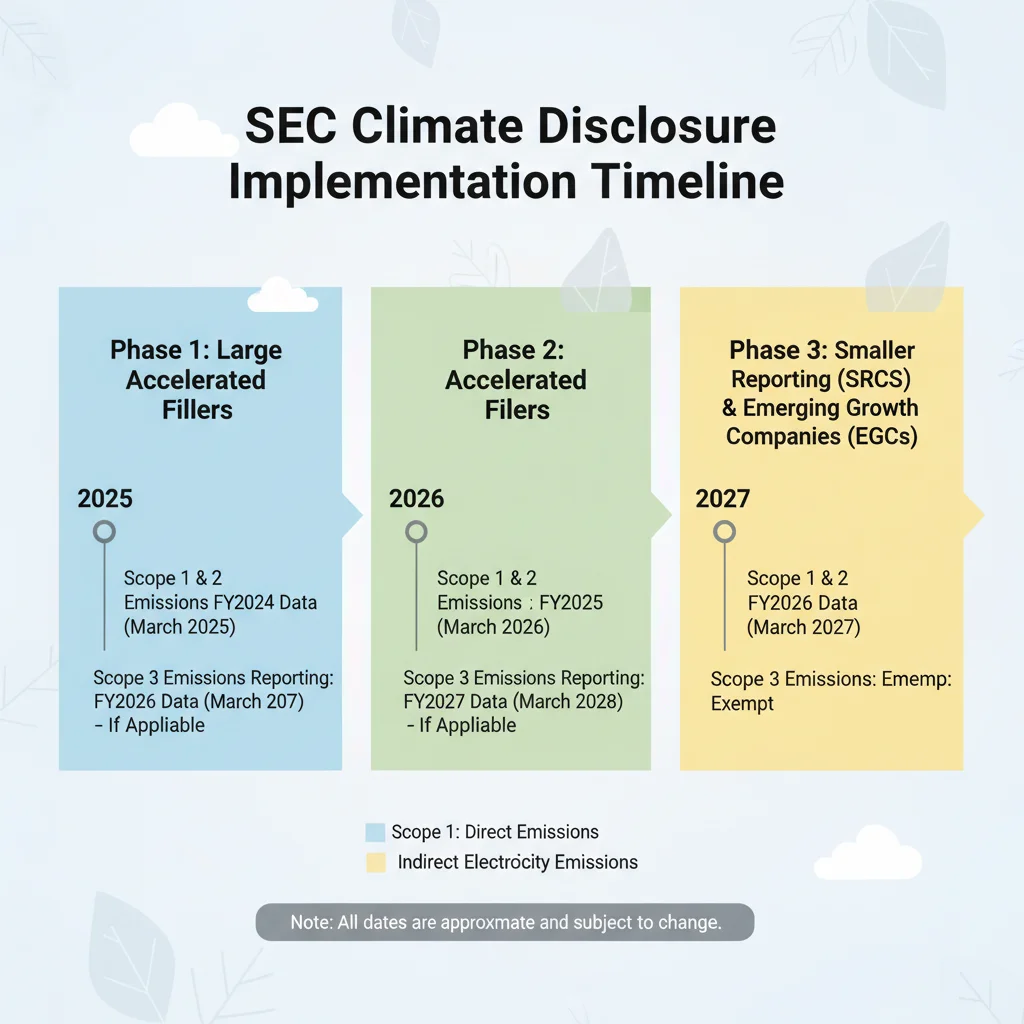
The journey towards full SEC climate compliance is not a sprint, but a marathon. Each step in this checklist builds upon the last, creating a robust framework for transparent and accurate climate reporting. Companies that prioritize these foundational and data-driven phases will be better positioned to meet the 2026 deadline with confidence.
Phase 3: Disclosure and Reporting (Leading up to 2026 Filings)
- Draft Initial Disclosures: Begin drafting the narrative disclosures required by the SEC rules, covering governance, strategy, risk management, and targets. Ensure consistency with other public statements and internal documents.
- Prepare Financial Statement Footnotes: Work with accounting teams to prepare the necessary financial statement footnotes related to climate-related expenditures, capitalized costs, charges, and losses, as well as the impacts on estimates and assumptions.
- Establish Internal Controls and Procedures: Develop and document robust internal controls over climate-related financial reporting (ICFR-Climate) to ensure the accuracy, completeness, and reliability of disclosed information. This is critical for meeting audit requirements and preventing misstatements.
- Conduct Internal Reviews and Audits: Perform internal reviews and mock audits of your climate disclosures to identify any weaknesses or inconsistencies before external scrutiny.
- Legal and External Auditor Review: Engage legal counsel and your external auditors to review all draft disclosures, ensuring compliance with both SEC regulations and accounting standards.
- Stakeholder Communication Strategy: Develop a clear communication strategy for investors, employees, and other stakeholders regarding your company’s approach to climate risk management and disclosures.
Implementing these steps will not only ensure SEC climate compliance but also enhance your company’s overall sustainability strategy and investor relations. The rigor required for these disclosures can drive internal efficiencies, foster innovation, and identify new business opportunities related to the transition to a low-carbon economy.
Challenges and Strategic Considerations for SEC Climate Compliance
While the path to SEC climate compliance is clear, it is not without its hurdles. Companies should anticipate and strategically address several key challenges.
Data Collection and Quality
Perhaps the most significant challenge will be the collection of high-quality, auditable climate data, especially for Scope 1 and Scope 2 emissions across diverse and often global operations. Many companies currently lack centralized systems for this, relying instead on disparate spreadsheets or manual processes. The SEC’s requirement for attestation on emissions data further elevates the need for accuracy and robust internal controls.
Strategy:
- Centralize Data Management: Invest in specialized ESG data management software that can integrate with existing operational systems (e.g., energy management, fleet management).
- Standardize Methodologies: Adopt consistent methodologies for data collection and calculation across all subsidiaries and regions.
- Employee Training: Train relevant personnel across all operational units on data collection protocols and the importance of data accuracy.
Materiality Determinations
Deciding what climate-related information is ‘material’ to investors will require careful judgment and may be subject to interpretation. The SEC’s guidance emphasizes a facts-and-circumstances approach, making it a dynamic rather than static assessment.
Strategy:
- Document Decision-Making: Maintain clear documentation of the materiality assessment process, including criteria used, data considered, and rationale for conclusions.
- Regular Review: Revisit materiality assessments periodically, especially as climate science, regulations, and investor expectations evolve.
- Engage Experts: Consult with legal counsel and sustainability experts to guide materiality determinations.
Integration with Financial Reporting
The requirement to disclose climate-related financial impacts in footnotes to the financial statements means that sustainability data can no longer be siloed. It must be integrated into the core financial reporting processes and subject to the same level of internal controls and assurance.
Strategy:
- Cross-Functional Collaboration: Foster strong collaboration between finance/accounting and sustainability teams. Finance professionals will need to understand climate concepts, and sustainability professionals will need to understand financial reporting standards.
- Develop ICFR-Climate: Establish specific internal controls over climate-related financial reporting, mirroring those for traditional financial data.
- Leverage Existing Controls: Where possible, adapt existing financial reporting controls to cover climate data.
Attestation and Assurance Readiness
The phased-in attestation requirement for Scope 1 and Scope 2 emissions means that companies will need to prepare for external verification. This is a new frontier for many and demands a high level of data integrity.
Strategy:
- Early Engagement with Attestation Providers: Begin discussions with potential attestation providers well in advance to understand their requirements and timelines.
- Pre-Assurance Reviews: Conduct internal or third-party pre-assurance reviews of emissions data and processes to identify and rectify issues before the formal attestation.
- Documentation: Ensure all methodologies, data sources, and calculations are thoroughly documented and auditable.
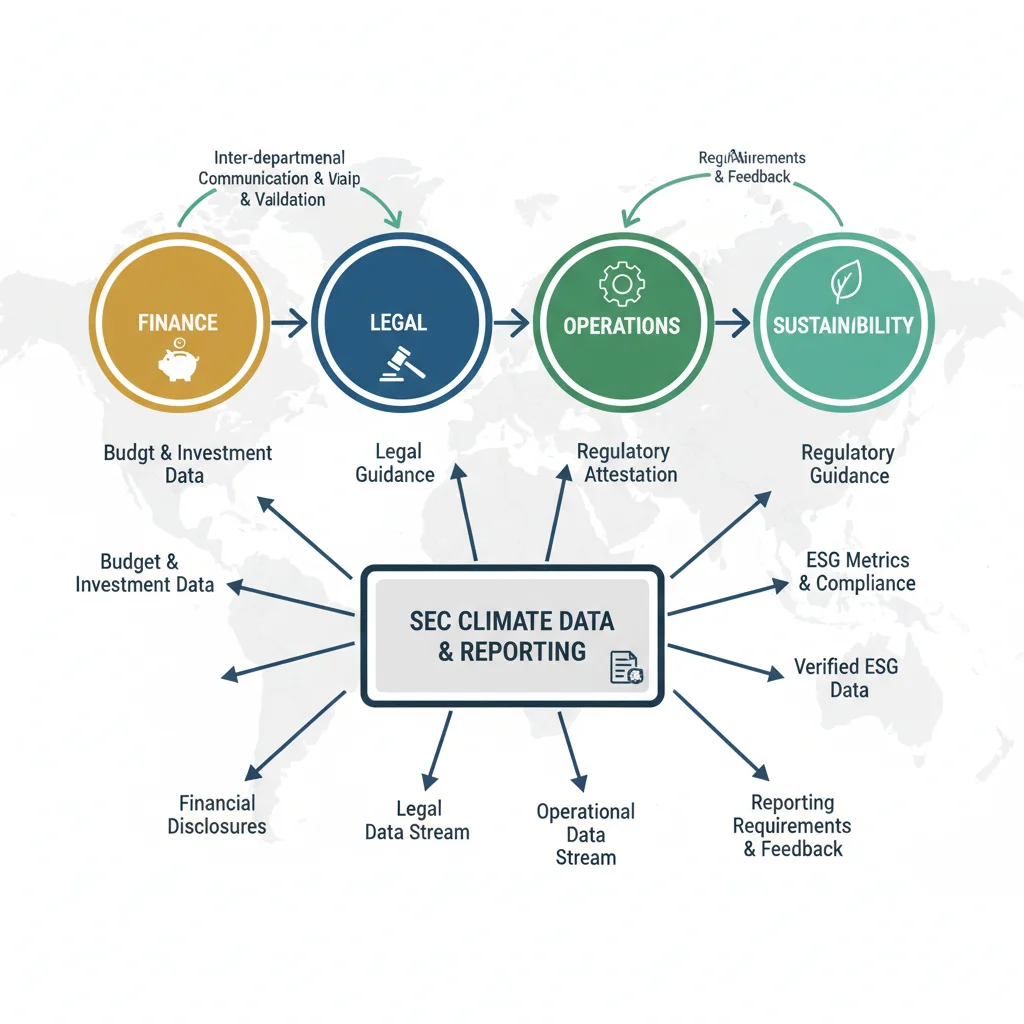
Navigating these challenges effectively will require a proactive and adaptive approach. Companies that view SEC climate compliance not just as a regulatory burden but as an opportunity to enhance transparency, improve risk management, and strengthen investor confidence will be best positioned for long-term success.
The Broader Impact: Beyond Compliance
While the immediate focus for public companies is achieving SEC climate compliance by 2026, the implications of these new rules extend far beyond mere regulatory adherence. These disclosures are set to drive significant shifts in corporate strategy, investment decisions, and market dynamics.
Enhanced Investor Relations and Capital Access
Investors, particularly institutional ones, are increasingly prioritizing ESG factors in their investment decisions. Companies that provide high-quality, transparent climate disclosures will likely attract more capital from this growing pool of sustainability-focused investors. Conversely, those that struggle with compliance or provide inadequate disclosures may face reputational risks and potentially higher costs of capital.
The standardized disclosures will also enable easier comparison between companies, fostering a more competitive environment for climate performance. This transparency will empower investors to reward companies demonstrating robust climate risk management and sustainable practices.
Catalyst for Innovation and Decarbonization
The process of identifying, measuring, and reporting climate-related risks and emissions can act as a powerful catalyst for internal innovation. Companies may discover opportunities to reduce energy consumption, optimize supply chains, develop greener products, and transition to renewable energy sources. This isn’t just about ‘doing good’; it’s about finding efficiencies and new revenue streams in a rapidly decarbonizing global economy.
For instance, quantifying Scope 1 and Scope 2 emissions might reveal unexpected inefficiencies in manufacturing processes, prompting investments in more energy-efficient machinery or a switch to renewable energy providers, leading to cost savings and improved environmental performance.
Strengthened Risk Management
Integrating climate risk into enterprise-wide risk management frameworks, as mandated by the SEC, will lead to more comprehensive and forward-looking risk assessments. This can help companies better prepare for physical climate impacts (e.g., supply chain disruptions from extreme weather) and transition risks (e.g., policy changes, carbon pricing, shifts in consumer preferences).
By systematically identifying and evaluating climate risks, companies can develop more resilient business models, diversify their operations, and build greater adaptive capacity in the face of a changing climate. This proactive approach to risk management can prevent costly disruptions and protect long-term shareholder value.
Improved Corporate Governance
The SEC rules elevate climate oversight to the board level, demanding greater accountability and expertise from directors. This will likely lead to boards with more climate literacy, potentially through new appointments or specialized training. Stronger governance around climate issues can improve overall corporate decision-making, ensuring that climate considerations are integrated into strategic planning and capital allocation processes.
The requirement to disclose board and management’s role in climate risk oversight will push companies to formalize these responsibilities and ensure clear lines of accountability, enhancing good governance practices across the organization.
Alignment with Global Standards
While distinct, the SEC’s rules share common ground with international sustainability reporting frameworks like the ISSB Standards and the CSRD. For multinational corporations, navigating these various regulations can be complex. However, the foundational work done for SEC climate compliance can often be leveraged, at least in part, to meet other global requirements, fostering a more harmonized approach to sustainability reporting worldwide.
Companies that build robust data collection systems and governance structures for SEC reporting will find themselves better prepared to adapt to evolving international standards, reducing redundant efforts and increasing efficiency.
Conclusion: Embracing the Future of Corporate Transparency
The new SEC Climate Disclosure Rules represent a fundamental shift in corporate reporting, embedding climate considerations firmly within the realm of financial disclosure. For public companies, the 2026 deadline for initial compliance, particularly for large accelerated filers, is fast approaching and demands immediate, strategic action. This isn’t a task to be delegated solely to the sustainability department; it requires a concerted, cross-functional effort involving finance, legal, operations, and the highest levels of management and governance.
By diligently working through this SEC climate compliance checklist – from establishing strong governance and data collection processes to engaging with attestation providers and integrating climate insights into financial reporting – companies can not only meet their regulatory obligations but also unlock significant strategic advantages. Enhanced investor confidence, improved access to capital, strengthened risk management, and a powerful impetus for innovation and decarbonization are all potential benefits that extend far beyond mere compliance.
Embracing these new rules as an opportunity to build a more transparent, resilient, and sustainable business model will be the hallmark of successful public companies in the years to come. The future of corporate reporting is here, and proactive engagement with the SEC Climate Disclosure Rules is the key to navigating it successfully.