Holographic Computing: US Enterprise Readiness for 2026

Holographic Computing’s Next Wave: What US Enterprises Should Prepare for by 2026
The technological landscape is in a constant state of flux, and at the forefront of this evolution is holographic computing readiness. For US enterprises, the year 2026 isn’t just another calendar mark; it represents a pivotal moment when holographic computing is expected to transition from niche innovation to a mainstream business tool. This isn’t merely about fancy displays; it’s about fundamentally altering how we interact with data, collaborate, design, and train. The implications for productivity, efficiency, and competitive advantage are immense. As digital transformation continues to accelerate, understanding and preparing for this next wave of computing becomes not just an option, but a strategic imperative for any forward-thinking organization.
Imagine a world where complex 3D models can be manipulated in real-time, where remote teams collaborate as if they are in the same room, and where training scenarios are so immersive they mimic reality. This is the promise of holographic computing, a fusion of augmented reality (AR) and mixed reality (MR) that projects digital content into our physical space, making it appear as if it truly exists. For US enterprises, this technology holds the key to unlocking unprecedented levels of innovation and operational excellence. The journey to holographic computing readiness requires a proactive approach, encompassing technological adoption, talent development, and strategic planning. This article will delve into the critical aspects of this impending revolution, providing a comprehensive guide for businesses aiming to stay ahead of the curve.
The Dawn of Holographic Computing: Beyond Science Fiction
For decades, holograms were the stuff of science fiction, confined to blockbuster movies and futuristic novels. Today, however, advancements in hardware, software, and processing power have brought us to the cusp of a new era. Holographic computing, often used interchangeably with mixed reality, refers to the ability to blend digital objects with the real world, allowing users to interact with them as if they were physical entities. Unlike virtual reality (VR), which immerses users in a completely simulated environment, holographic computing keeps users grounded in their physical surroundings while augmenting it with digital information.
The core components driving this revolution include sophisticated mixed reality headsets (like Microsoft’s HoloLens or Magic Leap), advanced spatial mapping algorithms, powerful graphics processing units (GPUs), and high-speed connectivity. These elements coalesce to create experiences that are not only visually compelling but also highly interactive and intuitive. The maturation of these technologies signifies that holographic computing readiness is no longer a distant dream but a tangible goal for enterprises within the next few years.
The distinction between AR, VR, and MR is crucial for understanding holographic computing’s unique value proposition. Augmented Reality (AR) overlays digital information onto the real world, often via smartphone screens (think Pokémon Go). Virtual Reality (VR) completely immerses users in a simulated digital environment, blocking out the real world (think Oculus Quest for gaming). Mixed Reality (MR), which is the foundation of holographic computing, goes a step further by anchoring digital objects to specific points in the real world, allowing users to interact with them and the physical environment simultaneously. This seamless blend is what makes holographic computing so powerful for enterprise applications, offering a more natural and integrated way to work with digital content.
Key Industries Poised for Transformation by 2026
The impact of holographic computing will be felt across a multitude of sectors, fundamentally reshaping workflows, training, and customer engagement. US enterprises in particular stand to gain significant competitive advantages by adopting this technology early. Here are some of the key industries and their potential transformations:
Manufacturing and Engineering
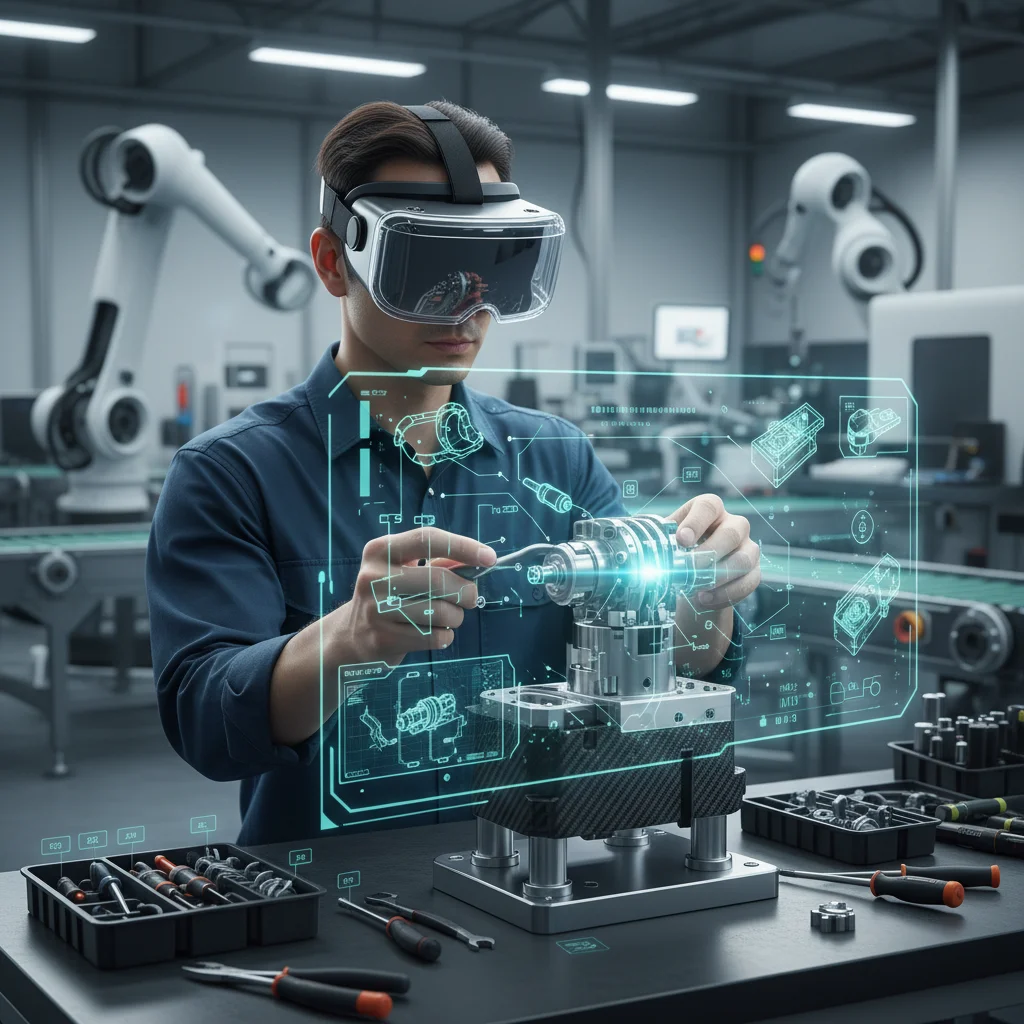
In manufacturing, holographic computing can revolutionize design, assembly, and maintenance. Engineers can collaborate on 3D models of prototypes in real-time, reviewing designs from any angle and making adjustments collaboratively. Assembly line workers can receive holographic instructions overlaid directly onto the machinery, guiding them through complex tasks with unprecedented accuracy. For maintenance, technicians can overlay digital schematics onto physical equipment, diagnosing issues and performing repairs more efficiently. This direct visual guidance reduces errors, speeds up processes, and significantly lowers training costs. The drive for greater precision and efficiency in production makes holographic computing readiness a critical factor for manufacturers.
Healthcare and Medicine
The medical field is ripe for holographic innovation. Surgeons can prepare for complex procedures by studying 3D holographic models of patient anatomy, allowing for more precise planning and reduced risks. Medical students can engage in highly immersive training simulations, practicing intricate operations without any risk to patients. Remote consultations can be enhanced with holographic visualizations of patient data, fostering better understanding and collaboration among geographically dispersed specialists. Furthermore, pharmaceutical companies can visualize molecular structures and drug interactions in 3D, accelerating research and development. The ability to visualize and interact with complex biological data in a spatial environment offers a paradigm shift in healthcare delivery and education.
Retail and E-commerce
Holographic computing offers innovative ways to engage customers and enhance the shopping experience. Customers could virtually ‘try on’ clothes or place holographic furniture in their homes before purchasing, reducing returns and increasing satisfaction. Retailers could create immersive showrooms where customers explore products in 3D, accessing detailed information and customization options. For e-commerce, this translates into richer product presentations that bridge the gap between online browsing and physical interaction, making online shopping more engaging and informative. The competitive landscape of retail demands constant innovation, and holographic computing readiness will be a differentiator.
Education and Training
Traditional learning methods can be dramatically improved with holographic computing. Students can explore historical sites, dissect virtual organs, or conduct complex scientific experiments in a safe, interactive holographic environment. Vocational training can become more hands-on and engaging, with trainees learning by doing in simulated real-world scenarios. This immersive approach can lead to deeper understanding, better retention, and more effective skill development across all educational levels, from K-12 to corporate training programs. The educational sector’s need for engaging and effective learning tools makes it a prime candidate for holographic integration.
Architecture, Engineering, and Construction (AEC)
For AEC professionals, holographic computing offers unparalleled visualization and collaboration capabilities. Architects can walk through holographic models of buildings with clients, making real-time design adjustments. Construction teams can overlay blueprints onto construction sites, ensuring accuracy and identifying potential conflicts before they arise. This reduces costly errors, streamlines communication, and accelerates project timelines. The ability to visualize and interact with complex structures in their intended physical space is a game-changer for the entire industry, driving the need for holographic computing readiness.
Building Your Holographic Computing Readiness Strategy
Achieving holographic computing readiness by 2026 requires a multi-faceted approach. US enterprises must start planning and investing now to capitalize on this transformative technology. Here are key strategic pillars:
1. Invest in Pilot Programs and Proofs of Concept
The best way to understand the potential of holographic computing is to experiment with it. Start small with pilot programs in departments or areas that stand to gain the most. This could involve using a mixed reality headset for a specific training module, visualizing a product design, or assisting with a complex maintenance task. These proofs of concept will help identify practical applications, measure ROI, and build internal expertise. Learning by doing is crucial in this nascent field.
2. Develop Internal Expertise and Talent
Holographic computing requires specialized skills in 3D modeling, spatial computing, user interface/user experience (UI/UX) design for mixed reality, and data integration. Enterprises should consider upskilling existing employees through training programs or hiring new talent with expertise in these areas. Cultivating a team that understands the nuances of holographic development and deployment will be critical for long-term success. This focus on human capital is a cornerstone of holographic computing readiness.
3. Prioritize Data Infrastructure and Connectivity
Holographic applications are data-intensive, requiring robust data infrastructure, cloud computing capabilities, and high-speed, low-latency connectivity (e.g., 5G). Enterprises need to assess their current IT infrastructure and make necessary upgrades to support the demands of real-time holographic rendering and data streaming. Secure and efficient data management will be paramount, especially when dealing with sensitive enterprise information or large-scale 3D models.
4. Focus on User Experience (UX) and Integration
The success of holographic computing hinges on its usability. Applications must be intuitive, comfortable, and seamlessly integrate into existing workflows. Poor UX can lead to user rejection, regardless of the technology’s potential. Enterprises should involve end-users in the design and development process to ensure that holographic solutions address real-world problems and enhance productivity rather than complicate it. Thoughtful integration with existing enterprise systems (ERP, CRM, CAD, etc.) is also essential to maximize value.
5. Address Security and Privacy Concerns
As with any emerging technology dealing with sensitive data and new forms of interaction, security and privacy are paramount. Enterprises must implement robust security protocols to protect holographic data, prevent unauthorized access, and ensure compliance with relevant regulations (e.g., GDPR, HIPAA). Considerations around data residency, encryption, and user authentication will become increasingly important as holographic systems become more integrated into critical business operations. A strong security posture is non-negotiable for true holographic computing readiness.
6. Cultivate Strategic Partnerships
The holographic computing ecosystem is still evolving. Collaborating with technology providers, software developers, and research institutions can accelerate adoption and provide access to cutting-edge solutions. Strategic partnerships can help enterprises overcome technical challenges, gain insights into best practices, and develop bespoke holographic applications tailored to their specific needs. This collaborative approach can significantly de-risk early adoption and foster innovation.
Challenges and Considerations
While the promise of holographic computing is immense, US enterprises must also be prepared to navigate potential challenges. Understanding these hurdles is part of achieving comprehensive holographic computing readiness.
Cost of Entry
The initial investment in hardware (headsets, specialized cameras) and software development can be substantial. Enterprises need to carefully evaluate the potential ROI and scale their adoption strategy accordingly. Starting with targeted pilot projects, as mentioned earlier, can help manage costs and demonstrate value before a broader rollout.
Technical Complexity
Developing and deploying holographic applications requires specialized technical skills. The learning curve for spatial computing, 3D content creation, and mixed reality development can be steep. This underscores the need for talent development and strategic partnerships with experienced vendors.
Hardware Limitations and Ergonomics
While mixed reality headsets are rapidly improving, current models still have limitations in terms of field of view, battery life, and comfort for extended use. Enterprises must consider these factors when designing applications and user scenarios, ensuring that the hardware doesn’t impede productivity or user acceptance.
Ethical and Societal Implications
As holographic computing becomes more pervasive, ethical considerations around data privacy, potential for misuse, and the impact on human interaction will emerge. Enterprises should proactively engage in discussions and develop internal policies to address these concerns responsibly, ensuring that the technology is used for positive societal impact.

The Future Beyond 2026: A Fully Immersive Enterprise
The year 2026 will mark a significant milestone in the adoption of holographic computing, but it’s just the beginning. Looking further into the future, we can anticipate even more profound transformations. The convergence of holographic computing with other emerging technologies like Artificial Intelligence (AI), the Internet of Things (IoT), and quantum computing will unlock capabilities that are difficult to fully grasp today. AI-powered holographic assistants could anticipate user needs, IoT sensors could feed real-time data into holographic visualizations, and quantum computing could enable even more complex and realistic simulations.
Imagine truly intelligent holographic digital twins of entire factories, cities, or even ecosystems, updated in real-time by IoT data and managed by AI. Decision-making will become profoundly spatial and data-driven. Remote work and global collaboration will evolve into highly immersive, shared holographic spaces where physical distance becomes irrelevant. The concept of a ‘digital office’ will take on a new meaning, blending seamlessly with physical workspaces. This long-term vision emphasizes why holographic computing readiness today is not just about immediate gains but about laying the groundwork for a future-proof enterprise.
The evolution will also see a shift from bulky headsets to more discreet eyewear, or even direct neural interfaces, making the interaction with holograms even more natural and ubiquitous. The lines between the physical and digital worlds will continue to blur, creating entirely new paradigms for human-computer interaction and enterprise operations. Enterprises that embrace this journey of innovation will be best positioned to thrive in the increasingly digital and immersive economy of tomorrow.
Conclusion: Seizing the Holographic Advantage
The advent of holographic computing represents a monumental shift in how enterprises will operate, innovate, and compete. For US businesses, 2026 is rapidly approaching, and the time to strategize for holographic computing readiness is now. By proactively investing in pilot programs, talent development, robust infrastructure, and strategic partnerships, enterprises can position themselves to harness the immense power of this technology.
Ignoring this trend is not an option for organizations that aspire to remain relevant and competitive. The benefits – from enhanced productivity and reduced costs to superior customer experiences and accelerated innovation – are too significant to overlook. The journey into holographic computing will be challenging, but the rewards for those who embrace it will be transformative. The future is not just digital; it’s holographic, and the enterprises that are prepared will be the ones to lead the next wave of technological evolution.
Embrace the future, understand the potential, and start building your holographic computing readiness roadmap today. The immersive enterprise awaits.