Sustainable Tech Practices U.S.: 10% Carbon Reduction by 2026 & Financial Impact
Sustainable Tech Practices in the U.S.: Achieving a 10% Carbon Footprint Reduction by 2026 (FINANCIAL IMPACT)
In an era defined by increasing environmental consciousness and the urgent need for climate action, the integration of sustainable tech practices has emerged as a pivotal strategy for businesses across the United States. The challenge is clear: reduce carbon emissions significantly to mitigate climate change. The opportunity is equally compelling: embrace eco-friendly technological solutions not only for environmental stewardship but also for substantial financial gains. This comprehensive article delves into how U.S. companies can achieve an ambitious 10% reduction in their carbon footprint by 2026 through the adoption of innovative sustainable tech practices, all while exploring the profound financial implications of such a transition.
The digital revolution, while transformative, has not been without its environmental costs. Data centers consume vast amounts of energy, manufacturing processes for electronic devices are resource-intensive, and the sheer volume of electronic waste (e-waste) continues to grow at an alarming rate. However, technology itself offers potent solutions to these very problems. By strategically implementing sustainable tech practices, businesses can not only minimize their environmental impact but also unlock new avenues for efficiency, cost savings, and enhanced brand reputation. The target of a 10% carbon reduction by 2026 is ambitious yet achievable, requiring a multi-faceted approach that integrates green principles into every layer of technological operations.
The Imperative of Sustainable Tech Practices
The call for sustainability is louder than ever. Climate change presents undeniable risks, from extreme weather events to resource scarcity, impacting global economies and supply chains. For businesses, ignoring these realities is no longer an option. Consumers, investors, and regulators are increasingly demanding greater transparency and accountability regarding environmental performance. This societal shift has propelled sustainable tech practices from a niche concern to a core business imperative.
Environmental Drivers for Adoption
- Climate Change Mitigation: The primary driver is the need to reduce greenhouse gas emissions. Technology, particularly IT infrastructure, contributes significantly to global energy consumption. Adopting sustainable practices directly addresses this.
- Resource Conservation: Sustainable tech emphasizes efficient resource use, from energy and water in data centers to rare earth minerals in device manufacturing.
- Waste Reduction: E-waste is a growing global crisis. Sustainable tech promotes circular economy principles, extending product lifecycles and facilitating responsible recycling.
- Ecosystem Protection: Reduced pollution from manufacturing and energy generation helps protect biodiversity and natural habitats.
Business Drivers for Adoption
- Cost Savings: Energy efficiency, optimized hardware utilization, and reduced waste translate directly into lower operational expenditures.
- Enhanced Brand Reputation: Companies committed to sustainability are viewed more favorably by consumers, employees, and investors, leading to increased customer loyalty and attracting top talent.
- Regulatory Compliance: Governments worldwide are enacting stricter environmental regulations. Proactive adoption of sustainable tech helps businesses stay ahead of compliance requirements and avoid penalties.
- Investor Confidence: Environmental, Social, and Governance (ESG) factors are increasingly influencing investment decisions. Strong ESG performance, often bolstered by sustainable tech, can attract capital.
- Innovation and Competitive Advantage: Developing and implementing green technologies can foster innovation, leading to new products, services, and a competitive edge in the market.
- Risk Management: Reducing reliance on volatile energy markets and mitigating environmental liabilities can enhance business resilience.
Key Pillars of Sustainable Tech Practices for Carbon Reduction
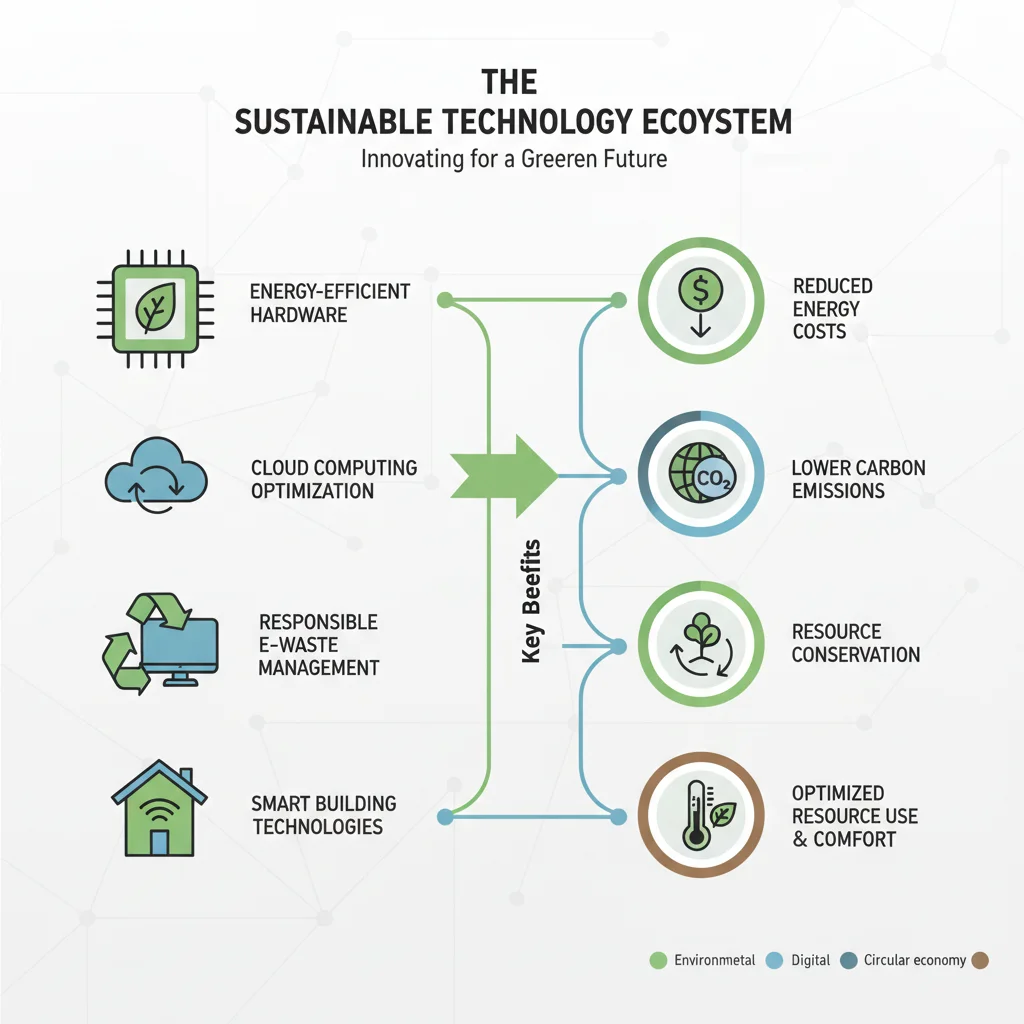
Achieving a 10% carbon footprint reduction by 2026 demands a holistic strategy encompassing various aspects of technological operations. Here are the core pillars that U.S. businesses should focus on:
1. Energy Efficiency in Data Centers and IT Infrastructure
Data centers are the backbone of the digital economy, and their energy consumption is substantial. Optimizing their efficiency is paramount. This involves:
- Power Usage Effectiveness (PUE) Improvement: Aiming for a PUE closer to 1.0, meaning less energy is wasted on cooling and power distribution. This can be achieved through advanced cooling techniques (e.g., liquid cooling, free cooling), hot/cold aisle containment, and optimizing server utilization.
- Virtualization and Cloud Computing: Consolidating servers through virtualization reduces the physical hardware footprint and associated energy consumption. Migrating to cloud services offered by providers committed to renewable energy (e.g., Google Cloud, AWS, Microsoft Azure, which have ambitious renewable energy targets) can significantly offload a company’s carbon burden.
- Renewable Energy Integration: Directly powering data centers with renewable energy sources like solar, wind, or geothermal, either through on-site generation or purchasing renewable energy credits (RECs) and power purchase agreements (PPAs).
- Hardware Refresh Cycles: Upgrading to more energy-efficient servers, storage devices, and networking equipment. Modern hardware often offers significantly better performance per watt.
2. Sustainable Software Development and Optimization
The code we write also has an environmental impact. Green coding practices are gaining traction:
- Efficient Algorithms: Developing software that requires fewer computational resources and executes faster, thereby reducing CPU cycles and energy consumption.
- Optimized Data Storage: Efficient data management, including data deduplication, compression, and intelligent archiving, reduces the need for extensive storage infrastructure.
- Cloud-Native Architectures: Designing applications for the cloud can lead to more efficient resource utilization and scalability, minimizing idle resources.
- Reducing Network Traffic: Optimizing data transfer protocols and minimizing redundant data transmission to lessen the energy consumption of network infrastructure.
3. E-Waste Management and Circular Economy Principles
Electronic waste is a growing environmental challenge. Adopting circular economy principles is crucial for sustainable tech practices:
- Extended Product Lifecycles: Investing in durable, repairable, and upgradeable hardware to prolong its useful life.
- Responsible Disposal and Recycling: Partnering with certified e-waste recyclers who adhere to strict environmental standards, ensuring hazardous materials are safely handled and valuable resources are recovered.
- Refurbishment and Reuse Programs: Implementing internal programs or collaborating with external partners to refurbish and reuse IT equipment, donating it to schools or non-profits where appropriate.
- Sustainable Procurement: Prioritizing vendors who demonstrate strong commitments to sustainability, offering products made with recycled materials, and having take-back programs.
4. Smart Buildings and IoT for Energy Management
Integrating smart technologies into office spaces and facilities can lead to significant energy savings:
- Intelligent Lighting Systems: Using LED lighting with occupancy sensors and daylight harvesting controls.
- Smart HVAC Systems: Implementing intelligent heating, ventilation, and air conditioning systems that adjust based on occupancy, weather forecasts, and real-time energy prices.
- IoT-Enabled Monitoring: Deploying sensors to monitor energy consumption across various devices and areas, providing data for optimization.
- Remote Work Solutions: Supporting remote and hybrid work models can reduce commuting emissions and energy consumption in physical offices, though it shifts some energy use to homes.
The Financial Impact: Beyond Environmental Altruism
While the environmental benefits of sustainable tech practices are undeniable, the financial incentives are often the most compelling factor for businesses. Achieving a 10% carbon reduction by 2026 is not just an expense; it’s an investment with significant returns.
Direct Cost Savings
- Reduced Energy Bills: The most immediate and tangible financial benefit. Energy-efficient data centers, green software, and smart building technologies directly lower electricity consumption, leading to substantial savings on utility bills. For large enterprises, these savings can run into millions of dollars annually.
- Lower Hardware Costs (Long-term): While initial investment in energy-efficient hardware might be higher, its longer lifespan and reduced maintenance needs can lead to lower total cost of ownership (TCO). Furthermore, optimizing hardware utilization through virtualization reduces the need to purchase new physical servers.
- Waste Management Cost Reduction: Effective e-waste management, including reuse and recycling, can reduce disposal fees and potentially generate revenue from recovered materials.
- Carbon Tax/Credit Opportunities: In regions with carbon pricing mechanisms, reducing emissions can lead to lower carbon tax liabilities or even generate revenue through carbon credit trading.
Indirect Financial Benefits
- Enhanced Brand Value and Customer Loyalty: A strong commitment to sustainability resonates with environmentally conscious consumers. Brands known for their green initiatives often command higher loyalty and can attract new customer segments. This translates to increased sales and market share.
- Attracting and Retaining Talent: Younger generations, in particular, prioritize working for companies with strong ethical and environmental values. Sustainable practices can be a powerful tool for recruiting and retaining top talent, reducing recruitment costs and improving productivity.
- Access to Green Financing and Investment: Financial institutions are increasingly offering green loans, bonds, and investment funds to companies with robust sustainability credentials. This can provide access to capital at more favorable rates. ESG-focused investors are also more likely to invest in sustainable companies, leading to higher valuations.
- Reduced Regulatory Risks and Fines: Proactive adoption of sustainable practices helps businesses comply with evolving environmental regulations, avoiding costly fines and legal battles.
- Innovation and New Revenue Streams: The pursuit of sustainability often sparks innovation. Companies might develop new green products or services, opening up entirely new markets and revenue opportunities. For example, a company that develops an energy-efficient AI model could license that technology to others.
- Supply Chain Resilience: Sustainable supply chain practices, often enabled by tech, can reduce risks associated with resource scarcity, ethical sourcing, and environmental disasters, leading to more stable operations.
Quantifying the Financial Impact: A Case Study Approach
To illustrate the financial impact, consider a hypothetical U.S. corporation with significant IT infrastructure. By implementing sustainable tech practices, they could see:
- Data Center Optimization: A 20% reduction in data center energy consumption through PUE improvements and virtualization could save $500,000 annually in electricity costs for a medium-sized enterprise.
- Cloud Migration: Moving 30% of on-premise workloads to a renewable-powered cloud provider could reduce server-related energy costs by an additional $200,000 and defer capital expenditure on new hardware.
- E-Waste Recycling Program: Implementing a robust recycling program could reduce disposal costs by $20,000 annually and potentially generate $5,000 from material recovery.
- Smart Office Technology: Deploying smart lighting and HVAC in headquarters could yield $100,000 in annual energy savings.
Cumulatively, these initiatives could result in over $825,000 in direct annual savings, contributing significantly to profitability while simultaneously reducing carbon emissions. Furthermore, the intangible benefits of improved brand image and employee morale would further enhance long-term value.
Challenges and Solutions in Implementing Sustainable Tech Practices
While the benefits are clear, the path to achieving a 10% carbon reduction by 2026 through sustainable tech practices is not without its challenges.
Common Challenges:
- Initial Investment Costs: Upgrading to new, energy-efficient hardware or implementing advanced cooling systems can require significant upfront capital.
- Lack of Awareness/Expertise: Many organizations may not fully understand the scope of sustainable tech or lack the internal expertise to implement complex green IT solutions.
- Measuring and Reporting: Accurately tracking carbon emissions and the impact of sustainable initiatives can be complex, requiring robust data collection and analytical tools.
- Vendor Lock-in: Relying on legacy systems or single vendors can make it difficult to transition to more sustainable solutions.
- Cultural Resistance: Employees and management may be resistant to changes in established practices.
Solutions and Best Practices:
- Phased Implementation: Break down large projects into smaller, manageable phases to spread out costs and demonstrate early successes.
- Strategic Partnerships: Collaborate with sustainability consultants, green IT vendors, and cloud providers with strong environmental commitments.
- Utilize Tools and Frameworks: Employ carbon accounting software, ESG reporting frameworks (e.g., GRI, SASB), and industry benchmarks (e.g., Green Grid’s PUE) to measure progress.
- Open Standards and Interoperability: Prioritize solutions that adhere to open standards to avoid vendor lock-in and ensure flexibility.
- Education and Training: Invest in training employees on sustainable tech practices and foster a culture of environmental responsibility from the top down.
- Government Incentives: Leverage federal and state government incentives, grants, and tax credits for green technology adoption and renewable energy investments.
Roadmap to 10% Carbon Reduction by 2026
To achieve the ambitious goal of a 10% carbon footprint reduction by 2026, U.S. businesses need a clear, actionable roadmap. This involves several key steps:
Step 1: Baseline Assessment and Goal Setting (Q4 2023 – Q1 2024)
- Conduct a comprehensive carbon audit: Measure current IT-related energy consumption, e-waste generation, and supply chain emissions to establish a baseline.
- Identify key emission hotspots: Pinpoint the areas with the highest carbon impact within your tech operations.
- Set SMART goals: Define specific, measurable, achievable, relevant, and time-bound targets for carbon reduction, aiming for the 10% by 2026.
Step 2: Strategy Development and Technology Selection (Q1 – Q2 2024)
- Develop a green IT strategy: Outline specific initiatives across data centers, software development, e-waste, and smart buildings.
- Research and evaluate sustainable tech solutions: Identify suitable hardware, software, and service providers that align with your sustainability goals.
- Conduct cost-benefit analyses: Quantify the financial returns on investment for proposed sustainable tech projects.
Step 3: Implementation and Integration (Q2 2024 – Q4 2025)
- Execute pilot projects: Start with smaller, impactful initiatives to test feasibility and gather data.
- Phased rollout: Gradually implement sustainable tech solutions across the organization, prioritizing high-impact areas.
- Integrate sustainability into procurement: Revise procurement policies to favor eco-friendly products and services.
- Employee engagement: Launch internal campaigns and training programs to educate and involve employees in sustainability efforts.
Step 4: Monitoring, Reporting, and Continuous Improvement (Ongoing)
- Implement robust monitoring systems: Continuously track energy consumption, e-waste metrics, and carbon emissions.
- Regular reporting: Publish annual sustainability reports, detailing progress against targets and financial impacts.
- Review and adapt: Periodically review the effectiveness of implemented strategies and make adjustments as needed to ensure continuous improvement towards the 2026 goal and beyond.

The Role of Policy and Collaboration
Achieving widespread adoption of sustainable tech practices and meeting national carbon reduction targets also requires supportive policy frameworks and collaborative efforts. Government incentives, such as tax breaks for green tech investments or R&D grants for sustainable innovation, can accelerate adoption. Industry-wide collaborations, sharing best practices, and developing common standards for eco-friendly technology can amplify individual company efforts.
Furthermore, the U.S. government and state agencies play a crucial role in leading by example, implementing sustainable tech in their own operations, and promoting public-private partnerships to advance green technology. Educational institutions are also vital in preparing the next generation of tech professionals with the skills and mindset for sustainable innovation.
Conclusion: A Sustainable and Profitable Future
The journey towards a 10% carbon footprint reduction in the U.S. tech sector by 2026 is an ambitious yet entirely attainable goal. By embracing a comprehensive suite of sustainable tech practices—from optimizing data center efficiency and developing green software to managing e-waste responsibly and leveraging smart building technologies—businesses can make a significant environmental impact. Crucially, this transition is not merely an act of corporate social responsibility; it is a strategic business decision that delivers substantial financial returns.
The financial benefits, including reduced operational costs, enhanced brand value, improved investor relations, and competitive advantage, create a compelling case for immediate action. Companies that proactively integrate sustainability into their technological core will not only contribute to a healthier planet but will also position themselves for long-term resilience, profitability, and leadership in the evolving global economy. The future of technology in the U.S. is green, and the time to invest in that future is now.