The Future of Human-Computer Interaction: 5 Emerging Interfaces to Watch in the US by 2026
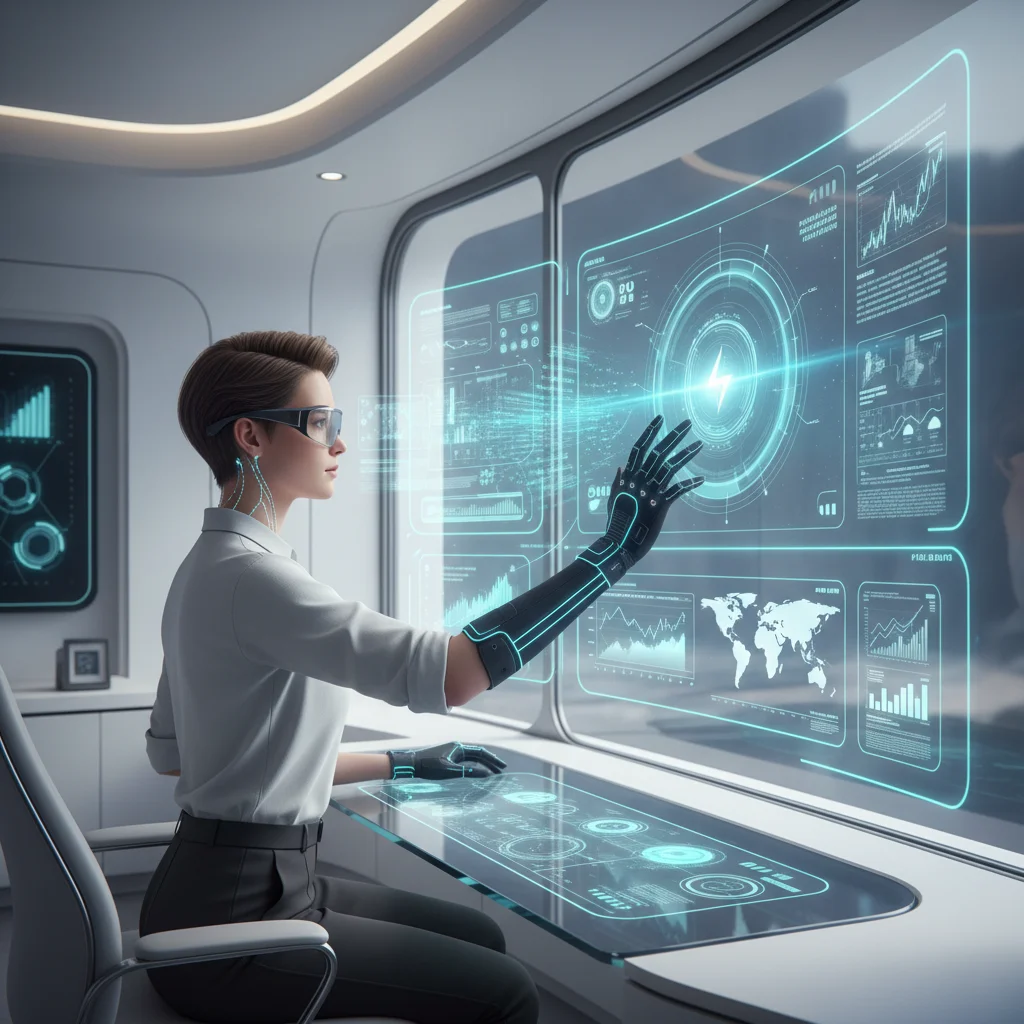
The landscape of technology is in a perpetual state of flux, constantly evolving to offer more intuitive, immersive, and seamless ways for humans to interact with digital systems. In the United States, the pace of innovation in human-computer interaction (HCI) is accelerating, promising a future where our relationship with technology is less about explicit commands and more about natural, almost subconscious engagement. As we look towards 2026, several emerging human interfaces are poised to redefine how we work, play, communicate, and live. This comprehensive exploration delves into the top five transformative interfaces that are not just on the horizon but are already beginning to shape our reality.
From the subtle whispers of our thoughts directly controlling machines to the tactile sensation of virtual objects, these advancements represent a paradigm shift. They move beyond the traditional keyboard and mouse, or even touchscreens, to create a symbiotic relationship between human and machine. Understanding these emerging technologies is crucial for businesses, innovators, and everyday consumers alike, as they will undoubtedly influence product development, user experience design, and even societal norms.
The concept of emerging human interfaces isn’t new; it’s a continuous journey of improvement and innovation. However, the convergence of advanced AI, miniaturization of hardware, and sophisticated sensor technology is pushing the boundaries of what’s possible at an unprecedented rate. Let’s embark on a journey to discover the interfaces that will soon become integral to our digital lives.
1. Brain-Computer Interfaces (BCIs): The Ultimate Frontier of Direct Thought Control
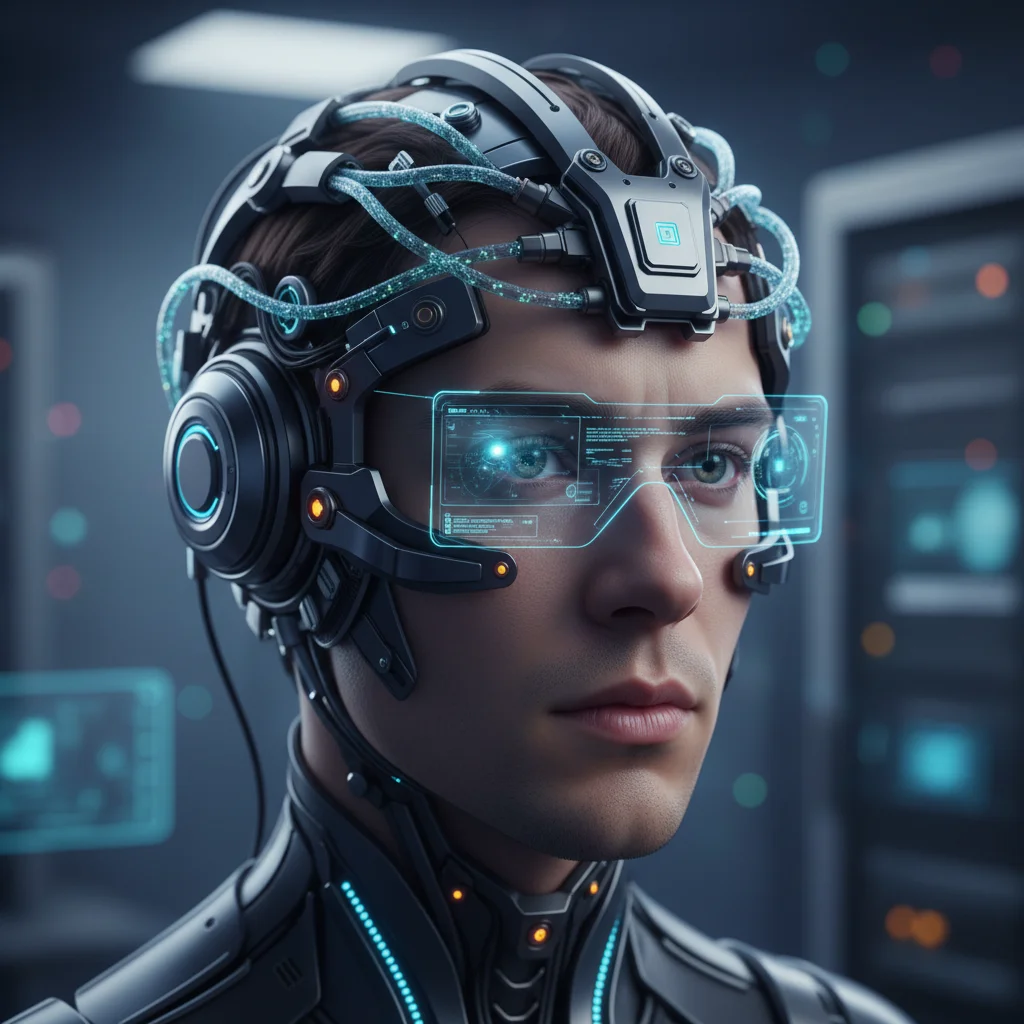
Imagine controlling a computer, navigating a virtual world, or even communicating with others simply by thinking. This seemingly sci-fi concept is rapidly becoming a tangible reality thanks to advancements in Brain-Computer Interfaces (BCIs). BCIs represent the pinnacle of emerging human interfaces, offering a direct communication pathway between the human brain and an external device. By detecting and interpreting brain signals, BCIs bypass traditional muscular pathways, allowing for unparalleled levels of control and interaction.
In the US, significant research and development are being poured into BCIs, with applications ranging from medical rehabilitation to enhanced gaming and productivity. For individuals with severe motor disabilities, BCIs offer a lifeline, enabling them to communicate, operate prosthetic limbs, or control environmental factors with their thoughts. Companies like Neuralink and Synchron are leading the charge, developing implantable and non-invasive BCI devices that promise to revolutionize how we interact with technology.
However, the journey of BCIs is not without its complexities. Ethical considerations surrounding privacy, data security, and the very definition of human autonomy are paramount. The reliability and accuracy of brain signal interpretation also remain a significant challenge, requiring sophisticated algorithms and machine learning to translate complex neural patterns into actionable commands. Despite these hurdles, the potential of BCIs to empower individuals and unlock new dimensions of human-computer interaction is immense, making them a cornerstone of future technological landscapes.
Sub-H2: Non-Invasive vs. Invasive BCIs: A Spectrum of Possibilities
BCIs are broadly categorized into non-invasive and invasive types. Non-invasive BCIs, such as those utilizing electroencephalography (EEG) caps, are easier to deploy and carry fewer risks. They work by detecting electrical activity on the scalp, offering a more accessible entry point into direct thought control. While their signal resolution might be lower compared to invasive methods, ongoing advancements in signal processing and machine learning are significantly improving their capabilities for practical applications like controlling drones, smart home devices, or even for therapeutic purposes.
Invasive BCIs, on the other hand, involve surgically implanting electrodes directly into the brain. This approach offers much higher signal fidelity and precision, making them ideal for complex applications such as controlling advanced prosthetics or restoring sensory functions. Companies like Neuralink are at the forefront of developing highly advanced invasive BCIs, aiming to create seamless, high-bandwidth connections between the brain and digital devices. While these present greater medical and ethical considerations, their potential for profound impact, especially in medical fields, is undeniable. The development of both types of BCIs is critical for the evolution of emerging human interfaces, catering to different needs and risk tolerances.
The future of BCIs in the US by 2026 will likely see a greater emphasis on refining non-invasive technologies for widespread consumer adoption, while invasive solutions continue to advance for specialized medical and high-performance applications. The ethical frameworks and regulatory bodies will also play a crucial role in shaping the responsible development and deployment of these transformative technologies.
2. Advanced Augmented Reality (AR) and Mixed Reality (MR): Blending Digital and Physical Worlds
Augmented Reality (AR) and Mixed Reality (MR) are not entirely new concepts, but their evolution into truly seamless and interactive emerging human interfaces is accelerating rapidly. Unlike Virtual Reality (VR), which immerses users in entirely digital environments, AR overlays digital information onto the real world, while MR allows for interaction with those digital objects as if they were physically present. The US market is witnessing a surge in sophisticated AR/MR solutions, moving beyond smartphone apps to dedicated headsets and smart glasses that promise to transform industries from manufacturing and healthcare to retail and entertainment.
By 2026, we anticipate a significant leap in the capabilities of AR/MR devices. Lighter, more aesthetically pleasing form factors, wider fields of view, and more powerful processing capabilities will make these interfaces indispensable. Imagine surgeons practicing complex procedures on holographic organs, architects visualizing building designs in real-time on a construction site, or consumers trying on virtual clothes that accurately conform to their body shape. These are just a few glimpses into the transformative potential of advanced AR/MR.
Key to this evolution are advancements in spatial computing, AI-powered object recognition, and sophisticated display technologies that reduce latency and improve visual fidelity. Companies like Magic Leap, Microsoft (with HoloLens), and Apple (with its rumored AR devices) are pushing the boundaries, aiming to create intuitive, natural ways for users to interact with digital content in their physical surroundings. The goal is to make the digital layer so integrated that it feels like a natural extension of our perception, enhancing our reality rather than replacing it.
Sub-H2: The Rise of Contextual AR and Spatial Computing
The next generation of AR/MR as emerging human interfaces will heavily rely on contextual understanding and spatial computing. Contextual AR means that the digital information presented to the user is not static but dynamically adapts based on their location, environment, and current task. For instance, walking through a museum, AR glasses could provide detailed information about an exhibit as you look at it, or in a factory, maintenance instructions could appear superimposed on the machinery you are inspecting.
Spatial computing takes this a step further, enabling digital objects to persist in the physical world and interact with it. This means a virtual blueprint laid out in a room would remain there for others to see and collaborate on, even after the original user leaves. This capability fosters shared AR experiences, critical for collaborative work environments and social interactions. The advancements in sensors, AI, and cloud processing are making these persistent, interactive digital overlays increasingly feasible, moving AR/MR from novelty to essential tools that augment our daily lives and professional endeavors. The blend of digital and physical will become so seamless that distinguishing between the two will become increasingly irrelevant, ushering in an era of truly hybrid realities.
3. Haptic Feedback and Tactile Interfaces: Bringing Touch to the Digital Realm
While visual and auditory interfaces have dominated human-computer interaction for decades, the sense of touch has largely been an untapped frontier. Haptic feedback and tactile interfaces are rapidly changing this, emerging as critical components of a more holistic and immersive interaction experience. These emerging human interfaces allow users to feel digital information, providing sensations like texture, pressure, vibration, and even the shape of virtual objects.
The applications for advanced haptic technology are vast and impactful. In gaming, haptic suits and gloves can make virtual worlds feel incredibly real, allowing players to feel the recoil of a weapon, the impact of a blow, or the sensation of rain. In medical training, surgeons can practice delicate procedures on virtual patients, feeling the resistance of tissue and the precision required for incisions. For product design, engineers can virtually ‘touch’ and manipulate prototypes, receiving tactile feedback on their designs before physical production.
Innovations in haptic actuators, smart materials, and sophisticated control algorithms are driving this revolution. Companies are developing everything from advanced haptic gloves and vests to integrated haptic feedback in touchscreens and even full-body haptic suits. The goal is to move beyond simple vibrations to nuanced, high-fidelity tactile sensations that significantly enhance the user’s perception and interaction with digital content. By 2026, we expect haptic feedback to be a standard feature in many consumer electronics and professional tools, making digital interactions more intuitive and engaging.
Sub-H2: Beyond Vibration: The Nuance of Advanced Haptics
Traditional haptic feedback often relied on simple vibrations to convey information. However, the next generation of emerging human interfaces in haptics is far more sophisticated. This involves technologies like electrovibration, which can simulate different textures on a smooth surface by altering friction, or localized force feedback, which can create the sensation of pushing against a solid virtual object.
Microfluidics and shape memory alloys are also being explored to create more dynamic and adaptable tactile experiences, allowing interfaces to change their physical properties in response to digital commands. Imagine a smartphone screen that can dynamically create raised buttons or textures on demand, or a wearable device that can simulate the precise grip of a virtual tool. These advancements are crucial for creating truly immersive AR/VR experiences, enhancing accessibility for visually impaired users, and enabling new forms of remote interaction where touch is paramount. The integration of advanced haptics will bridge the gap between our physical and digital worlds, making our interactions richer and more intuitive.
4. Gesture and Gaze Tracking: Intuitive Control Through Natural Movement and Eye Focus
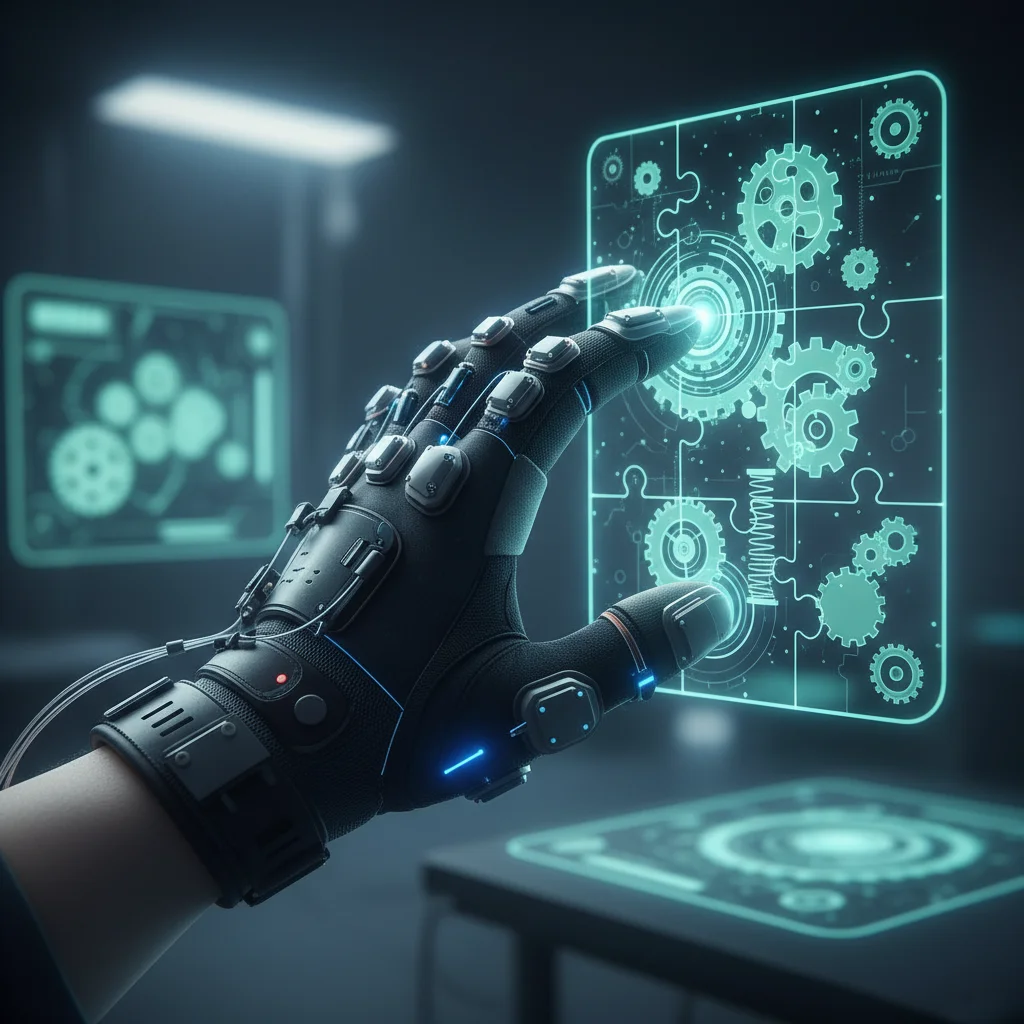
The desire for more natural and intuitive control over technology has led to significant advancements in gesture and gaze tracking, positioning them as key emerging human interfaces. Moving beyond the click and swipe, these technologies allow users to interact with digital systems using hand movements, body postures, and even the direction of their gaze, eliminating the need for physical controllers or touchpoints.
Gesture control has evolved from simple predefined movements to highly nuanced and customizable interactions. Using advanced cameras, depth sensors, and AI-powered computer vision, systems can now recognize complex hand gestures, full-body movements, and even subtle facial expressions. This opens up possibilities for touchless interaction in public spaces, sterile environments, or for controlling complex machinery without needing to physically touch a panel.
Gaze tracking, on the other hand, allows users to select, activate, or navigate interfaces simply by looking at them. This technology is particularly valuable for accessibility, enabling individuals with limited mobility to control computers and communicate. In consumer applications, gaze tracking can enhance user experience by predicting intent, optimizing content display, and creating more responsive interfaces in AR/VR environments. Imagine navigating a menu on a smart display just by glancing at options, or scrolling through a document by moving your eyes down the page.
Sub-H2: The Power of Multimodal Interaction and Contextual Awareness
The true power of gesture and gaze tracking as emerging human interfaces lies in their integration into multimodal interaction systems. This means combining them with other input methods, such as voice commands or haptic feedback, to create a richer and more robust user experience. For example, a user might gaze at an object in an AR environment, then use a hand gesture to manipulate it, and finally utter a voice command to confirm an action.
Contextual awareness is also paramount. Advanced gesture and gaze tracking systems are becoming intelligent enough to understand the user’s intent based on their environment, task, and even emotional state. This allows for more natural and less frustrating interactions, as the system can anticipate needs and offer relevant options without explicit prompting. As these technologies mature, they will make our interactions with technology feel less like operating a machine and more like communicating with an intelligent assistant, blending seamlessly into our daily routines and professional workflows.
5. Advanced Voice AI and Conversational Interfaces: Beyond Simple Commands
Voice AI and conversational interfaces have already made significant inroads into our lives through smart speakers and virtual assistants. However, their evolution as emerging human interfaces is far from complete. By 2026, we anticipate a leap from simple command-and-response systems to highly sophisticated, context-aware, and emotionally intelligent conversational AI that can engage in natural, flowing dialogue.
The next generation of voice AI will be characterized by enhanced natural language understanding (NLU) and natural language generation (NLG), allowing systems to comprehend complex queries, understand nuances, and respond in a manner that is indistinguishable from human conversation. This includes understanding sarcasm, tone, and even inferring intent from incomplete sentences. The goal is to move beyond transactional interactions to genuine conversational partnerships that can assist with complex tasks, offer personalized advice, and even provide emotional support.
Furthermore, these advanced voice interfaces will be deeply integrated into other emerging technologies. Imagine conversing with an AR assistant that can not only understand your spoken commands but also visually identify objects in your environment and provide relevant information or actions. Or a BCI that translates your thoughts into spoken words, allowing for seamless communication without physical effort. The ubiquity of voice AI will make technology more accessible to everyone, reducing the learning curve and enabling more intuitive control over an ever-expanding array of devices and services.
Sub-H2: Emotional Intelligence and Personalization in Conversational AI
A key differentiator for future voice AI as emerging human interfaces will be their ability to detect and respond to human emotions. Through advancements in sentiment analysis and affective computing, conversational interfaces will be able to understand if a user is frustrated, happy, or confused, and adjust their responses accordingly. This emotional intelligence will lead to more empathetic and helpful interactions, particularly in customer service, healthcare, and educational settings.
Personalization will also reach new heights. Voice AI will learn individual preferences, speaking styles, and even predict needs based on past interactions and contextual data. This means a truly personalized digital assistant that anticipates what you might need before you even ask, offering proactive assistance and tailored information. The integration of memory and long-term learning will enable these systems to build deep, ongoing relationships with users, transforming them from mere tools into invaluable digital companions that augment our cognitive abilities and streamline our daily lives.
The Converging Future of Emerging Human Interfaces
The five emerging human interfaces discussed – Brain-Computer Interfaces, Advanced AR/MR, Haptic Feedback, Gesture and Gaze Tracking, and Advanced Voice AI – are not developing in isolation. Their true transformative power will come from their convergence and synergistic integration. Imagine a future where you can think a command (BCI), see it executed in your physical space via holograms (AR/MR), feel the virtual object (haptics), refine the interaction with a subtle hand gesture (gesture control), and receive verbal confirmation from an intelligent assistant (voice AI).
This multimodal, seamless interaction paradigm represents the ultimate goal of HCI innovation. In the US, companies and researchers are actively working on platforms that can integrate these diverse input and output modalities, creating a unified and intuitive user experience. The challenges are significant, encompassing everything from technical interoperability and data synchronization to ethical considerations and user adoption.
However, the rewards are even greater. A future where technology adapts to us, rather than us adapting to technology, promises to unlock unprecedented levels of productivity, creativity, and human potential. These emerging human interfaces will not just change how we use devices; they will fundamentally alter our relationship with information, our perception of reality, and our capacity to interact with the world around us. Staying informed about these developments is not just about keeping up with technology; it’s about preparing for a future that is rapidly approaching and will redefine the very essence of human experience.