Space Tech Commercialization: 2026 Opportunities for US Startups and Investors

Space Tech Commercialization: 2026 Opportunities for US Startups and Investors
The dawn of the New Space era has ushered in an unprecedented landscape of innovation, investment, and commercial potential. As we look towards 2026, the trajectory for space tech commercialization continues its steep ascent, presenting remarkable Space Tech Opportunities for US startups and savvy investors. This isn’t just about rockets and satellites anymore; it’s about a sprawling ecosystem of services, data, manufacturing, and exploration that is fundamentally reshaping our terrestrial and extraterrestrial futures.
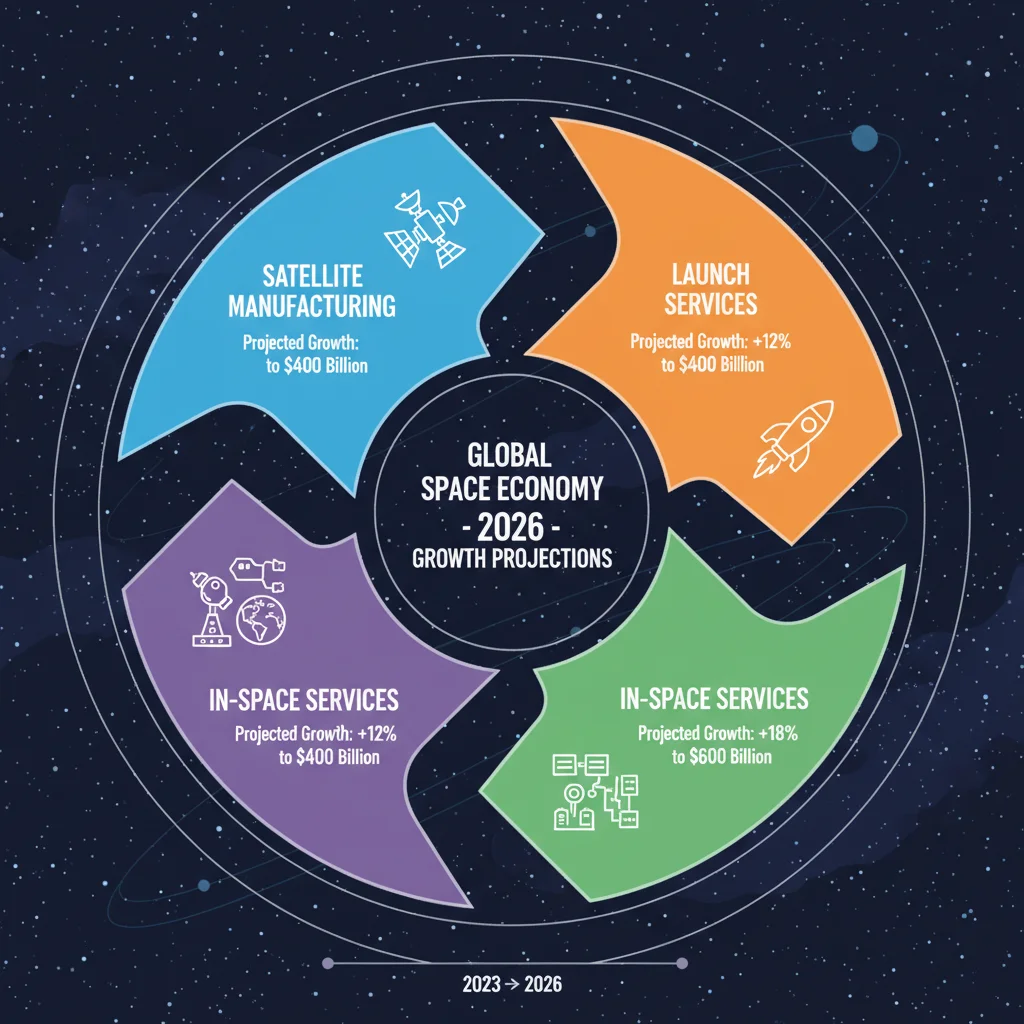
The global space economy is projected to reach well over a trillion dollars in the coming decades, and a significant portion of this growth is driven by commercial ventures. For the United States, a historical leader in space exploration, this translates into a fertile ground for entrepreneurial spirit and strategic capital. Understanding the nuances of this rapidly evolving market is crucial for anyone looking to make a significant impact or gain a substantial return on investment. This comprehensive guide will delve into the key areas of growth, the challenges to overcome, and the specific Space Tech Opportunities that will define 2026 for US players.
The Exploding Landscape of Space Tech Commercialization
Space tech commercialization is no longer the exclusive domain of government agencies. Private companies, from agile startups to established corporations, are driving innovation at an astonishing pace. This shift is fueled by declining launch costs, miniaturization of technology, and an increasing demand for space-derived data and services across various industries. The competitive environment is fostering rapid advancements, making 2026 a pivotal year for those poised to capitalize on these trends.
Key Drivers Propelling Space Tech Growth
- Lower Launch Costs: Reusable rocket technology has drastically reduced the cost of sending payloads into orbit, opening up access to space for a wider range of commercial entities.
- Miniaturization and Standardization: Small satellites (CubeSats, nanosats) are making space missions more affordable and accessible, enabling new applications and business models.
- Increased Data Demand: Earth observation, communication, and navigation services are critical for industries like agriculture, logistics, defense, and climate monitoring, driving demand for satellite constellations.
- Government Support and Partnerships: Agencies like NASA are actively fostering commercial partnerships, providing funding, technical expertise, and a pathway for private companies to participate in ambitious missions, including lunar and Martian exploration.
- Private Investment Surge: Venture capital and private equity firms are pouring billions into space tech, recognizing the long-term growth potential and disruptive nature of the sector.
These drivers collectively create a dynamic environment where new Space Tech Opportunities emerge almost daily. For US startups, this means a chance to innovate and lead; for investors, it signals a lucrative, albeit complex, market.
Top Space Tech Opportunities for US Startups in 2026
Identifying the most promising sectors within space tech commercialization is key to strategic planning. In 2026, several areas stand out for their high growth potential and readiness for significant commercial investment and innovation.
1. In-Orbit Services and Manufacturing (IOSM)
The ability to service, refuel, repair, and even manufacture in space is rapidly moving from science fiction to commercial reality. IOSM represents a significant frontier, offering solutions to extend satellite lifespans, mitigate space debris, and enable more complex missions. US startups focusing on robotics, advanced materials for in-space construction, and autonomous rendezvous and docking technologies will find substantial Space Tech Opportunities here.
- Satellite Servicing: Repairing or refueling existing satellites, extending their operational life and reducing the need for costly replacements.
- Space Debris Removal: Developing technologies to actively remove defunct satellites and rocket stages, a growing environmental and operational concern.
- In-Space Assembly & Manufacturing: Building larger structures in orbit that are too big to launch fully assembled, such as large telescopes, solar power arrays, or future space stations. This area benefits from advancements in 3D printing and robotic assembly.
2. Advanced Satellite Constellations and Downstream Applications
While the launch market is maturing, the demand for sophisticated satellite constellations and the data they provide is soaring. Startups can differentiate themselves by focusing on niche applications or by developing innovative ways to process and deliver satellite data.
- Hyperspectral Imaging: Providing highly detailed spectral data for agriculture, environmental monitoring, and defense, offering insights beyond traditional visible light imagery.
- IoT Connectivity from Space: Connecting remote devices and sensors globally, enabling everything from smart agriculture to asset tracking in areas without terrestrial network coverage.
- Enhanced Earth Observation Analytics: Developing AI/ML-powered platforms to extract actionable intelligence from vast amounts of satellite imagery and data, serving sectors like finance, insurance, and urban planning.
- Quantum Communication Satellites: Exploring secure communication networks using quantum entanglement, a nascent but potentially revolutionary field for data security.
3. Lunar Economy and Cislunar Space
With renewed global interest in lunar exploration and the establishment of permanent human presence on the Moon, the cislunar space (the region between Earth and the Moon) is becoming a hotbed for commercial activity. This includes everything from lunar landers and rovers to infrastructure for future lunar bases.
- Lunar Logistics and Transportation: Developing cost-effective and reliable landers and transportation services to deliver payloads to the lunar surface.
- Resource Extraction (In-Situ Resource Utilization – ISRU): Technologies for extracting water ice, helium-3, and other valuable resources from the Moon for propellants, life support, or energy.
- Lunar Infrastructure Development: Creating power generation, communication networks, and habitats for sustained lunar operations.
- Space Tourism and Lunar Experiences: While still in its infancy, the long-term potential for lunar tourism and related services presents significant Space Tech Opportunities.
4. Space-Based Energy and Propulsion
Innovations in power generation and propulsion are critical for expanding humanity’s reach in space. This sector includes both advanced rocket propulsion systems and future concepts like space-based solar power.
- Advanced Propulsion Systems: Developing more efficient and faster propulsion for deep-space missions, such as electric propulsion, nuclear thermal propulsion, or even speculative concepts like fusion propulsion.
- Space-Based Solar Power (SBSP): Technologies for capturing solar energy in orbit and beaming it wirelessly to Earth, offering a potential solution to global energy demands. This requires significant technological breakthroughs in power transmission and orbital infrastructure.
Investment Strategies for Capitalizing on Space Tech Opportunities in 2026
For investors, the space tech sector offers high rewards but also requires a nuanced understanding of the risks and long development cycles. Strategic investment is crucial to navigating this frontier market.
Understanding the Investment Landscape
The space investment landscape is diverse, ranging from early-stage venture capital for disruptive startups to private equity in more mature companies. Public markets also offer exposure through aerospace giants and specialized ETFs.
- Early-Stage VC: High-risk, high-reward investments in startups developing groundbreaking technologies. Due diligence on technical feasibility, team expertise, and market fit is paramount.
- Growth Equity: Investing in companies with proven technology and market traction, helping them scale operations and expand their customer base.
- Strategic Partnerships: Large aerospace companies often invest in or acquire smaller startups to integrate new technologies and capabilities into their portfolios.
Key Investment Considerations
- Longer Timelines: Many space tech ventures have longer development cycles and slower revenue generation compared to typical tech startups. Investors need patience and a long-term perspective.
- Capital Intensity: Developing and deploying space technology is often very capital-intensive. Robust funding rounds are common.
- Regulatory Environment: Space is a heavily regulated domain. Understanding national and international space law, export controls, and licensing requirements is critical.
- Dual-Use Technologies: Many space technologies have both commercial and defense applications, opening up diverse customer bases but also adding regulatory complexities.
- Talent Acquisition: The demand for skilled engineers, scientists, and operational experts in space tech is high. Companies with strong talent pipelines are more attractive.
Investors looking for Investment Strategies in 2026 should consider diversified portfolios, balancing early-stage bets with investments in companies closer to commercialization. Focusing on enabling technologies and infrastructure, rather than just end-user services, can also mitigate risk.
Challenges and Mitigation Strategies for US Startups and Investors
While the opportunities are vast, the space tech sector is not without its challenges. Understanding and proactively addressing these can be the difference between success and failure.
Technological Hurdles
- Reliability and Durability: Space is an unforgiving environment. Technologies must withstand extreme temperatures, radiation, and vacuum for extended periods.
- Scalability: Moving from prototype to mass production for space-qualified components and systems can be complex and expensive.
- Cybersecurity: Protecting space assets and data from cyber threats is increasingly critical, especially for commercial operations.
Financial and Market Challenges
- High Upfront Costs: The initial investment required for R&D, manufacturing, and launch can be prohibitive for many startups.
- Limited Customer Base (Historically): While expanding, the space market still has a relatively smaller customer base compared to traditional tech, making market penetration challenging.
- Insurance Costs: Launch and in-orbit insurance can be very expensive, adding to operational costs.
Regulatory and Policy Landscape
- Evolving Regulations: The rapid pace of innovation often outstrips the development of clear regulatory frameworks, leading to uncertainty.
- International Competition: While the US leads in many areas, other nations are rapidly developing their space capabilities, increasing global competition.
- Space Debris: The growing problem of space debris poses a threat to all orbital assets and requires international cooperation and technological solutions.
Mitigation Strategies
- Strategic Partnerships: Collaborating with established aerospace companies, government agencies, and research institutions can provide access to expertise, funding, and infrastructure.
- Modular Design: Designing systems with modular components can reduce development costs and improve scalability and repairability.
- Dual-Use Focus: Developing technologies with both commercial and government applications can diversify revenue streams and attract broader investment.
- Advocacy and Engagement: Startups and investors should actively engage with policymakers to help shape favorable regulatory environments that foster innovation.
- Robust Risk Management: Implementing comprehensive risk assessment and mitigation strategies, from technical failures to market shifts, is essential.

The Role of Government and Public-Private Partnerships
The US government, particularly through NASA and the Department of Defense, plays a crucial role in fostering Space Tech Opportunities. Public-private partnerships (PPPs) are becoming the norm, accelerating development and de-risking investments.
NASA’s Commercial Programs
NASA’s initiatives like the Commercial Crew Program, Commercial Lunar Payload Services (CLPS), and the International Space Station (ISS) commercialization efforts have proven highly successful. These programs provide funding, technical guidance, and a guaranteed customer for private companies, significantly lowering barriers to entry.
- Commercial Crew Program: Demonstrated the viability of private companies transporting astronauts to the ISS.
- CLPS: Opening up lunar surface access to private companies, driving innovation in lunar landers and payloads.
- ISS Commercialization: Allowing private companies to conduct research, manufacturing, and even host private astronaut missions on the ISS.
Department of Defense (DoD) Engagement
The DoD is a major driver of space tech innovation, particularly in areas like satellite communications, Earth observation for intelligence, and resilient space architectures. Programs like the Space Force’s Space Systems Command (SSC) and various innovation cells actively seek out and fund promising commercial technologies.
- National Security Space: Demand for secure, resilient, and advanced space capabilities for defense and intelligence purposes.
- Rapid Prototyping and Experimentation: DoD initiatives often provide funding for rapid prototyping and demonstrations of new space technologies.
These government engagements provide significant market pull and validation for commercial space ventures, making them attractive to investors. Startups should actively seek out and apply for these programs to accelerate their growth and secure crucial early contracts.
Emerging Trends to Watch in 2026 and Beyond
Beyond the established growth areas, several nascent trends are poised to become significant Space Tech Opportunities in the mid-to-long term. Keeping an eye on these can provide a competitive edge.
Space-Based Computing and Data Centers
The idea of hosting data centers in space, leveraging the vacuum and cold for efficiency, or placing computational power closer to space-based data sources, is gaining traction. This could reduce latency and enhance data processing for critical applications.
Asteroid Mining and Deep Space Resources
While still a distant prospect for large-scale commercialization, foundational technologies for identifying, characterizing, and potentially extracting resources from asteroids are being developed. Early investments in these areas could yield massive returns in the future.
Biotechnology in Space
Microgravity environments offer unique conditions for biological research, drug discovery, and advanced materials science. Startups exploring these applications, particularly those leveraging the ISS or future commercial space stations, could unlock novel medical and industrial solutions.
Sustainable Space Operations
As the orbital environment becomes more crowded, technologies promoting sustainability – such as active debris removal, satellite end-of-life de-orbiting systems, and environmentally friendly propellants – will become increasingly vital and commercially viable.
Conclusion: A Universe of Opportunity Awaits
The year 2026 stands as a beacon for Space Tech Opportunities, particularly for US startups and investors ready to navigate the dynamic and exhilarating New Space economy. From in-orbit services and advanced satellite applications to the burgeoning lunar economy and innovative propulsion systems, the avenues for growth and impact are diverse and profound.
Success in this sector demands not only technological prowess but also strategic vision, robust financial backing, and an adaptability to an ever-changing regulatory and competitive landscape. By understanding the key drivers, focusing on high-potential segments, and leveraging strong partnerships, US companies are uniquely positioned to lead this new era of space commercialization.
For startups, the call to innovate is louder than ever. For investors, the chance to be part of truly transformative ventures is here. The future is being built in space, and 2026 offers a prime window to stake a claim in this incredible journey. The next generation of trillion-dollar industries will undoubtedly emerge from the boundless potential of space tech commercialization, and those who act strategically now will reap the greatest rewards.