
Strategic Asset Allocation for 2026: A US Market-Focused Approach to Maximizing Returns
As we navigate the dynamic landscape of global finance, investors are constantly seeking robust strategies to optimize their portfolios. The year 2026, while still a few years away, requires foresight and meticulous planning, especially when focusing on the US market. Strategic asset allocation is not merely about picking the right stocks; it’s about constructing a resilient, growth-oriented portfolio that can withstand economic headwinds and capitalize on emerging opportunities. This comprehensive guide delves into the nuances of US Market Allocation 2026, providing actionable insights to help you maximize your returns.
Understanding the Macroeconomic Landscape for 2026
Before diving into specific asset classes, it’s crucial to establish a foundational understanding of the potential macroeconomic environment influencing the US Market Allocation 2026. Several key factors will likely shape the economic narrative:
- Inflation Trends: Will inflation stabilize at target levels, or will persistent pressures necessitate further monetary policy adjustments? Understanding this will dictate the attractiveness of various asset classes, particularly fixed income and inflation-protected securities.
- Interest Rate Environment: The Federal Reserve’s stance on interest rates will profoundly impact borrowing costs, corporate profitability, and the valuation of equities. A higher-for-longer scenario could favor value stocks, while a pivot to lower rates might boost growth-oriented sectors.
- Geopolitical Developments: Global political stability and trade relations can introduce significant volatility. While the US market often exhibits resilience, international events can still create ripple effects, affecting supply chains, commodity prices, and investor sentiment.
- Technological Advancements: Rapid innovation, particularly in areas like artificial intelligence, biotechnology, and clean energy, will continue to drive economic growth and create new investment opportunities within the US market. Identifying these secular trends early will be key.
- Consumer Spending and Labor Market: The health of the US consumer, supported by a robust labor market, is a primary driver of economic activity. Monitoring employment figures, wage growth, and consumer confidence will offer vital clues about the economy’s trajectory towards 2026.
- Fiscal Policy: Government spending and taxation policies can stimulate or constrain economic growth. Potential infrastructure projects, tax reforms, or regulatory changes could create significant shifts in specific industries.
These interconnected factors will collectively determine the risk and reward profiles of different assets, forming the bedrock of our US Market Allocation 2026 strategy.
Core Principles of Strategic Asset Allocation
Strategic asset allocation is a long-term investment approach that involves setting target allocations for various asset classes and then periodically rebalancing the portfolio to maintain those allocations. This disciplined approach is crucial for investors aiming to maximize returns while managing risk effectively, especially when preparing for specific periods like 2026 within the US market.
Diversification: The Cornerstone of Resilience
Diversification is more than just spreading your investments across different assets; it’s about combining assets that react differently to various market conditions. For your US Market Allocation 2026, this means considering a blend of:
- Equities (Stocks): Representing ownership in companies, equities offer the potential for significant capital appreciation. Within the US market, this includes large-cap, mid-cap, and small-cap stocks, as well as growth and value investing styles.
- Fixed Income (Bonds): Bonds provide income and can act as a buffer during equity market downturns. The US bond market offers a wide range, from Treasury bonds to corporate bonds, each with varying risk and return profiles.
- Real Estate: Direct or indirect investments in real estate can provide income, diversification, and a hedge against inflation. Real Estate Investment Trusts (REITs) are a popular way to gain exposure without direct ownership.
- Commodities: Gold, oil, and other raw materials can offer a hedge against inflation and currency devaluation. Their performance often has a low correlation with traditional financial assets.
- Alternative Investments: This broad category includes private equity, hedge funds, and other less liquid assets that can offer unique return streams and further diversification.
The goal is to create a portfolio where the poor performance of one asset class is offset by the strong performance of another, smoothing out returns over the long term, a key objective for any US Market Allocation 2026 plan.
Risk Tolerance and Time Horizon
Your personal risk tolerance and investment time horizon are paramount in determining your optimal asset allocation. A younger investor with a longer time horizon might favor a higher allocation to equities, given their greater growth potential and ability to recover from market downturns. Conversely, an investor nearing retirement might opt for a more conservative allocation, emphasizing capital preservation and income generation. For 2026 planning, assess how these factors align with your financial goals.
Rebalancing: Maintaining Your Strategic Path
Market fluctuations will inevitably cause your portfolio’s actual asset allocation to drift from your target. Rebalancing involves periodically adjusting your portfolio back to its original strategic weights. This discipline forces you to sell assets that have performed well (and are now overweighted) and buy assets that have underperformed (and are now underweighted), effectively buying low and selling high. Regular rebalancing is a critical component of any successful US Market Allocation 2026 strategy.
Key US Market Sectors to Watch for 2026
Focusing specifically on the US market, certain sectors are poised to play a significant role in investment returns leading up to and into 2026. Identifying these sectors and understanding their drivers is essential for a forward-looking allocation strategy.
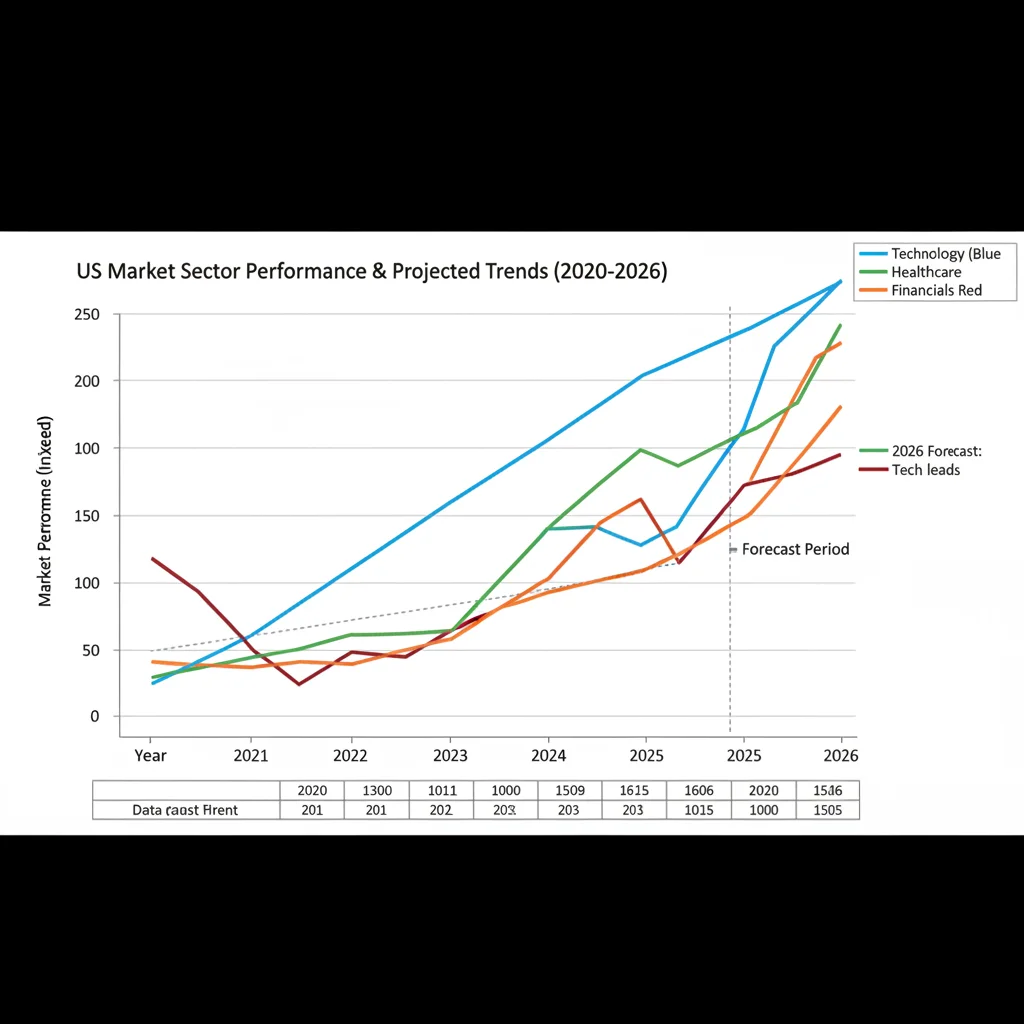
Technology Sector: Continued Innovation and Disruption
The technology sector remains a powerhouse in the US economy. By 2026, advancements in artificial intelligence (AI), machine learning, cloud computing, cybersecurity, and the metaverse are expected to continue their rapid expansion. Companies at the forefront of these innovations will likely see sustained growth. However, regulatory scrutiny and competition will also be key factors to monitor. Investors should consider both established tech giants and emerging disruptors for their US Market Allocation 2026.
Healthcare and Biotechnology: Demographic Tailwinds and Innovation
The aging global population and continuous breakthroughs in medical science ensure that the healthcare and biotechnology sectors will remain robust. Personalized medicine, gene therapies, and digital health solutions are areas of significant growth potential. The US, with its leading research institutions and pharmaceutical companies, is at the forefront of these developments. This sector offers defensive qualities combined with high-growth opportunities, making it a compelling component of a diversified portfolio for 2026.
Renewable Energy and Clean Technology: The Green Transition
The global push towards sustainability and decarbonization will continue to accelerate, making renewable energy and clean technology a critical growth area. US companies involved in solar, wind, battery storage, electric vehicles, and energy efficiency solutions are set to benefit from supportive government policies, increasing consumer demand, and technological improvements. This sector offers both environmental impact and strong investment potential for your US Market Allocation 2026.
Financial Services: Adapting to a New Era
The financial sector, encompassing banking, insurance, and wealth management, will likely undergo further transformation driven by digitalization and evolving regulatory frameworks. Fintech innovations will continue to reshape how financial services are delivered. The sector’s performance will be closely tied to interest rate movements and overall economic health. Identifying agile and technologically advanced financial institutions will be crucial.
Consumer Discretionary vs. Consumer Staples
The distinction between consumer discretionary (non-essential goods and services) and consumer staples (essential goods) becomes important depending on the economic outlook. If consumer confidence remains high and economic growth is robust, discretionary spending could thrive. Conversely, in periods of uncertainty, consumer staples tend to be more resilient. A balanced approach, or a tilt based on your economic forecast for 2026, is advisable for your US Market Allocation 2026.
Crafting Your US Market Allocation Strategy for 2026
With macroeconomic insights and sector-specific considerations in mind, let’s outline a framework for building your US Market Allocation 2026 strategy. Remember, this is a general guide, and personalized advice from a financial advisor is always recommended.
Sample Portfolio Models (Illustrative)
Here are a few illustrative models, ranging from aggressive to conservative, to help you visualize potential allocations. These percentages are broad guidelines and should be adjusted based on your individual circumstances.
Aggressive Portfolio (Higher Growth Potential, Higher Risk)
- US Equities (70-80%):
- Large-Cap Growth (30-35%): Focus on dominant tech and innovative companies.
- Mid-Cap & Small-Cap Growth (15-20%): Exposure to emerging leaders and higher growth potential.
- Sector-Specific ETFs (20-25%): Targeted exposure to high-growth areas like AI, Biotech, Clean Energy.
- Fixed Income (10-15%):
- Short-to-Intermediate Term US Treasuries/High-Quality Corporate Bonds: For liquidity and some stability.
- Alternatives/Commodities (5-10%):
- Gold, diversified commodity ETFs, or select private equity exposure for enhanced diversification.
Moderate Portfolio (Balanced Growth and Risk)
- US Equities (50-60%):
- Large-Cap Blend (25-30%): Mix of growth and value in established companies.
- Mid-Cap Value/Growth (10-15%): Broader market exposure.
- Sector-Specific ETFs (15-20%): Balanced exposure across technology, healthcare, and industrials.
- Fixed Income (30-40%):
- Intermediate-Term US Treasuries, Investment-Grade Corporate Bonds: Core stability and income.
- Real Estate/Commodities (5-10%):
- REITs, diversified commodity funds for diversification and inflation hedge.
Conservative Portfolio (Capital Preservation, Income Focus)
- US Equities (20-30%):
- Large-Cap Value/Dividend Stocks (15-20%): Stable companies with consistent dividends.
- Consumer Staples/Utilities (5-10%): Defensive sectors for stability.
- Fixed Income (60-70%):
- Long-Term US Treasuries, High-Quality Municipal Bonds, Investment-Grade Corporate Bonds: Emphasis on income and capital preservation.
- Cash/Cash Equivalents (5-10%):
- For liquidity and further capital preservation.
Considerations for Each Asset Class in 2026
- US Equities: Focus on companies with strong balance sheets, sustainable competitive advantages, and exposure to secular growth themes. Valuations will be crucial; avoid overpaying for growth.
- US Fixed Income: Monitor interest rate expectations closely. Shorter-duration bonds might be preferable if rates are expected to rise, while longer-duration bonds could offer more yield if rates stabilize or fall. Quality is paramount in a potentially volatile environment.
- Real Estate (US): Residential real estate might face affordability challenges, but commercial segments like data centers, logistics, and certain healthcare facilities could offer robust returns. REITs provide liquidity and diversification.
- Commodities: Gold may act as a safe haven, while industrial commodities could benefit from infrastructure spending and manufacturing growth.
Risk Management Strategies for Your 2026 Portfolio
Even the most meticulously planned US Market Allocation 2026 strategy needs robust risk management. Market volatility, unforeseen economic shocks, and geopolitical events can all impact your portfolio. Here are key strategies to mitigate these risks:

Systematic Rebalancing
As discussed, periodic rebalancing helps maintain your desired risk profile. Whether you rebalance quarterly, semi-annually, or annually, stick to a consistent schedule. This prevents any single asset class from dominating your portfolio due to strong performance, which could inadvertently increase your risk exposure.
Hedging Strategies
For sophisticated investors, hedging can be used to protect against specific risks. This might involve using options or futures contracts to mitigate currency risk, interest rate risk, or even broad market downturns. However, hedging can be complex and costly, so it’s best suited for experienced investors or those working with professional advisors.
Emergency Fund and Liquidity
Ensure you have a sufficient emergency fund (3-6 months of living expenses) in highly liquid assets outside your investment portfolio. This prevents you from being forced to sell investments at an inopportune time to cover unexpected expenses, preserving your long-term US Market Allocation 2026 strategy.
Diversification Beyond Asset Classes
Consider diversifying within asset classes. For example, within US equities, don’t put all your eggs in one sector. Spread your investments across different industries, market capitalizations (large, mid, small), and investment styles (growth, value). Similarly, in fixed income, diversify across different maturities and issuers.
Regular Review and Adjustment
While strategic asset allocation is long-term, it’s not set in stone. The macroeconomic environment, your personal financial situation, and market conditions can change. Conduct an annual review of your portfolio and your financial goals. Be prepared to make tactical adjustments to your US Market Allocation 2026 if fundamental shifts occur, but avoid reactionary decisions based on short-term market noise.
The Role of Behavioral Finance in Asset Allocation
Even the most perfectly constructed US Market Allocation 2026 strategy can be derailed by behavioral biases. Understanding these biases is crucial for maintaining discipline and achieving long-term success.
- Herd Mentality: The tendency to follow the crowd, buying what everyone else is buying and selling what everyone else is selling. This often leads to buying high and selling low. Stick to your predefined strategy.
- Confirmation Bias: Seeking out information that confirms your existing beliefs while ignoring contradictory evidence. Be open to new data and challenge your assumptions regularly.
- Loss Aversion: The psychological tendency to prefer avoiding losses over acquiring equivalent gains. This can lead to holding onto losing investments too long or selling winning investments too soon.
- Overconfidence: Believing you have superior knowledge or control over market outcomes. This can lead to excessive risk-taking.
- Anchoring: Over-relying on the first piece of information encountered (the ‘anchor’) when making decisions. For example, anchoring to a past stock price when assessing its current value.
By recognizing these cognitive pitfalls, investors can make more rational decisions, adhere to their strategic asset allocation, and avoid costly emotional errors, thereby safeguarding their US Market Allocation 2026 plan.
Implementing Your US Market Allocation 2026 Strategy
Once you’ve designed your optimal US Market Allocation 2026, the next step is effective implementation. This involves choosing the right investment vehicles and platforms.
Investment Vehicles
- Exchange-Traded Funds (ETFs): ETFs offer diversified exposure to specific sectors, indices, or asset classes with low expense ratios. They are highly liquid and can be bought and sold like stocks. They are excellent tools for implementing broad asset class exposure within the US market.
- Mutual Funds: Actively managed mutual funds offer professional management but typically come with higher fees. Index mutual funds, similar to ETFs, provide broad market exposure at lower costs.
- Individual Stocks and Bonds: For investors with the time and expertise, direct investment in individual stocks and bonds allows for precise portfolio construction. However, this requires significant research and carries higher idiosyncratic risk.
- Robo-Advisors: These automated platforms offer algorithm-driven portfolio management, often at a lower cost than traditional human advisors. They are excellent for new investors or those who prefer a hands-off approach to asset allocation and rebalancing.
Choosing a Brokerage Platform
Select a brokerage platform that aligns with your investment style and needs. Consider factors such as:
- Fees and Commissions: Look for platforms with low or no trading commissions and reasonable expense ratios for funds.
- Investment Options: Ensure the platform offers the range of investment vehicles you need to execute your US Market Allocation 2026.
- Tools and Resources: Access to research, analytical tools, and educational content can be invaluable.
- Customer Service: Reliable customer support is important for resolving any issues that may arise.
Conclusion: Building a Resilient and Profitable US Market Portfolio for 2026
Strategic asset allocation for 2026, with a keen focus on the US market, is a multifaceted endeavor that requires a blend of macroeconomic understanding, sector-specific insights, disciplined execution, and robust risk management. The US market, with its innovation, economic resilience, and diverse opportunities, remains a cornerstone for many investors seeking long-term growth.
By carefully considering inflation, interest rates, technological advancements, and geopolitical factors, you can position your portfolio to capitalize on emerging trends. Diversification across equities, fixed income, real estate, and potentially commodities, tailored to your individual risk tolerance and time horizon, forms the bedrock of a successful strategy. Regular rebalancing and an awareness of behavioral biases will ensure you stay on track, avoiding emotional decisions that can undermine your goals.
Whether you adopt an aggressive, moderate, or conservative approach, the key is to have a well-defined plan for your US Market Allocation 2026 and the discipline to stick to it. The future of the US market holds immense potential, and with a strategic allocation, you can confidently navigate its complexities and work towards maximizing your returns.
Remember, financial planning is an ongoing process. As 2026 approaches and new data emerges, be prepared to review and adapt your strategy, always keeping your long-term financial objectives at the forefront. Proactive planning today will pave the way for a more secure and prosperous financial future.