US Dividend Growth Investing 2026: Your Guide to Income

Mastering US Dividend Growth Investing in 2026: A Step-by-Step Guide for Income Seekers
Welcome to the definitive guide on US Dividend Growth Investing for 2026. In an ever-evolving financial landscape, the pursuit of reliable income streams remains a cornerstone of successful long-term wealth building. For many investors, dividend growth stocks represent an attractive avenue to achieve this goal, offering both capital appreciation and a steadily increasing income stream. This comprehensive article will equip you with the knowledge, strategies, and insights needed to navigate the world of US dividend growth investing and build a robust, income-generating portfolio.
As we look towards 2026, understanding the nuances of the market, identifying resilient companies, and implementing sound investment principles will be paramount. Whether you are a seasoned investor looking to refine your approach or a newcomer eager to embark on your dividend journey, this guide provides a step-by-step roadmap to help you master US Dividend Growth Investing.
What is US Dividend Growth Investing and Why It Matters in 2026?
At its core, US Dividend Growth Investing is an investment strategy focused on purchasing shares of companies that not only pay dividends but also have a consistent history of increasing those dividends over time. Unlike high-yield dividend investing, which often prioritizes the largest immediate payout, dividend growth investing emphasizes the sustainability and growth rate of the dividend. This distinction is crucial, especially in the current economic climate.
Why is this strategy particularly relevant for 2026? Firstly, steadily growing dividends provide a natural hedge against inflation. As the cost of living rises, a growing income stream helps maintain purchasing power. Secondly, companies that consistently increase their dividends tend to be financially stable, mature businesses with strong competitive advantages, often referred to as ‘moats.’ These companies typically have predictable earnings, robust cash flows, and a commitment to returning value to shareholders, making them more resilient during market downturns.
Furthermore, the compounding effect of reinvesting growing dividends can significantly accelerate wealth accumulation. By automatically buying more shares with the dividends received, investors benefit from both a larger share count and an increasing dividend per share, creating a powerful feedback loop. This strategy has historically outperformed other investment approaches over the long term, offering a compelling blend of income, capital appreciation, and risk mitigation.
The Foundations of Successful US Dividend Growth Investing
Building a successful portfolio centered on US Dividend Growth Investing requires a solid understanding of fundamental principles. It’s not just about picking stocks with a history of dividend increases; it’s about selecting quality businesses that are likely to continue this trend well into the future. Here are the foundational elements:
1. Understanding Dividend Aristocrats and Kings
A great starting point for identifying potential investments in US Dividend Growth Investing is to look at companies that have proven their commitment to shareholders through decades of dividend increases. Dividend Aristocrats are S&P 500 companies that have increased their dividend for at least 25 consecutive years. Dividend Kings are an even more exclusive group, having raised their dividends for 50 or more consecutive years. These companies represent the pinnacle of dividend reliability and financial strength. While past performance is no guarantee of future results, their track records provide strong evidence of durable business models and shareholder-friendly management.
2. Key Metrics for Evaluating Dividend Growth Stocks
Beyond historical performance, several financial metrics are critical for assessing a company’s ability to continue growing its dividend:
- Dividend Payout Ratio: This is the percentage of earnings paid out as dividends. A high payout ratio (e.g., above 70-80% for most industries, though some, like REITs, can be higher) might indicate that the dividend is unsustainable or has little room for growth. A healthy payout ratio suggests that the company has sufficient earnings to cover its dividend and reinvest in the business.
- Free Cash Flow (FCF): Dividends are paid from cash, not just reported earnings. Strong and consistent free cash flow is essential for sustaining and growing dividends. Look for companies with ample FCF after capital expenditures.
- Dividend Growth Rate: While a long history of increases is good, the rate at which the dividend is growing is also important. A company that consistently increases its dividend by 5-10% annually is generally more attractive than one with minimal increases.
- Balance Sheet Strength: A strong balance sheet with manageable debt levels is crucial. Companies with excessive debt may be forced to cut dividends during economic downturns to service their obligations.
- Return on Equity (ROE) & Return on Invested Capital (ROIC): These profitability metrics indicate how efficiently a company is using its capital to generate profits. High and consistent ROE/ROIC often correlates with a company’s ability to fund future dividend growth.
3. Industry Diversification
While focusing on individual companies, it’s vital to diversify across different sectors. Relying too heavily on one industry, even if it has strong dividend payers, can expose your portfolio to unnecessary risk. Consider sectors known for consistent dividend growth, such as consumer staples, healthcare, utilities, and certain technology or industrial companies. Diversification helps smooth out returns and protects your portfolio against sector-specific downturns.
Crafting Your US Dividend Growth Investing Strategy for 2026
With the foundations in place, let’s delve into practical steps for building and managing your US Dividend Growth Investing portfolio in 2026.
Step 1: Define Your Investment Goals
Before you start buying stocks, clearly define what you want to achieve. Are you aiming for a specific income level? Is capital appreciation equally important? What is your time horizon? Your goals will influence your stock selection and portfolio construction. For instance, a retiree seeking immediate income might prioritize companies with higher current yields and stable growth, while a younger investor might focus on companies with lower current yields but higher dividend growth potential.
Step 2: Research and Identify Potential Candidates
This is where the real work begins. Utilize financial screeners to filter companies based on criteria like dividend history (e.g., 10+ years of increases), payout ratio, market capitalization, and industry. Once you have a list, delve deeper into each company’s fundamentals. Read their annual reports (10-K filings), earnings call transcripts, and investor presentations. Understand their business model, competitive landscape, and future growth prospects. Look for companies with sustainable competitive advantages (moats) that protect their profitability and allow them to consistently raise prices or gain market share.
Step 3: Valuation Matters
Even the best companies can be bad investments if you pay too much for them. Valuation is a critical aspect of US Dividend Growth Investing. Common valuation metrics include:
- Price-to-Earnings (P/E) Ratio: Compare a company’s P/E to its historical average and to industry peers.
- Dividend Yield: While not the sole factor, a significantly higher or lower yield compared to historical averages or peers can signal overvaluation or undervaluation, or potential risks/opportunities.
- Discounted Cash Flow (DCF) Analysis: A more advanced method that estimates a company’s intrinsic value based on its projected future cash flows.
Aim to buy quality companies when they are trading at a reasonable or attractive valuation. This provides a margin of safety and enhances your potential for both income and capital gains.
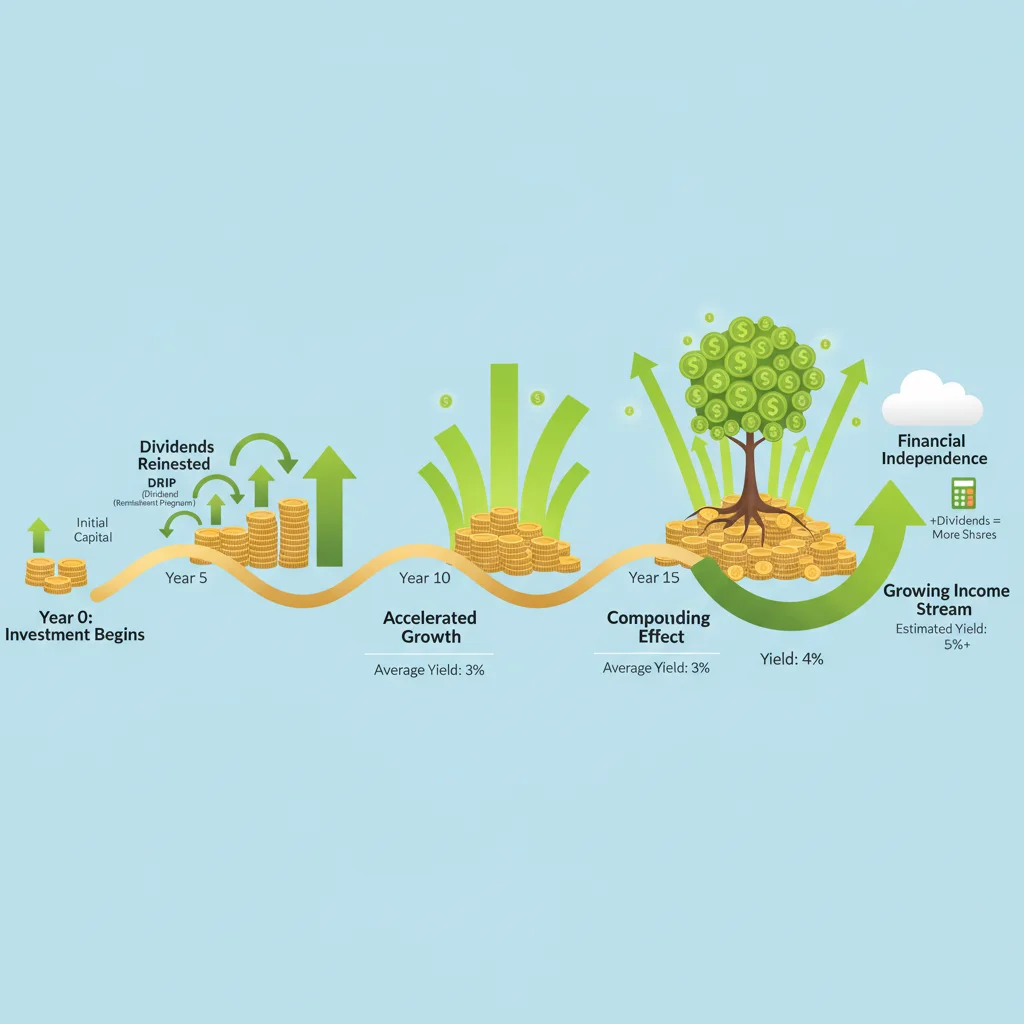
Step 4: Consider Dividend Reinvestment Plans (DRIPs)
For long-term investors, especially those with a significant time horizon, dividend reinvestment can be a game-changer. Many companies offer DRIPs, allowing you to automatically reinvest your cash dividends back into additional shares of the same stock, often commission-free or at a reduced cost. This harnesses the power of compounding, accelerating your share count and future dividend income. Even if a company doesn’t offer a direct DRIP, your brokerage account likely allows you to set up automatic dividend reinvestment.
Step 5: Portfolio Management and Monitoring
Your US Dividend Growth Investing portfolio isn’t a ‘set it and forget it’ endeavor. Regular monitoring is essential. Review your holdings periodically (e.g., quarterly or annually) to ensure they still meet your investment criteria. Key things to monitor include:
- Earnings Reports: Keep an eye on the company’s financial performance.
- Dividend Announcements: Are dividends being increased as expected? Are there any announcements of cuts or suspensions?
- News and Events: Stay informed about any significant news, industry trends, or regulatory changes that could impact your holdings.
- Rebalance as Needed: Over time, some stocks may grow disproportionately, leading to an unbalanced portfolio. Rebalancing involves selling some of your winners and buying more of your underperforming (but still fundamentally strong) assets to maintain your desired asset allocation.
Key Sectors and Trends for US Dividend Growth Investing in 2026
As we head into 2026, certain sectors and trends are particularly noteworthy for US Dividend Growth Investing:
1. Healthcare Sector
The healthcare sector remains a strong contender for dividend growth. Driven by an aging global population, advancements in medical technology, and consistent demand for pharmaceutical products and services, many healthcare companies exhibit stable earnings and a propensity for dividend increases. Look for established pharmaceutical giants, medical device companies, and healthcare REITs.
2. Consumer Staples
Companies that produce essential goods – food, beverages, household products – are often considered defensive investments. Their products are in demand regardless of economic conditions, leading to stable cash flows that support consistent dividend growth. Many Dividend Aristocrats and Kings hail from this sector.
3. Utilities
Utility companies provide essential services like electricity, natural gas, and water. Their regulated nature often leads to predictable earnings and stable dividend payments. While their growth rates may be modest, utilities are excellent for income stability and often offer attractive yields.
4. Technology (Select Companies)
While traditionally known for growth over dividends, an increasing number of mature technology companies are becoming strong dividend payers and growers. Tech giants with dominant market positions and massive free cash flow are now returning significant capital to shareholders. Careful selection is key here, focusing on companies with sustainable business models and a commitment to dividends.
5. Industrials
Diversified industrial companies, often involved in manufacturing, machinery, and infrastructure, can be excellent dividend growers. They benefit from global economic growth and often have long operating histories with a focus on shareholder returns.
Potential Pitfalls to Avoid in US Dividend Growth Investing
While US Dividend Growth Investing is a powerful strategy, it’s not without its risks. Being aware of common pitfalls can help you avoid costly mistakes:
1. Chasing High Yields
A high dividend yield can be enticing, but it can also be a red flag. An unusually high yield might indicate that the market expects a dividend cut, or that the company’s stock price has fallen significantly due to underlying business problems. Always investigate the sustainability of a high yield, focusing on the payout ratio and free cash flow.
2. Neglecting Dividend Safety
A company’s dividend history is important, but future safety is paramount. A long track record doesn’t guarantee future increases if the company’s fundamentals are deteriorating. Always assess the health of the business, its competitive position, and its ability to generate future earnings and cash flow to support dividend payments.
3. Over-Diversification or Under-Diversification
Too few stocks expose you to excessive company-specific risk, while too many stocks can dilute your returns and make it difficult to monitor your holdings effectively. A well-diversified portfolio typically consists of 20-30 high-quality dividend growth stocks across various sectors.
4. Ignoring Valuation
As mentioned earlier, paying too much for even the best company can lead to suboptimal returns. Always consider the valuation of a stock before investing. Patience is a virtue in investing; sometimes, waiting for a better entry point is the smartest move.
5. Emotional Decisions
Market volatility can be unsettling, but making impulsive decisions based on fear or greed is detrimental to long-term success. Stick to your investment plan, rely on your research, and resist the urge to panic sell during downturns or chase hot stocks during upturns. US Dividend Growth Investing is a long-term strategy that rewards patience and discipline.

Building Your US Dividend Growth Investing Portfolio in 2026: A Practical Example
Let’s consider a hypothetical example of how you might approach building a US Dividend Growth Investing portfolio in 2026. This is for illustrative purposes only and not investment advice.
Phase 1: Initial Research and Screening
You start by screening for US companies with:
- Market Cap > $10 Billion (for stability)
- Dividend Payout Ratio < 60% (for safety and growth potential)
- Consecutive Dividend Increases > 10 years
- Positive Free Cash Flow for the last 5 years
This initial screen might yield a list of several hundred companies. You then narrow it down by focusing on sectors you understand and believe have long-term tailwinds.
Phase 2: Deeper Dive and Selection
From your narrowed list, you begin a deeper fundamental analysis. For example, you might look at:
- Company A (Consumer Staples): A global food and beverage giant with a 50+ year history of dividend increases. Strong brand recognition, consistent demand, and a manageable payout ratio. Valuation seems fair based on historical P/E.
- Company B (Healthcare): A leading pharmaceutical company with a robust drug pipeline and a 20+ year track record of dividend growth. Strong cash flow generation and reasonable debt levels.
- Company C (Technology): A dominant software company that recently started paying and growing its dividend, benefiting from recurring revenue and high switching costs for customers. Payout ratio is low, indicating significant room for future growth.
- Company D (Utilities): A major electric utility with a regulated monopoly, providing stable earnings and a consistent, albeit modest, dividend growth rate. Offers a higher current yield for immediate income.
Phase 3: Portfolio Construction and Rebalancing
You decide to allocate your initial capital across these companies, aiming for sector diversification. As time progresses, you monitor their performance. If Company C’s stock price surges and its valuation becomes stretched, you might trim some shares (if it becomes an outsized portion of your portfolio) and reallocate to a fundamentally sound company that is currently undervalued or to increase your position in Company D for more income. You also regularly reinvest the dividends received, leveraging the power of compounding.
The Role of ETFs and Mutual Funds in US Dividend Growth Investing
For investors who prefer a more hands-off approach or want immediate diversification, Exchange Traded Funds (ETFs) and mutual funds focused on US Dividend Growth Investing can be excellent options. These funds hold baskets of dividend-growing stocks, providing instant diversification across numerous companies and sectors. Examples include funds tracking Dividend Aristocrats or other dividend-focused indices.
When selecting a dividend growth ETF or mutual fund, consider:
- Expense Ratio: Lower fees mean more of your returns stay in your pocket.
- Underlying Index: Understand the methodology the fund uses to select its holdings.
- Diversification: Ensure the fund provides adequate diversification across sectors and company sizes.
- Dividend History of the Fund: While not the same as individual stocks, look at the fund’s income distribution history.
These funds can serve as a core component of your portfolio, allowing you to benefit from the dividend growth strategy without the need for extensive individual stock research.
Conclusion: Your Path to Financial Freedom with US Dividend Growth Investing in 2026
US Dividend Growth Investing offers a compelling path to building long-term wealth and generating a steadily increasing income stream. By focusing on financially sound companies with a proven commitment to returning value to shareholders, you can construct a resilient portfolio capable of weathering market fluctuations and providing a reliable source of passive income.
As you embark on or continue your dividend growth journey in 2026, remember the importance of patience, discipline, and continuous learning. Start with clear goals, conduct thorough research, pay attention to valuation, and diversify wisely. Whether you choose to invest in individual stocks or utilize dividend growth ETFs, the principles outlined in this guide will serve as your compass.
Embrace the power of compounding, reinvest your dividends, and watch as your income stream grows year after year. With a strategic approach to US Dividend Growth Investing, you are not just investing in stocks; you are investing in your financial future, building a legacy of income and wealth that can support your goals for decades to come. The journey to financial freedom is within reach, and dividend growth stocks can be a powerful vehicle to get you there.