Navigating the 15% Corporate Minimum Tax: Impact on U.S. Tech Giants 2026

The global economic landscape is in constant flux, and few changes reverberate as widely as shifts in corporate tax policy. One such monumental alteration, the 15% corporate minimum tax, is poised to reshape the financial strategies and operational blueprints of U.S. tech giants. As we approach Q1 2026, the implications of this tax are becoming clearer, demanding meticulous analysis and proactive adjustments from some of the world’s most influential companies. This comprehensive article delves into the intricacies of this new tax regime, exploring its genesis, its direct and indirect financial impacts, and the strategic maneuvers U.S. tech behemoths are likely to employ to navigate this new fiscal reality.
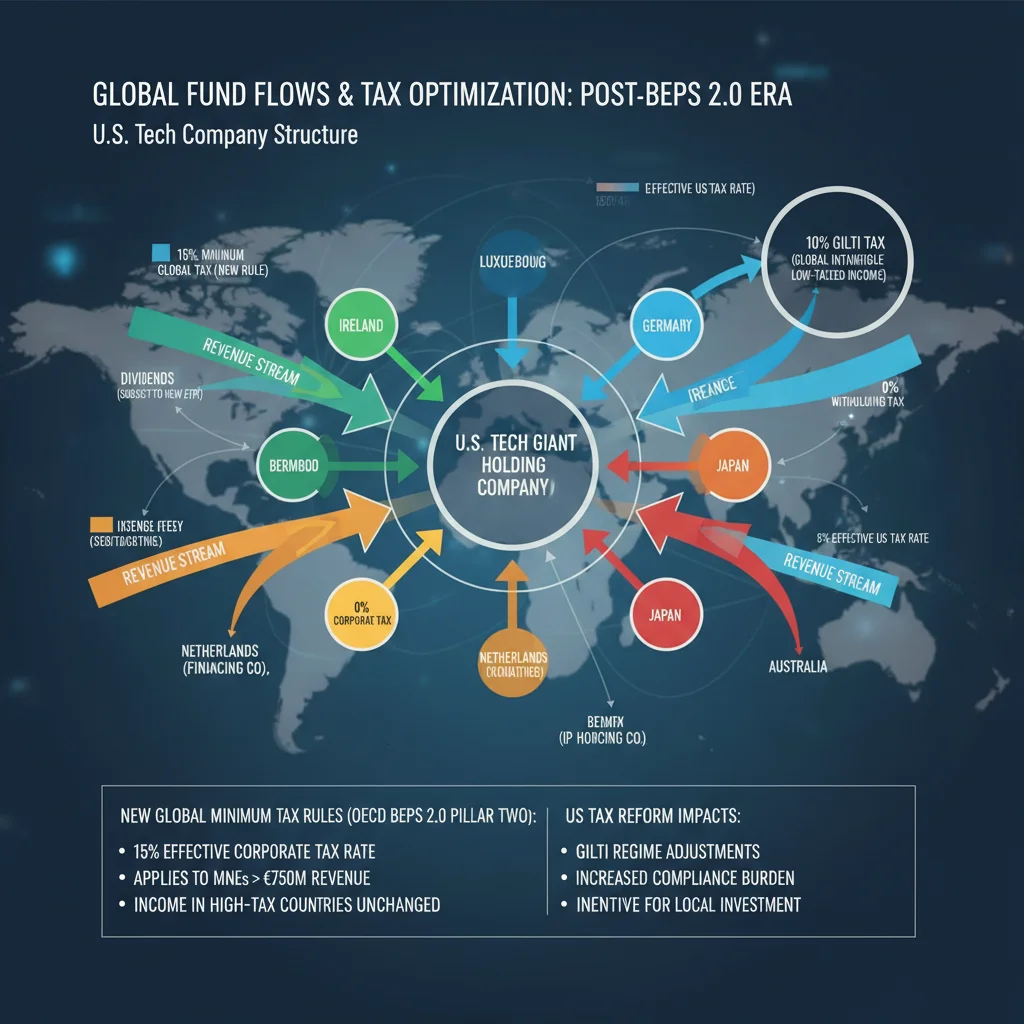
The concept of a global corporate minimum tax has been a topic of intense international debate for years, primarily driven by concerns over tax avoidance and profit shifting by multinational corporations. The Organization for Economic Co-operation and Development (OECD) and the G20, through their Inclusive Framework on Base Erosion and Profit Shifting (BEPS), have been at the forefront of this initiative. The ultimate goal is to ensure that large multinational enterprises (MNEs) pay a fair share of tax wherever they operate, reducing the incentive for companies to relocate profits to low-tax jurisdictions. The 15% corporate minimum tax, often referred to as Pillar Two of the OECD’s BEPS initiative, represents a significant step towards achieving this objective.
For U.S. tech giants, many of whom operate vast global networks and have historically leveraged international tax structures to optimize their effective tax rates, this new minimum tax presents both challenges and opportunities. The first quarter of 2026 is critical, as it marks a period where these companies will begin to fully grapple with the immediate financial ramifications and the need for significant strategic recalibrations. Understanding the nuances of this tax, from its calculation mechanisms to its enforcement, is paramount for investors, policymakers, and the companies themselves.
Understanding the 15% Corporate Minimum Tax: Genesis and Mechanics
The journey to the 15% corporate minimum tax began with a growing international consensus that the existing global tax system was ill-equipped to handle the complexities of the modern digital economy. For decades, multinational corporations, particularly those in the tech sector, have been able to book profits in jurisdictions with minimal corporate tax rates, leading to what many perceived as an unfair advantage and a race to the bottom in global tax competition. This phenomenon eroded national tax bases and fueled public discontent.
The OECD/G20 Inclusive Framework, comprising over 140 countries and jurisdictions, embarked on a mission to address these issues. Pillar One of this initiative focuses on reallocating a portion of MNEs’ profits to market jurisdictions, regardless of physical presence. Pillar Two, which includes the 15% corporate minimum tax, aims to put a floor on corporate tax competition by ensuring that MNEs with revenues above a certain threshold (typically €750 million) pay a minimum effective tax rate of 15% on their profits in each jurisdiction where they operate.
The mechanics of the 15% corporate minimum tax are complex, involving several interlocking rules. The primary components are the Income Inclusion Rule (IIR) and the Undertaxed Profits Rule (UTPR). The IIR generally requires a parent entity to pay a top-up tax on the low-taxed income of its constituent entities. If the IIR does not apply, or does not fully apply, the UTPR acts as a backstop, denying deductions or requiring an equivalent adjustment to the extent that the low-taxed income of a constituent entity is not subject to the IIR. This layered approach ensures that the minimum tax is applied broadly across an MNE’s global operations.
For U.S. tech giants, the implementation of these rules means a significant shift from their current tax planning strategies. Many of these companies have sophisticated international structures, often involving intellectual property (IP) holdings in low-tax jurisdictions. The new rules will effectively neutralize the tax benefits of such structures if the effective tax rate in those jurisdictions falls below 15%. This necessitates a thorough re-evaluation of their global operating models and financial reporting.
Direct Financial Impact on U.S. Tech Giants in Q1 2026
The direct financial impact of the 15% corporate minimum tax on U.S. tech giants in Q1 2026 is expected to be substantial. These companies, characterized by their high profitability, extensive international operations, and often significant intangible assets, are precisely the type of entities the minimum tax targets. The immediate consequence will be an increase in their global effective tax rates, leading to a reduction in net income. While the exact figures will vary for each company, preliminary analyses suggest that the aggregate tax burden for the sector could increase by billions of dollars annually.
One of the primary areas of impact will be on profit centers currently located in low-tax jurisdictions. Many U.S. tech companies have established subsidiaries or branches in countries like Ireland, Singapore, and the Netherlands, which historically offered favorable tax regimes. Under the new rules, any income generated in these jurisdictions that is taxed below 15% will be subject to a top-up tax, either in the parent company’s home country (U.S. in this case) or in other jurisdictions where the MNE operates, via the UTPR. This effectively eliminates the arbitrage opportunities that these companies have long utilized.
Moreover, the tax will likely affect how companies value and manage their intellectual property. IP, such as patents, copyrights, and trademarks, is often the most valuable asset for tech firms. Historically, companies have transferred IP to low-tax entities to reduce their overall tax liability. The 15% corporate minimum tax will diminish the attractiveness of such strategies, potentially leading to a re-evaluation of IP ownership structures and transfer pricing policies. Companies may choose to repatriate IP or restructure their licensing agreements to align with the new tax environment.
Beyond the direct tax liability, there will be significant compliance costs. The complexity of the Pillar Two rules requires substantial investment in tax technology, professional expertise, and internal systems to accurately track and report effective tax rates across all jurisdictions. Companies will need to gather granular financial data from each entity, perform intricate calculations, and ensure compliance with various national implementations of the OECD rules. This administrative burden, particularly in the initial phases of implementation, will add another layer of cost and complexity.
Strategic Adjustments and Operational Realignment
In response to the 15% corporate minimum tax, U.S. tech giants are already embarking on a series of strategic adjustments and operational realignments. These strategies are multifaceted, encompassing tax planning, supply chain optimization, and even broader business model considerations.
One immediate strategic response is the re-evaluation of global tax planning. Companies are moving away from purely tax-driven location decisions for profit centers and towards a more substance-based approach. This means ensuring that entities in various jurisdictions have genuine economic activity, employees, and assets commensurate with the profits booked there. The days of ‘shell companies’ in low-tax havens are increasingly numbered. Tech firms might consider consolidating operations in fewer, strategically chosen locations that offer a balance of market access, talent pool, and a reasonably stable tax environment, even if the headline tax rates are higher than previously sought-after jurisdictions.
Supply chain optimization is another critical area. For tech companies, this often involves the flow of digital services, data, and intellectual property. The new tax regime will force a re-examination of where these elements are created, processed, and consumed. Companies may look to localize more of their operations and value creation in their primary markets to reduce the complexity and potential tax exposure associated with cross-border transactions. This could involve shifting R&D centers, data storage facilities, or customer support operations to higher-tax jurisdictions if it aligns with broader business objectives and reduces overall tax risk.
Furthermore, U.S. tech giants will need to enhance their internal financial reporting and tax compliance systems. The level of data granularity required for Pillar Two compliance is unprecedented. Companies will need robust enterprise resource planning (ERP) systems, tax engines, and data analytics capabilities to accurately calculate effective tax rates for each jurisdiction and prepare the necessary disclosures. This technological investment is not merely a compliance cost but an opportunity to gain deeper insights into their global financial performance and tax footprint.
Human capital strategies will also be impacted. As companies re-evaluate their global footprint, there may be shifts in where talent is located. High-value functions, particularly those related to IP development and management, might be moved to jurisdictions where the overall economic and tax environment is more favorable under the new rules. This could lead to a redistribution of highly skilled jobs globally, with potential implications for national economies.
Impact on Innovation and Global Competitiveness
The 15% corporate minimum tax is not just a financial calculation; it has broader implications for innovation and the global competitiveness of U.S. tech giants. One of the long-standing arguments against higher corporate taxes is their potential to stifle innovation by reducing available capital for R&D and expansion. While the minimum tax aims to level the playing field, its impact on innovation warrants close scrutiny.
Tech companies are characterized by their heavy investment in research and development (R&D). Many countries offer R&D tax credits and incentives to encourage innovation. The interaction of these incentives with the 15% corporate minimum tax is complex. While certain qualified R&D expenditures may be excluded from the tax base under the Substance-Based Income Exclusion (SBIE) of Pillar Two, companies will still need to carefully assess whether the overall tax burden allows for continued aggressive investment in innovation. A higher effective tax rate could, in theory, reduce the after-tax return on R&D investments, potentially leading to a more cautious approach to pioneering new technologies.
However, it is also plausible that the minimum tax could lead to more efficient allocation of capital. By reducing the incentive to prioritize tax optimization over genuine economic substance, companies might direct resources towards more productive investments in core business activities, talent development, and market expansion. This could foster a healthier, more sustainable innovation ecosystem in the long run.
In terms of global competitiveness, U.S. tech giants operate in a fiercely competitive environment. The minimum tax aims for a global standard, but its implementation across different countries will vary, and there will inevitably be transitional periods and potential loopholes. The key for U.S. firms will be to adapt swiftly and effectively to these changes to maintain their competitive edge. Companies that successfully integrate the new tax rules into their strategic planning will be better positioned to navigate the evolving global market.
Another factor is the potential impact on mergers and acquisitions (M&A) activity. Tax considerations play a significant role in M&A deals. The new tax regime could influence valuation models and the attractiveness of targets, particularly those with complex international structures. Companies might favor acquisitions that offer synergies in terms of operational efficiency and tax compliance under the new rules, rather than those primarily driven by tax arbitrage opportunities.
The Role of Government and Future Outlook
The role of governments, particularly the U.S. government, is crucial in shaping the future outlook of the 15% corporate minimum tax. While the U.S. has its own Global Intangible Low-Taxed Income (GILTI) regime, which shares some similarities with Pillar Two, there are important differences. The U.S. will need to consider how to align its domestic tax policies with the international framework to ensure its companies are not unduly disadvantaged or subject to double taxation.
Policymakers will face the delicate task of balancing the desire for increased tax revenue with the need to foster innovation and maintain the competitiveness of U.S. tech companies. This could involve exploring new forms of tax incentives for R&D, streamlining compliance processes, or providing guidance that helps companies transition smoothly to the new regime. The U.S. Treasury and IRS will be instrumental in issuing regulations and interpretations that clarify the application of the rules for American businesses.
Looking beyond Q1 2026, the long-term outlook for the 15% corporate minimum tax will depend on several factors. The first is the degree of global adoption and consistent implementation. If a significant number of countries fail to implement the rules effectively, it could create new distortions and competitive imbalances. The OECD continues to monitor implementation and provide guidance, but national variations are inevitable.
Secondly, the agility and adaptability of U.S. tech giants themselves will be key. Companies that view this as a purely compliance exercise rather than a strategic inflection point may struggle. Those that proactively re-engineer their global operations, invest in robust tax governance, and integrate tax planning into their core business strategy will likely emerge stronger.
The tax landscape is unlikely to remain static. As the digital economy evolves, so too will the challenges and opportunities for corporate taxation. Future amendments to Pillar Two, or entirely new tax initiatives, may emerge. U.S. tech giants will need to cultivate a culture of continuous adaptation and foresight to navigate these ongoing changes successfully.

Case Studies and Sector-Specific Nuances
While the 15% corporate minimum tax applies broadly to large MNEs, its impact will manifest differently across various sub-sectors within the tech industry. Examining specific case studies, even hypothetically, can illuminate these nuances.
Consider a hypothetical large software-as-a-service (SaaS) provider. Its primary assets are often intellectual property and extensive cloud infrastructure. If this company has historically licensed its IP through a subsidiary in a low-tax jurisdiction, generating significant profits there, the new minimum tax will directly target those profits. The company might respond by repatriating the IP, or by increasing the substance of its operations in the low-tax jurisdiction to qualify for the SBIE. Alternatively, it might re-evaluate its pricing models for international customers to absorb some of the increased tax costs.
For a hardware manufacturer with complex global supply chains and manufacturing facilities in various countries, the impact might involve a detailed analysis of intercompany transactions and transfer pricing. If components are manufactured in a jurisdiction with a low effective tax rate, and then sold to other group entities, the minimum tax could trigger adjustments. The company might need to adjust its transfer pricing policies to ensure that profits are allocated in a manner consistent with the new rules, potentially leading to higher tax liabilities in certain manufacturing hubs.
E-commerce giants, with their vast customer bases and localized operations in numerous countries, face challenges related to the allocation of marketing and distribution profits. If a company has a significant market presence in a country but generates profits in a low-tax jurisdiction through centralized functions, the minimum tax could lead to a reallocation of those profits, increasing the tax burden in the market jurisdiction. These companies will need sophisticated systems to track and attribute profits accurately across their global footprint.
The financial services sector within tech, such as fintech companies, might also face unique challenges. These companies often deal with highly regulated environments and cross-border financial transactions. The interaction of financial regulations with the 15% corporate minimum tax will add another layer of complexity, requiring careful navigation to ensure both regulatory compliance and tax efficiency.
Ultimately, the sector-specific nuances underscore the need for tailored strategies. A one-size-fits-all approach will not suffice. Each U.S. tech giant will need to conduct a thorough internal assessment, leveraging expert tax and legal advice, to develop a strategy that is optimal for its unique business model, operational footprint, and financial structure. The companies that demonstrate the greatest agility and foresight in this regard will be best positioned to thrive in the post-Q1 2026 tax environment.
The Broader Economic Implications for the U.S.
The implementation of the 15% corporate minimum tax has broader economic implications for the United States beyond the direct impact on tech giants. These implications touch upon federal revenue, international trade, and the overall attractiveness of the U.S. as a hub for innovation and business.
From a federal revenue perspective, the U.S. Treasury could see an increase in tax receipts if U.S. parent companies are required to pay top-up taxes on their low-taxed foreign income under the Income Inclusion Rule. This additional revenue could be used to fund domestic programs, reduce deficits, or potentially even lead to future tax reforms. However, the exact amount of increased revenue is difficult to predict and will depend on how comprehensively other countries implement Pillar Two and how U.S. tech companies adjust their operations.
The tax could also influence international trade and investment flows. If the U.S. is perceived as having a robust and fair tax system that aligns with global standards, it could enhance its reputation as a stable and predictable investment destination. Conversely, if U.S. companies face disproportionate burdens or if the U.S. tax system is seen as misaligned with the global framework, it could potentially deter foreign direct investment or encourage U.S. companies to shift certain activities overseas to countries with more favorable (or simply more aligned) tax regimes.
Furthermore, the competitiveness of U.S. tech companies on the global stage is a significant concern. While the minimum tax aims to level the playing field, its complex implementation could create temporary disadvantages for companies that are slower to adapt. Maintaining a competitive edge will require not only corporate agility but also supportive government policies that ensure U.S. businesses can compete fairly against their international counterparts. This includes advocating for consistent global implementation and potentially offering domestic incentives to offset any unintended negative consequences.
There’s also the question of how the tax might affect smaller tech companies and startups. While the €750 million revenue threshold means most startups won’t be directly subject to Pillar Two, the broader changes in the tax environment could have ripple effects. For instance, if larger tech companies restructure their supply chains or investment strategies, it could impact the ecosystem of smaller businesses that rely on these giants as clients, partners, or acquisition targets. The overall health and dynamism of the U.S. tech sector are intricately linked to the financial stability and strategic decisions of its largest players.
Conclusion: A New Era for Corporate Taxation
The 15% corporate minimum tax marks the dawn of a new era in global corporate taxation. For U.S. tech giants, Q1 2026 will serve as a critical juncture, demanding a fundamental re-evaluation of their global financial structures, operational strategies, and tax compliance frameworks. The days of aggressive tax arbitrage solely based on jurisdictional differences are drawing to a close, replaced by a mandate for greater economic substance and transparency.
The direct financial impact will be felt through increased tax liabilities and compliance costs. However, the indirect effects on innovation, global competitiveness, and the broader U.S. economy are equally significant and will unfold over time. Companies that view this change not merely as a regulatory burden but as an opportunity to optimize their business models for a more transparent and equitable global tax environment will be the ones that thrive.
Navigating this complex landscape requires a multi-pronged approach: robust internal systems for data collection and analysis, expert tax and legal counsel, proactive engagement with policymakers, and a willingness to adapt business strategies to align with the new global consensus. The U.S. tech sector, known for its innovation and resilience, is uniquely positioned to lead in this adaptation. By embracing these changes, U.S. tech giants can not only ensure compliance but also contribute to a more stable and fair global economic system, cementing their leadership in a world where tax responsibility is increasingly paramount.