Mastering U.S. Data Privacy Compliance: A 4-Step Guide for 2026

Mastering U.S. Data Privacy Compliance: A 4-Step Guide for 2026
In the rapidly evolving digital landscape, data has become the new oil, fueling innovation and economic growth. However, with this immense power comes significant responsibility, particularly regarding the protection of personal information. For businesses operating in the United States, navigating the labyrinthine world of US Data Privacy Compliance is not merely a legal obligation; it’s a critical component of maintaining consumer trust, avoiding hefty fines, and securing a competitive edge. As we approach 2026, the patchwork of state-level data privacy laws continues to expand and mature, making a proactive and strategic approach more essential than ever.
The absence of a comprehensive federal data privacy law in the U.S. has led to a complex ecosystem where businesses must understand and adhere to a myriad of state-specific regulations. From the pioneering California Consumer Privacy Act (CCPA) and its successor, the California Privacy Rights Act (CPRA), to emerging laws in Virginia (CDPA), Colorado (CPA), Utah (UCPA), and Connecticut (CTDPA), and many others on the horizon, the compliance burden is substantial. This guide aims to demystify the process, offering a practical, 4-step framework to help your organization achieve and maintain robust US Data Privacy Compliance in 2026 and beyond.
Ignoring these regulations is no longer an option. The financial penalties for non-compliance can be severe, not to mention the irreparable damage to reputation and consumer loyalty. A study by IBM revealed that the average cost of a data breach reached a record high in 2023, underscoring the financial imperative of strong data protection. This article will provide actionable insights, best practices, and a clear roadmap to ensure your business is not just compliant, but also a leader in responsible data stewardship. Let’s embark on this journey to strengthen your organization’s data privacy posture.
Step 1: Understand the Landscape & Identify Applicable Laws
The first and arguably most crucial step in achieving US Data Privacy Compliance is to thoroughly understand the regulatory landscape and identify which laws apply to your organization. This requires a comprehensive assessment of your business operations, the types of data you collect, where your customers reside, and your revenue thresholds.
The Evolving Regulatory Environment
While the European Union’s GDPR set a global benchmark, the U.S. approach has been incremental, with states taking the lead. Here’s a snapshot of the key state laws you need to be aware of:
- California Consumer Privacy Act (CCPA) / California Privacy Rights Act (CPRA): Effective since 2020 and significantly expanded in 2023, the CPRA grants California consumers extensive rights, including the right to know, delete, correct, and opt-out of the sale or sharing of their personal information. It also introduced the California Privacy Protection Agency (CPPA) for enforcement.
- Virginia Consumer Data Protection Act (VCDPA): Effective January 1, 2023, the VCDPA applies to businesses that conduct business in Virginia or produce products or services targeted to Virginia residents, and that control or process personal data of at least 100,000 consumers or control or process personal data of at least 25,000 consumers and derive over 50% of gross revenue from the sale of personal data.
- Colorado Privacy Act (CPA): Also effective January 1, 2023, the CPA has similar thresholds and grants Colorado residents rights comparable to those in California and Virginia, with some nuanced differences in definitions and enforcement.
- Utah Consumer Privacy Act (UCPA): Effective December 31, 2023, the UCPA is generally considered more business-friendly, with higher thresholds and a more limited scope of consumer rights compared to other state laws.
- Connecticut Data Privacy Act (CTDPA): Effective July 1, 2023, the CTDPA closely mirrors the VCDPA and CPA, providing Connecticut residents with similar data rights and imposing obligations on businesses meeting certain processing and revenue thresholds.
- Other State Laws: Many other states, including Iowa, Indiana, Montana, Tennessee, and Delaware, have enacted their own privacy laws, or have legislation pending. The trend indicates a continued proliferation of state-level regulations, making a multi-state compliance strategy indispensable for businesses operating nationwide.
Determining Applicability: Key Questions to Ask
To identify which of these laws apply to your organization, consider the following:
- Where do your customers reside? The geographic location of your consumers is paramount. If you collect data from residents of California, Virginia, Colorado, Utah, or Connecticut, their respective laws likely apply.
- What types of personal data do you collect? Different laws define ‘personal data’ or ‘personal information’ with slight variations, often including identifiers, commercial information, biometric data, internet activity, and sensitive personal information.
- What are your revenue and processing thresholds? Most state laws have thresholds based on annual gross revenue, the number of consumers whose data is processed, or the percentage of revenue derived from data sales. For example, some laws apply to businesses exceeding $25 million in annual gross revenue, or those processing personal data of 100,000 or more consumers.
- Do you sell or share personal data? The definitions of ‘sale’ and ‘sharing’ can be broad, encompassing more than just monetary exchange. Understanding these definitions is critical for compliance with opt-out rights.
- Are you a ‘controller’ or ‘processor’? Most laws differentiate between data controllers (who determine the purposes and means of processing personal data) and data processors (who process data on behalf of a controller). Each role carries distinct responsibilities.
Conducting a thorough legal review with privacy counsel is highly recommended to accurately determine your compliance obligations across all relevant jurisdictions. This foundational step sets the stage for all subsequent US Data Privacy Compliance efforts.
Step 2: Conduct a Data Inventory & Mapping Exercise
Once you understand which laws apply, the next critical step is to gain a clear, comprehensive understanding of the data flowing through your organization. This is achieved through a meticulous data inventory and mapping exercise. Without knowing what data you have, where it is, who has access to it, and how it’s used, effective US Data Privacy Compliance is virtually impossible.
What is Data Inventory and Mapping?
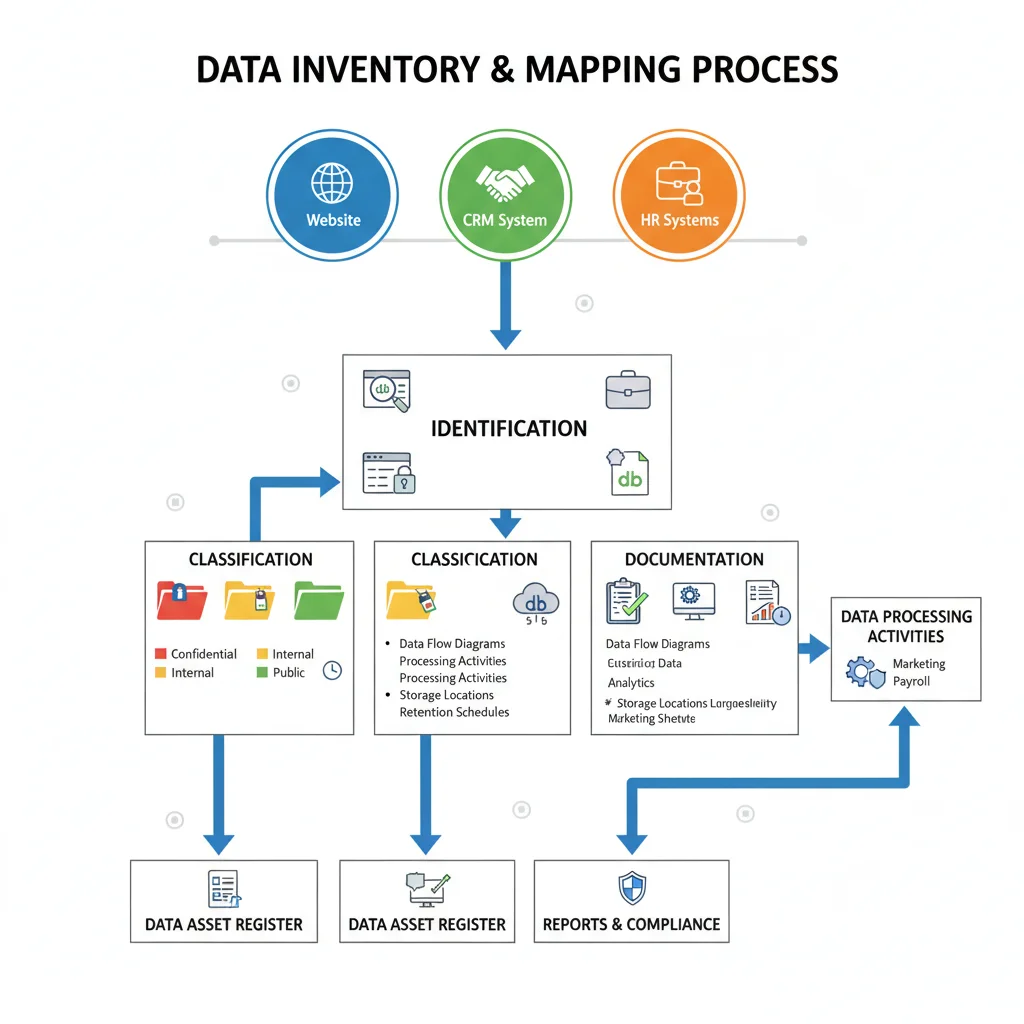
Data Inventory: This involves identifying and cataloging all personal data collected, processed, and stored by your organization. It’s like creating a detailed list of every piece of personal information you possess.
Data Mapping: This takes the inventory a step further by visualizing the data’s lifecycle. It tracks how data flows through your systems, from collection to storage, processing, sharing, and eventual deletion. It answers questions like: Where did this data come from? Where is it stored? Who has access to it? Why is it being processed? How long is it retained? And when is it deleted?
Key Components of a Data Inventory and Mapping Exercise:
-
Identify Data Sources: List all points where personal data enters your organization. This could include:
- Website forms (contact us, newsletters, registrations)
- CRM systems
- Marketing automation platforms
- HR systems (employee data)
- Customer service interactions (chat logs, call recordings)
- Third-party data providers
- Cookies and tracking technologies
-
Classify Data Types: Categorize the personal data you collect. This includes:
- Identifiers: Names, email addresses, IP addresses, unique identifiers.
- Sensitive Personal Information: (as defined by various laws) Social Security numbers, driver’s license numbers, racial or ethnic origin, religious or philosophical beliefs, union membership, genetic data, biometric data, health data, sexual orientation, precise geolocation data.
- Commercial Information: Purchase history, products or services considered.
- Internet Activity: Browsing history, search history, interaction with websites/applications.
- Inferences: Derived information used to create consumer profiles.
-
Determine Purposes of Processing: For each type of data, clearly define why you are collecting and processing it. This is crucial for establishing a lawful basis for processing and for fulfilling transparency requirements. Examples include: fulfilling orders, providing customer support, marketing, internal analytics, improving services, etc.
-
Identify Data Locations & Storage: Where is the data physically and logically stored? This includes:
- Internal servers
- Cloud storage providers (AWS, Azure, Google Cloud)
- Third-party SaaS applications
- Physical files
-
Assess Data Access & Sharing: Who has access to the data internally? Do you share data with third parties (vendors, partners, advertisers)? If so, what data is shared, and for what purpose? This is vital for vendor management and data processing agreements.
-
Establish Data Retention Policies: How long do you keep different types of data? Retention periods should be aligned with legal requirements, business needs, and the principle of data minimization.
-
Document Data Flows: Create visual diagrams or detailed written descriptions of how data moves through your organization. This helps identify risks and ensures that data processing aligns with privacy policies.
Benefits of Data Inventory and Mapping:
- Enhanced Compliance: Provides the foundational knowledge needed to meet transparency, access, deletion, and opt-out rights.
- Risk Mitigation: Helps identify areas of non-compliance, data vulnerabilities, and potential privacy risks.
- Improved Data Governance: Fosters better management of data assets and understanding of data lifecycle.
- Operational Efficiency: Streamlines data management processes and reduces unnecessary data storage.
- Trust Building: Demonstrates a commitment to responsible data handling, building consumer confidence.
This exercise is not a one-time event. It should be an ongoing process, regularly reviewed and updated as your business operations, data processing activities, and the regulatory landscape evolve. Robust data inventory and mapping are indispensable for achieving sustainable US Data Privacy Compliance.
Step 3: Develop & Implement Robust Privacy Policies & Procedures
With a solid understanding of applicable laws and a comprehensive data inventory, the next step is to translate that knowledge into actionable policies and procedures. This involves crafting clear, compliant privacy notices, establishing internal protocols for handling data subject requests, and implementing strong data security measures. This is where your commitment to US Data Privacy Compliance becomes operational.
Crafting Compliant Privacy Notices and Policies
-
Public-Facing Privacy Policy: Your website’s privacy policy is often the first point of contact for consumers regarding your data practices. It must be:
- Comprehensive: Clearly explain what personal data is collected, the purposes for collection, categories of sources, categories of third parties with whom data is shared, and the specific rights consumers have under applicable state laws (e.g., right to know, delete, correct, opt-out).
- Accessible: Easy to find on your website, typically linked in the footer.
- Understandable: Written in plain, unambiguous language, avoiding legal jargon where possible.
- Up-to-Date: Regularly reviewed and updated to reflect changes in your data practices or new legal requirements.
-
Cookie Policy/Notice: If your website uses cookies or similar tracking technologies, a separate or integrated cookie policy is essential. It should detail:
- Types of cookies used (e.g., essential, analytics, advertising).
- Purposes for which cookies are used.
- How users can control or opt-out of cookies (e.g., through a cookie consent banner).
-
Internal Privacy Policies & Procedures: These govern how your employees handle personal data. Key internal policies include:
- Data Handling Guidelines: Protocols for collecting, storing, accessing, and disposing of personal data.
- Data Breach Response Plan: A clear, step-by-step plan for identifying, containing, assessing, and notifying authorities and affected individuals in the event of a data breach.
- Employee Training: Mandatory training programs to ensure all staff understand their roles and responsibilities in upholding data privacy.
- Third-Party Vendor Management: Procedures for vetting vendors, ensuring they meet privacy standards, and establishing data processing agreements (DPAs) that comply with relevant laws.
Operationalizing Consumer Rights Requests (DSRs/DSARs)
All major U.S. state privacy laws grant consumers specific rights regarding their personal data. Your organization must have robust procedures in place to handle these requests efficiently and compliantly:
- Right to Know: Consumers can request disclosure of specific pieces of personal information collected about them, categories of sources, business purposes for collection, and categories of third parties with whom data is shared.
- Right to Delete: Consumers can request the deletion of their personal information, with certain exceptions.
- Right to Correct: Consumers can request the correction of inaccurate personal information.
- Right to Opt-Out: Consumers have the right to opt-out of the sale or sharing of their personal information for cross-context behavioral advertising. For sensitive personal information, an opt-in mechanism may be required.
- Right to Limit Use and Disclosure of Sensitive Personal Information: Under the CPRA, consumers can limit the use and disclosure of their sensitive personal information.
To operationalize these rights:
- Designate Channels: Provide clear, accessible methods for consumers to submit requests (e.g., web forms, toll-free numbers, email addresses).
- Verification Process: Implement a robust identity verification process to prevent fraudulent requests, ensuring you only disclose or delete data for the rightful individual.
- Response Timelines: Adhere strictly to the legally mandated response timelines (typically 45 days, with a possible 45-day extension).
- Internal Workflow: Establish clear internal workflows for receiving, processing, and fulfilling requests, involving relevant departments (IT, legal, customer service).
- Record Keeping: Maintain detailed records of all requests received, verification steps taken, and actions performed.

Implementing Data Security Measures
While not exclusively privacy laws, most U.S. state privacy regulations implicitly or explicitly require organizations to implement reasonable security measures to protect personal data. This includes:
- Access Controls: Limiting access to personal data on a need-to-know basis.
- Encryption: Encrypting data at rest and in transit.
- Regular Security Audits: Conducting periodic vulnerability assessments and penetration testing.
- Employee Training: Educating employees on cybersecurity best practices and responsible data handling.
- Incident Response: Having a well-defined and tested data breach response plan.
Developing and implementing these policies and procedures is foundational to demonstrating accountability and achieving sustainable US Data Privacy Compliance. These are living documents and processes that require continuous attention and adaptation.
Step 4: Continuous Monitoring, Training & Adaptation
Achieving US Data Privacy Compliance is not a one-time project; it’s an ongoing commitment. The regulatory landscape is dynamic, technology evolves rapidly, and business practices change. Therefore, the final step involves establishing mechanisms for continuous monitoring, regular employee training, and agile adaptation to new challenges and requirements.
Regular Audits and Assessments
To ensure ongoing compliance, your organization should implement a schedule for regular privacy audits and assessments. These should include:
- Internal Audits: Periodically review your data processing activities, privacy policies, and procedures against current legal requirements and best practices. This can help identify gaps before they lead to non-compliance.
- External Audits/Assessments: Consider engaging third-party privacy experts to conduct independent assessments. Their objective perspective can uncover blind spots and provide valuable recommendations.
- Data Protection Impact Assessments (DPIAs) / Privacy Impact Assessments (PIAs): For new projects, technologies, or significant changes to data processing activities, conduct DPIAs/PIAs to identify and mitigate privacy risks proactively. Many state laws, like the VCDPA and CPA, explicitly require these for certain high-risk processing activities.
- Vendor Reviews: Regularly review the privacy and security practices of your third-party vendors who process personal data on your behalf. Ensure their contracts (Data Processing Agreements) remain compliant and that they adhere to agreed-upon standards.
Ongoing Employee Training and Awareness
Your employees are your first line of defense against privacy breaches and non-compliance. A robust, ongoing training program is essential:
- Mandatory Initial Training: All new employees should receive comprehensive privacy training as part of their onboarding.
- Annual Refresher Training: Conduct annual training sessions for all employees to keep them updated on current privacy laws, company policies, and best practices.
- Role-Specific Training: Provide specialized training for employees in roles that involve handling personal data directly (e.g., IT, HR, marketing, customer service).
- Awareness Campaigns: Use internal communications (newsletters, posters, intranet updates) to maintain a high level of privacy awareness throughout the organization.
- Phishing Simulations: Regularly conduct phishing simulations to test employee vigilance and educate them on common cyber threats.
Training should cover topics such as identifying personal data, handling data subject requests, data minimization, data security best practices, and the consequences of non-compliance.
Adapting to Regulatory Changes and New Technologies
The U.S. data privacy landscape is constantly evolving. New state laws are enacted, existing laws are amended, and court rulings can change interpretations. Furthermore, new technologies introduce novel data processing challenges. Your compliance program must be agile enough to adapt:
- Stay Informed: Designate a privacy officer or team responsible for monitoring legislative developments at both federal and state levels. Subscribe to industry newsletters, legal updates, and attend webinars.
- Legal Counsel Engagement: Maintain an ongoing relationship with legal counsel specializing in data privacy to advise on new requirements and their implications for your business.
- Technology Reviews: Regularly assess new technologies and platforms your organization adopts to ensure they align with your privacy principles and do not introduce new compliance risks.
- Feedback Loops: Establish mechanisms for employees to report potential privacy issues or suggest improvements to existing policies and procedures.
- Documentation Updates: Ensure that all privacy policies, procedures, and data inventories are updated promptly to reflect any changes in laws, technology, or business practices.
By embedding continuous monitoring, robust training, and a culture of adaptability into your organizational DNA, you can ensure your US Data Privacy Compliance program remains effective, resilient, and future-proof. This proactive approach not only minimizes legal and financial risks but also strengthens your reputation as a trustworthy steward of personal information.
Conclusion: Embracing a Culture of Data Privacy
The journey to achieving and maintaining US Data Privacy Compliance in 2026 is multifaceted and ongoing. It demands a strategic, systematic approach that permeates every level of your organization. The absence of a single, overarching federal law means businesses must navigate a complex mosaic of state-specific regulations, each with its own nuances and requirements. However, by following the four steps outlined in this guide – understanding the regulatory landscape, conducting thorough data inventory and mapping, developing robust policies and procedures, and committing to continuous monitoring and adaptation – your organization can not only meet its legal obligations but also build a foundation of trust with its consumers.
The benefits of strong data privacy compliance extend far beyond simply avoiding penalties. They include enhanced brand reputation, increased consumer loyalty, improved data governance, and a more secure operational environment. In an era where data breaches are common and privacy concerns are at an all-time high, organizations that prioritize data protection will undoubtedly stand out as leaders.
As 2026 approaches, the imperative to act is clear. Proactive engagement with data privacy is no longer just a legal checkbox; it’s a strategic business imperative. Embrace a culture of data privacy, empower your teams with the necessary knowledge and tools, and commit to continuous improvement. By doing so, your organization will be well-positioned to thrive in the evolving digital economy, demonstrating responsible stewardship of the invaluable personal data entrusted to its care. Start your comprehensive US Data Privacy Compliance journey today to secure your future.