AI Ethics Frameworks: Navigating US Tech Policy in 2026

The Top 3 AI Ethics Frameworks Shaping U.S. Tech Policy in 2026: An Insider’s Guide to Compliance and Innovation (RECENT UPDATES)
The rapid evolution of Artificial Intelligence (AI) has brought unprecedented opportunities and complex challenges. As AI systems become more integrated into every facet of society, from healthcare to finance, the imperative to ensure their ethical development and deployment has never been more critical. In the United States, a dynamic landscape of policies, guidelines, and frameworks is emerging to address these concerns. Understanding these AI ethics frameworks is not just a matter of compliance for businesses and innovators; it’s a strategic necessity for sustainable growth and public trust. This comprehensive guide delves into the top three AI ethics frameworks that are poised to significantly shape U.S. tech policy in 2026, offering an insider’s perspective on their implications for compliance, innovation, and the broader societal impact.
The year 2026 is rapidly approaching, and with it, the potential for significant shifts in how AI is regulated and governed in the U.S. Policymakers are grappling with how to foster innovation while mitigating risks such as bias, privacy infringements, and algorithmic discrimination. The frameworks we will explore represent the culmination of years of research, debate, and stakeholder engagement. They offer a blueprint for responsible AI development, emphasizing principles that are designed to protect individuals, promote fairness, and ensure accountability. For any organization operating in the AI space, or indeed, any business that leverages AI in its operations, a deep understanding of these AI ethics frameworks is paramount.
Beyond mere regulation, these frameworks often serve as a moral compass, guiding developers and deployers toward more equitable and beneficial AI outcomes. They are not static documents but living guidelines, subject to ongoing refinement and adaptation as AI technology itself continues to advance. Recent updates and ongoing discussions indicate a clear trajectory towards more formalized and enforceable standards. This article aims to demystify these complex topics, providing clarity and actionable insights for navigating the intricate world of AI ethics and U.S. tech policy.
The Evolving Landscape of AI Ethics and U.S. Policy
Before diving into specific frameworks, it’s essential to grasp the broader context of AI ethics in the U.S. The federal government, various state governments, industry consortia, and academic institutions are all contributing to a rich, albeit sometimes fragmented, tapestry of ethical guidelines. This decentralized approach reflects the diverse interests and concerns at play, from national security implications to consumer protection. The challenge lies in harmonizing these different perspectives into a cohesive strategy that promotes both technological advancement and societal well-being.
Historically, the U.S. has favored a sector-specific approach to regulation, often allowing industries to self-regulate before comprehensive legislation is enacted. However, the unique nature of AI, with its pervasive impact and rapid evolution, is prompting a re-evaluation of this strategy. There’s a growing consensus that a more unified and proactive approach is needed to address the systemic risks posed by AI. This shift is evident in the increasing focus on national strategies, executive orders, and proposed legislation aimed at establishing foundational principles for AI governance. The discussions around these AI ethics frameworks are a testament to this evolving understanding.
Furthermore, the global nature of AI development means that U.S. policy cannot exist in a vacuum. International cooperation and alignment with global standards are becoming increasingly important. While this article focuses on U.S. policy, it’s worth noting that many of the principles embedded in these domestic frameworks have parallels in international discussions, reflecting a shared global concern for responsible AI. Businesses operating internationally must therefore be mindful of both domestic and global AI ethics frameworks.
Framework 1: The National Institute of Standards and Technology (NIST) AI Risk Management Framework (AI RMF)
Overview and Core Principles
The NIST AI Risk Management Framework (AI RMF) stands as a cornerstone of U.S. efforts to promote trustworthy and responsible AI. Released in January 2023, the AI RMF provides a voluntary, flexible, and actionable guide for organizations to identify, assess, and manage risks associated with AI systems. It is not a regulatory mandate but serves as a crucial reference point for establishing best practices and informing future policy. Its influence is expected to grow significantly by 2026, becoming a de facto standard for many industries.
The AI RMF is structured around four core functions: Govern, Map, Measure, and Manage. These functions are designed to be iterative and adaptable, allowing organizations to integrate AI risk management into their existing enterprise risk management processes. The framework emphasizes a socio-technical approach, recognizing that AI risks are not solely technical but also involve human, organizational, and societal factors.
- Govern: This function focuses on establishing an organizational culture of responsible AI, including policies, procedures, and training that support trustworthy AI development and deployment. It emphasizes accountability and ethical considerations from the outset.
- Map: Organizations are encouraged to identify and characterize the context, risks, and impacts of their AI systems. This includes understanding potential harms, biases, and vulnerabilities across the AI lifecycle.
- Measure: This involves developing and applying appropriate metrics and methods to analyze, assess, benchmark, and monitor AI risks. The focus is on quantifiable evaluation and continuous improvement.
- Manage: The final function involves allocating resources, implementing risk responses, and continuously monitoring AI systems to ensure risks are mitigated effectively and in an ongoing manner.
The NIST AI RMF also highlights seven key characteristics of trustworthy AI: valid and reliable, safe, secure, resilient, explainable and interpretable, privacy-enhanced, and fair with harmful bias managed. These characteristics provide a comprehensive lens through which organizations can evaluate their AI systems and align with ethical principles. The adoption of these principles is crucial for any entity aiming to adhere to leading AI ethics frameworks.
Recent Updates and Future Impact
Since its initial release, NIST has continued to refine and expand the AI RMF, offering companion resources, use cases, and implementation guidance. Recent updates include greater emphasis on generative AI risks and specific guidance for sectors like healthcare and critical infrastructure. By 2026, we anticipate the AI RMF to be widely adopted across various sectors, influencing procurement standards, certification processes, and even regulatory compliance as agencies begin to incorporate its principles into their own guidelines. Its voluntary nature allows for flexibility, but its comprehensive approach makes it an indispensable tool for responsible AI. Companies that proactively integrate the NIST AI RMF will likely gain a competitive advantage and demonstrate a strong commitment to ethical AI. This framework is rapidly becoming one of the most influential AI ethics frameworks in the US.
Framework 2: The White House Office of Science and Technology Policy (OSTP) Blueprint for an AI Bill of Rights
Overview and Core Principles
The White House OSTP’s ‘Blueprint for an AI Bill of Rights,’ unveiled in October 2022, represents a proactive effort by the executive branch to articulate fundamental rights and protections in the age of AI. While not legally binding, it serves as a powerful statement of intent, guiding federal agencies and influencing legislative discussions. By 2026, its principles are expected to be deeply embedded in federal policy and potentially inspire state-level legislation.
The Blueprint outlines five core principles designed to protect the American public from harmful AI systems:
- Safe and Effective Systems: Individuals should be protected from unsafe or ineffective AI systems, with systems undergoing testing, risk assessment, and mitigation.
- Algorithmic Discrimination Protections: AI systems should be designed and used in an equitable way, and individuals should not face discrimination by algorithms. Proactive equity assessments and algorithmic impact assessments are encouraged.
- Data Privacy: Individuals should be protected from abusive data practices via built-in protections and individuals should have agency over their data. This includes limiting data collection, ensuring data security, and providing transparency about data usage.
- Notice and Explanation: Individuals should know that an automated system is being used and understand how and why it contributes to outcomes that impact them. Clear, timely, and accessible explanations are crucial.
- Human Alternatives, Consideration, and Fallback: Individuals should have access to a human being who can consider and remedy problems arising from automated systems; they should be able to opt out of automated systems in favor of a human alternative where appropriate.
These principles underscore a human-centric approach to AI, prioritizing individual rights and well-being. They provide a moral and ethical foundation for developing and deploying AI technologies, aiming to prevent harm and foster trust. Adherence to these principles is becoming a benchmark for responsible AI, making it a critical one among the various AI ethics frameworks.
Recent Updates and Future Impact
The Blueprint has spurred discussions across federal agencies, leading to various initiatives aimed at operationalizing its principles. For instance, agencies are exploring how to implement algorithmic impact assessments and enhance data privacy protections. By 2026, we anticipate that many of these principles will be codified into agency-specific guidance or even federal regulations, particularly in areas like civil rights, consumer protection, and employment. Businesses that align their AI development practices with the Blueprint’s tenets will not only minimize regulatory risks but also build stronger public trust and brand reputation. The ‘Blueprint for an AI Bill of Rights’ is a powerful guiding document among the leading AI ethics frameworks.
Framework 3: State-Level AI Ethics Initiatives (e.g., California, New York)
Overview and Core Principles
While federal efforts gain momentum, several U.S. states have emerged as key players in shaping AI ethics and policy. States like California, New York, and Colorado are often at the forefront of technological regulation, and AI is no exception. Their initiatives often serve as testing grounds for future federal legislation and can have significant implications for businesses operating nationwide. By 2026, these state-level AI ethics frameworks are expected to be more formalized and potentially create a patchwork of regulations that businesses must navigate.
For example, California, with its robust history of privacy legislation (e.g., CCPA, CPRA), is actively exploring AI-specific regulations that build upon existing data protection principles. Discussions often revolve around:
- Algorithmic Transparency: Requiring companies to disclose the use of AI in decision-making processes and provide explanations for outcomes.
- Bias Audits and Mitigation: Mandating regular audits of AI systems for bias and requiring mechanisms for mitigation, particularly in sensitive areas like employment, housing, and credit.
- Data Governance and Security: Strengthening requirements for how data used to train AI models is collected, stored, and secured, ensuring robust privacy protections.
- Accountability and Oversight: Establishing clear lines of responsibility for AI system performance and impact, potentially including human oversight requirements.
Similarly, New York has been active in proposing legislation related to AI, particularly concerning automated employment decision tools (AEDTs), which aim to prevent algorithmic bias in hiring processes. These state-level efforts often focus on specific applications of AI where the potential for harm to individuals is most direct and immediate. The diversity of these approaches highlights the complex nature of developing comprehensive AI ethics frameworks.
Recent Updates and Future Impact
Recent legislative sessions have seen a surge in proposed bills addressing AI, ranging from general principles to sector-specific mandates. By 2026, it’s highly probable that some of these state initiatives will have moved from proposal to enacted law, creating legally binding obligations for businesses. For instance, California might implement stricter rules for AI used in public services or high-stakes decision-making. New York’s AEDT law, already in effect, serves as a precedent for how states can regulate specific AI applications.
The proliferation of state-level AI ethics frameworks presents both challenges and opportunities. While it can lead to a complex compliance environment, it also allows for tailored solutions that address local concerns and fosters innovation through diverse regulatory approaches. Companies operating across state lines will need to develop robust compliance strategies that account for these varying requirements. Engaging with state-level legislative processes and understanding these nuanced frameworks will be crucial for effective AI governance.
Cross-Cutting Themes and Synergies Among Frameworks
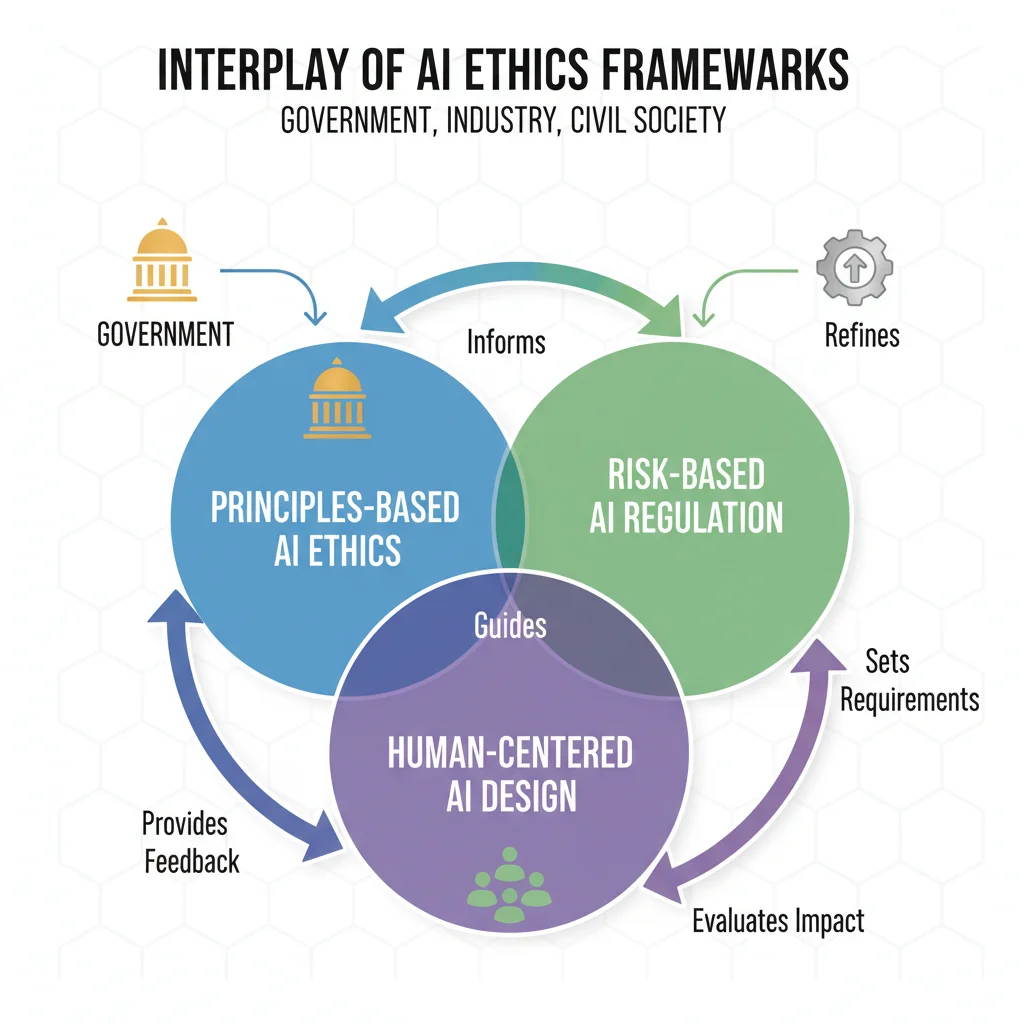
Despite their distinct origins and specific focuses, the NIST AI RMF, the OSTP Blueprint, and state-level initiatives share several overarching themes that are critical for understanding the future of AI ethics in the U.S. These common threads provide a unified vision for responsible AI and highlight areas where convergence is likely even amidst diverse approaches.
Transparency and Explainability
A consistent demand across all frameworks is for greater transparency and explainability in AI systems. Users and affected individuals should understand how AI systems work, what data they use, and why they make certain decisions. This doesn’t necessarily mean full algorithmic disclosure, but rather providing meaningful insights that build trust and allow for informed consent and challenge. NIST emphasizes explainability as a characteristic of trustworthy AI, while the OSTP Blueprint explicitly calls for ‘Notice and Explanation.’ State initiatives often include provisions for disclosing AI use and explaining outcomes, especially in critical applications.
Fairness and Bias Mitigation
The prevention and mitigation of algorithmic bias are central to all major AI ethics frameworks. Whether it’s NIST’s focus on ‘fair with harmful bias managed,’ the OSTP’s ‘Algorithmic Discrimination Protections,’ or state-level mandates for bias audits, the commitment to equitable AI outcomes is clear. This involves proactive assessments, diverse data sets, robust testing, and continuous monitoring to ensure AI systems do not perpetuate or amplify societal inequities. This is a particularly challenging area, requiring ongoing research and development in technical solutions and policy approaches.
Accountability and Governance
All frameworks stress the importance of clear accountability for AI systems. This includes assigning responsibility for AI development, deployment, and impact, as well as establishing mechanisms for oversight and redress. NIST’s ‘Govern’ function sets the stage for organizational accountability, while the OSTP Blueprint emphasizes ‘Human Alternatives, Consideration, and Fallback.’ State laws are also exploring ways to hold companies accountable for AI-related harms. This focus on governance ensures that organizations are not just building AI, but building it responsibly and are prepared to address its consequences.
Data Privacy and Security
Given that AI systems are often data-driven, robust data privacy and security measures are foundational to ethical AI. The OSTP Blueprint explicitly calls for ‘Data Privacy’ protections, building on existing privacy laws like GDPR and CCPA. NIST’s framework includes ‘privacy-enhanced’ as a characteristic of trustworthy AI, and state-level initiatives frequently integrate AI ethics with broader data protection legislation. Ensuring secure data handling, minimizing data collection, and respecting individual data rights are paramount across all these AI ethics frameworks.
Navigating Compliance and Fostering Innovation
For businesses and innovators, the array of AI ethics frameworks might seem daunting. However, viewing them as opportunities rather than mere hurdles can unlock significant strategic advantages. Proactive engagement with these frameworks can lead to more robust, trustworthy, and ultimately more successful AI products and services. Compliance should not be an afterthought but an integral part of the AI development lifecycle.
Strategies for Compliance
- Integrate Ethics by Design: Embed ethical considerations throughout the entire AI lifecycle, from conception and design to deployment and monitoring. This includes conducting ethical impact assessments and involving diverse stakeholders.
- Establish Internal Governance Structures: Create dedicated AI ethics committees, assign clear roles and responsibilities, and develop internal policies that align with the principles of the NIST AI RMF, OSTP Blueprint, and relevant state laws.
- Invest in Explainable AI (XAI) and Bias Detection Tools: Utilize technologies that enhance the transparency and fairness of AI systems. This includes tools for detecting and mitigating bias, and for providing clear explanations of AI decisions.
- Prioritize Data Privacy and Security: Implement strong data governance practices, adhere to privacy-by-design principles, and ensure compliance with all applicable data protection regulations.
- Stay Informed and Engage: Continuously monitor updates to federal and state AI policies. Participate in industry groups, public consultations, and academic discussions to stay ahead of the curve and contribute to the evolving dialogue around AI ethics frameworks.
- Conduct Regular Audits and Assessments: Periodically review AI systems for compliance with ethical guidelines, performance, and potential for unintended consequences.
Fostering Responsible Innovation
Adhering to AI ethics frameworks is not antithetical to innovation; in fact, it can be a powerful catalyst. By building trustworthy AI, companies can:
- Enhance Public Trust: Consumers and users are increasingly concerned about the ethical implications of AI. Demonstrating a commitment to responsible AI can build trust and loyalty.
- Reduce Legal and Reputational Risks: Proactive compliance can mitigate the risk of costly lawsuits, regulatory fines, and reputational damage associated with unethical AI practices.
- Attract and Retain Talent: Ethical considerations are a significant factor for top AI talent. Companies committed to responsible AI are more likely to attract and retain skilled professionals.
- Unlock New Markets: Trustworthy AI can open doors to new applications and markets where ethical considerations are paramount, such as sensitive public sector deployments or highly regulated industries.
- Drive Sustainable Growth: AI systems built on ethical foundations are more robust, resilient, and adaptable, leading to more sustainable long-term growth and societal benefit.
The Road Ahead: 2026 and Beyond
As we look towards 2026 and beyond, the landscape of AI ethics and policy in the U.S. will undoubtedly continue to evolve. The frameworks discussed – the NIST AI RMF, the OSTP Blueprint, and burgeoning state-level initiatives – represent key pillars in this ongoing development. While they currently offer guidance and principles, the trend is clearly towards more formalized and potentially legally binding regulations. The convergence of these AI ethics frameworks, driven by shared ethical imperatives and increasing public demand for accountability, will likely lead to a more coherent and comprehensive regulatory environment.
The U.S. approach will continue to balance the need for innovation with the imperative for protection. This means that while strict regulations might emerge in high-risk areas, there will also be continued emphasis on voluntary standards and industry best practices. The dialogue between government, industry, academia, and civil society will remain crucial in shaping these policies, ensuring they are both effective and adaptable to future technological advancements.
For organizations, the message is clear: do not wait for mandates. Embrace responsible AI practices now. Integrate ethical considerations into your core business strategy, leverage existing frameworks like the NIST AI RMF, and stay abreast of legislative developments at both federal and state levels. By doing so, you can position your organization as a leader in trustworthy AI, ready to thrive in an increasingly regulated and ethically conscious digital world. The future of AI is not just about technological capability, but about ethical stewardship, and the successful navigation of these AI ethics frameworks will be key to unlocking AI’s full potential for good.
Conclusion
The year 2026 marks a pivotal moment in the U.S. for AI ethics and policy. The NIST AI Risk Management Framework provides a robust operational guide, the White House OSTP’s Blueprint for an AI Bill of Rights establishes fundamental human-centric principles, and various state-level initiatives are pioneering specific regulatory approaches. Together, these AI ethics frameworks are forming the bedrock of responsible AI development and deployment in the nation. Understanding their nuances, staying updated on their evolution, and proactively integrating their principles into organizational practices will be critical for compliance, fostering innovation, and building a future where AI serves humanity ethically and effectively.
The journey towards fully realizing the potential of AI while safeguarding against its risks is complex and ongoing. However, with these foundational frameworks in place and a continued commitment to collaborative governance, the U.S. is poised to lead in creating an AI ecosystem that is both innovative and profoundly ethical. Embrace these guidelines, participate in the conversation, and contribute to shaping a responsible AI future.