Future of 5G in US: Investment Trends & Infrastructure 2026

The Future of 5G in the U.S.: 3 Investment Trends and Infrastructure Developments for 2026 (RECENT UPDATES)
The dawn of 5G has ushered in a new era of connectivity, promising transformative changes across industries and daily life. In the United States, the race to build out and capitalize on this technology is accelerating, with significant investments and infrastructure developments shaping its future. As we look towards 2026, understanding the key 5G US Investment trends and infrastructure advancements becomes crucial for businesses, policymakers, and consumers alike. This comprehensive guide delves into the current landscape, projected evolutions, and recent updates that will define America’s 5G journey.
The Current State of 5G in the U.S.
Before peering into the future, it’s essential to grasp where the U.S. stands with 5G. Initial deployments focused on bringing higher speeds to urban centers, primarily utilizing millimeter-wave (mmWave) and C-band spectrums. While mmWave offers blistering speeds, its limited range and penetration capabilities have necessitated a complementary approach. C-band, with its better balance of speed and coverage, has become a cornerstone of nationwide 5G expansion. Sub-6 GHz 5G, offering broader coverage but more modest speed improvements over 4G LTE, fills in the gaps, especially in suburban and rural areas.
Major carriers like Verizon, AT&T, and T-Mobile have invested billions in acquiring spectrum licenses and deploying network infrastructure. T-Mobile, for instance, has gained a significant lead in mid-band 5G coverage due to its acquisition of Sprint’s 2.5 GHz spectrum. Verizon and AT&T are rapidly catching up, aggressively deploying C-band spectrum to enhance their offerings. This competitive environment is a key driver of 5G US Investment and innovation.
However, challenges persist. Rural areas still lag in 5G access, and even in urban environments, consistent high-speed 5G can be elusive due to signal blockers and network congestion. The promise of 5G, particularly its low latency and massive connectivity capabilities, extends far beyond faster downloads. It is poised to unlock truly transformative applications in areas like autonomous vehicles, smart cities, IoT, and advanced industrial automation. Realizing this full potential requires not just network build-out but also the development of an entire ecosystem around 5G.
Investment Trend 1: Densification and Small Cell Deployment
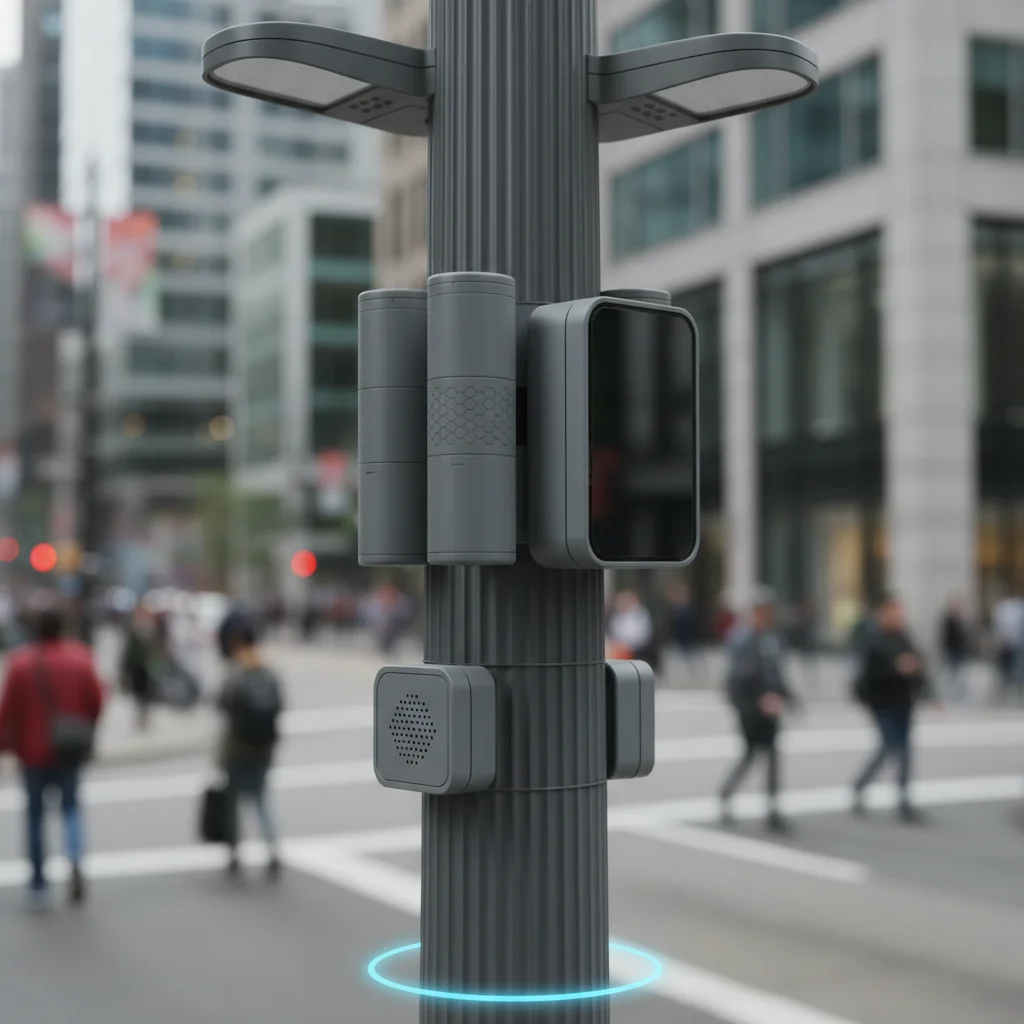
One of the most critical 5G US Investment trends leading up to 2026 is the intense focus on network densification, primarily through the widespread deployment of small cells. Unlike previous generations that relied heavily on large, high-power cell towers, 5G’s higher frequencies, especially mmWave, require signals to be transmitted over shorter distances. This necessitates a much denser network of smaller antennas, known as small cells, placed closer to users.
Small cells are compact, low-power cellular radio access points that can be mounted on existing street furniture like lampposts, utility poles, and building facades. Their deployment is crucial for improving coverage in dense urban environments, enhancing capacity, and enabling the ultra-low latency promised by 5G. The capital expenditure for acquiring, installing, and maintaining these small cells represents a significant portion of current and future 5G US Investment.
By 2026, we expect to see hundreds of thousands, if not millions, of small cells deployed across major U.S. cities and increasingly in suburban areas. This densification will not only improve mobile broadband speeds but also lay the groundwork for specialized 5G applications. For example, a dense network of small cells can provide precise location data for autonomous vehicles, enable real-time communication for smart city sensors, and support mission-critical IoT devices in industrial settings. The regulatory environment, particularly regarding zoning and permitting for small cell deployment, will continue to play a vital role in the speed and scale of this infrastructure build-out.
Furthermore, this trend isn’t just about hardware. It also involves significant investment in the backhaul infrastructure – the high-capacity fiber optic cables that connect small cells to the core network. Without robust fiber connectivity, the benefits of small cell densification cannot be fully realized. Therefore, fiber optic expansion is an intertwined and equally critical component of this investment trend.
Investment Trend 2: Edge Computing and Private 5G Networks
Beyond increasing speed and coverage, 5G’s true power lies in its ability to enable new applications that demand ultra-low latency and hyper-local data processing. This brings us to the second major 5G US Investment trend: the proliferation of edge computing and the rise of private 5G networks.
Edge Computing: Bringing Processing Closer to the Source
Edge computing involves processing data closer to where it’s generated, rather than sending it all the way to a centralized cloud data center. For 5G, this means deploying mini-data centers or computing resources at the ‘edge’ of the network – think cell towers, local exchanges, or even within enterprise facilities. This drastically reduces latency, which is critical for applications like augmented reality (AR), virtual reality (VR), industrial automation, and real-time analytics for autonomous systems. The market for edge computing is projected to grow exponentially, with substantial 5G US Investment flowing into hardware, software, and services for edge infrastructure.
Companies are investing in new data center architectures, specialized processors, and software platforms designed to manage and orchestrate workloads at the edge. This includes partnerships between telecommunications companies, cloud providers (like AWS, Microsoft Azure, Google Cloud), and hardware manufacturers to create integrated edge solutions. By 2026, edge computing is expected to be a foundational element for many advanced 5G use cases, transforming how data is collected, processed, and utilized across various sectors.

Private 5G Networks: Tailored Connectivity for Enterprises
Private 5G networks are dedicated, localized 5G networks deployed for specific organizations, offering enhanced security, reliability, and customized performance compared to public networks. Enterprises across manufacturing, logistics, healthcare, and defense are increasingly interested in private 5G to power their digital transformation initiatives. This is a significant area for future 5G US Investment.
These networks allow businesses to have complete control over their connectivity, enabling applications like real-time asset tracking, automated guided vehicles (AGVs), predictive maintenance, and secure communication for critical operations. The investment here comes from both enterprises directly purchasing and deploying their own networks, and from service providers offering ‘network-as-a-service’ solutions. The availability of shared and unlicensed spectrum (like CBRS in the U.S.) is further fueling the growth of private 5G, making it more accessible and affordable for a wider range of organizations.
By 2026, private 5G is anticipated to move beyond pilot projects and become a mainstream solution for large enterprises and specialized environments, driving substantial investment in equipment, software, and integration services. This trend underscores the shift from 5G merely being a consumer broadband upgrade to a critical platform for industrial and enterprise innovation.
Investment Trend 3: Open RAN and Network Virtualization
The third significant 5G US Investment trend shaping the future of U.S. 5G infrastructure is the move towards Open Radio Access Networks (Open RAN) and broader network virtualization. This trend is driven by a desire for greater vendor diversity, increased flexibility, and reduced costs in network deployment and operation.
Open RAN: A Paradigm Shift in Network Architecture
Traditionally, cellular networks have been built using proprietary, vertically integrated equipment from a single vendor (e.g., Ericsson, Nokia, Huawei). Open RAN aims to disaggregate the hardware and software components of the RAN, allowing different vendors’ equipment to interoperate through open interfaces and standards. This fosters competition, encourages innovation, and potentially lowers capital and operational expenditures for carriers.
The U.S. government has actively promoted Open RAN as a strategic imperative, particularly to reduce reliance on foreign suppliers and enhance national security. As a result, there is significant 5G US Investment, both public and private, being directed towards the research, development, and deployment of Open RAN solutions. Carriers are experimenting with Open RAN in various capacities, from greenfield deployments to integrating it into existing networks.
By 2026, Open RAN is expected to move from early trials to more widespread commercial deployment, particularly for greenfield networks and specific use cases. This will create new opportunities for a diverse ecosystem of vendors, including software providers, hardware manufacturers, and system integrators. The long-term impact could be a more resilient, innovative, and cost-effective 5G infrastructure across the U.S.
Network Virtualization and Software-Defined Networking (SDN)
Complementary to Open RAN is the broader trend of network virtualization, including Network Function Virtualization (NFV) and Software-Defined Networking (SDN). These technologies decouple network functions (like routing, firewalling, and traffic management) from proprietary hardware and run them as software on standard servers. This brings cloud-like agility, scalability, and efficiency to network operations.
For 5G, virtualization is crucial for enabling network slicing – the ability to create multiple virtual networks on a single physical infrastructure, each tailored to specific application requirements (e.g., one slice for ultra-low latency IoT, another for high-bandwidth video streaming). This flexibility is a cornerstone of 5G’s promise to support a diverse array of use cases.
Significant 5G US Investment is being poured into developing and deploying virtualized network functions, orchestrators, and automation platforms. Carriers are transforming their core networks into highly virtualized, software-driven environments. By 2026, a fully virtualized and software-defined core network will be standard for 5G deployments, enabling dynamic resource allocation and rapid service deployment, which are essential for maximizing the return on 5G infrastructure investments.
Infrastructure Developments for 2026: Beyond the Antennas
While the investment trends discussed above heavily influence infrastructure, it’s also important to highlight specific developments that are shaping the physical and digital backbone of 5G in the U.S. by 2026.
Fiber Optic Expansion: The Unsung Hero
The backbone of any advanced wireless network is robust fiber optic infrastructure. 5G, with its massive data throughput and low latency requirements, demands an unprecedented amount of fiber. Every small cell, every edge computing node, and every major cell tower needs high-capacity fiber connectivity to function optimally. Therefore, a major infrastructure development for 2026 will be the continued and accelerated expansion of fiber optic networks across the country.
This includes both long-haul fiber routes and, critically, “fiber to the X” (FTTx) deployments, bringing fiber closer to homes, businesses, and network endpoints. Government initiatives, such as the Broadband Equity, Access, and Deployment (BEAD) program, are providing significant funding to bridge the digital divide and ensure fiber availability, which directly benefits 5G infrastructure. The synergy between fixed and mobile broadband infrastructure is becoming increasingly apparent, with fiber being the common denominator for high-speed connectivity.
Spectrum Availability and Allocation
Spectrum is the lifeblood of wireless communication, and its availability and efficient allocation are paramount for 5G’s success. The U.S. has made significant progress in making mid-band spectrum (C-band, 3.45 GHz) available for 5G, which has been crucial for nationwide deployments. However, the demand for more spectrum, particularly in the mid-band, remains high.
By 2026, we anticipate further efforts from the FCC and other regulatory bodies to identify and clear additional spectrum for 5G use. This could include exploring new bands, re-allocating existing ones, and implementing dynamic spectrum sharing technologies to maximize efficiency. Continuous spectrum availability is a direct enabler of further 5G US Investment and network expansion, ensuring that carriers have the necessary airwaves to deliver on 5G’s promises.
Cybersecurity and Resiliency
As 5G networks become more pervasive and central to critical infrastructure, cybersecurity and network resiliency are paramount. The distributed nature of 5G, with its reliance on virtualization and edge computing, introduces new attack vectors and complexities. Infrastructure developments for 2026 will heavily feature enhanced security measures, including advanced threat detection, identity and access management for network functions, and robust encryption protocols.
Investment in cybersecurity for 5G is not just about protecting data but also about ensuring the continuous operation of critical services. This includes developing resilient network architectures that can withstand outages and cyberattacks, incorporating AI and machine learning for proactive threat intelligence, and establishing clear protocols for incident response. The U.S. government and industry are collaborating to define best practices and standards for secure 5G deployments, making it a critical aspect of future infrastructure planning.
Recent Updates and What to Expect
Recent updates continue to underscore the rapid evolution of 5G in the U.S. Carriers are actively expanding their C-band footprints, bringing faster speeds to a wider audience. T-Mobile recently announced further expansion of its Ultra Capacity 5G, while Verizon and AT&T continue to activate new C-band markets. The focus is shifting from simply having 5G coverage to delivering a truly differentiated 5G experience.
Furthermore, the push for private 5G networks is gaining momentum, with more enterprises exploring and deploying tailored solutions. Partnerships between telecom operators, cloud providers, and industrial automation companies are becoming commonplace, signaling a maturing ecosystem for enterprise 5G. The discussions around Open RAN are also intensifying, with major industry players committing to trials and deployments, albeit with a cautious approach to ensure stability and performance.
Looking ahead to 2026, we can expect:
- Ubiquitous Mid-Band 5G: Near-nationwide availability of robust mid-band 5G, providing a strong balance of speed and coverage.
- Targeted mmWave Deployments: Continued strategic deployment of mmWave in high-traffic areas and specific enterprise environments.
- Advanced 5G Applications: A noticeable increase in commercial deployments of latency-sensitive applications leveraging edge computing and private 5G, particularly in manufacturing, logistics, and healthcare.
- Increased Open RAN Adoption: More widespread commercial adoption of Open RAN solutions, especially in greenfield expansions and specific network segments.
- Enhanced Rural Connectivity: Significant progress in bringing 5G to underserved rural areas, driven by government incentives and collaborative efforts.
Conclusion: A Transformative Path Ahead for 5G US Investment
The journey of 5G in the U.S. is dynamic, marked by continuous innovation and substantial investment. As we approach 2026, the three key 5G US Investment trends – network densification and small cell deployment, the rise of edge computing and private 5G networks, and the adoption of Open RAN and network virtualization – will fundamentally reshape the country’s digital infrastructure. These trends, coupled with ongoing fiber expansion, spectrum management, and a strong focus on cybersecurity, are paving the way for a truly transformative 5G experience.
The implications are far-reaching, promising not just faster internet for consumers but also a foundational platform for economic growth, industrial efficiency, and societal advancement. Stakeholders across the public and private sectors must continue to collaborate, innovate, and invest strategically to fully realize the immense potential of 5G in the United States. The future of connectivity is here, and it’s being built, brick by digital brick, with foresight and significant capital.