Navigating the 2026 AI Regulatory Landscape: 3 Key Compliance Updates for US Tech Firms
The rapid evolution of Artificial Intelligence (AI) has brought about unprecedented innovation, transforming industries and reshaping the way businesses operate. However, this transformative power also comes with a growing need for robust regulatory frameworks to address concerns around data privacy, algorithmic bias, transparency, and accountability. As we approach 2026, the United States is poised to see significant shifts in its AI regulatory landscape, presenting both challenges and opportunities for tech firms. Understanding and preparing for these changes is not merely a legal obligation but a strategic imperative for continued growth and public trust.
For US tech firms, the year 2026 will mark a critical juncture. New regulations and updated guidelines are expected to solidify, impacting everything from product development and data handling to deployment strategies and ethical considerations. Failure to adapt can lead to substantial fines, reputational damage, and a loss of market competitiveness. Conversely, proactive compliance can foster innovation, build consumer confidence, and position companies as leaders in responsible AI development. This comprehensive guide delves into the three most crucial compliance updates US tech firms must prioritize to successfully navigate the 2026 AI regulatory landscape.
The Imperative of Proactive AI Regulatory Compliance 2026
The conversation around AI regulation has been intensifying globally, with various jurisdictions proposing and enacting their own sets of rules. While the European Union’s AI Act has set a global benchmark, the US approach is often characterized by a more fragmented, sector-specific, and agency-led regulatory environment. However, this seemingly disparate approach is converging towards common principles, particularly in areas concerning consumer protection, civil rights, and national security. The year 2026 is anticipated to be a period where these principles translate into more concrete, enforceable regulations across different federal and state levels.
For US tech firms, the challenge lies in understanding this multifaceted regulatory environment. It requires not just legal counsel but also a deep integration of compliance considerations into every stage of AI lifecycle management – from conception and design to deployment and continuous monitoring. The cost of non-compliance far outweighs the investment in proactive measures. Beyond financial penalties, regulatory breaches can erode public trust, lead to costly litigation, and stifle innovation. Therefore, a strategic and forward-looking approach to AI Regulatory Compliance 2026 is paramount.
This article will dissect the three primary areas where US tech firms should anticipate significant regulatory evolution: enhanced data privacy and security requirements for AI systems, stricter algorithmic transparency and explainability mandates, and the escalating focus on ethical AI development and bias mitigation. Each of these areas represents a complex interplay of technological capabilities, legal obligations, and societal expectations. By understanding the nuances of each, firms can develop robust compliance strategies that ensure both legal adherence and responsible innovation.
1. Enhanced Data Privacy and Security Requirements for AI Systems
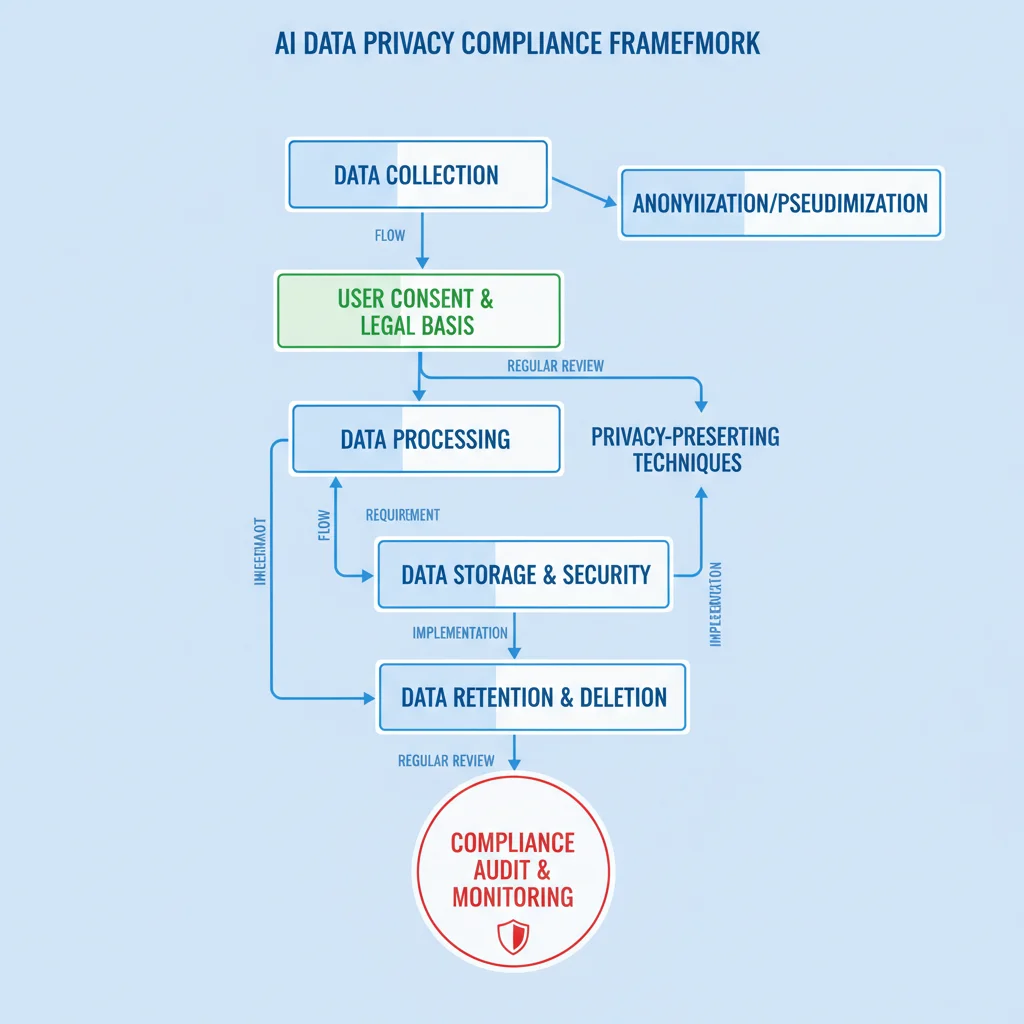
At the core of many AI applications lies data – vast quantities of it. From training data to inference data, the collection, processing, storage, and usage of personal information are inextricably linked to AI’s functionality. As AI systems become more sophisticated and pervasive, the potential for data misuse, breaches, and privacy infringements also escalates. Consequently, enhanced data privacy and security requirements are at the forefront of the 2026 AI regulatory agenda in the US.
Expanding Scope of Privacy Laws
While the US currently lacks a comprehensive federal privacy law akin to GDPR, states like California (CCPA/CPRA), Virginia (VCDPA), Colorado (CPA), Utah (UCPA), and Connecticut (CTDPA) have enacted robust privacy statutes. These laws are continually being refined and, crucially, are beginning to incorporate specific provisions pertaining to AI and automated decision-making. By 2026, we anticipate a more harmonized, albeit still potentially state-by-state, approach to how these laws apply to AI systems. This will likely involve:
- Specific AI-related definitions: Clarification on what constitutes ‘personal data’ when processed by AI, and how ‘automated decision-making’ is defined and regulated.
- Expanded consumer rights: Consumers will likely gain stronger rights to access, correct, delete, and opt-out of data processing used for AI training and deployment, especially concerning profiling and targeted advertising driven by AI.
- Data minimization principles: A stronger emphasis on collecting only the data necessary for the AI’s intended purpose, reducing the risk of over-collection and subsequent misuse.
- Purpose limitation: Clear restrictions on using data collected for one purpose (e.g., training an AI model for customer service) for an entirely different, unrelated purpose without explicit consent.
Strengthened Data Security for AI Datasets
The security of AI training datasets and the data processed by AI models is paramount. Breaches of these datasets can expose sensitive personal information, compromise proprietary algorithms, and undermine the integrity of AI systems. Regulators will be pushing for:
- Robust encryption standards: Implementing state-of-the-art encryption for data at rest and in transit, especially for sensitive data used by AI.
- Access controls and authentication: Strict controls over who can access AI datasets and models, with multi-factor authentication and granular permission management.
- Regular security audits and penetration testing: Proactive measures to identify vulnerabilities in AI data pipelines and systems.
- Supply chain security: Ensuring that third-party vendors and partners involved in AI development and deployment adhere to equivalent data security standards.
Impact Assessment and Risk Management
Many emerging regulations will require AI-specific data protection impact assessments (DPIAs) or similar risk assessments. These assessments will need to identify, evaluate, and mitigate privacy and security risks associated with the development and deployment of AI systems. Tech firms will need to:
- Develop standardized methodologies for conducting AI-specific DPIAs.
- Integrate privacy-by-design and security-by-design principles into their AI development lifecycle.
- Establish clear risk management frameworks for AI systems, including incident response plans for AI-related data breaches.
Compliance in this area necessitates a holistic approach, integrating legal, technical, and operational measures. Firms must invest in data governance frameworks that specifically address AI data lifecycles, ensuring transparency, accountability, and robust protection of personal information. Staying abreast of evolving state privacy laws and anticipating federal initiatives will be critical for effective AI Regulatory Compliance 2026.
2. Stricter Algorithmic Transparency and Explainability Mandates
The ‘black box’ problem of AI – where even developers struggle to understand how certain complex algorithms arrive at their decisions – is a significant concern for regulators. Lack of transparency can lead to biased outcomes, unfair discrimination, and a general distrust of AI systems, particularly in sensitive areas like credit scoring, employment, healthcare, and law enforcement. The 2026 AI regulatory landscape will undoubtedly escalate demands for greater algorithmic transparency and explainability.
The Push for Explainable AI (XAI)
Explainable AI (XAI) is no longer just a research concept; it’s rapidly becoming a regulatory expectation. While achieving full explainability for all AI models remains a technical challenge, regulators will require firms to demonstrate a reasonable level of understanding and ability to explain their AI systems’ decisions. This will translate into:
- Documentation requirements: Detailed documentation of AI model design, training data, performance metrics, and decision-making logic. This includes model cards, data sheets for datasets, and impact statements.
- Post-hoc explainability techniques: Employing techniques (e.g., LIME, SHAP) to provide insights into how specific AI decisions were made, particularly in high-stakes applications.
- Human oversight: Mandates for meaningful human oversight in AI-driven decision-making processes, especially where decisions have significant impacts on individuals.
- Clear communication to users: Providing clear, understandable explanations to individuals affected by AI-driven decisions, outlining the principal factors that led to the outcome.
Addressing Algorithmic Bias and Discrimination
Algorithmic bias, often stemming from biased training data or flawed model design, can perpetuate and amplify societal inequalities. Regulators are increasingly focused on preventing and mitigating such biases. This will involve:
- Bias detection and mitigation strategies: Firms will be expected to implement systematic processes for identifying, measuring, and mitigating biases in their AI systems throughout the development lifecycle.
- Fairness metrics: Adoption of industry-standard or regulator-mandated fairness metrics to evaluate AI model performance across different demographic groups.
- Auditing and testing: Regular and independent audits of AI systems for bias and discriminatory outcomes, with a focus on real-world impact.
- Diverse datasets: Encouraging or mandating the use of diverse and representative datasets for AI training to minimize the risk of inherent biases.
Transparency in AI Usage
Beyond how algorithms work, there’s a growing demand for transparency about when and where AI is being used. This includes:
- Disclosure requirements: Clear disclosure to users when they are interacting with an AI system (e.g., chatbots) or when their data is being processed by AI for automated decision-making.
- Opt-out mechanisms: Providing individuals with the option to opt out of automated decision-making in certain contexts, where feasible and legally required.
- Public registries: Potential for public registries of high-risk AI systems to increase accountability and oversight.
Achieving algorithmic transparency and explainability is a significant technical and organizational undertaking. It requires a cultural shift within tech firms to prioritize these aspects from the outset of AI development. Investing in specialized tools, training data scientists and engineers in XAI techniques, and establishing robust governance structures will be critical for navigating these mandates in 2026 and beyond, solidifying your AI Regulatory Compliance 2026 strategy.
3. Escalating Focus on Ethical AI Development and Bias Mitigation
While related to transparency, the broader concept of ethical AI development encompasses a wider range of considerations, including human flourishing, societal well-being, and accountability. Regulators are moving beyond merely technical compliance to demand a more holistic ethical framework for AI. By 2026, firms will face heightened scrutiny regarding their commitment to ethical AI principles, necessitating robust internal policies and external accountability mechanisms.
Establishing Ethical AI Frameworks
Many organizations have already developed internal ethical AI principles, but regulators are increasingly looking for these principles to be operationalized and enforceable. This will likely involve:
- Formal ethical AI policies: Developing comprehensive, publicly available ethical AI policies that cover areas such as fairness, privacy, security, transparency, accountability, and human oversight.
- Ethics review boards: Establishing internal or external ethics review boards or committees to vet AI projects, assess their societal impact, and ensure alignment with ethical principles.
- Employee training: Providing mandatory training for all personnel involved in AI development, deployment, and management on ethical considerations and responsible AI practices.
- Whistleblower protections: Implementing mechanisms for employees to report ethical concerns related to AI without fear of retribution.
Accountability and Governance
Accountability for AI systems is a complex challenge, especially when multiple actors are involved in the AI supply chain. Regulators are keen to assign clear responsibilities. This will include:
- Designated AI ethics officers: The potential emergence of roles or departments specifically responsible for overseeing AI ethics and compliance within organizations.
- Clear lines of responsibility: Establishing clear internal processes to assign responsibility for AI system outcomes, including errors, biases, and unintended consequences.
- Post-deployment monitoring: Continuous monitoring of AI systems in real-world environments to detect and address any emerging ethical issues or biases.
- Remediation mechanisms: Developing clear processes for addressing and remediating harms caused by AI systems, including mechanisms for redress for affected individuals.
Societal Impact Assessments
Beyond individual privacy, regulators are increasingly interested in the broader societal impact of AI. This could lead to requirements for:
- Societal impact assessments: Evaluating the potential broader societal implications of deploying AI systems, including effects on employment, social equity, and democratic processes.
- Engagement with stakeholders: Proactive engagement with civil society organizations, academics, and the public to gather feedback on AI systems and address concerns.
- Compliance with non-discrimination laws: Ensuring AI systems fully comply with existing anti-discrimination laws, with a focus on their application in AI contexts.

The push for ethical AI is not just about avoiding regulatory penalties; it’s about building trustworthy AI that benefits society. Firms that embed ethical considerations into their core values and development processes will not only comply with 2026 regulations but also gain a significant competitive advantage by fostering trust and demonstrating leadership in responsible innovation. This proactive stance on ethical AI development is a cornerstone of effective AI Regulatory Compliance 2026.
Preparing for the Future: A Strategic Roadmap for AI Regulatory Compliance 2026
Navigating the evolving AI regulatory landscape requires more than just a reactive approach. US tech firms must adopt a strategic, forward-looking roadmap to ensure comprehensive AI Regulatory Compliance 2026. This involves several key steps:
1. Establish Cross-Functional AI Governance
Compliance is not solely the responsibility of the legal department. It requires collaboration across engineering, product development, data science, legal, ethics, and executive leadership. Establish a dedicated AI governance committee or working group responsible for:
- Monitoring regulatory developments at federal and state levels.
- Developing and implementing internal AI policies and standards.
- Overseeing AI risk assessments and compliance audits.
- Fostering a culture of responsible AI throughout the organization.
2. Conduct a Comprehensive AI Inventory and Risk Assessment
Understand where and how AI is being used across your organization. Catalog all AI systems, their data sources, purposes, and potential impacts. Conduct a thorough risk assessment for each system, focusing on privacy, security, transparency, bias, and ethical implications. Prioritize high-risk AI applications for immediate attention and remediation.
3. Invest in Technology and Talent
Compliance often requires technological solutions. Invest in tools for data governance, privacy-enhancing technologies, and AI explainability platforms. Crucially, invest in your people. Train your data scientists, engineers, and product managers on responsible AI principles, ethical considerations, and the specific requirements of emerging regulations. Consider hiring AI ethicists or compliance specialists.
4. Integrate Compliance into the AI Lifecycle
Don’t treat compliance as an afterthought. Embed privacy-by-design, security-by-design, and ethics-by-design principles into every stage of the AI development lifecycle, from initial concept to deployment and ongoing maintenance. This means incorporating compliance checkpoints and reviews at each phase.
5. Stay Informed and Engage
The AI regulatory landscape is dynamic. Continuously monitor legislative proposals, regulatory guidance, and industry best practices. Engage with industry associations, participate in policy discussions, and contribute to the development of responsible AI standards. Proactive engagement can help shape future regulations and ensure your firm is well-positioned to adapt.
6. Develop Robust Documentation and Auditing Capabilities
Regulators will demand proof of compliance. Establish meticulous documentation practices for your AI systems, including data sources, model architectures, training processes, performance metrics, bias assessments, and impact analyses. Develop robust internal auditing capabilities to regularly assess compliance and prepare for external audits.
Conclusion
The year 2026 promises to be a landmark period for AI regulation in the US. The three key areas of enhanced data privacy and security, stricter algorithmic transparency and explainability, and an escalating focus on ethical AI development will fundamentally reshape how tech firms build, deploy, and manage AI systems. For US tech firms, this is not a moment for hesitation but for decisive action. By embracing AI Regulatory Compliance 2026 as a strategic priority, investing in robust governance, technology, and talent, and fostering a culture of responsible innovation, companies can not only mitigate risks but also unlock new opportunities for growth, build enduring trust with consumers, and lead the way in shaping a beneficial and ethical AI-powered future.
Proactive engagement with these evolving regulations will differentiate market leaders from those who merely react. The firms that embed these principles into their DNA will be the ones that thrive, innovate responsibly, and continue to drive the technological progress that defines our era. The journey to comprehensive AI Regulatory Compliance 2026 begins now.