Advanced Tax-Efficient Investing: Reduce US Liabilities by 20% Annually

In the intricate landscape of personal finance, one of the most significant yet often overlooked aspects is the impact of taxes on your investment returns. For investors in the United States, navigating the myriad of tax regulations can feel like a daunting task. However, with the right strategies, it’s entirely possible to significantly reduce your annual tax liabilities, potentially by 20% or more, thereby accelerating your wealth accumulation. This comprehensive guide delves into advanced Tax-Efficient Investing US strategies, offering actionable insights to help you optimize your portfolio and keep more of your hard-earned money.
Understanding the Foundation of Tax-Efficient Investing US
Before we explore advanced techniques, it’s crucial to grasp the fundamental principles of Tax-Efficient Investing US. At its core, tax efficiency in investing is about minimizing the amount of taxes you pay on your investment gains, income, and withdrawals. This doesn’t mean avoiding taxes illegally, but rather utilizing the various legal provisions, accounts, and investment vehicles designed to defer, reduce, or even eliminate tax obligations.
The Tax Drag: Why It Matters
Taxes can create a substantial ‘tax drag’ on your investment returns. Imagine earning a 10% return on an investment, but then 20-30% or more of that gain is immediately siphoned off by taxes. Over decades, this seemingly small percentage can amount to hundreds of thousands, if not millions, of dollars in lost wealth. Understanding and mitigating this tax drag is the first step towards truly effective Tax-Efficient Investing US.
Key Tax Categories Affecting Investments
- Income Tax: Applies to interest earned from bonds, dividends from stocks (though qualified dividends are taxed at capital gains rates), and ordinary income from certain investments.
- Capital Gains Tax: Levied on profits from selling investments. This is divided into short-term (assets held for one year or less, taxed at ordinary income rates) and long-term (assets held for more than one year, taxed at preferential rates).
- Estate Tax: Applies to the transfer of property upon death, though high exclusion limits mean it affects a relatively small percentage of the population.
- Gift Tax: Applies to the transfer of property by one living person to another.
Advanced Strategies for Reducing Investment Tax Liabilities
1. Maximize Tax-Advantaged Retirement Accounts
This is often the cornerstone of Tax-Efficient Investing US. While commonly known, their full potential is often underutilized. These accounts offer significant tax benefits, whether it’s tax-deductible contributions, tax-deferred growth, or tax-free withdrawals.
Traditional IRAs and 401(k)s: Tax Deferral Powerhouses
Contributions to Traditional IRAs and 401(k)s are often tax-deductible, reducing your taxable income in the year of contribution. Investments grow tax-deferred, meaning you don’t pay taxes on dividends, interest, or capital gains until you withdraw funds in retirement. This deferral allows your money to compound more effectively over time. For high-income earners, the ability to reduce current taxable income can be particularly powerful.
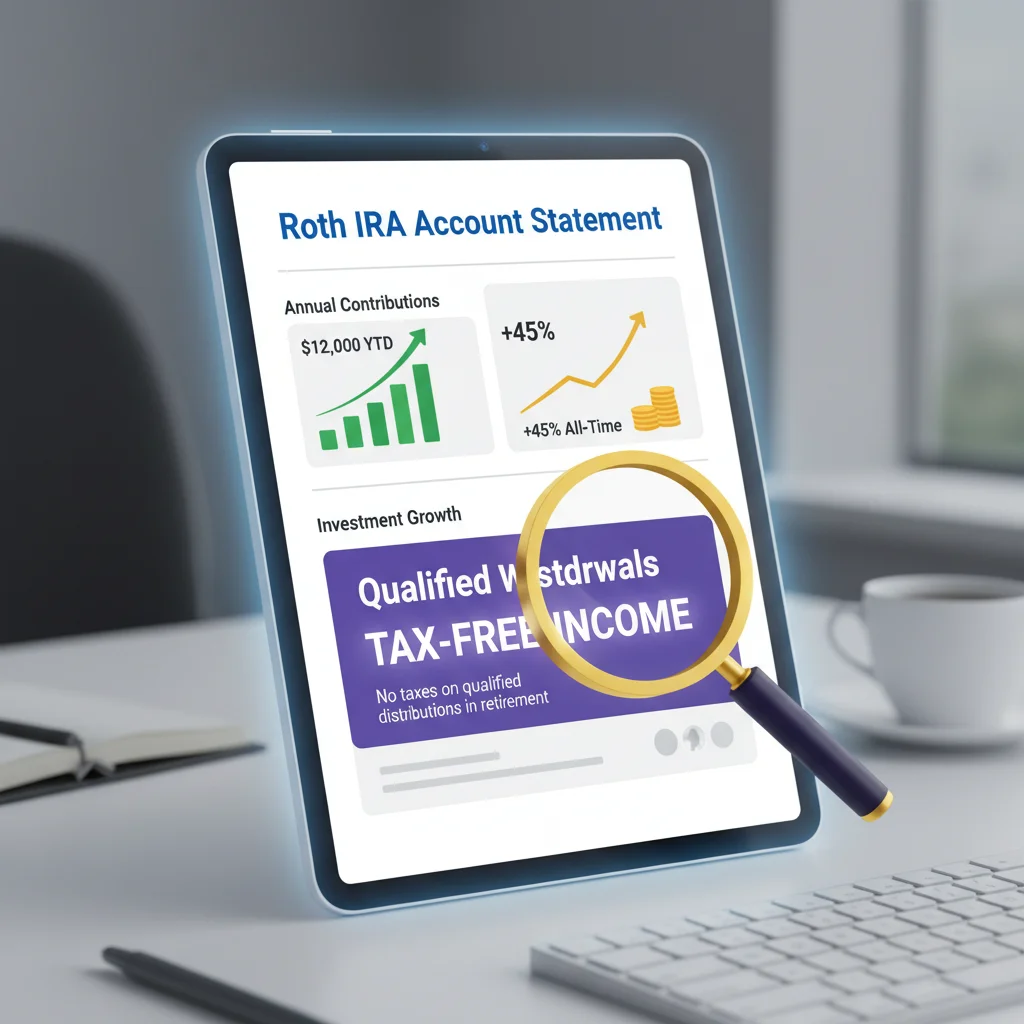
Roth IRAs and Roth 401(k)s: Tax-Free Growth and Withdrawals
Contributions to Roth accounts are made with after-tax dollars, meaning they are not tax-deductible. However, the magic of Roth accounts lies in their tax-free growth and, crucially, tax-free qualified withdrawals in retirement. If you anticipate being in a higher tax bracket in retirement than you are now, a Roth account can be an incredibly powerful tool for Tax-Efficient Investing US. The future tax savings can be immense.
Backdoor Roth Conversions
For those whose income exceeds the limits for direct Roth IRA contributions, a ‘backdoor Roth’ conversion can be a viable strategy. This involves contributing to a non-deductible Traditional IRA and then converting it to a Roth IRA. While the conversion itself might be a taxable event if you have pre-tax IRA money, it allows high-income earners to access the benefits of a Roth IRA. This advanced technique requires careful planning to avoid the ‘pro-rata’ rule if you hold other pre-tax IRA accounts.
2. Strategic Asset Placement (Asset Location)
Asset location is a sophisticated Tax-Efficient Investing US strategy that involves strategically placing different types of investments into different account types (taxable vs. tax-advantaged) to minimize overall tax liability. The goal is to put tax-inefficient assets in tax-advantaged accounts and tax-efficient assets in taxable accounts.
Tax-Inefficient Assets: Where to Put Them
- High-Turnover Funds: Actively managed mutual funds or ETFs that frequently buy and sell securities can generate significant short-term capital gains, which are taxed at higher ordinary income rates. These are best held in tax-deferred accounts (401(k)s, Traditional IRAs) where these gains are not taxed until withdrawal.
- Bonds and REITs: Investments that generate significant ordinary income (like interest from bonds or income from Real Estate Investment Trusts) are also good candidates for tax-deferred accounts. This shields the annual income from immediate taxation.
- High-Dividend Stocks: While qualified dividends receive preferential tax treatment, non-qualified dividends are taxed as ordinary income. Placing such stocks in tax-advantaged accounts can defer or eliminate these taxes.
Tax-Efficient Assets: Where to Put Them
- Low-Turnover Index Funds/ETFs: These investments typically have lower capital gains distributions due to their passive nature. They can be held in taxable accounts, as their tax impact is already relatively low, preserving space in tax-advantaged accounts for more tax-inefficient holdings.
- Growth Stocks: Companies that reinvest most of their earnings back into the business often pay little to no dividends. If held for the long term, their gains will be taxed at favorable long-term capital gains rates when sold. These are suitable for taxable accounts.
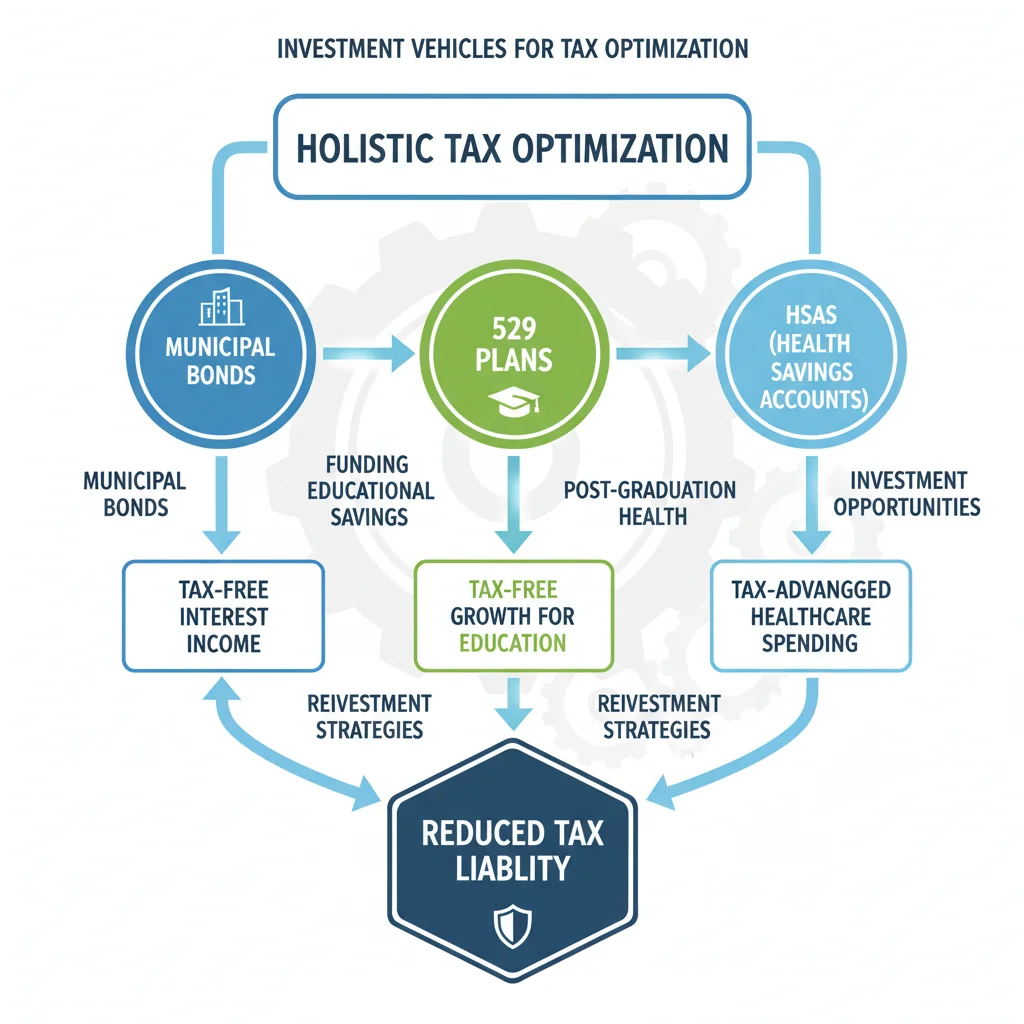
- Municipal Bonds: Interest earned from municipal bonds is generally exempt from federal income tax and, often, state and local taxes if you reside in the issuing state. This makes them highly tax-efficient for taxable accounts, especially for high-income earners.
3. Harnessing Tax Loss Harvesting
Tax loss harvesting is an active Tax-Efficient Investing US strategy that involves selling investments at a loss to offset capital gains and, potentially, a limited amount of ordinary income. This can be a powerful tool to reduce your annual tax bill.
How It Works
If you have investments that have declined in value, you can sell them to realize a capital loss. These losses can first be used to offset any capital gains you have realized during the year. If your capital losses exceed your capital gains, you can use up to $3,000 of the remaining loss to offset ordinary income. Any unused losses can be carried forward indefinitely to offset future capital gains and ordinary income.
Important Considerations: The Wash-Sale Rule
A critical rule to remember with tax loss harvesting is the ‘wash-sale rule.’ This rule prohibits you from claiming a loss on a security if you buy a ‘substantially identical’ security within 30 days before or after the sale. To avoid this, you can buy a similar, but not identical, investment (e.g., an ETF tracking a different index, or a different company in the same sector) or wait 31 days before repurchasing the original security.
4. Utilizing Health Savings Accounts (HSAs)
HSAs are often called the ‘triple-tax-advantaged’ account and are an incredibly powerful tool for Tax-Efficient Investing US, especially for those with high-deductible health plans (HDHPs).
The Triple Tax Advantage
- Tax-Deductible Contributions: Contributions to an HSA are tax-deductible, reducing your taxable income.
- Tax-Free Growth: Investments within an HSA grow tax-free.
- Tax-Free Withdrawals: Qualified withdrawals for eligible medical expenses are tax-free.
Beyond Medical Expenses: A Retirement Powerhouse
While designed for healthcare costs, HSAs can function as a supplemental retirement account. If you can afford to pay for current medical expenses out-of-pocket, you can let your HSA investments grow tax-free. Once you turn 65, you can withdraw funds for any purpose without penalty, though non-medical withdrawals will be taxed as ordinary income (similar to a Traditional IRA). This flexibility makes HSAs a unique and highly efficient investment vehicle.
5. Smart Use of 529 Plans for Education Savings
For those saving for education, 529 plans offer significant tax advantages at both the federal and often state levels, making them a crucial component of Tax-Efficient Investing US for families.
Tax Benefits of 529 Plans
- Tax-Deferred Growth: Investments in a 529 plan grow tax-deferred.
- Tax-Free Withdrawals: Qualified withdrawals for eligible educational expenses (tuition, fees, books, room and board) are tax-free.
- State Tax Deductions/Credits: Many states offer tax deductions or credits for contributions to their 529 plans, providing an immediate tax benefit.
Flexibility Beyond Higher Education
Recent changes have expanded the utility of 529 plans. Funds can now be used for K-12 private school tuition (up to $10,000 per year per beneficiary) and to pay off up to $10,000 in student loan debt per beneficiary. This added flexibility enhances their appeal as a tax-efficient savings vehicle.
6. Utilizing Qualified Charitable Distributions (QCDs)
For individuals aged 70½ or older who are required to take Required Minimum Distributions (RMDs) from their IRAs, QCDs offer a tax-efficient way to make charitable donations.
How QCDs Work
A QCD allows you to directly transfer up to $100,000 per year from your IRA to an eligible charity. This amount counts towards your RMD but is not included in your adjusted gross income (AGI). This can be particularly beneficial for those who don’t itemize deductions but still want to support charities, as it effectively reduces your taxable income without requiring itemization.
7. Consider Annuities for Tax Deferral
While often complex and sometimes criticized for high fees, deferred annuities can offer a tax-efficient way to save for retirement, especially for high-income earners who have maxed out other tax-advantaged accounts.
Tax Deferral in Annuities
Earnings within an annuity grow tax-deferred, meaning you don’t pay taxes until you begin to take withdrawals. This allows for greater compounding over time. When you annuitize or take withdrawals, only the earnings portion is taxed as ordinary income. However, be mindful of surrender charges and the fact that annuities are not protected from creditors in the same way some other retirement accounts might be.
8. Advanced Real Estate Strategies
Real estate investing offers its own set of unique tax advantages that can be leveraged for Tax-Efficient Investing US.
Depreciation
Investment properties can be depreciated over their useful life, allowing investors to deduct a portion of the property’s value each year against rental income, even if the property is appreciating in market value. This can significantly reduce taxable income.
1031 Exchanges (Like-Kind Exchanges)
A 1031 exchange allows real estate investors to defer capital gains taxes when selling an investment property by reinvesting the proceeds into a similar ‘like-kind’ property. This deferral can continue indefinitely, allowing wealth to compound without the drag of immediate taxation until the final sale of the last property (or death, where it may receive a step-up in basis).
Opportunity Zones
Established under the Tax Cuts and Jobs Act of 2017, Opportunity Zones encourage long-term investments in designated low-income communities. Investors can defer or even reduce capital gains taxes by investing those gains into Qualified Opportunity Funds (QOFs). If the investment is held for at least 10 years, any appreciation on the QOF investment becomes tax-free. This is a powerful, though more complex, Tax-Efficient Investing US strategy.
9. Strategic Use of Donor-Advised Funds (DAFs)
For charitably inclined investors, Donor-Advised Funds (DAFs) offer a powerful way to manage philanthropic giving while enjoying immediate tax benefits.
How DAFs Work
When you contribute appreciated assets (like stocks or mutual funds) to a DAF, you receive an immediate tax deduction for the fair market value of the assets. You avoid capital gains taxes on the appreciation of the donated assets. The funds then grow tax-free within the DAF, and you can recommend grants to your favorite charities over time. This allows you to ‘bunch’ charitable deductions in a high-income year and then distribute the funds to charities over several years, maximizing your tax efficiency.
10. Understanding and Managing Qualified Dividends and Long-Term Capital Gains
While all investment income is subject to tax, the rates vary significantly. Understanding these differences is key to effective Tax-Efficient Investing US.
Preferential Tax Rates
Qualified dividends and long-term capital gains are taxed at preferential rates (0%, 15%, or 20%) depending on your taxable income, which are often lower than ordinary income tax rates. By tilting your portfolio towards investments that generate these types of gains, especially in taxable accounts, you can reduce your overall tax burden.
Tax-Gain Harvesting
In years where your income is low (e.g., during retirement, a career break), you might find yourself in the 0% long-term capital gains tax bracket. In such situations, you can strategically sell appreciated assets up to the limit of this 0% bracket, realize the gain tax-free, and then immediately repurchase them. This ‘steps up’ your cost basis, meaning future gains will be calculated from this new, higher basis, ultimately reducing future tax liabilities if you sell at a higher price.
11. Investing in Master Limited Partnerships (MLPs)
MLPs are publicly traded partnerships, primarily in the energy and natural resources sectors. They offer unique tax advantages, though they come with complexities.
Tax Benefits of MLPs
MLPs are ‘pass-through’ entities, meaning they avoid corporate income tax. Instead, income and losses are passed directly to the investors (unitholders). A significant portion of MLP distributions are often considered ‘return of capital,’ which is tax-deferred. This reduces your cost basis but isn’t taxed until you sell your units or your basis reaches zero. This deferral can be a powerful tool for Tax-Efficient Investing US, though the tax reporting (K-1 forms) can be more involved.
12. The Power of Diversification and Rebalancing with Tax Efficiency in Mind
While diversification and rebalancing are fundamental investment principles, integrating tax efficiency into these practices can further enhance your returns.
Tax-Aware Rebalancing
When rebalancing your portfolio, try to sell assets that have losses (for tax loss harvesting) or those in tax-advantaged accounts first to avoid realizing gains in taxable accounts. If you must sell appreciated assets in a taxable account, prioritize those with long-term capital gains over short-term gains.
Diversification Across Tax Structures
Beyond diversifying across asset classes, diversify across tax structures (taxable, tax-deferred, tax-free accounts). This provides flexibility in managing withdrawals in retirement and allows you to adapt to changing tax laws or personal financial situations.
Putting It All Together: A Holistic Approach to Tax-Efficient Investing US
Achieving significant tax reduction, such as 20% annually, requires a holistic and integrated approach. It’s not about implementing one strategy, but rather combining several tailored to your specific financial situation, income level, and investment goals.
Regular Review and Adjustment
Tax laws change, your income fluctuates, and your investment goals evolve. What works for Tax-Efficient Investing US today might not be optimal next year. Regularly review your tax strategy with a qualified financial advisor or tax professional. This ensures you’re always taking advantage of the latest provisions and optimizing your portfolio for maximum after-tax returns.
Consider Your Time Horizon
The length of time you plan to hold an investment significantly impacts its tax treatment. Long-term holdings generally benefit from preferential capital gains rates, while short-term trading can lead to higher tax burdens. Align your investment horizon with tax-efficient strategies.
The Importance of Professional Guidance
While this guide provides a wealth of information, the complexities of the US tax code and investment strategies often warrant professional advice. A financial planner or tax advisor specializing in Tax-Efficient Investing US can help you:
- Develop a personalized tax strategy.
- Navigate complex rules like the pro-rata rule for backdoor Roths or the wash-sale rule.
- Stay updated on legislative changes that could impact your investments.
- Optimize asset allocation and location across all your accounts.
Conclusion: Empowering Your Financial Future with Tax-Efficient Investing US
The journey to financial independence is paved with smart decisions, and among the most impactful is mastering Tax-Efficient Investing US. By strategically utilizing tax-advantaged accounts, implementing asset location, engaging in tax loss harvesting, and exploring specialized vehicles like HSAs and 529 plans, you can dramatically reduce your tax liabilities. The goal isn’t just to save money on taxes; it’s to accelerate the growth of your wealth, allowing your investments to compound more effectively and bring you closer to your financial aspirations. Start implementing these advanced strategies today, and watch your after-tax returns flourish.