Quantum Computing’s Impact: 5 US Industry Transformations by 2030
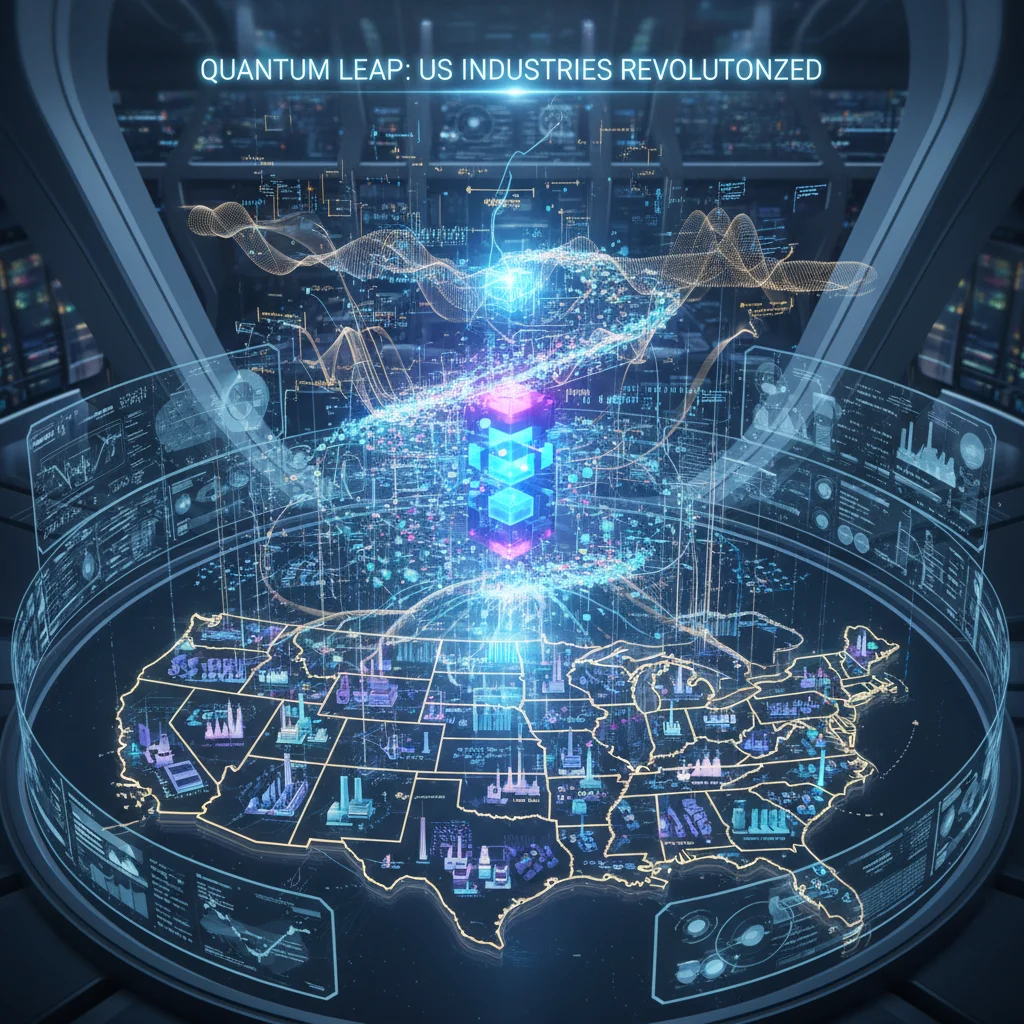
The landscape of technology is constantly evolving, but few advancements hold as much transformative potential as quantum computing. Far from the classical computers we use today, quantum computers leverage the bizarre principles of quantum mechanics – superposition, entanglement, and quantum tunneling – to process information in fundamentally new ways. This allows them to tackle problems that are currently intractable for even the most powerful supercomputers, opening doors to breakthroughs across virtually every sector. By 2030, these emerging quantum computing applications are poised to dramatically reshape US industries, driving innovation, efficiency, and entirely new business models.
The United States, a global leader in technological innovation, is at the forefront of quantum research and development. Significant investments from both government and private sectors are fueling rapid progress, with companies like IBM, Google, Microsoft, and various startups pushing the boundaries of what’s possible. This article will delve into five critical areas where quantum computing is expected to make its most profound impact on US industries within the next decade, offering a glimpse into a future powered by quantum advantage.
Understanding the Quantum Leap: Why Quantum Computing Matters
Before diving into specific applications, it’s crucial to grasp why quantum computing represents such a significant leap. Traditional computers store information as bits, which can be either a 0 or a 1. Quantum computers, however, use qubits, which can be 0, 1, or both simultaneously (superposition). This, combined with entanglement (where qubits become linked and share the same fate, regardless of distance) and interference (where probabilities of outcomes can be manipulated), allows quantum computers to explore a vast number of possibilities concurrently. This parallel processing capability is what gives them their immense power for certain types of computations.
While still in its nascent stages, with current quantum machines primarily serving as research tools, the pace of development is accelerating. Error correction, a major hurdle, is being actively addressed, and quantum algorithms are continuously being refined. As these challenges are overcome, the practical applications of quantum computing will move from theoretical possibilities to tangible realities, fundamentally altering the competitive landscape for US businesses.
1. Revolutionizing Financial Services: From Risk Management to Algorithmic Trading
The financial sector, characterized by its reliance on complex calculations, vast datasets, and the need for speed, is an ideal candidate for quantum disruption. US financial institutions, from Wall Street giants to fintech startups, are already exploring how quantum computing applications can give them a competitive edge.
Quantum Optimization for Portfolio Management
One of the most immediate impacts will be in portfolio optimization. Traditional methods for constructing optimal portfolios struggle with the exponential increase in variables as the number of assets grows. Quantum algorithms, particularly quantum annealing and quantum approximate optimization algorithms (QAOA), are uniquely suited to solve these complex optimization problems. By 2030, quantum-powered tools could enable fund managers to identify the best asset allocations, balancing risk and return with unprecedented precision and speed, leading to higher returns and more stable portfolios.
Enhanced Risk Assessment and Fraud Detection
Risk management is another area ripe for quantum innovation. Financial institutions face constant challenges in assessing credit risk, market risk, and operational risk. Quantum computers can simulate complex financial models, such as Monte Carlo simulations, much faster than classical computers. This allows for more thorough and real-time risk analysis, identifying potential vulnerabilities and enabling proactive mitigation strategies. Furthermore, quantum machine learning algorithms could significantly enhance fraud detection systems, sifting through massive transaction data to spot anomalies and patterns indicative of fraudulent activity that might be missed by current AI.
Accelerated Algorithmic Trading
In the high-stakes world of algorithmic trading, microseconds can mean millions. Quantum computers’ ability to process information at immense speeds could revolutionize high-frequency trading strategies. They could analyze market data, predict price movements, and execute trades with a speed and sophistication far beyond current capabilities. This would not only increase profitability for firms but also potentially lead to more efficient and liquid markets, although it also raises questions about market stability and fairness.

2. Accelerating Drug Discovery and Materials Science
The pharmaceutical and materials science industries are constantly seeking to discover new molecules and design novel materials with specific properties. Both processes are incredibly resource-intensive and often involve simulating molecular interactions at the quantum level – a task that pushes classical computers to their limits. This makes them prime targets for quantum computing applications.
Quantum Chemistry for Drug Discovery
Drug discovery is a notoriously long and expensive process, with high failure rates. Quantum computers can simulate molecular structures and their interactions with unprecedented accuracy. This means pharmaceutical companies can use quantum chemistry simulations to:
- Predict drug efficacy: Accurately model how potential drug candidates will bind to target proteins, reducing the need for costly and time-consuming experimental trials.
- Design novel molecules: Explore a vast chemical space to design entirely new molecules with desired therapeutic properties, leading to breakthrough treatments for diseases like cancer, Alzheimer’s, and autoimmune disorders.
- Optimize drug formulations: Understand how different compounds interact to create more stable and effective drug delivery systems.
By 2030, quantum-assisted drug discovery platforms could significantly shorten the time from target identification to clinical trials, bringing life-saving medications to market faster and at lower costs.
Designing Advanced Materials
Materials science is another field that will benefit immensely. From superconductors to catalysts, batteries to aerospace composites, the properties of materials are determined by their atomic and molecular structures. Quantum computers can simulate these structures and predict their behavior, allowing scientists to design new materials with tailor-made properties. Imagine:
- More efficient batteries: Quantum simulations could lead to the discovery of new electrode materials, resulting in batteries with higher energy density and faster charging capabilities, transforming electric vehicles and renewable energy storage.
- Novel catalysts: Designing more efficient catalysts could revolutionize industrial chemical processes, making them greener and more cost-effective.
- Lightweight, stronger alloys: Developing advanced materials for aerospace and automotive industries, leading to more fuel-efficient vehicles and safer structures.
The ability to virtually “test” millions of material combinations could usher in a new era of material innovation across US manufacturing.
3. Enhancing Logistics and Supply Chain Optimization
Modern supply chains are incredibly complex, involving countless variables related to transportation, warehousing, inventory management, and demand forecasting. Optimizing these intricate networks is a monumental challenge for classical computers, but it’s a domain where quantum computing applications can offer significant advantages, especially for US logistics companies managing vast national and international networks.
Solving Complex Routing Problems
The “traveling salesman problem” – finding the most efficient route among multiple destinations – is a classic example of a problem that becomes exponentially harder as the number of stops increases. Quantum algorithms are particularly adept at solving such combinatorial optimization problems. By 2030, quantum-powered logistics platforms could:
- Optimize delivery routes: For trucking fleets, shipping companies, and last-mile delivery services, quantum computing could calculate the most efficient routes in real-time, accounting for traffic, weather, and delivery windows, leading to significant fuel savings and faster delivery times.
- Improve warehouse management: Efficiently organize inventory and optimize picking paths within large warehouses, reducing operational costs and improving order fulfillment rates.
Dynamic Supply Chain Management
Supply chains are vulnerable to disruptions, from natural disasters to geopolitical events. Quantum computers could enable more resilient and adaptive supply chains by performing real-time simulations of various scenarios. This would allow US businesses to:
- Forecast demand with greater accuracy: Integrate more variables into predictive models, leading to better inventory management and reduced waste.
- Respond to disruptions rapidly: Quickly re-optimize logistics networks in response to unexpected events, minimizing delays and mitigating financial losses.
- Balance costs and efficiency: Find optimal trade-offs between transportation costs, inventory holding costs, and service levels across the entire supply chain.
The result would be leaner, more efficient, and more robust supply chains that can better withstand global pressures, a critical advantage for the US economy.
4. Advancing Artificial Intelligence and Machine Learning
Artificial Intelligence (AI) and Machine Learning (ML) are already transforming industries, but they are limited by the computational power of classical computers. Quantum computing promises to supercharge these fields, leading to breakthroughs in areas currently considered impossible. Quantum machine learning (QML) is a rapidly developing field that combines quantum algorithms with machine learning techniques, opening new frontiers for quantum computing applications.
Accelerated Machine Learning Training
Training complex AI models, especially deep learning networks, requires immense computational resources and time. Quantum computers could significantly accelerate this process. Quantum algorithms can perform certain linear algebra operations, central to many ML algorithms, much faster. This means:
- Faster model development: Researchers and data scientists could train more sophisticated models in a fraction of the time, leading to quicker iteration and deployment of AI solutions.
- Handling larger datasets: Process and analyze datasets of unprecedented size and complexity, extracting insights that are currently hidden.
New AI Capabilities
Beyond acceleration, quantum computing could enable entirely new types of AI. Quantum neural networks, for instance, could leverage quantum phenomena to develop more powerful and efficient learning architectures. This could lead to:
- More accurate predictive models: In healthcare, finance, and climate science, quantum-enhanced AI could make more precise predictions based on complex, noisy data.
- Advanced natural language processing: Better understanding and generation of human language, leading to more sophisticated virtual assistants, translation tools, and content creation.
- Improved image and pattern recognition: Critical for autonomous vehicles, medical diagnostics, and security systems.
The synergy between quantum computing and AI will likely be one of the most impactful technological developments of the next decade, profoundly affecting every US industry that relies on data-driven decision-making.
5. Enhancing Cybersecurity and Data Protection
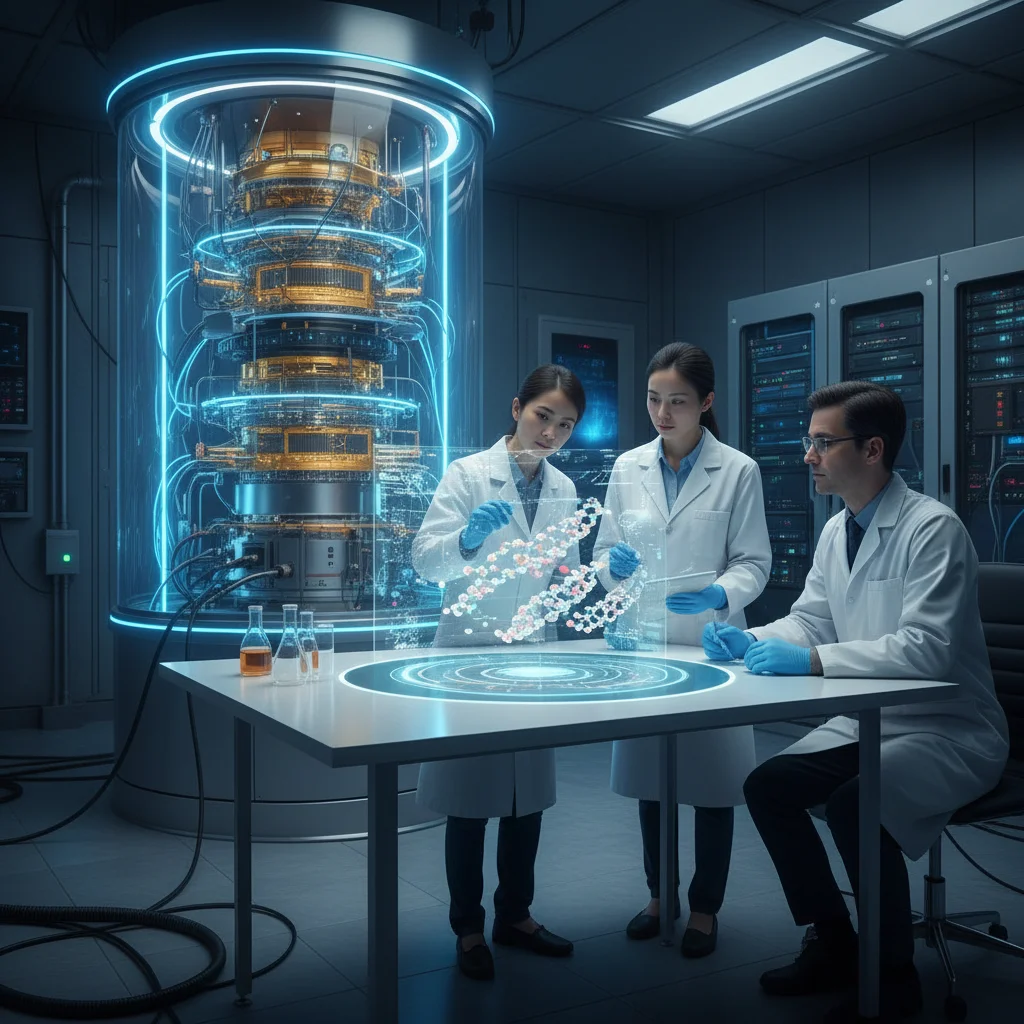
As our world becomes increasingly digital, cybersecurity threats grow in sophistication and frequency. Current encryption methods, largely based on the difficulty of factoring large numbers, are vulnerable to attacks from sufficiently powerful quantum computers – a concept known as “breaking cryptography.” However, quantum computing also offers solutions to these very problems, ushering in an era of quantum-safe cybersecurity. This makes it a crucial area for quantum computing applications in the US.
Post-Quantum Cryptography (PQC)
The development of post-quantum cryptography (PQC) is a race against time. These are cryptographic algorithms designed to be secure against both classical and quantum computers. US government agencies and private companies are heavily invested in researching and implementing PQC standards. By 2030, we can expect to see widespread adoption of PQC to protect sensitive data, financial transactions, and critical infrastructure from quantum attacks. This transition is complex and requires significant investment, but it’s essential for maintaining national security and economic stability.
Quantum Key Distribution (QKD)
Beyond PQC, quantum mechanics offers an intrinsically secure method for key exchange: Quantum Key Distribution (QKD). QKD uses the principles of quantum physics to ensure that any attempt to eavesdrop on the communication channel is immediately detectable. This provides a fundamentally unhackable way to distribute encryption keys. While QKD is currently limited by distance and infrastructure, advancements are being made rapidly. By 2030, we could see QKD being deployed in high-security applications, such as government communications, critical infrastructure control systems, and sensitive financial networks, bolstering the US’s defense against cyber threats.
Quantum-Enhanced Threat Detection
Quantum machine learning could also play a role in identifying and responding to cyber threats. By analyzing vast amounts of network traffic and system logs, quantum-enhanced AI could detect subtle anomalies and patterns indicative of advanced persistent threats (APTs) or zero-day exploits much faster and more accurately than classical systems. This proactive threat detection would allow US organizations to neutralize cyberattacks before they can cause significant damage, safeguarding intellectual property, personal data, and national security.
Challenges and the Road Ahead
While the potential of quantum computing is immense, several significant challenges must be addressed for these applications to become widespread by 2030:
- Hardware Development: Building stable, error-corrected qubits remains a primary hurdle. Current quantum computers are still prone to errors (noise), limiting their computational power.
- Software and Algorithms: Developing practical quantum algorithms and programming tools that can effectively harness the power of quantum hardware is an ongoing area of research.
- Talent Gap: There is a significant shortage of quantum physicists, engineers, and programmers. Education and training initiatives are crucial to build the workforce needed to drive quantum innovation.
- Cost: Quantum computers are currently extremely expensive to build and operate, limiting their accessibility.
- Scalability: Scaling up quantum systems to thousands or millions of stable qubits is a monumental engineering challenge.
Despite these challenges, the rapid pace of investment and research, particularly in the US, suggests that significant progress will be made over the next decade. Government initiatives, academic research, and private sector innovation are all converging to accelerate the quantum revolution.
Conclusion: A Quantum Future for US Industries
The emergence of quantum computing applications is not a distant dream; it’s a rapidly approaching reality that will fundamentally alter the competitive landscape of US industries by 2030. From optimizing complex financial models and accelerating drug discovery to revolutionizing logistics, supercharging AI, and fortifying cybersecurity, quantum technology promises unprecedented capabilities.
US businesses and policymakers must recognize the strategic importance of quantum computing. Investing in research and development, fostering a skilled workforce, and exploring early-stage applications will be crucial for maintaining a leading edge in the global economy. While the journey from theoretical potential to widespread practical application is fraught with challenges, the rewards of embracing the quantum era – in terms of economic growth, scientific advancement, and national security – are simply too great to ignore. The quantum future is not just coming; it’s already beginning to reshape the industries that define the United States.