Metaverse Economy 2026: 5 Untapped Revenue Streams for US Innovators

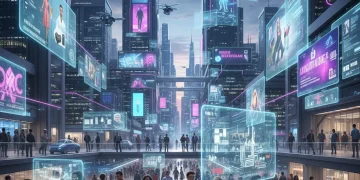
The metaverse, once a distant sci-fi concept, is rapidly transforming into a tangible economic frontier. As we hurtle towards 2026, the digital landscape is ripe with unprecedented opportunities, particularly for US innovators poised to capitalize on its burgeoning potential. This immersive, interconnected virtual world promises to revolutionize how we work, play, socialize, and conduct business. Understanding and strategically navigating the metaverse economy is no longer an option but a necessity for forward-thinking entrepreneurs and businesses.
The projections for the metaverse’s economic impact are staggering. Estimates vary, but many analysts predict a multi-trillion-dollar market within the next decade. This growth is fueled by advancements in virtual reality (VR), augmented reality (AR), blockchain technology, and artificial intelligence (AI), all converging to create richer, more seamless digital experiences. For US innovators, this presents a unique window to establish early dominance and carve out significant market share in what promises to be the next major technological paradigm shift.
While some aspects of the metaverse, like gaming and basic digital asset trading, are already gaining traction, there are still vast, untapped revenue streams waiting to be discovered and exploited. This article delves into five critical areas where US innovators can find significant opportunities to generate revenue and build sustainable businesses in the metaverse by 2026. From the foundational infrastructure to highly specialized services, the potential for innovation and financial gain is immense. By focusing on these emerging sectors, innovators can position themselves at the forefront of the metaverse revolution, shaping its future while securing their own financial prosperity.
The key to success in this nascent economy lies in foresight, adaptability, and a willingness to experiment. The metaverse is not a monolithic entity but a collection of interconnected virtual spaces, each with its own rules, economies, and communities. Innovators who can identify niche markets, create compelling value propositions, and build strong communities will be the ones that thrive. This exploration of metaverse revenue streams aims to provide a roadmap for those ready to embark on this exciting journey.
1. The Exploding Market of Virtual Real Estate and Digital Land Development
Just as physical real estate has been a cornerstone of wealth generation for centuries, virtual real estate is rapidly emerging as a primary metaverse revenue stream. Digital parcels of land within popular metaverse platforms like Decentraland, The Sandbox, and Somnium Space have seen astronomical price increases, with some plots selling for millions of dollars. This isn’t just speculative fervor; it’s driven by the fundamental principle of scarcity and utility within a growing digital world.
Investing in Digital Land: More Than Just Pixels
For US innovators, the opportunity extends far beyond simply buying and holding digital land. The real value lies in its development. Imagine purchasing a prime virtual location and transforming it into a bustling commercial district, an exclusive residential community, or a unique entertainment venue. This involves a blend of architectural design, user experience planning, and community building, all within a virtual context. Innovators can specialize in:
- Virtual Land Acquisition and Brokerage: Becoming experts in identifying undervalued digital land, facilitating transactions, and offering advisory services to individuals and businesses looking to enter the metaverse.
- Digital Architecture and Construction: Designing and building virtual structures, from simple homes to elaborate commercial complexes, art galleries, or event spaces. This requires a new breed of architects and 3D modelers who understand the unique physics and possibilities of virtual environments.
- Property Management Services: Managing virtual properties for owners, including leasing out spaces, organizing events, and ensuring the upkeep of digital assets.
- Metaverse City Planning: For larger-scale projects, innovators could offer services in designing entire virtual districts or cities, considering traffic flow (of avatars), aesthetic coherence, and functional zoning.
The demand for virtual real estate is fueled by brands seeking to establish a metaverse presence, creators needing space for their digital projects, and individuals looking for unique social spaces. US innovators with expertise in urban planning, architecture, game design, and digital marketing are perfectly positioned to lead this charge. The challenges include understanding the specific SDKs and building tools of different platforms, as well as navigating the evolving legal and ownership frameworks of digital assets. However, the potential for high returns makes this one of the most compelling metaverse revenue streams.
Monetizing Virtual Spaces
Once developed, virtual properties can be monetized in numerous ways:
- Advertising and Sponsorships: Brands will pay to have their virtual billboards or sponsored experiences placed in high-traffic digital locations.
- Event Hosting: Charging for access to exclusive virtual concerts, conferences, art exhibitions, or fashion shows held on owned digital land.
- Rentals and Leases: Renting out virtual storefronts, offices, or residential plots to other users or businesses.
- Digital Commerce Hubs: Creating virtual shopping malls where other businesses can set up their digital stores, taking a commission on sales.
The intersection of NFTs (Non-Fungible Tokens) and virtual real estate is particularly potent. Each parcel of digital land is often an NFT, ensuring verifiable ownership and enabling seamless trading on blockchain marketplaces. This foundational element provides a secure and transparent framework for all related metaverse revenue streams.
2. The Rise of Digital Fashion and Wearable NFTs
Fashion is not just about physical clothing; it’s about identity, expression, and status. In the metaverse, where avatars represent our digital selves, digital fashion is set to become a multi-billion-dollar industry, offering another significant metaverse revenue stream for innovators. People will want to express themselves uniquely in virtual worlds, and digital apparel, accessories, and even hairstyles will be key to this self-expression.
Beyond Skins: Haute Couture for Avatars
This isn’t merely about creating ‘skins’ for video game characters; it’s about crafting high-quality, unique, and often exclusive digital garments that leverage advanced 3D modeling, animation, and texture mapping. Brands like Gucci, Nike, and Balenciaga have already dipped their toes into digital fashion, recognizing its immense potential. US innovators can follow suit by:
- Digital Fashion Design Houses: Creating original digital clothing lines, from streetwear to haute couture, specifically for avatars across various metaverse platforms. This requires expertise in 3D design software (e.g., CLO3D, Marvelous Designer, Blender) and an understanding of virtual aesthetics.
- NFT Wearables Creation: Minting digital fashion items as NFTs, allowing for verifiable ownership, scarcity, and resale value. This adds a layer of exclusivity and collectibility that drives demand.
- Cross-Platform Interoperability Solutions: Developing technologies or standards that allow digital fashion items to be worn by avatars across different metaverse platforms, solving a key challenge in the current fragmented landscape.
- Custom Avatar Tailoring Services: Offering bespoke digital fashion services, where users can commission unique outfits tailored to their avatar’s specific dimensions and style preferences.
The beauty of digital fashion is its freedom from physical constraints. Designers can experiment with materials, physics, and forms that are impossible in the real world, leading to truly fantastical and imaginative creations. This creative freedom, combined with the growing demand for personalization, makes digital fashion an incredibly fertile ground for metaverse revenue streams.

Monetization Models for Digital Fashion
- Direct Sales of NFT Wearables: Selling unique or limited-edition digital garments directly to consumers through marketplace platforms.
- Subscription Services: Offering monthly or annual subscriptions for access to exclusive digital fashion collections or early releases.
- Brand Collaborations: Partnering with physical world fashion brands to create digital versions of their collections or unique metaverse-exclusive designs.
- Gaming Integrations: Designing digital fashion that can be worn by characters in popular metaverse games, often leading to large user bases.
- Digital Fashion Shows and Events: Hosting virtual fashion weeks or launch parties, monetized through ticket sales, sponsorships, or exclusive NFT drops for attendees.
The speed at which trends evolve in the metaverse will likely be even faster than in the physical world, requiring agility and continuous innovation from digital fashion houses. US innovators who can master the technical aspects of 3D design and blockchain, combined with a keen eye for style and trends, will unlock substantial metaverse revenue streams in this dynamic sector.
3. Immersive Educational and ‘Edutainment’ Platforms
The metaverse isn’t just for entertainment; it holds immense potential to revolutionize education and training. Traditional online learning, while convenient, often lacks the immersive and interactive elements that foster deeper engagement. The metaverse offers a solution, creating a powerful metaverse revenue stream through innovative educational platforms.
Learning Reimagined in 3D
Imagine medical students performing virtual surgeries, history students walking through ancient Rome, or engineering students collaboratively designing a bridge in a shared virtual space. These experiences far surpass what 2D screens can offer. US innovators can develop platforms and content for:
- Virtual Classrooms and Universities: Creating fully immersive learning environments where students and educators can interact as avatars, attend lectures, participate in labs, and collaborate on projects, regardless of their physical location.
- Interactive Training Simulations: Developing highly realistic simulations for corporate training, military drills, or specialized skill development (e.g., operating heavy machinery, complex scientific experiments). These simulations can be safer, more cost-effective, and more repeatable than their physical counterparts.
- ‘Edutainment’ Experiences: Blending education with entertainment, creating engaging virtual worlds where users learn through exploration, puzzles, and interactive storytelling. This could target younger audiences or offer novel ways for adults to acquire new knowledge.
- Language Immersion Worlds: Building virtual cities or scenarios where users can practice new languages with AI-powered NPCs or other learners in a realistic, low-pressure environment.
- Skill-Based Workshops and Certifications: Offering specialized courses in areas like 3D modeling, blockchain development, or virtual event management, culminating in metaverse-recognized certifications.
The demand for accessible, engaging, and effective learning solutions is constant. The metaverse provides the tools to meet this demand in groundbreaking ways. Innovators who can combine pedagogical expertise with cutting-edge VR/AR and 3D development skills will find a significant metaverse revenue stream here. The challenges include developing intuitive user interfaces, ensuring content accessibility, and integrating robust assessment tools within the virtual environment.
Monetization Models for Edutainment
- Subscription-Based Access: Monthly or annual fees for access to virtual classrooms, course libraries, or immersive learning worlds.
- Per-Course or Certification Fees: Charging for individual courses, modules, or professional certifications.
- Licensing Content and Platforms: Licensing educational content or entire metaverse learning platforms to traditional educational institutions or corporations.
- Sponsorships and Partnerships: Collaborating with companies to sponsor virtual training environments or provide specialized content.
- NFT-Based Diplomas/Certificates: Issuing verifiable, blockchain-backed diplomas or certificates that prove mastery of skills learned in the metaverse.
As the global workforce increasingly requires continuous upskilling and reskilling, the metaverse offers a scalable and engaging solution. US innovators can lead the charge in defining the future of education, establishing powerful metaverse revenue streams in the process.
4. Virtual Events and Experiential Marketing
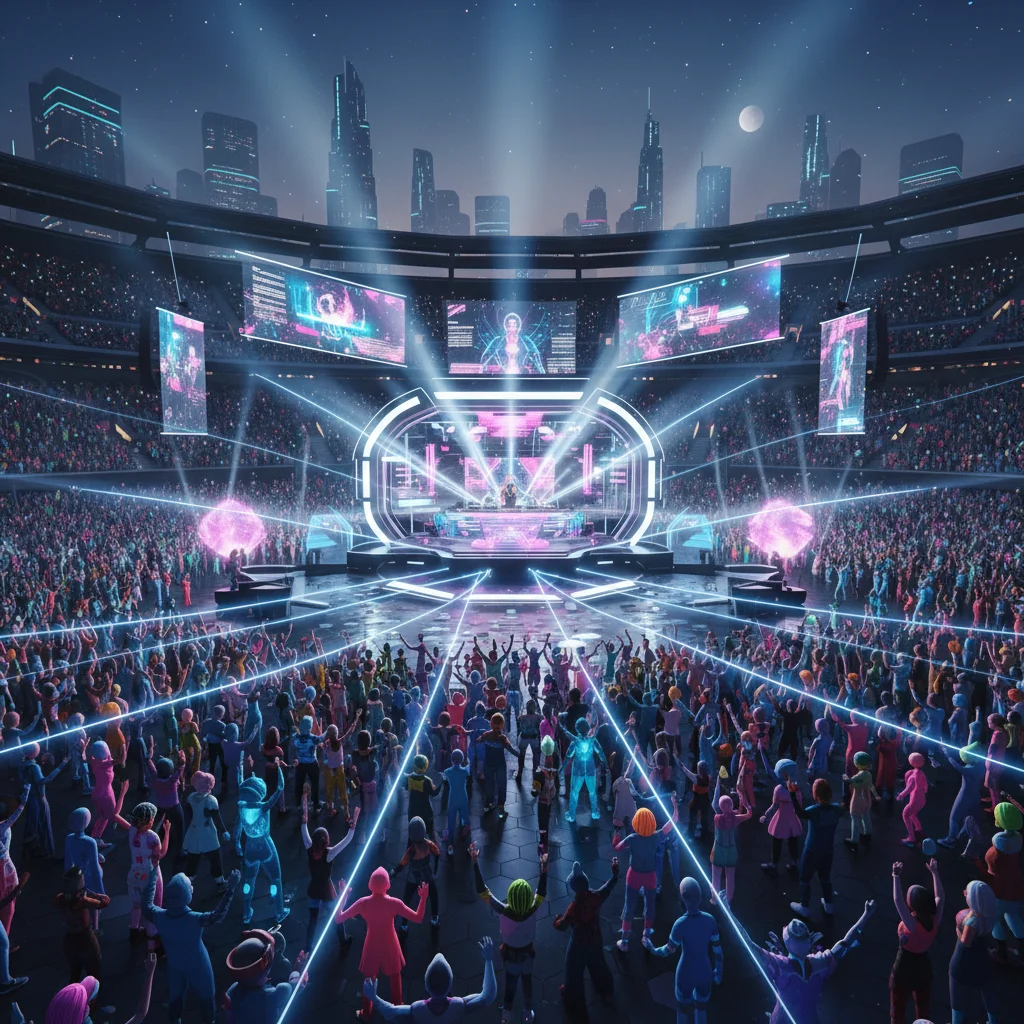
The COVID-19 pandemic accelerated the adoption of virtual events, but the metaverse takes this concept to an entirely new level. Beyond simple video conferencing, metaverse events offer truly immersive, interactive, and memorable experiences that are impossible in the physical world or on 2D screens. This represents a substantial metaverse revenue stream for event organizers and experiential marketing agencies.
Beyond Zoom: Immersive Gatherings
From concerts and conferences to product launches and art exhibitions, virtual events in the metaverse can attract global audiences, eliminate geographical barriers, and offer unique forms of engagement. US innovators can specialize in:
- Metaverse Event Planning and Production: Designing, building, and managing all aspects of virtual events, from conceptualization to execution. This includes creating custom virtual venues, managing avatar interactions, and integrating interactive elements.
- Experiential Marketing Campaigns: Developing bespoke metaverse experiences for brands looking to connect with consumers in novel, immersive ways. This could involve virtual product showrooms, interactive brand activations, or gamified marketing events.
- Interactive Content Creation: Producing 3D assets, animations, and interactive experiences specifically for virtual events, such as holographic presenters, dynamic stage designs, or real-time audience participation features.
- Ticketing and Access Solutions: Developing secure, NFT-based ticketing systems for exclusive metaverse events, allowing for verifiable attendance and potential secondary market sales.
- Virtual Venue Development: Creating and leasing out customizable virtual venues that can host a variety of events, from small gatherings to massive concerts or conferences.
The ability to scale events to unprecedented numbers of attendees, coupled with lower overheads compared to physical events, makes this an attractive proposition for businesses and artists alike. The challenge lies in creating engaging experiences that leverage the unique capabilities of the metaverse, rather than simply replicating physical events in a virtual space. US innovators with backgrounds in event management, game design, and digital marketing are well-suited to tap into these metaverse revenue streams.
Monetization Models for Virtual Events
- Ticket Sales (including NFT tickets): Charging for access to premium virtual concerts, conferences, or exclusive experiences.
- Sponsorships and Brand Placements: Offering brands opportunities to sponsor events, have virtual booths, or integrate their products into the experience.
- Virtual Merchandise Sales: Selling exclusive digital merchandise (NFTs) related to the event, such as concert tees for avatars or collectible art pieces.
- Data and Analytics: Collecting valuable data on attendee behavior and preferences, which can be anonymized and sold to market research firms or used to optimize future events.
- Consulting and Services: Offering expertise to companies and individuals looking to host their own metaverse events.
As the metaverse becomes more sophisticated, so too will the possibilities for virtual events. Innovators who can push the boundaries of interactivity and immersion will establish dominant positions in this exciting metaverse revenue stream.
5. AI-Driven NPCs and Intelligent Virtual Assistants
The metaverse won’t just be populated by human avatars; it will also be teeming with AI-driven Non-Player Characters (NPCs) and intelligent virtual assistants. These AI entities will enhance user experiences, provide services, and even act as autonomous economic agents, opening up a fascinating and complex metaverse revenue stream.
Populating the Metaverse with Smart Agents
Current NPCs in games are often rudimentary, following scripted paths. However, with advancements in AI, metaverse NPCs will become far more sophisticated, capable of natural language interaction, learning, adapting, and even exhibiting personality. US innovators can focus on:
- Advanced NPC Development: Creating highly intelligent and customizable AI characters that can serve various roles – from shopkeepers and tour guides to companions and quest givers – making metaverse environments feel more alive and responsive.
- Virtual Assistant Services: Developing AI assistants specifically for the metaverse, capable of helping users navigate, find information, manage digital assets, or even perform complex tasks within virtual worlds.
- AI-Powered Content Generation: Utilizing AI to dynamically generate quests, dialogues, environmental details, or even entire mini-games within the metaverse, providing endless fresh content.
- Emotional AI for Avatars: Developing AI that can analyze user sentiment and adapt NPC interactions or even avatar expressions in real-time, leading to more empathetic and engaging virtual interactions.
- Autonomous Economic Agents: Designing AI NPCs that can participate in the metaverse economy, buying, selling, and trading digital assets based on predefined goals or learned behaviors.
The integration of advanced AI will be crucial for scaling the metaverse and making it truly immersive. Without intelligent NPCs, virtual worlds risk feeling empty or repetitive. Innovators with expertise in AI, machine learning, natural language processing, and character design are uniquely positioned to capture this emerging metaverse revenue stream. The ethical implications of creating sentient or near-sentient AI in the metaverse will also be a critical area of development and regulation.
Monetization Models for AI NPCs and Assistants
- Licensing AI Models and APIs: Offering developers and metaverse platforms access to sophisticated AI NPC frameworks or specific AI functionalities.
- Subscription for Premium NPCs/Assistants: Users or businesses could subscribe to access more advanced, customizable, or specialized AI assistants or NPC services.
- In-Metaverse Commerce via AI: AI shopkeepers or agents could facilitate transactions, taking a small commission on sales of digital goods or services.
- Data Monetization (Ethical): Anonymized data on how users interact with AI can be valuable for improving metaverse experiences and can be ethically monetized.
- Custom AI Character Development: Providing bespoke AI character creation services for brands, celebrities, or individuals seeking a unique digital presence.
As the metaverse grows in complexity and scale, the demand for intelligent automation and dynamic interaction will only increase. US innovators focusing on AI-driven solutions will find themselves at the forefront of a transformative metaverse revenue stream.
Conclusion: Seizing the Metaverse Opportunity by 2026
The metaverse is not just a technological trend; it’s an evolutionary leap in how humans interact with digital information and each other. By 2026, the foundational elements will be firmly in place, and the early adopters and innovators will have already begun to reap significant rewards. For US innovators, the five untapped metaverse revenue streams discussed – virtual real estate, digital fashion, immersive educational platforms, virtual events, and AI-driven NPCs – represent not just opportunities, but blue oceans of potential.
Success in this new frontier will require a blend of technical prowess, creative vision, and a deep understanding of user behavior in virtual environments. It will also demand a willingness to iterate rapidly, embrace new technologies like blockchain and advanced AI, and collaborate across diverse disciplines. The fragmented nature of the early metaverse means that interoperability and user-centric design will be paramount.
The time to act is now. Waiting for the metaverse to fully mature means missing out on the foundational opportunities. US innovators who are bold enough to experiment, invest, and build in these identified areas will not only secure their own financial futures but will also play a pivotal role in shaping the very fabric of the metaverse economy. The digital gold rush is here, and the most prepared and visionary will be the ones to strike it rich in the expansive, interconnected worlds of tomorrow.
By focusing on these strategic metaverse revenue streams, US businesses and entrepreneurs can position themselves as leaders in the next wave of digital innovation, creating value, fostering communities, and defining the future of human interaction in the metaverse by 2026 and beyond.