The Power of Diversification: How 7 Asset Classes Can Stabilize Your 2026 Returns

The Power of Diversification: How 7 Asset Classes Can Stabilize Your 2026 Returns
In the ever-evolving landscape of global finance, the adage “don’t put all your eggs in one basket” has never been more pertinent. As we look towards 2026, investors face a myriad of uncertainties, from geopolitical shifts and technological disruptions to inflation concerns and interest rate fluctuations. Navigating this complex environment requires a robust strategy, and at its core lies the principle of diversification. Building a diversified investment portfolio is not merely a suggestion; it is a fundamental imperative for stabilizing returns, mitigating risks, and achieving long-term financial prosperity.
This comprehensive guide will delve into the critical importance of a diversified investment portfolio, exploring how strategically allocating your capital across seven distinct asset classes can fortify your financial position. We will dissect each asset class, highlighting its unique characteristics, potential benefits, and how it contributes to a well-rounded investment strategy. Whether you’re a seasoned investor or just beginning your financial journey, understanding these principles is key to securing your financial future.
Understanding Diversification: More Than Just Spreading Risk
At its heart, diversification is the practice of investing in a variety of assets to reduce overall risk. The idea is that different assets react differently to the same economic events. When one asset class performs poorly, another might perform well, thereby offsetting potential losses and smoothing out portfolio volatility. However, true diversification goes beyond simply owning multiple stocks or bonds; it involves allocating capital across different asset classes that have low correlations with each other.
A well-constructed diversified investment portfolio aims to achieve an optimal balance between risk and return. By combining assets with varying risk-return profiles, investors can potentially achieve higher returns for a given level of risk, or lower risk for a given level of return. This is particularly crucial in today’s dynamic market, where single-asset concentration can expose investors to significant downside risks. For 2026, with potential economic headwinds and opportunities on the horizon, a thoughtful approach to diversification will be paramount.
Why Diversification is Your Best Defense in 2026
- Market Volatility: Global markets are inherently volatile. Diversification helps cushion the impact of sharp downturns in any single market segment.
- Economic Cycles: Different asset classes perform better during different phases of the economic cycle. A diversified portfolio can capture growth opportunities regardless of the prevailing economic conditions.
- Inflation Protection: Certain asset classes, like real estate and commodities, can offer a hedge against inflation, preserving your purchasing power.
- Interest Rate Changes: While bonds are sensitive to interest rates, other asset classes may react differently, providing balance.
- Unforeseen Events: Black swan events, though rare, can have profound impacts. Diversification acts as a protective layer against such unpredictable occurrences.
The 7 Essential Asset Classes for Your Diversified Investment Portfolio
Let’s explore the seven key asset classes that form the bedrock of a truly diversified investment portfolio. Each offers unique characteristics and plays a vital role in balancing risk and reward.
1. Equities (Stocks)
Equities represent ownership stakes in publicly traded companies. They are generally considered growth-oriented investments, offering the potential for significant capital appreciation and dividend income. However, they also come with higher volatility compared to other asset classes.
- Benefits: High growth potential, inflation hedge over the long term, dividend income.
- Risks: Market volatility, company-specific risks, economic downturns.
- How to Diversify: Invest across different sectors (technology, healthcare, consumer staples), market capitalizations (large-cap, mid-cap, small-cap), geographies (domestic, international, emerging markets), and investment styles (growth, value). Exchange-Traded Funds (ETFs) and mutual funds offer an easy way to achieve broad equity exposure.
- Outlook for 2026: Equities are expected to remain a core component of growth portfolios. Focus on sectors with strong fundamentals, innovation, and resilience to potential economic shifts.
2. Fixed Income (Bonds)
Fixed income securities, primarily bonds, represent loans made to governments, municipalities, or corporations. They are generally considered less volatile than stocks and provide a steady stream of income through interest payments. Bonds play a crucial role in providing stability and capital preservation within a diversified investment portfolio.
- Benefits: Capital preservation, regular income stream, lower volatility than stocks, diversification benefits during equity market downturns.
- Risks: Interest rate risk (bond prices fall when rates rise), inflation risk, credit risk (default by the issuer).
- How to Diversify: Invest in a mix of government bonds (Treasuries), corporate bonds (investment-grade and high-yield), municipal bonds, and international bonds. Consider different maturities (short, intermediate, long-term) to manage interest rate risk.
- Outlook for 2026: With potential interest rate normalization, bonds will continue to offer stability. Shorter-duration bonds might be favored in a rising rate environment, while longer-duration bonds could be attractive if rates stabilize or decline.
3. Real Estate
Real estate investments involve owning or investing in physical properties (residential, commercial, industrial) or real estate-related assets. It can provide both income (from rent) and capital appreciation over time, often acting as a hedge against inflation.
- Benefits: Income generation, potential for capital appreciation, inflation hedge, tangible asset.
- Risks: Illiquidity, market downturns, property-specific risks, management intensity (for direct ownership).
- How to Diversify: Direct ownership of properties, Real Estate Investment Trusts (REITs), real estate crowdfunding, or private real estate funds. Diversify across property types (residential, office, retail, industrial, data centers) and geographies.
- Outlook for 2026: Real estate markets can be localized and influenced by interest rates. REITs offer liquidity and diversification benefits. Focus on sectors with strong demand drivers like logistics, data centers, and multi-family housing in growing urban areas.
4. Commodities
Commodities are raw materials or primary agricultural products that can be bought and sold. Examples include precious metals (gold, silver), energy (oil, natural gas), and agricultural products (corn, wheat). They often perform well during periods of inflation or geopolitical instability, making them a valuable component of a diversified investment portfolio.
- Benefits: Inflation hedge, portfolio diversification (low correlation with stocks and bonds), potential for capital appreciation during supply disruptions.
- Risks: Volatility, supply and demand fluctuations, storage costs (for direct ownership), geopolitical risks.
- How to Diversify: Invest through commodity ETFs, futures contracts, or companies involved in commodity production (e.g., mining stocks, energy companies). Diversify across different types of commodities.
- Outlook for 2026: Commodities can be volatile but offer protection against inflation. Energy and agricultural commodities might see sustained demand, while precious metals can act as a safe haven during uncertainty.
5. Alternative Investments (Hedge Funds, Private Equity, Venture Capital)
Alternative investments are financial assets that do not fall into traditional categories like stocks, bonds, or cash. This broad category includes hedge funds, private equity, venture capital, and even collectibles or art. They typically have lower correlation with traditional markets and can offer enhanced returns, but often come with higher fees, illiquidity, and higher minimum investment requirements.
- Benefits: High return potential, significant diversification benefits, access to unique market opportunities.
- Risks: Illiquidity, high fees, lack of transparency, complex structures, high minimum investment.
- How to Diversify: Access through specialized funds, accredited investor platforms, or by investing in publicly traded companies that invest in these areas. For most retail investors, limited exposure through publicly traded alternatives or funds of funds might be more accessible.
- Outlook for 2026: Private markets continue to be a source of innovation and growth. While less accessible to average investors, understanding their role in a truly diversified investment portfolio is key for comprehensive financial planning.
6. Cash and Cash Equivalents
Cash and cash equivalents include savings accounts, money market funds, short-term government bonds, and certificates of deposit (CDs). While they offer minimal returns, they provide liquidity, capital preservation, and a safe harbor during market downturns. A strategic allocation to cash is crucial for emergency funds and for seizing opportunistic investments.
- Benefits: Liquidity, capital preservation, low risk, provides dry powder for future investments.
- Risks: Inflation erodes purchasing power, low returns, opportunity cost.
- How to Diversify: Maintain an adequate emergency fund in a high-yield savings account or money market fund. Strategically hold a portion of your portfolio in cash to capitalize on market dips.
- Outlook for 2026: With potentially higher interest rates, cash equivalents might offer slightly better returns than in recent years. It remains a crucial component for liquidity and risk management.
7. Cryptocurrencies and Digital Assets
The newest and arguably most volatile asset class, cryptocurrencies like Bitcoin and Ethereum, along with other digital assets (e.g., NFTs, stablecoins), have emerged as a distinct category. While highly speculative, they offer unique characteristics such as decentralization and potential for significant growth, though they also carry substantial risks.
- Benefits: High growth potential, decentralization, hedge against traditional financial systems, early-stage technology investment.
- Risks: Extreme volatility, regulatory uncertainty, security risks (hacking), technological risks, bubble potential.
- How to Diversify: For most investors, a small, speculative allocation (e.g., 1-5% of a portfolio) to major cryptocurrencies like Bitcoin and Ethereum, possibly through reputable exchanges or regulated funds, is advisable. Avoid overexposure due to extreme volatility.
- Outlook for 2026: Cryptocurrencies are maturing but remain highly speculative. Regulatory clarity and institutional adoption could drive further growth, but significant volatility is expected. Approach with caution and a long-term perspective.
Building Your Diversified Investment Portfolio for 2026
Constructing a robust diversified investment portfolio is an ongoing process that requires careful consideration of your personal financial situation, risk tolerance, and investment goals. Here’s a step-by-step approach:
1. Assess Your Risk Tolerance and Investment Horizon
Before you even think about asset allocation, understand how much risk you are comfortable taking and for how long you plan to invest. A younger investor with a long time horizon can generally afford to take on more risk (e.g., higher equity allocation) than someone nearing retirement.
2. Define Your Financial Goals
Are you saving for retirement, a down payment on a house, or your child’s education? Each goal may have a different time horizon and require a slightly different asset allocation strategy. Clearly defined goals will guide your investment decisions.
3. Determine Your Optimal Asset Allocation
Based on your risk tolerance and goals, decide on the percentage of your portfolio to allocate to each asset class. There’s no one-size-fits-all answer, but here’s a general framework:
- Aggressive (High-Growth, High-Risk): Higher allocation to equities, potentially a small percentage to alternatives and crypto.
- Moderate (Balanced): A mix of equities, bonds, and real estate, with smaller allocations to commodities and alternatives.
- Conservative (Capital Preservation): Higher allocation to bonds and cash, lower exposure to equities and other volatile assets.
For example, a moderate investor might aim for 60% equities, 30% bonds, 5% real estate, 3% commodities, and 2% cash/alternatives. Remember, this is a starting point, and professional advice can help tailor this to your specific needs.
4. Implement Your Strategy
Once you have your allocation percentages, begin investing in the chosen asset classes. Utilize a mix of low-cost index funds, ETFs, and potentially individual securities to gain exposure. Consider automating your investments to ensure consistency.
5. Regular Monitoring and Rebalancing
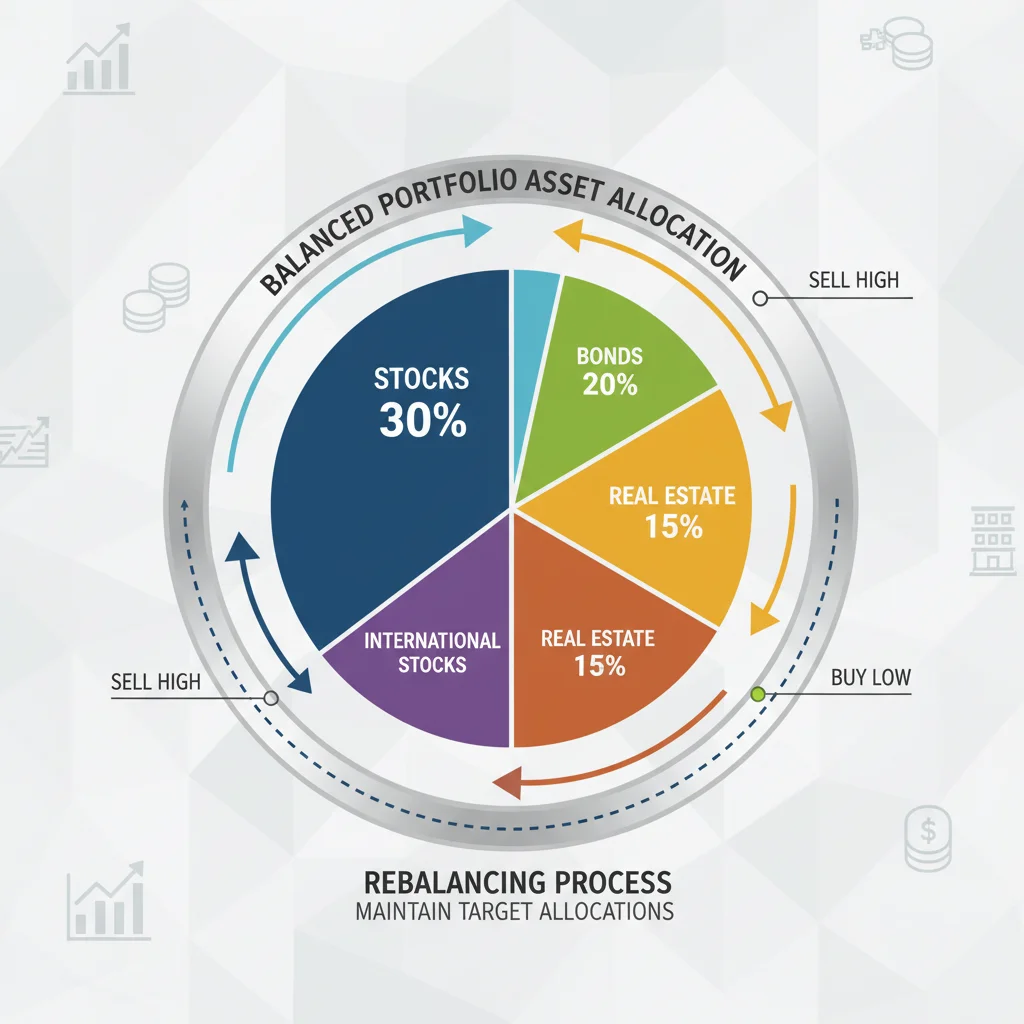
Market fluctuations will inevitably cause your asset allocation to drift from your target percentages. This is where regular monitoring and rebalancing come in. Rebalancing involves selling assets that have performed well (and now represent a larger portion of your portfolio) and buying assets that have underperformed (and now represent a smaller portion) to bring your portfolio back to your desired allocation.
This disciplined approach helps you “buy low and sell high” automatically and ensures your risk level remains consistent with your comfort level. Most financial advisors recommend rebalancing annually or semi-annually, or when an asset class deviates by a certain percentage (e.g., 5-10%) from its target.
Advanced Diversification Strategies for 2026
Beyond the fundamental allocation across asset classes, consider these advanced strategies to further enhance your diversified investment portfolio:
Geographic Diversification
Don’t limit your equity and bond investments to your home country. Global markets offer unique growth opportunities and can help offset risks associated with a single economy. Emerging markets, while more volatile, can offer higher growth potential.
Sector Diversification
Within equities, spread your investments across various industries. A portfolio heavily concentrated in one sector (e.g., technology) can be highly susceptible to downturns specific to that industry. A balanced approach across defensive (healthcare, utilities) and cyclical (consumer discretionary, industrials) sectors can provide stability.
Investment Style Diversification
Consider a mix of growth and value stocks. Growth stocks are typically companies expected to grow earnings at an above-average rate, while value stocks are often mature companies trading below their intrinsic value. These styles can perform differently under various market conditions.
Currency Diversification
Holding assets denominated in different currencies can provide a hedge against fluctuations in your home currency, especially for international investors or those with global financial obligations.

Common Diversification Pitfalls to Avoid
While the benefits of a diversified investment portfolio are clear, several common mistakes can undermine its effectiveness:
- Over-diversification: Owning too many different assets can lead to “diworsification,” where the benefits of diversification diminish, and tracking your portfolio becomes overly complex. Focus on meaningful allocations rather than countless small positions.
- Ignoring Correlations: True diversification requires assets with low correlation. If all your assets move in the same direction, you haven’t effectively diversified. Research the historical correlation between your chosen asset classes.
- Failing to Rebalance: As discussed, allowing your portfolio to drift from its target allocation negates the benefits of your initial diversification strategy.
- Chasing Performance: Reacting to recent market trends by selling underperforming assets and buying top performers often leads to buying high and selling low. Stick to your long-term strategy.
- Concentration in Employer Stock: While tempting, having a significant portion of your net worth tied up in your company’s stock adds unnecessary risk. Your job is already tied to the company; your investments should be separate.
- Emotional Investing: Fear and greed are powerful emotions that can derail even the best-laid plans. Adhere to your strategy, especially during market downturns.
The Role of Professional Guidance in Building a Diversified Investment Portfolio
For many, the complexities of building and maintaining a truly diversified investment portfolio can be daunting. This is where the expertise of a financial advisor can be invaluable. A qualified advisor can help you:
- Assess your unique financial situation, risk tolerance, and goals.
- Develop a personalized asset allocation strategy.
- Select appropriate investment vehicles (ETFs, mutual funds, individual securities).
- Implement and monitor your portfolio.
- Provide guidance on rebalancing and adjusting your strategy as life circumstances change or market conditions evolve.
- Educate you on market dynamics and help you avoid emotional investing pitfalls.
Even if you prefer a DIY approach, consulting with a fee-only financial planner for a one-time portfolio review can provide valuable insights and ensure you are on the right track for 2026 and beyond.
Conclusion: Stabilizing Your Future with a Diversified Investment Portfolio
As we navigate towards 2026, the global economic landscape promises both opportunities and challenges. The ability to weather market storms and capture growth will largely depend on the resilience of your investment strategy. A thoughtfully constructed and consistently managed diversified investment portfolio, spanning across equities, fixed income, real estate, commodities, alternatives, cash, and even a prudent allocation to digital assets, is your most powerful tool for achieving financial stability and long-term wealth accumulation.
Remember, diversification is not about eliminating risk entirely, but about managing it effectively. It’s about building a portfolio that can absorb shocks from any single asset class and continue to grow steadily over time. By understanding the unique contributions of each asset class and adhering to a disciplined approach of regular monitoring and rebalancing, you can stabilize your returns and confidently pursue your financial aspirations. Start building your robust diversified investment portfolio today for a more secure and prosperous tomorrow.