6G Research Impact: US Telecom Infrastructure by 2030
The Impact of 6G Research on US Telecommunications Infrastructure by 2030: A Deep Dive
The telecommunications landscape is in a constant state of evolution, with each new generation of wireless technology ushering in unprecedented capabilities and transforming the way we live, work, and interact. As 5G continues its global rollout, the world’s leading researchers and innovators are already looking ahead to 6G. This next-generation wireless technology, anticipated to be deployed by 2030, promises to redefine connectivity with capabilities far exceeding anything we currently imagine. The impact of 6G US Telecom infrastructure will be monumental, shaping not only the digital economy but also societal structures and national security.
This article embarks on a deep dive into the anticipated impact of 6G research on US telecommunications infrastructure by 2030. We will explore the technological advancements that define 6G, the strategic implications for the United States, the challenges that must be overcome, and the opportunities that lie ahead. Understanding the trajectory of 6G US Telecom is crucial for policymakers, industry leaders, and citizens alike, as it will dictate the pace of innovation and the nation’s competitive standing on the global stage.
Understanding the Core Tenets of 6G Technology
Before delving into its impact, it’s essential to grasp what 6G entails. While still in its nascent research phases, 6G is envisioned to deliver peak data rates of 1 terabit per second (Tbps) or even higher, with latency dropping to microseconds. This represents a thousand-fold increase in speed compared to 5G and near-instantaneous response times. However, 6G is more than just speed; it’s about creating a truly intelligent, pervasive, and immersive communication environment.
Key Technological Pillars of 6G:
- Terahertz (THz) Spectrum: 6G will leverage higher frequency bands, including the terahertz spectrum, to achieve its unprecedented data rates. This requires significant advancements in transceiver design, antenna technology, and signal processing to overcome the challenges associated with THz propagation, such as high atmospheric absorption and limited range.
- Artificial Intelligence (AI) and Machine Learning (ML) Integration: AI will be fundamentally embedded in the 6G network architecture, from network management and optimization to intelligent resource allocation and security. AI-powered algorithms will enable self-organizing networks, predictive maintenance, and highly personalized services. The network itself will become a giant, distributed AI system.
- Integrated Sensing and Communication (ISAC): 6G networks will not only transmit and receive data but also sense their environment. This means base stations and user devices could simultaneously perform communication and sensing functions, enabling hyper-accurate localization, gesture recognition, environmental monitoring, and even holographic communication.
- Blockchain and Distributed Ledger Technologies (DLT): For enhanced security, privacy, and decentralized network management, blockchain and DLT are expected to play a significant role in 6G. This could facilitate secure data sharing, identity management, and the creation of trusted communication environments.
- Quantum Computing and Communication: While perhaps not fully mature by 2030, early integration of quantum computing-safe cryptography and quantum communication principles could begin to emerge in 6G, offering unparalleled security and new computational paradigms.
- Non-Terrestrial Networks (NTN): 6G will heavily rely on the integration of satellite, High-Altitude Platform Station (HAPS), and Unmanned Aerial Vehicle (UAV) communication to provide ubiquitous coverage, even in remote or underserved areas, and to enhance network resilience.
The convergence of these technologies paints a picture of a future where connectivity is seamless, intelligent, and deeply integrated into the fabric of daily life. The research into these areas is a global race, and the United States’ contributions to 6G US Telecom development are critical for maintaining its technological leadership.
Transformative Impact on US Telecommunications Infrastructure
The transition to 6G will necessitate a profound transformation of the existing US telecommunications infrastructure. This isn’t merely an upgrade; it’s a fundamental reimagining of how networks are built, operated, and secured.
Network Architecture Overhaul:
The current cellular architecture, primarily designed for human-to-human communication, will evolve into a more complex, multi-layered system optimized for machine-to-machine interaction and immersive experiences. This will involve:
- Dense Heterogeneous Networks (HetNets): A far greater density of small cells, microcells, and picocells will be required to exploit the higher frequency bands and provide pervasive coverage, especially in urban areas.
- Edge Computing at Scale: To achieve ultra-low latency, a massive expansion of edge computing capabilities will be necessary. Data processing and AI inference will occur closer to the source, reducing backhaul traffic and enabling real-time applications.
- Cloud-Native and Virtualized Networks: The move towards fully cloud-native, virtualized, and software-defined networks (SDN/NFV) will accelerate. This will allow for greater flexibility, scalability, and automated management of network resources.
- Optical Fiber Backbone Enhancement: The backbone infrastructure, predominantly fiber optics, will need significant upgrades to handle the exponential increase in data traffic generated by 6G. This includes deploying more fiber to the edge and investing in next-generation optical technologies.

Spectrum Allocation and Management:
The availability and efficient allocation of spectrum will be paramount for 6G US Telecom. The move to terahertz frequencies presents both opportunities and challenges. Regulators will need to identify and clear new spectrum bands, develop innovative sharing mechanisms, and establish robust interference management protocols. International harmonization of spectrum will also be crucial for global interoperability.
Security and Resilience:
With an increasingly interconnected and intelligent network, the attack surface expands dramatically. 6G infrastructure will require advanced security protocols, including quantum-safe cryptography, AI-driven threat detection, and robust resilience mechanisms to withstand cyberattacks, natural disasters, and other disruptions. The integrity and trustworthiness of the network will be non-negotiable.
Economic and Societal Implications for the US
The impact of 6G research extends far beyond technological advancements, promising profound economic and societal shifts within the United States.
Economic Growth and Innovation:
- New Industries and Business Models: 6G will be the catalyst for entirely new industries and business models, particularly in areas like holographic communication, extended reality (XR), sentient environments, and truly autonomous systems. This will foster innovation and create new job opportunities.
- Productivity Gains: Ultra-reliable low-latency communication (URLLC) and massive machine-type communication (mMTC) will revolutionize sectors such as manufacturing (Industry 5.0), logistics, healthcare (remote surgery, AI diagnostics), and agriculture (precision farming).
- Global Competitiveness: Leadership in 6G research and deployment will be a key determinant of a nation’s economic competitiveness. The US must invest heavily to remain at the forefront of this technological race.
Societal Transformation:
- Enhanced Public Safety: Real-time data from integrated sensing capabilities, coupled with AI, can significantly improve emergency response, disaster prediction, and smart city management.
- Improved Healthcare: Telemedicine, remote surgery, and AI-powered diagnostics will become more accessible and effective, potentially bridging healthcare disparities.
- Immersive Education and Entertainment: 6G will enable truly immersive virtual and augmented reality experiences, transforming education, gaming, and entertainment.
- Digital Inclusion: By extending connectivity to underserved rural and remote areas through non-terrestrial networks, 6G has the potential to reduce the digital divide.
Challenges and Strategic Imperatives for 6G US Telecom
Despite the immense potential, the path to a fully realized 6G future for the US is fraught with significant challenges that require strategic foresight and concerted effort.
Research and Development Investment:
Developing 6G technologies requires massive, sustained investment in fundamental research, advanced engineering, and prototyping. The US government, academia, and private sector must collaborate to fund and accelerate these efforts, ensuring that intellectual property and innovation remain within the country.
Workforce Development:
A highly skilled workforce will be essential to design, deploy, and maintain 6G networks. This necessitates investment in STEM education, specialized training programs, and attracting top talent in areas like AI, quantum computing, radio frequency engineering, and cybersecurity.
Supply Chain Security and Resilience:
The lessons learned from 5G regarding supply chain vulnerabilities are even more critical for 6G. The US must foster a diverse and secure domestic supply chain for critical 6G components and equipment, reducing reliance on potentially untrusted foreign vendors. This includes investing in semiconductor manufacturing and advanced materials research.
Regulatory Framework and Policy:
Existing regulatory frameworks for spectrum allocation, infrastructure deployment, and data privacy may not be adequate for 6G. Policymakers will need to be agile in adapting regulations to foster innovation while ensuring fair competition, consumer protection, and national security. This includes streamlining permitting processes for new infrastructure.
International Collaboration and Standards:
While competition is inherent, international collaboration on 6G standards is vital for global interoperability and economies of scale. The US must actively participate in international standards bodies to ensure its interests are represented and to influence the direction of global 6G development. Simultaneously, it must protect its technological edge.
Ethical Considerations:
The pervasive nature of 6G, with its integrated sensing and AI capabilities, raises significant ethical questions regarding privacy, surveillance, bias in AI algorithms, and the potential for misuse. Robust ethical guidelines and regulatory oversight will be critical to ensure responsible development and deployment.
Key Players and Initiatives in US 6G Research
Numerous entities across the United States are actively contributing to 6G research, forming a complex ecosystem of innovation. This collaborative effort is vital for advancing 6G US Telecom capabilities.
Academic Institutions:
Leading universities like Stanford, MIT, UC Berkeley, Georgia Tech, and NYU are at the forefront of fundamental 6G research. Their work spans novel antenna designs, THz communication, AI/ML for networks, quantum networking, and integrated sensing. These institutions are also crucial for training the next generation of engineers and researchers.
Government Agencies:
Agencies such as the National Science Foundation (NSF), DARPA (Defense Advanced Research Projects Agency), and NIST (National Institute of Standards and Technology) are funding critical research initiatives. The NSF in particular has established various centers and programs dedicated to future wireless technologies, often in partnership with industry.
Industry Leaders:
Major telecommunications companies and technology giants, including AT&T, Verizon, T-Mobile, Qualcomm, Intel, and NVIDIA, are heavily invested in 6G R&D. They are exploring new chip architectures, developing advanced software platforms, and conducting trials for emerging 6G technologies. Their involvement ensures that research translates into deployable solutions.
Consortia and Public-Private Partnerships:
Organizations like the O-RAN Alliance, Next G Alliance, and various IEEE working groups are bringing together diverse stakeholders to collaborate on standards, research roadmaps, and proof-of-concept demonstrations. These partnerships are essential for accelerating innovation and ensuring a cohesive approach to 6G development.

Envisioning the 6G US Telecom Landscape by 2030
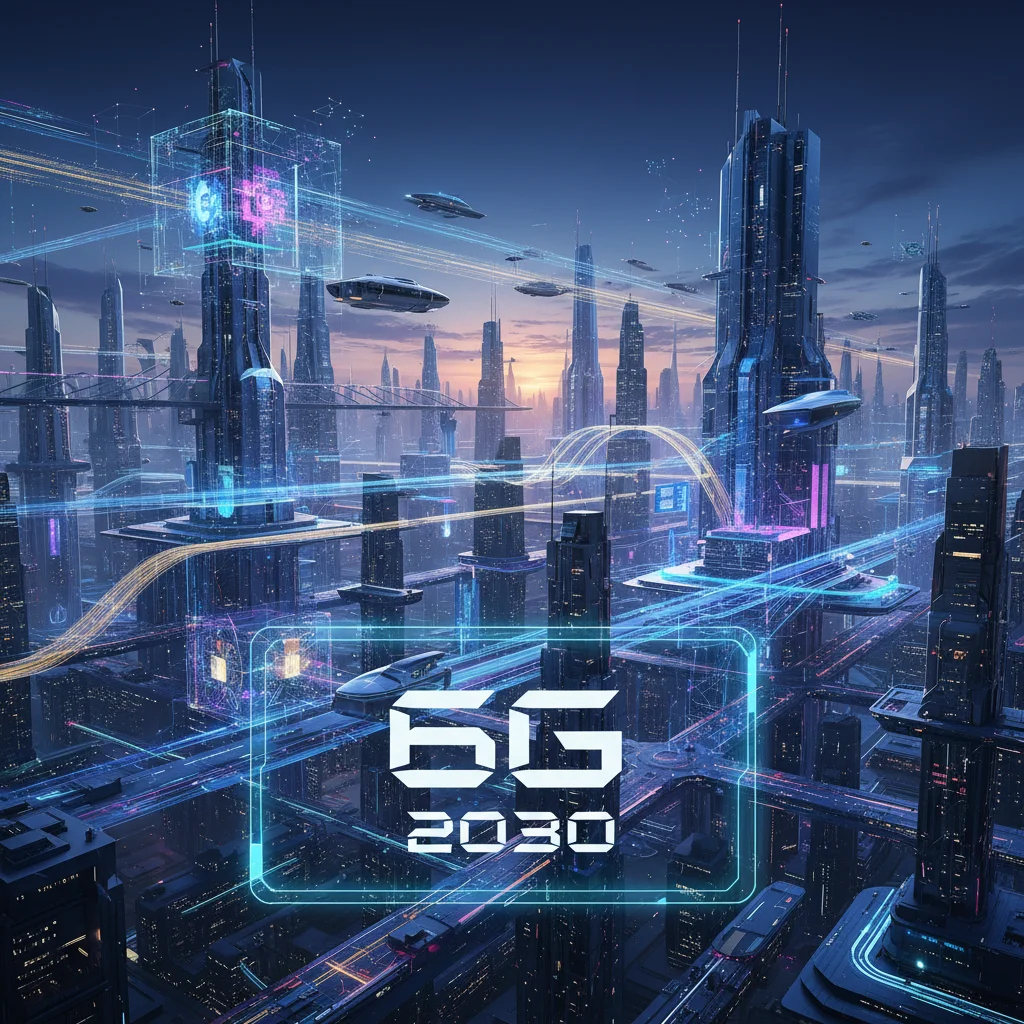
By 2030, the vision for 6G US Telecom is one of a hyper-connected, intelligent, and deeply integrated digital ecosystem. We can anticipate:
- Ubiquitous Connectivity: Seamless, high-speed, and low-latency connectivity will be available almost everywhere, bridging urban and rural divides.
- Sentient Environments: Homes, offices, and public spaces will become ‘sentient,’ capable of understanding and responding to human needs and environmental conditions through integrated sensing and AI.
- True Immersive Experiences: Holographic communication, realistic virtual meetings, and fully immersive XR environments will become commonplace, transforming entertainment, education, and remote work.
- Autonomous Systems Everywhere: Fully autonomous vehicles, drones, and robots will operate reliably and safely, supported by ultra-low latency and highly accurate positioning from 6G networks.
- Personalized Healthcare: Wearable sensors and AI-powered diagnostics connected via 6G will provide continuous health monitoring and personalized medical interventions.
- Resilient and Secure Infrastructure: The core infrastructure will be highly resilient, self-healing, and secured against advanced cyber threats, ensuring national security and economic stability.
This future is not without its challenges, particularly in ensuring equitable access, managing data privacy, and navigating the ethical implications of such pervasive technology. However, the potential for positive transformation is immense.
Conclusion: Paving the Way for a 6G Future
The impact of 6G US Telecom research on the nation’s infrastructure by 2030 will be profound and multifaceted. It promises to usher in an era of unprecedented connectivity, intelligence, and immersive experiences, transforming every facet of life and industry. However, realizing this vision requires proactive and sustained effort.
The United States must prioritize robust investment in fundamental research and development, foster a highly skilled workforce, secure its supply chains, and establish forward-thinking regulatory frameworks. Collaboration between government, academia, and industry is not just beneficial but absolutely critical. By strategically addressing these imperatives, the US can ensure it remains a global leader in telecommunications, harnessing the full potential of 6G to drive economic growth, enhance national security, and improve the quality of life for all its citizens.
The journey to 6G is a testament to human ingenuity and the relentless pursuit of progress. As we approach 2030, the foundations laid today in 6G research will determine the shape of our connected future, making the strategic decisions and investments made now more crucial than ever for the trajectory of 6G US Telecom.