2026 US Economic Forecast: Investment Portfolio Strategies

The economic landscape is a constantly shifting entity, influenced by a myriad of global and domestic factors. As we cast our gaze towards the horizon of 2026, understanding the potential trajectory of the 2026 US Economy Forecast becomes paramount for investors seeking to optimize their portfolios. This comprehensive analysis aims to dissect the anticipated economic environment, identify key trends, highlight potential challenges, and provide actionable strategies to position your investments for success over the next 12 months.
Forecasting the future is inherently complex, yet by examining current indicators, historical patterns, and expert consensus, we can build a robust framework for strategic planning. The US economy, a global powerhouse, is expected to navigate a path influenced by inflation dynamics, interest rate policies, technological advancements, geopolitical tensions, and consumer behavior. For the astute investor, this means a proactive approach to portfolio management, moving beyond conventional wisdom to embrace adaptable and resilient strategies.
Understanding the Macroeconomic Picture for the 2026 US Economy Forecast
Before diving into specific investment strategies, it’s crucial to establish a foundational understanding of the broader macroeconomic picture that will define the 2026 US Economy Forecast. Several key pillars will likely shape this outlook:
Inflation and Interest Rates: The Lingering Influence
Inflation, a dominant theme in recent years, is expected to continue playing a significant role. While many economists anticipate a gradual deceleration, the path to the Federal Reserve’s target inflation rate may not be smooth. Persistent supply chain issues, wage growth pressures, and geopolitical events could all contribute to inflationary spikes. Consequently, interest rate policy will remain a critical lever. The Federal Reserve’s decisions regarding federal funds rates will directly impact borrowing costs, corporate earnings, and the attractiveness of various asset classes. Investors must consider scenarios where rates remain elevated for longer than anticipated or, conversely, where a more aggressive easing cycle begins if economic growth falters significantly. Understanding this interplay is fundamental to making informed decisions for your investment portfolio.
Economic Growth: Resilience Amidst Headwinds
The US economy has demonstrated remarkable resilience, often defying predictions of slowdowns. For the 2026 US Economy Forecast, projections generally point towards moderate growth, albeit potentially slower than the post-pandemic boom. Factors such as consumer spending, business investment, and government expenditures will be primary drivers. However, global economic slowdowns, trade tensions, and domestic political uncertainties could act as headwinds. A soft landing, where inflation cools without a severe recession, remains the aspirational outcome, but investors should prepare for a range of possibilities, from continued expansion to a mild contraction.
Labor Market Dynamics: A Tightrope Walk
The US labor market has been exceptionally tight, characterized by low unemployment rates and strong wage growth. This robust employment picture supports consumer spending, a key component of economic growth. However, a tight labor market can also fuel inflationary pressures. As we look to 2026, the labor market’s trajectory will be a delicate balance. A gradual cooling, with unemployment rising slightly but not precipitously, would be ideal for managing inflation without triggering a recession. Investors should monitor job growth figures, wage inflation, and labor force participation rates closely, as these will offer valuable insights into the overall health and direction of the economy.
Technological Advancements: The AI Revolution and Beyond
The rapid evolution of technology, particularly in artificial intelligence (AI), is not just a sector-specific phenomenon but a transformative force impacting the entire economy. AI’s potential to enhance productivity, drive innovation, and reshape industries will be a significant factor in the 2026 US Economy Forecast. Companies embracing and integrating AI effectively could see substantial gains, while those lagging might face competitive disadvantages. This technological shift creates new investment opportunities and necessitates a re-evaluation of traditional industry valuations. From automation to data analytics, the ripple effects of technological progress will be felt across all sectors.
Key Challenges and Risks for the 2026 US Economy
While the outlook for the 2026 US Economy Forecast presents opportunities, it is also essential to acknowledge and prepare for potential challenges and risks that could impact investment portfolios.
Geopolitical Instability: An Ever-Present Threat
Geopolitical tensions, from ongoing conflicts to trade disputes and shifts in international alliances, pose a significant risk to global economic stability and, by extension, the US economy. Disruptions to supply chains, commodity price volatility, and altered investment flows can all stem from geopolitical events. Investors should maintain a diversified portfolio that can withstand unexpected international shocks and consider assets that historically perform well during periods of uncertainty, such as certain commodities or defensive sectors.
Fiscal Policy and Debt Levels: A Long-Term Concern
The US national debt continues to grow, raising long-term concerns about fiscal sustainability. While not an immediate crisis for the 2026 US Economy Forecast, the trajectory of government spending, taxation, and debt servicing costs could influence future economic growth and investor confidence. Potential legislative changes related to fiscal policy could also introduce volatility into markets. Understanding the implications of these fiscal dynamics is crucial for long-term portfolio planning.
Regulatory Landscape Shifts: Impact on Industries
Changes in the regulatory environment can have profound effects on specific industries and companies. New legislation concerning technology, environmental policies, financial services, or healthcare could create headwinds or tailwinds for various sectors. Investors should stay informed about potential regulatory shifts and assess their impact on the companies and industries within their portfolios. Proactive adjustments based on anticipated regulatory changes can help mitigate risks and capitalize on emerging opportunities.
Positioning Your Investment Portfolio for the 2026 US Economy Forecast
Given the anticipated macroeconomic environment and potential challenges, strategic adjustments to your investment portfolio are essential. Here’s how to position your holdings for the 2026 US Economy Forecast:
Diversification Remains Key
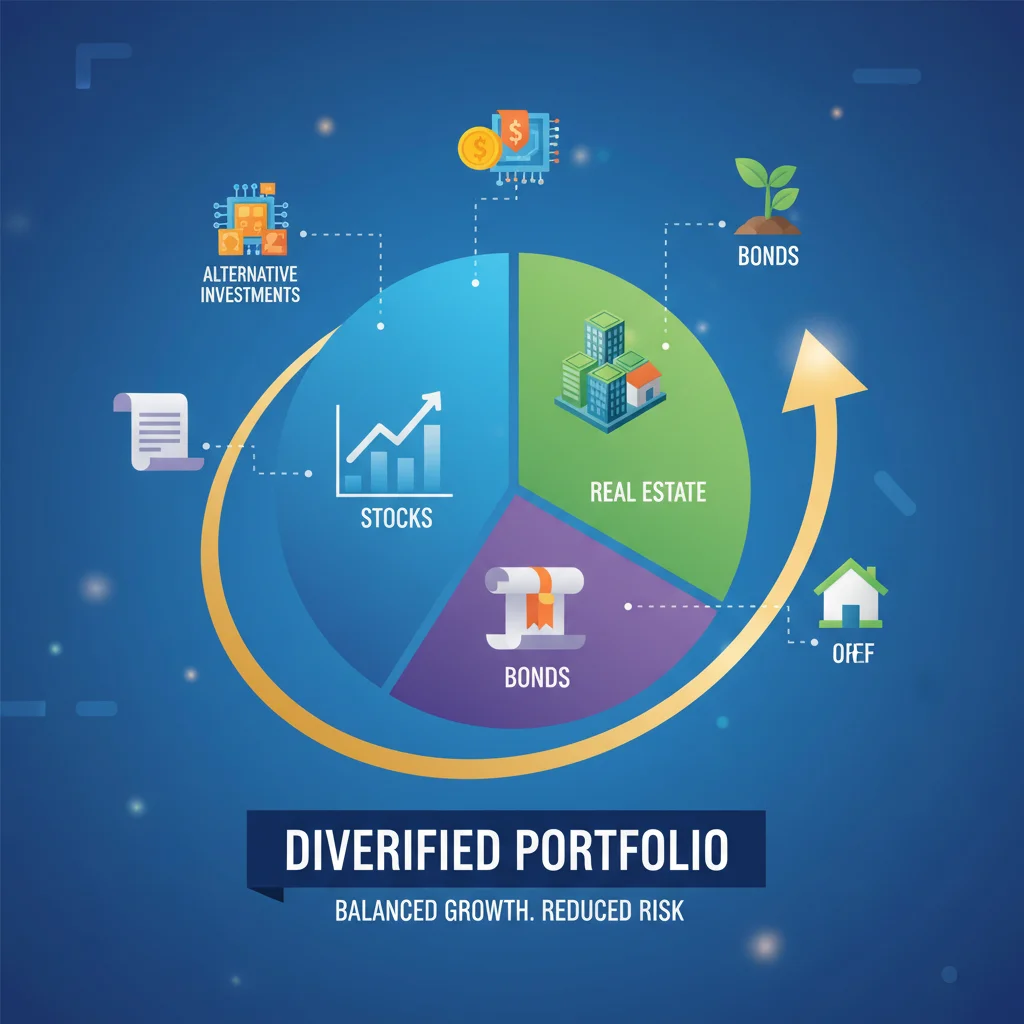
The timeless principle of diversification becomes even more critical in an uncertain economic climate. Spreading investments across various asset classes (stocks, bonds, real estate, commodities, alternative investments), sectors, and geographies helps mitigate risk. A well-diversified portfolio is better equipped to weather market volatility and capture growth opportunities wherever they arise. Avoid overconcentration in any single asset or sector, as this can expose your portfolio to undue risk.
Embrace Quality and Value Stocks
In an environment where economic growth might moderate and interest rates could remain elevated, companies with strong fundamentals, healthy balance sheets, consistent earnings, and sustainable competitive advantages tend to outperform. Focus on quality stocks that demonstrate pricing power, efficient operations, and robust free cash flow generation. Value stocks, particularly those that have been overlooked but possess solid underlying businesses, could also offer attractive entry points for the 2026 US Economy Forecast. These companies often provide a cushion during downturns and can deliver steady returns.
Consider Defensive Sectors
Defensive sectors, such as consumer staples, utilities, and healthcare, tend to be less sensitive to economic cycles. Demand for their products and services remains relatively stable even during economic slowdowns, making them attractive for investors seeking stability in their portfolio for the 2026 US Economy Forecast. While they may not offer explosive growth, they can provide a ballast during periods of market turbulence and often pay consistent dividends.

Explore Growth Opportunities in Technology and Innovation
Despite potential economic headwinds, innovation continues to drive significant growth. Sectors at the forefront of technological advancements, particularly those leveraging AI, renewable energy, biotechnology, and cybersecurity, offer compelling long-term investment opportunities. However, careful due diligence is crucial, as valuations in these areas can be high. Focus on companies with genuine innovation, strong intellectual property, and clear paths to profitability. The transformative power of these technologies will be a defining feature of the 2026 US Economy Forecast and beyond.
Re-evaluate Fixed Income Strategies
With the potential for interest rates to remain volatile, a nuanced approach to fixed income is necessary. Short-duration bonds might be preferable to longer-duration bonds if rates are expected to rise further, as they are less sensitive to interest rate fluctuations. High-quality corporate bonds and Treasury Inflation-Protected Securities (TIPS) could also play a role, offering protection against inflation. Investors should consider bond ladders or diversified bond funds to manage interest rate risk effectively. The role of fixed income in providing stability and income within the portfolio remains important, but its composition may need adjustment.
Real Estate: A Mixed Outlook
The real estate market faces a mixed outlook for the 2026 US Economy Forecast. Higher interest rates have impacted borrowing costs and property valuations, particularly in commercial real estate. However, certain segments, such as industrial properties (driven by e-commerce) or residential areas with strong demographic tailwinds, could still offer opportunities. Investors might consider real estate investment trusts (REITs) for diversified exposure, carefully selecting those with strong balance sheets and properties in resilient sectors. Geographic diversification within real estate investments can also mitigate localized risks.
Alternative Investments: Enhancing Portfolio Resilience
Alternative investments, such as private equity, hedge funds, commodities, or even certain structured products, can offer diversification benefits and potentially enhance returns, especially during periods of market volatility. These investments often have a low correlation with traditional stocks and bonds, providing a buffer against market downturns. However, they typically come with higher fees, less liquidity, and require a higher level of due diligence. For sophisticated investors, a carefully selected allocation to alternatives can strengthen the overall resilience of a portfolio for the 2026 US Economy Forecast.
Cash Management and Liquidity
Maintaining an adequate cash reserve is always prudent, but particularly so in an uncertain economic environment. Cash provides liquidity for unexpected expenses, allows investors to capitalize on market opportunities during downturns, and acts as a safe haven. With potentially higher interest rates, parking cash in high-yield savings accounts or short-term Treasury bills can also generate reasonable returns, making it a more attractive component of the portfolio than in previous low-interest-rate environments.
Sector-Specific Considerations for 2026
Delving deeper, certain sectors warrant specific attention when preparing for the 2026 US Economy Forecast:
Technology Sector: Navigating Innovation and Valuation
While the tech sector remains a long-term growth driver, investors should differentiate between established giants with robust cash flows and speculative ventures. Focus on companies with sustainable business models, strong competitive moats, and reasonable valuations. The AI revolution will continue to create winners, but identifying the true innovators from those simply benefiting from hype will be key. Cybersecurity, cloud computing, and advanced semiconductors are areas with strong secular tailwinds.
Healthcare Sector: Demographics and Innovation
The healthcare sector is a historically defensive sector, buoyed by an aging population and continuous innovation. Pharmaceutical companies, medical device manufacturers, and healthcare service providers are generally less sensitive to economic cycles. Breakthroughs in biotechnology and personalized medicine will continue to drive growth. However, regulatory changes and pricing pressures remain factors to watch. For the 2026 US Economy Forecast, healthcare offers a blend of stability and growth potential.
Energy Sector: Transition and Volatility
The energy sector will continue to be influenced by global supply and demand dynamics, geopolitical events, and the ongoing transition to renewable energy. While traditional fossil fuel companies may see volatility, investments in renewable energy infrastructure, electric vehicle technology, and energy storage solutions present significant long-term growth opportunities. Balancing exposure to both traditional and renewable energy sources can provide a hedge against different market conditions.
Financial Sector: Interest Rate Sensitivity
The financial sector, including banks, insurance companies, and investment firms, is highly sensitive to interest rate changes and economic growth. While higher rates can boost net interest margins for banks, a significant economic downturn could lead to increased loan defaults. Investors should focus on well-capitalized institutions with diversified revenue streams and strong risk management practices. The fintech sub-sector also presents innovative opportunities, but with its own set of risks related to regulation and competition.
Implementing Your 2026 Investment Strategy
Developing a strategy is one thing; implementing it effectively is another. Here are practical steps for investors:
Regular Portfolio Reviews
The economic environment is dynamic. Regular reviews of your portfolio (at least quarterly, if not more frequently) are essential to ensure it remains aligned with your financial goals and the evolving 2026 US Economy Forecast. Be prepared to make tactical adjustments as new information emerges or market conditions shift. This isn’t about constant trading, but rather thoughtful rebalancing and re-evaluation.
Stay Informed and Seek Expert Advice
Continuously educate yourself on economic trends, market news, and expert analyses. While this article provides a comprehensive overview, the financial landscape is constantly evolving. Consider consulting with a qualified financial advisor who can provide personalized guidance based on your specific financial situation, risk tolerance, and investment objectives. A professional can help you navigate the complexities of the 2026 US Economy Forecast and ensure your portfolio is optimally positioned.
Maintain a Long-Term Perspective
While this analysis focuses on the next 12 months, successful investing is fundamentally a long-term endeavor. Short-term market fluctuations are inevitable. Stick to your long-term financial plan, resist the urge to make emotional decisions based on daily news, and remember that compounding returns are most effective over extended periods. The strategies for the 2026 US Economy Forecast should serve as tactical adjustments within a broader, enduring investment philosophy.
Conclusion: Navigating the Future with Confidence
The 2026 US Economy Forecast presents a landscape of both opportunities and challenges. By understanding the macroeconomic drivers, acknowledging potential risks, and implementing a well-thought-out investment strategy, investors can position their portfolios for resilience and growth. Diversification, a focus on quality and value, strategic allocation to growth sectors, and a flexible approach to fixed income will be vital. Regular reviews, continuous learning, and professional guidance will further empower you to navigate the complexities of the coming year with confidence.
The key is not to predict the exact future, but to prepare for a range of possible futures, building a robust and adaptable portfolio that can thrive regardless of the specific path the economy takes. By doing so, you can transform potential uncertainties into opportunities for long-term financial success in the 2026 US Economy Forecast and beyond.