AI Ethics Frameworks 2026: Responsible Development in US Tech

The rapid advancement of Artificial Intelligence (AI) has ushered in an era of unprecedented technological capability, transforming industries and daily life at an astonishing pace. While the benefits of AI are undeniable, ranging from enhanced efficiency to groundbreaking scientific discoveries, the ethical implications of its deployment have become a paramount concern. As we look towards 2026, the imperative for robust AI Ethics Frameworks in US tech companies is more critical than ever. This isn’t just about compliance; it’s about building trust, mitigating risks, and ensuring that AI serves humanity responsibly and equitably.
The landscape of AI development is complex, characterized by intricate algorithms, vast datasets, and applications that touch every facet of society. Without clear ethical guidelines, the potential for unintended consequences – bias, discrimination, privacy infringements, and even autonomous decision-making with limited human oversight – becomes a significant threat. US tech companies, at the forefront of AI innovation, bear a profound responsibility to lead in this ethical frontier. Establishing and adhering to comprehensive AI Ethics Frameworks is not merely a moral obligation but a strategic necessity for long-term success and societal acceptance.
In this comprehensive exploration, we will delve into the multifaceted aspects of AI Ethics Frameworks, examining their core principles, the challenges in their implementation, and the strategies US tech companies can adopt to foster responsible AI development by 2026. We will also consider the evolving regulatory environment and the role of stakeholders in shaping a future where AI’s immense power is harnessed for good.
The Urgency of AI Ethics Frameworks in 2026
The year 2026 is rapidly approaching, and with it comes a heightened expectation for technological accountability. The public, policymakers, and even investors are increasingly scrutinizing the ethical implications of AI. High-profile incidents involving AI bias, privacy breaches, and opaque decision-making processes have underscored the urgent need for proactive measures. US tech companies, often viewed as pioneers, are under immense pressure to demonstrate their commitment to ethical AI.
Without well-defined AI Ethics Frameworks, companies risk not only reputational damage but also significant financial penalties, legal challenges, and a loss of consumer trust. Moreover, a lack of ethical foresight can stifle innovation in the long run. When concerns about AI’s societal impact outweigh its perceived benefits, public resistance can grow, leading to stricter regulations that may impede technological progress. Therefore, embedding ethics into the very fabric of AI development is a forward-thinking strategy that ensures sustainable innovation.
Key Drivers for Ethical AI Adoption:
- Public Trust: Consumers are more likely to adopt and trust AI solutions from companies that demonstrate a strong commitment to ethical principles.
- Regulatory Scrutiny: Governments worldwide are developing and implementing regulations to govern AI. Proactive ethical frameworks can help companies stay ahead of the curve.
- Talent Attraction and Retention: Top talent in AI and related fields are increasingly seeking to work for organizations that align with their ethical values.
- Risk Mitigation: Addressing ethical considerations upfront can prevent costly legal battles, public backlash, and brand damage.
- Competitive Advantage: Companies with robust ethical AI practices can differentiate themselves in the market, appealing to conscious consumers and partners.
Core Principles of Effective AI Ethics Frameworks
While the specific details of AI Ethics Frameworks may vary across organizations and industries, several core principles consistently emerge as foundational for responsible AI development. These principles serve as guiding lights, informing design choices, deployment strategies, and governance mechanisms.
1. Transparency and Explainability
One of the most significant challenges in AI is the ‘black box’ problem, where the decision-making processes of complex algorithms are opaque and difficult to understand. Transparency and explainability aim to demystify AI, allowing stakeholders to comprehend how an AI system arrives at its conclusions. This involves:
- Documentation: Thorough documentation of data sources, model architecture, training methodologies, and performance metrics.
- Interpretability: Developing AI models whose internal workings can be understood by humans, or at least whose outputs can be adequately explained.
- Communication: Clearly communicating the capabilities, limitations, and potential risks of AI systems to users and the public.
2. Fairness and Non-Discrimination
Bias in AI systems is a pervasive and critical concern. If AI models are trained on biased data, or if their algorithms inadvertently perpetuate existing societal inequalities, they can lead to discriminatory outcomes. Ensuring fairness and non-discrimination requires:
- Bias Detection and Mitigation: Implementing rigorous methods to identify and rectify biases in data collection, model training, and deployment.
- Representative Data: Utilizing diverse and representative datasets to ensure AI systems perform equitably across different demographic groups.
- Impact Assessments: Conducting regular fairness assessments to understand how AI systems affect various user groups.
3. Accountability and Governance
Establishing clear lines of responsibility for AI systems is crucial, especially when errors or harmful outcomes occur. Accountability and governance principles ensure that there are mechanisms for oversight, redress, and continuous improvement. This includes:
- Human Oversight: Ensuring that human operators retain ultimate control and decision-making authority, especially in high-stakes applications.
- Audit Trails: Maintaining comprehensive records of AI system operations, decisions, and modifications.
- Ethical Review Boards: Establishing internal or external bodies to review AI projects for ethical implications and compliance.
4. Privacy and Data Security
AI systems often rely on vast amounts of data, much of which can be personal or sensitive. Protecting this data from unauthorized access, misuse, and breaches is fundamental to ethical AI. Key considerations include:
- Data Minimization: Collecting and processing only the data that is strictly necessary for the AI system’s intended purpose.
- Anonymization and Pseudonymization: Employing techniques to protect individual identities within datasets.
- Robust Security Measures: Implementing state-of-the-art cybersecurity protocols to safeguard AI systems and their associated data.
5. Safety and Reliability
AI systems, particularly those operating in critical infrastructure, healthcare, or autonomous vehicles, must be designed to be safe and reliable. Failures in these systems can have severe consequences, making rigorous testing and validation essential. This principle emphasizes:
- Rigorous Testing: Extensive testing under various conditions to identify potential vulnerabilities and failure modes.
- Error Handling: Designing AI systems with robust error detection and recovery mechanisms.
- Continuous Monitoring: Implementing systems for real-time monitoring of AI performance and immediate intervention if issues arise.
Challenges in Implementing AI Ethics Frameworks
While the principles of ethical AI are widely accepted, their practical implementation within large, complex organizations like US tech companies presents numerous challenges. These hurdles must be systematically addressed to ensure the effectiveness of any AI Ethics Frameworks.
1. Technical Complexity
The inherent complexity of advanced AI models, especially deep learning networks, makes it challenging to achieve full transparency and explainability. Debugging and understanding the rationale behind certain AI decisions can be incredibly difficult, requiring specialized tools and expertise. Moreover, mitigating bias in large, multifaceted datasets is a non-trivial technical problem.
2. Evolving Ethical Norms
Ethics are not static; societal values and expectations evolve over time. What is considered ethically acceptable today might not be tomorrow. AI Ethics Frameworks must be dynamic and adaptable, capable of incorporating new insights and responding to changing societal norms. This requires continuous engagement with diverse stakeholders and a willingness to revise established guidelines.
3. Balancing Innovation and Ethics
There can be a perceived tension between rapid innovation and rigorous ethical review. Companies often prioritize speed to market, and comprehensive ethical assessments can be seen as slowing down development cycles. Striking the right balance requires integrating ethics into the design process from the outset, rather than treating it as an afterthought.

4. Lack of Standardized Metrics and Tools
Unlike traditional engineering disciplines, AI ethics often lacks universally accepted metrics and tools for measuring fairness, transparency, or accountability. This makes it difficult for companies to consistently evaluate their AI systems and compare their ethical performance. The development of industry-wide standards and best practices is still in its nascent stages.
5. Organizational Culture and Buy-in
Implementing effective AI Ethics Frameworks requires a fundamental shift in organizational culture. It necessitates buy-in from leadership, engineers, product managers, and legal teams. Without a shared commitment to ethical AI, frameworks can become mere paper exercises, failing to influence actual development practices.
6. Global vs. Local Ethical Considerations
US tech companies operate on a global scale, but ethical norms and legal frameworks vary significantly across different countries and regions. Developing AI systems that are ethically sound and compliant in diverse cultural and regulatory contexts adds another layer of complexity. What is considered fair in one region might be perceived differently elsewhere.
Strategies for US Tech Companies to Build Robust AI Ethics Frameworks by 2026
To overcome these challenges and truly embed ethics into AI development, US tech companies need to adopt a multi-pronged strategic approach. This involves not just policy formulation but also cultural transformation, technological investment, and continuous engagement.
1. Establish Dedicated AI Ethics Teams and Roles
Companies should create dedicated teams or appoint chief AI ethics officers responsible for overseeing the development, implementation, and enforcement of ethical guidelines. These teams should be interdisciplinary, comprising not only AI engineers but also ethicists, social scientists, legal experts, and user experience designers. This ensures a holistic perspective on ethical challenges.
2. Integrate Ethics into the AI Development Lifecycle (AI-DL)
Ethics should not be a separate stage but an integral part of every phase of the AI development lifecycle, from conception and data collection to deployment and monitoring. This ‘ethics-by-design’ approach ensures that ethical considerations are built into the very foundation of AI systems. This involves:
- Ethical Impact Assessments: Conducting assessments at the beginning of each project to identify potential ethical risks.
- Ethical Checkpoints: Incorporating ethical reviews at key milestones throughout the development process.
- Post-Deployment Monitoring: Continuously monitoring deployed AI systems for unintended ethical consequences.
3. Invest in Explainable AI (XAI) Technologies
To address the black box problem, US tech companies should actively invest in and develop Explainable AI (XAI) technologies. XAI aims to make AI models more understandable to humans, providing insights into their decision-making processes. This can range from model-agnostic interpretation techniques to inherently interpretable models. This investment is crucial for building trust and enabling effective human oversight.
4. Implement Rigorous Data Governance and Bias Mitigation Strategies
Given the critical role of data in AI, companies must establish stringent data governance policies. This includes:
- Data Auditing: Regularly auditing datasets for biases, representativeness, and privacy compliance.
- Synthetic Data Generation: Exploring the use of synthetic data to augment biased datasets or protect privacy.
- Fairness Metrics: Adopting and developing standardized fairness metrics to evaluate AI system performance across different demographic groups.
5. Foster an Ethical AI Culture Through Training and Education
An organization’s culture is paramount. Companies must provide comprehensive training and education to all employees involved in AI development and deployment. This training should cover ethical principles, company policies, and practical tools for identifying and addressing ethical dilemmas. Promoting open dialogue and creating safe spaces for discussing ethical concerns are also vital.
6. Engage with External Stakeholders and Collaborate on Industry Standards
No single company can solve the complex challenges of AI ethics alone. US tech companies should actively engage with academics, policymakers, civil society organizations, and other industry players. Collaboration on developing industry-wide standards, best practices, and ethical guidelines can lead to a more coherent and effective approach to responsible AI development. Participating in initiatives like the Partnership on AI or the Global Partnership on AI (GPAI) can be highly beneficial.
7. Establish Robust Redress Mechanisms
Even with the best AI Ethics Frameworks, unintended harms can occur. Companies must establish clear and accessible mechanisms for users to report issues, seek explanations, and obtain redress when AI systems cause harm. This demonstrates accountability and a commitment to continuous improvement.
The Role of Regulation and Policy in Shaping AI Ethics by 2026
While industry self-regulation is important, government policies and regulations will inevitably play a significant role in shaping the landscape of AI Ethics Frameworks by 2026. Different regions are taking varied approaches, and US tech companies must be prepared to navigate this evolving regulatory environment.
In the European Union, the proposed AI Act aims to establish a comprehensive legal framework for AI, categorizing AI systems by risk level and imposing stringent requirements on high-risk AI. This European approach emphasizes proactive regulation and a strong focus on fundamental rights.
In the United States, the approach has historically been more sector-specific and principles-based, often relying on existing laws and voluntary guidelines. However, there is a growing recognition of the need for more cohesive federal action. Initiatives like the National AI Initiative Act and various NIST (National Institute of Standards and Technology) frameworks provide guidance, but a comprehensive federal regulatory framework for AI is still under development. By 2026, it is highly probable that the US will have moved towards more concrete regulatory measures, particularly in areas like data privacy, algorithmic bias, and autonomous systems.
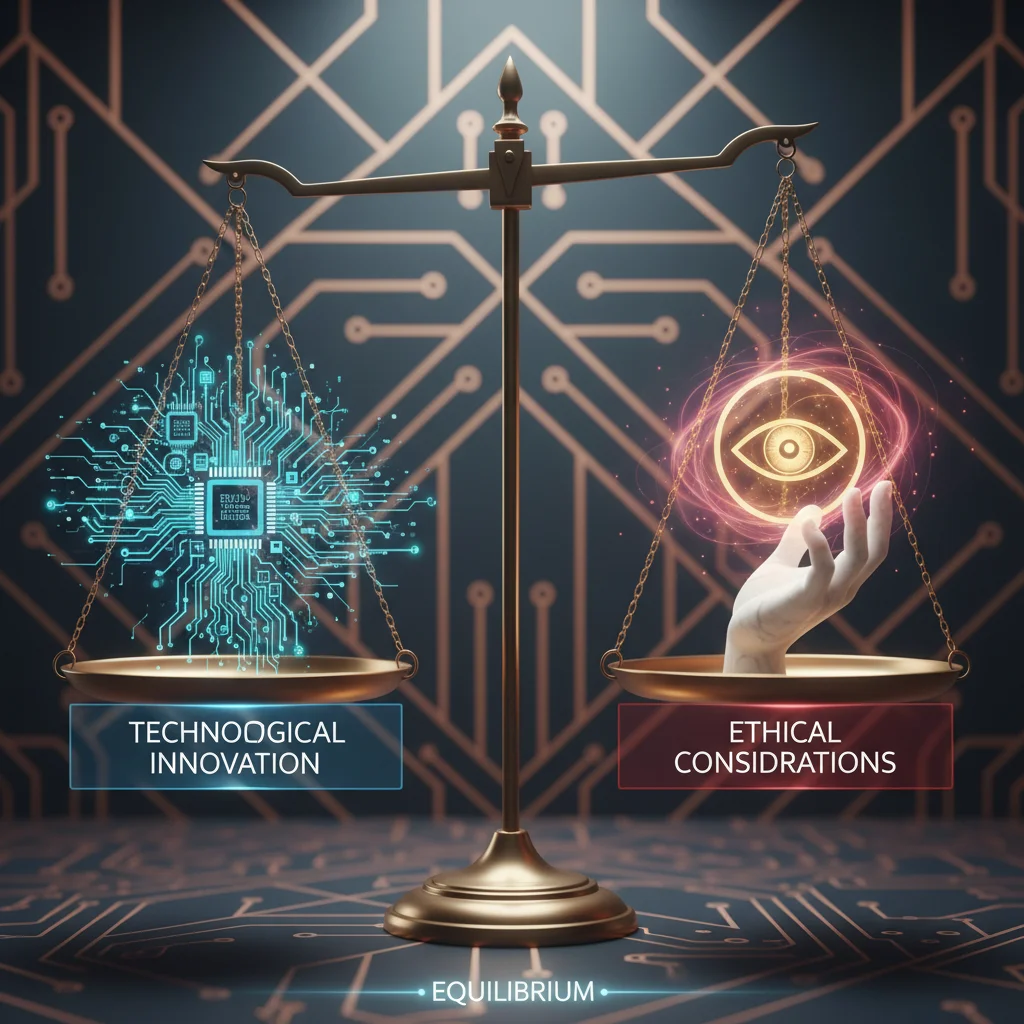
US tech companies must actively monitor these developments, engage with policymakers, and advocate for regulations that are both effective in protecting citizens and conducive to innovation. Proactive adoption of strong AI Ethics Frameworks can help shape these regulations in a way that is practical and beneficial for all stakeholders.
Future Outlook: Beyond 2026
The journey towards truly ethical AI does not end in 2026; it is an ongoing process of learning, adaptation, and refinement. As AI technologies continue to advance, new ethical dilemmas will undoubtedly emerge. The frameworks established today will serve as a foundation for future ethical considerations, but they must remain flexible and scalable.
Looking beyond 2026, we can anticipate increased focus on:
- Global Harmonization: Efforts to align AI ethics principles and regulations across different jurisdictions to facilitate international cooperation and trade.
- AI for Good: A greater emphasis on leveraging AI to address grand societal challenges, such as climate change, disease, and poverty, while ensuring ethical implementation.
- Autonomous Systems and Human Control: Deeper discussions and policy development around the degree of autonomy AI systems should possess, particularly in critical applications.
- Digital Literacy and Education: Increased public education on how AI works, its benefits, and its risks, to empower citizens to engage critically with AI technologies.
The commitment of US tech companies to robust AI Ethics Frameworks will be a defining factor in determining whether AI fulfills its promise as a transformative force for good or becomes a source of societal concern. By embracing ethical principles, investing in responsible practices, and fostering a culture of accountability, these companies can lead the way in building a future where AI empowers humanity while upholding our shared values.
Conclusion
The trajectory of Artificial Intelligence is inextricably linked to the ethical considerations that guide its development and deployment. For US tech companies, the period leading up to and beyond 2026 represents a critical juncture. The establishment and rigorous adherence to comprehensive AI Ethics Frameworks are not optional; they are fundamental to ensuring responsible innovation, building public trust, and mitigating the profound risks associated with powerful AI technologies.
By prioritizing transparency, fairness, accountability, privacy, and safety, companies can create AI systems that are not only technologically advanced but also ethically sound. While challenges abound, from technical complexities to evolving ethical norms, a strategic approach involving dedicated ethical teams, integrated development processes, investment in XAI, robust data governance, and continuous stakeholder engagement can pave the way for a more responsible AI future. The future of AI is not just about what technology can do, but what it *should* do, and AI Ethics Frameworks are the compass guiding us toward that responsible future.