Bio-Integrated AI: 2026 Opportunities for US Biotech & Pharma
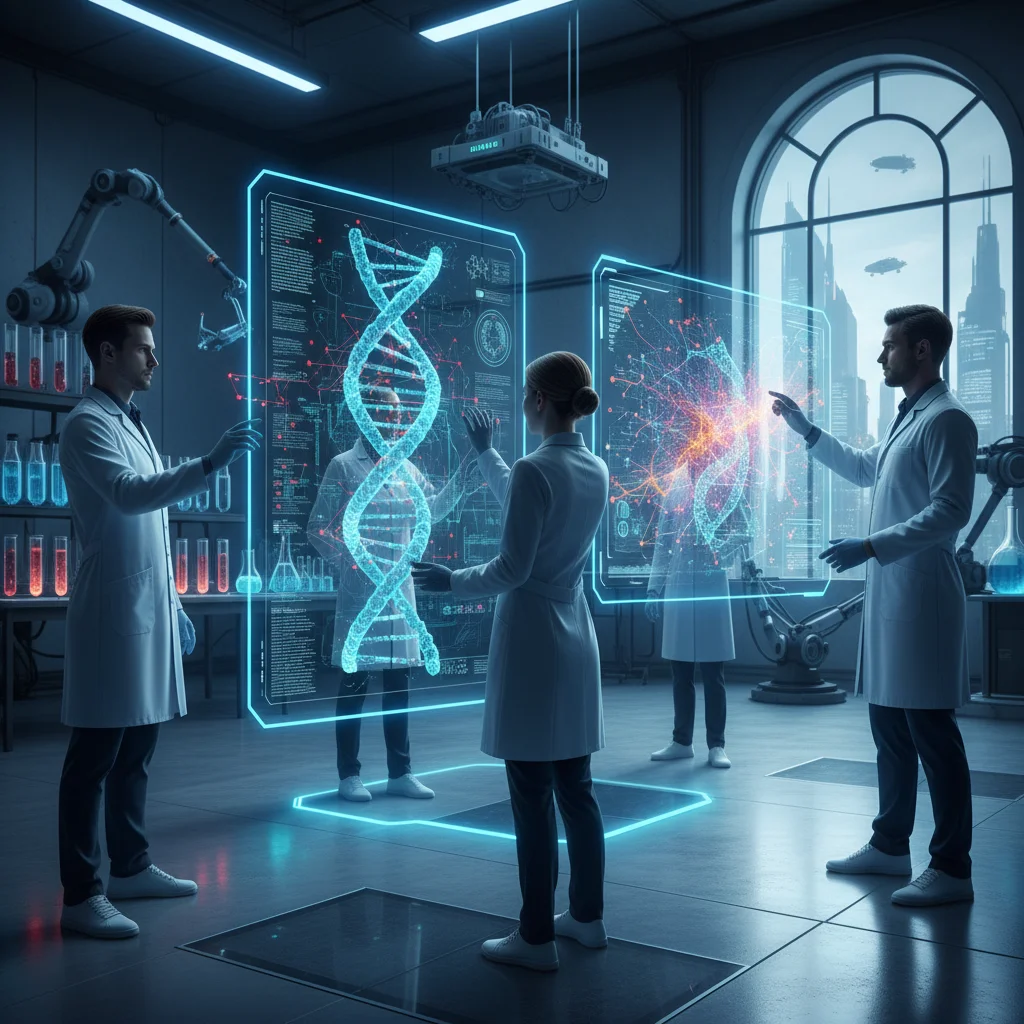
The landscape of healthcare is on the cusp of a profound transformation, driven by the relentless march of technological innovation. Among the most promising and disruptive forces emerging is bio-integrated AI. This isn’t just about applying AI to biological data; it’s about a deeper, more symbiotic relationship where artificial intelligence is intrinsically woven into biological processes, systems, and even living organisms. For the US biotech and pharma sectors, 2026 is shaping up to be a pivotal year, offering unprecedented opportunities for those willing to embrace this revolutionary paradigm.
As we delve into the intricate world of bio-integrated AI, we uncover a future where drug discovery is accelerated beyond imagination, personalized medicine becomes the standard, and healthcare delivery is optimized with unparalleled precision. The implications are vast, promising not only significant advancements in treatment and diagnosis but also substantial economic growth and competitive advantages for the pioneering companies.
Understanding Bio-Integrated AI: A New Frontier
What exactly is bio-integrated AI? At its core, it represents the convergence of advanced artificial intelligence capabilities with biological systems. This goes beyond traditional bioinformatics, where AI analyzes existing biological datasets. Instead, bio-integrated AI involves AI systems that can directly interact with, interpret, and even manipulate biological processes at a fundamental level. Think of AI algorithms guiding gene editing with CRISPR, AI-powered nanobots delivering targeted therapies, or synthetic biology designs optimized by machine learning. It’s a closed-loop system where biological feedback informs AI, and AI insights directly influence biological action.
The foundational pillars of bio-integrated AI include:
- Synthetic Biology: Designing and constructing new biological parts, devices, and systems, or re-designing existing natural biological systems for useful purposes, with AI optimizing these designs.
- Genomics and Proteomics: AI analyzing vast amounts of genetic and protein data to identify novel drug targets, understand disease mechanisms, and predict patient responses. Here, AI isn’t just processing; it’s actively learning biological rules.
- Neural Interfaces: Direct communication between AI systems and biological neural networks, paving the way for advanced prosthetics, brain-computer interfaces, and neurological disease treatments.
- Biomimicry and Bio-inspired AI: AI systems designed based on biological principles, such as swarm intelligence for drug delivery or evolutionary algorithms for protein engineering.
The synergy between these fields is creating an entirely new ecosystem of innovation. Companies that master this integration will be at the forefront of the next generation of biotechnological and pharmaceutical breakthroughs.
The US Biotech and Pharma Landscape in 2026: A Hotbed for Bio-Integrated AI
The United States, with its robust research infrastructure, significant venture capital investment, and a culture of innovation, is uniquely positioned to lead the charge in bio-integrated AI. By 2026, several factors will converge to create a fertile ground for its widespread adoption and impact:
- Increased Data Volume and Sophistication: The sheer volume of genomic, proteomic, clinical, and real-world data generated will continue to grow exponentially. AI will be indispensable for making sense of this complexity.
- Advancements in AI Algorithms: Deep learning, reinforcement learning, and generative AI models are becoming increasingly sophisticated, capable of handling the nuanced and often unpredictable nature of biological systems.
- Regulatory Evolution: While regulatory bodies like the FDA are typically cautious, the demonstrable benefits and increasing maturity of bio-integrated AI applications will likely lead to clearer pathways for approval and commercialization.
- Talent Pool Growth: The interdisciplinary nature of bio-integrated AI is fostering a new generation of scientists and engineers skilled in both biological sciences and advanced AI techniques.
- Investment Surge: Venture capital and pharmaceutical giants are already pouring billions into AI-driven biotech. This trend is expected to accelerate significantly by 2026, fueling research, development, and commercialization efforts.
For US companies, the race is not just about adopting AI, but about strategically integrating it into their core R&D, manufacturing, and commercial strategies. Those who fail to adapt risk being left behind in an increasingly competitive global market.
Transformative Opportunities for Drug Discovery and Development
One of the most immediate and impactful areas for bio-integrated AI is in drug discovery and development. The traditional drug discovery pipeline is notoriously long, expensive, and prone to high failure rates. Bio-integrated AI promises to fundamentally alter this paradigm.
Accelerated Target Identification and Validation
Identifying viable drug targets is the first critical step. AI can analyze vast omics datasets (genomics, transcriptomics, proteomics, metabolomics) to pinpoint disease-associated genes, proteins, and pathways with unprecedented accuracy. Furthermore, AI can predict the functional consequences of targeting these molecules, significantly reducing the experimental burden.
De Novo Drug Design and Optimization
Generative AI models are now capable of designing novel molecules from scratch, optimizing them for desired properties like binding affinity, specificity, and pharmacokinetics. This moves beyond screening existing libraries to creating entirely new chemical entities tailored to specific biological targets. Imagine AI designing a protein that perfectly inhibits a cancer pathway, or a small molecule that precisely modulates a neurological receptor.
Predictive Toxicology and Efficacy
Before clinical trials, predicting a drug’s toxicity and efficacy in humans is crucial. Bio-integrated AI can analyze preclinical data, synthesize information from various biological models, and even simulate drug interactions within virtual human organs (organ-on-a-chip models enhanced by AI) to provide more accurate predictions, thereby reducing the need for extensive animal testing and improving the success rate in human trials.
Optimized Clinical Trial Design and Patient Selection
AI can analyze patient data to identify biomarkers that predict treatment response, allowing for more targeted and efficient clinical trials. This translates to smaller trial populations, faster enrollment, and a higher probability of success, ultimately bringing life-saving drugs to market sooner.
The Dawn of Personalized Medicine with Bio-Integrated AI
The promise of personalized medicine – tailoring medical treatment to the individual characteristics of each patient – has long been a holy grail in healthcare. Bio-integrated AI is finally making this a tangible reality for 2026 and beyond.
Precision Diagnostics
AI algorithms can analyze a patient’s genetic profile, microbiome data, lifestyle factors, and real-time physiological data from wearables to provide a holistic and highly accurate diagnostic picture. This goes beyond identifying disease to understanding its specific manifestation in an individual, enabling truly personalized treatment plans.
Tailored Therapies and Dosage Regimens
With a deeper understanding of individual patient biology, AI can recommend specific drugs, combination therapies, and optimal dosages that are most likely to be effective and minimize side effects. This is particularly transformative for complex diseases like cancer, where genetic mutations vary widely among patients.
Proactive Disease Management
Bio-integrated AI can monitor patients continuously, predict disease exacerbations before they occur, and suggest preventative interventions. For chronic conditions, this proactive approach can significantly improve patient outcomes and reduce healthcare costs. Imagine an AI system detecting early signs of sepsis or cardiac arrest based on subtle physiological changes, triggering immediate medical attention.
Challenges and Ethical Considerations
While the opportunities are immense, the path to widespread adoption of bio-integrated AI is not without its challenges. Addressing these proactively will be crucial for sustainable growth and public trust.
Data Privacy and Security
The integration of highly sensitive biological and health data with AI systems raises significant concerns about privacy and security. Robust ethical frameworks and stringent data protection protocols will be paramount to prevent misuse and maintain patient trust.
Regulatory Frameworks
Existing regulatory frameworks are often slow to adapt to rapidly evolving technologies. Innovators will need to work closely with regulatory bodies to establish clear guidelines for the development, testing, and deployment of bio-integrated AI solutions, particularly those involving direct biological interaction.
Bias in AI Algorithms
AI models trained on biased datasets can perpetuate and even amplify existing health disparities. Ensuring fairness, transparency, and explainability in AI algorithms, particularly those influencing patient care, is a critical ethical imperative.
Interdisciplinary Talent Gap
The demand for professionals skilled in both AI and biological sciences currently outstrips supply. Investing in education and training programs that foster interdisciplinary expertise will be essential to bridge this gap.
Cost of Implementation
Developing and implementing cutting-edge bio-integrated AI solutions can be expensive, potentially creating barriers to entry for smaller biotech firms. Strategies for democratizing access to these technologies and fostering collaborative ecosystems will be important.
Key Players and Emerging Trends in 2026
By 2026, we can expect to see several key trends and players dominating the bio-integrated AI space in the US.
Big Pharma’s Strategic Investments
Major pharmaceutical companies will continue to acquire or partner with AI-driven biotech startups, integrating bio-integrated AI capabilities into their R&D pipelines. Expect to see dedicated AI divisions within these giants, focusing on areas like novel target discovery and predictive modeling.
Specialized Biotech Startups Flourishing
A new wave of highly specialized biotech startups will emerge, focusing on niche applications of bio-integrated AI, such as AI-guided gene therapy, synthetic biology platforms, or brain-computer interface technologies. These agile companies will be crucial innovation drivers.
Academic-Industrial Partnerships
Leading research universities with strong AI and biology departments will form increasingly tight partnerships with industry, transferring cutting-edge research from lab to market. Government funding for these collaborative initiatives will also likely increase.
The Rise of AI-Powered CROs (Contract Research Organizations)
CROs will leverage bio-integrated AI to offer more efficient and cost-effective services, from preclinical testing to clinical trial management, transforming the way external R&D is conducted.
Focus on Ethical AI and Explainable AI (XAI)
As bio-integrated AI becomes more embedded in critical healthcare decisions, there will be an intensified focus on developing ethical AI frameworks and XAI techniques to ensure transparency, accountability, and trust in these systems.
Strategic Imperatives for US Biotech and Pharma
To capitalize on the opportunities presented by bio-integrated AI in 2026, US biotech and pharma companies must adopt several strategic imperatives:
1. Invest in Interdisciplinary Talent
Recruit and retain talent with expertise in both AI/data science and biological sciences. Foster an organizational culture that encourages collaboration between these traditionally disparate fields. This might involve creating dedicated bio-AI teams or cross-training existing employees.
2. Build Robust Data Infrastructure
Establish secure, scalable, and interoperable data infrastructure capable of handling vast amounts of diverse biological and clinical data. Data quality, standardization, and accessibility will be critical for training effective AI models.
3. Form Strategic Partnerships
Collaborate with AI technology providers, academic research institutions, and specialized biotech startups. These partnerships can provide access to cutting-edge AI tools, expertise, and novel biological insights that might be difficult to develop in-house.
4. Prioritize Ethical AI Development
Integrate ethical considerations and principles of fairness, privacy, and transparency into every stage of bio-integrated AI development and deployment. Proactively engage with regulatory bodies and patient advocacy groups.
5. Embrace Agility and Experimentation
The field of bio-integrated AI is rapidly evolving. Companies must adopt agile methodologies, be willing to experiment with new technologies, and adapt quickly to emerging trends and breakthroughs. A culture of continuous learning and innovation is essential.
6. Focus on Niche Applications with High Impact
Instead of trying to tackle everything at once, identify specific high-impact areas where bio-integrated AI can provide a clear competitive advantage, such as rare disease drug discovery, specific oncology targets, or personalized diagnostics for chronic conditions.
The Future is Now: Preparing for 2026 and Beyond
The year 2026 is not some distant future; it’s just around the corner, and the foundational work for widespread bio-integrated AI adoption is happening now. For US biotech and pharma, this is a moment of immense potential and significant responsibility. The fusion of AI and biology promises to unlock treatments and cures that were once considered science fiction, fundamentally reshaping human health and longevity.
Companies that proactively invest in the necessary talent, infrastructure, and ethical frameworks will not only gain a significant competitive edge but will also play a crucial role in ushering in a new era of precision medicine and transformative healthcare solutions. The journey into bio-integrated AI is complex, but the rewards – both scientific and societal – are immeasurable. The time to act is now, to ensure that the US remains at the forefront of this biological and technological revolution.