Blockchain Beyond Crypto: 4 Supply Chain Efficiencies Unlocked by DLT in the US by 2026
Blockchain Beyond Crypto: 4 Supply Chain Efficiencies Unlocked by DLT in the US by 2026
The term ‘blockchain’ often conjures images of volatile cryptocurrencies and complex digital assets. However, its true potential extends far beyond the financial realm, particularly within the intricate world of supply chain management. In the United States, businesses are increasingly recognizing Distributed Ledger Technology (DLT), the underlying framework of blockchain, as a transformative force capable of revolutionizing their operational landscapes. By 2026, we anticipate four significant efficiencies being unlocked across US supply chains, driven by the strategic implementation of blockchain technology. This deep dive will explore these efficiencies, illustrating how blockchain is poised to reshape logistics, transparency, and trust in an increasingly complex global economy.
The traditional supply chain, often characterized by fragmented data, opaque processes, and a lack of real-time visibility, is ripe for disruption. From raw material sourcing to final product delivery, countless intermediaries and data silos create vulnerabilities, inefficiencies, and opportunities for fraud. This is where blockchain steps in, offering a decentralized, immutable, and transparent record-keeping system that can connect every participant in a supply chain, creating a single source of truth. The implications for the US market, with its vast and diverse industrial sectors, are profound, promising not just incremental improvements but a fundamental paradigm shift in how goods are moved, tracked, and verified.
The journey towards widespread blockchain adoption in US supply chains is not without its challenges. Issues such as interoperability between different blockchain platforms, regulatory clarity, and the significant initial investment required for implementation are all factors that companies must consider. However, the compelling benefits, particularly in an era demanding greater accountability and resilience, are proving to be powerful motivators. As the technology matures and best practices emerge, the path to unlocking these efficiencies becomes clearer, paving the way for a more secure, efficient, and trustworthy supply chain ecosystem across the nation.
1. Unprecedented Transparency and Traceability: Knowing Your Product’s Journey
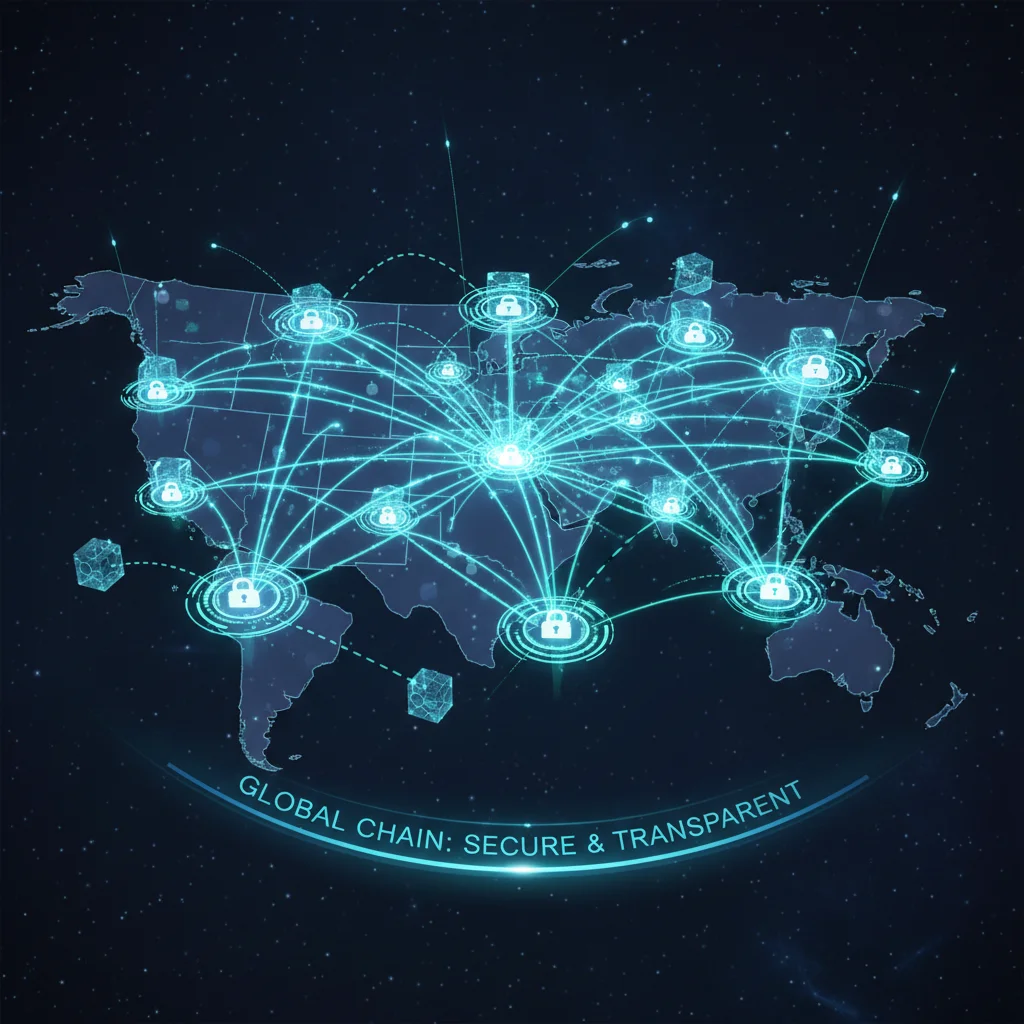
One of the most immediate and impactful benefits that blockchain brings to the US supply chain is an unprecedented level of transparency and traceability. In today’s globalized market, consumers and regulators alike demand to know the origin, journey, and ethical footprint of products. Traditional methods of tracking goods often rely on disparate systems, paper records, and manual data entry, leading to delays, errors, and a lack of comprehensive visibility. Blockchain fundamentally alters this dynamic by creating an immutable, shared ledger that records every transaction and movement of a product from its genesis to its end-user.
Imagine a scenario where a consumer in New York can scan a QR code on a product and instantly access detailed information about its entire journey: where the raw materials were sourced, who manufactured it, the conditions under which it was produced, and every transit point it passed through. This level of granular detail, impossible to achieve efficiently with conventional systems, becomes a reality with blockchain. Each step in the supply chain – from a farm harvesting produce to a factory assembling electronics, to a shipping company transporting goods – can be recorded as a block on the chain, timestamped and cryptographically secured. This creates an unbroken chain of custody, verifiable by all authorized participants.
For US businesses, this enhanced transparency translates into several critical advantages. Firstly, it significantly boosts consumer trust. In an age of increasing awareness about ethical sourcing, environmental impact, and product authenticity, companies that can provide verifiable proof of their claims gain a substantial competitive edge. Secondly, it drastically improves recall management. In the event of a product defect or contamination, identifying the exact batch, origin, and distribution path becomes instantaneous, minimizing risk to public health and reducing financial losses for companies. Instead of recalling entire product lines, businesses can pinpoint and isolate affected items with precision.
Furthermore, regulatory compliance is streamlined. Industries like pharmaceuticals, food and beverage, and aerospace in the US are subject to stringent regulations regarding product safety and origin. Blockchain provides an unalterable audit trail that simplifies compliance reporting and demonstrates adherence to standards, reducing the burden of manual audits and the risk of penalties. This also extends to combating counterfeiting, a multi-billion dollar problem globally. By providing a verifiable digital identity for each product, blockchain makes it exceedingly difficult for counterfeit goods to infiltrate the legitimate supply chain, protecting both brands and consumers.
The implementation of blockchain for transparency and traceability is not merely about tracking; it’s about building a foundation of trust. When every participant in the supply chain operates on a shared, verifiable record, disputes are minimized, accountability is increased, and the overall integrity of the supply chain is fortified. By 2026, we expect to see a growing number of US companies, particularly in high-value or highly regulated sectors, leveraging blockchain to offer unparalleled insight into their products’ journeys, setting new standards for consumer confidence and operational integrity.

2. Enhanced Efficiency Through Smart Contracts and Automation
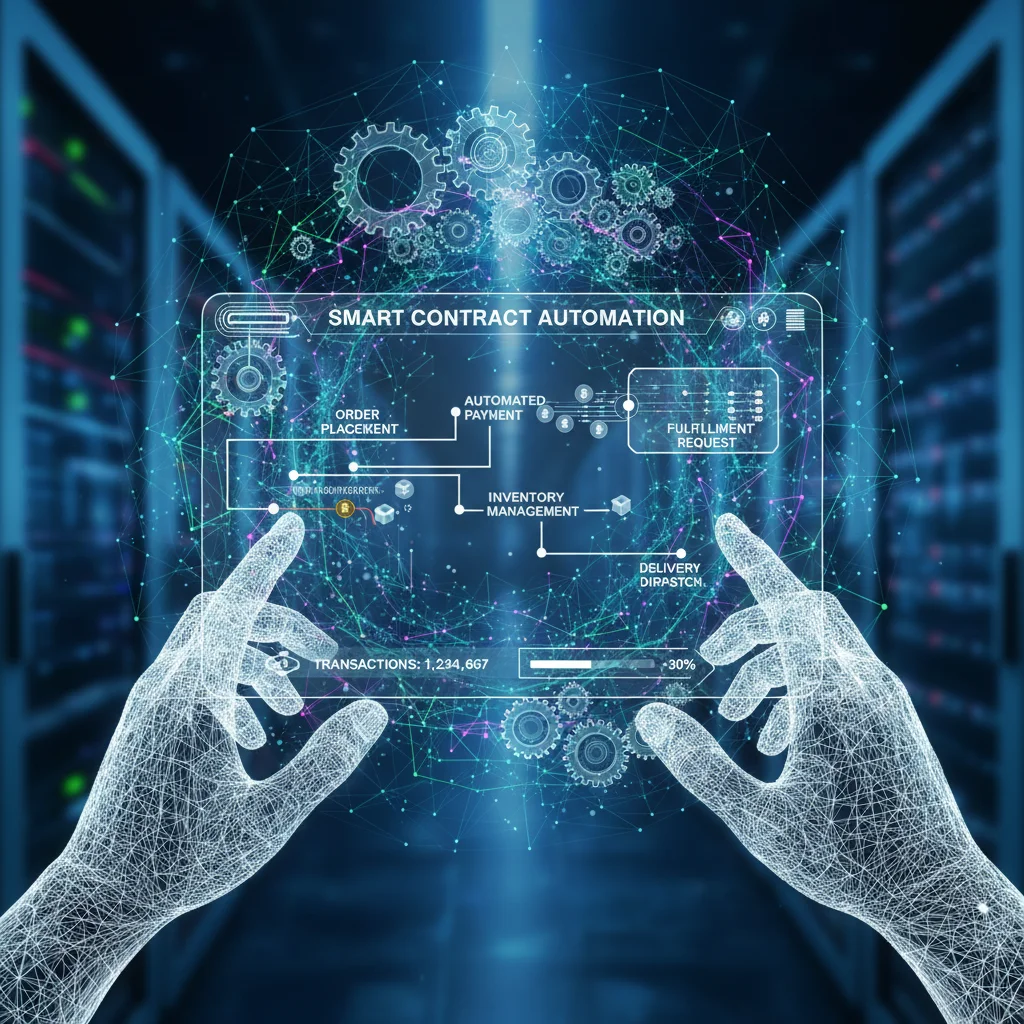
Beyond simply tracking goods, blockchain’s ability to host ‘smart contracts’ introduces a profound level of automation and efficiency into US supply chain operations. Smart contracts are self-executing contracts with the terms of the agreement directly written into lines of code. They run on the blockchain, meaning they are immutable, transparent, and automatically execute when predefined conditions are met, without the need for intermediaries.
Consider the traditional process of payments and order fulfillment in a supply chain. Typically, this involves invoices, purchase orders, letters of credit, and manual approvals, often leading to delays, administrative overhead, and potential disputes. With smart contracts, this entire process can be automated. For example, a smart contract could be programmed to automatically release payment to a supplier once goods are received and verified at a warehouse, as confirmed by IoT sensors integrated with the blockchain. Or, it could automatically trigger the next stage of production once a previous stage is completed and recorded.
This automation significantly reduces administrative costs and processing times. Manual reconciliation of records, which consumes considerable resources, becomes largely obsolete. Discrepancies are flagged immediately, rather than discovered weeks later, allowing for swift resolution. For US businesses, this means faster cash flow for suppliers, reduced working capital requirements, and a more agile supply chain capable of responding quickly to market demands. The elimination of intermediaries in many transactional processes also translates to lower transaction fees and reduced bureaucratic hurdles.
Furthermore, smart contracts can enforce compliance with contractual agreements with unparalleled precision. If a delivery is late, or if product quality metrics (as recorded by sensors) do not meet agreed-upon standards, the smart contract can automatically impose penalties or trigger alternative actions, all without human intervention. This not only ensures adherence to terms but also builds trust among trading partners, knowing that agreements will be executed exactly as stipulated, every time.
The application of smart contracts extends to various facets of the supply chain, including:
- Automated Customs Clearance: Integrating customs documentation and regulations into smart contracts can expedite cross-border shipments, reducing delays at ports and borders.
- Inventory Management: Smart contracts can automatically reorder stock when inventory levels fall below a certain threshold, ensuring optimal stock levels and preventing stockouts.
- Freight Management: Payments to carriers can be automatically released upon confirmed delivery, incentivizing timely and efficient transportation.
- Warranty and Returns: Smart contracts can manage product warranties and returns processes, automatically verifying purchase dates and conditions for eligibility.
By 2026, the adoption of smart contracts is expected to dramatically streamline operations for many US supply chains, driving down operational costs, increasing speed, and fostering a more reliable and efficient ecosystem. This shift towards automated, trustless transactions will be a cornerstone of the next generation of supply chain management, making the process faster, cheaper, and more dependable for all involved parties.
3. Enhanced Data Security and Integrity
In an era plagued by cyber threats and data breaches, the security and integrity of supply chain data are paramount. Proprietary information, customer data, and logistical details are constantly at risk in traditional centralized systems, which present single points of failure. Blockchain, by its very design, offers a robust solution to these vulnerabilities, providing enhanced data security and integrity that will be a game-changer for US supply chains by 2026.
The inherent cryptographic nature of blockchain ensures that once data is recorded on the ledger, it is virtually impossible to alter or delete. Each ‘block’ of information is linked to the previous one in a chronological chain, and any attempt to tamper with a block would invalidate all subsequent blocks, making such an act immediately detectable. This immutability is a cornerstone of blockchain’s security model. Unlike centralized databases, where a single hacker could potentially compromise the entire system, a distributed ledger requires a consensus among multiple participants to validate transactions, making it significantly more resistant to malicious attacks and unauthorized changes.
Furthermore, blockchain technology often employs encryption techniques to protect sensitive data. While the existence of a transaction is public (or visible to authorized parties), the details within that transaction can be encrypted, ensuring that only those with the appropriate keys can access the information. This allows for a balance between transparency and privacy, crucial for businesses that need to share certain data with partners while keeping other proprietary information confidential.
For US supply chains, this means a significant reduction in the risks associated with:
- Data Tampering: Preventing fraudulent alterations of shipping manifests, quality control records, or inventory counts.
- Cyberattacks: Distributed networks are inherently more resilient to DDoS attacks and data breaches compared to centralized servers.
- Intellectual Property Theft: Securely tracking the movement of designs, prototypes, and sensitive manufacturing information.
- Counterfeiting: As mentioned earlier, the immutable record of a product’s journey makes it incredibly difficult for fake products to be introduced without detection.
The integrity of data is not just about protection from external threats; it’s also about ensuring accuracy. With multiple parties validating and recording information on a shared ledger, the chances of errors and inconsistencies are drastically reduced. This ‘single source of truth’ eliminates the need for costly and time-consuming reconciliation processes, ensuring that all participants are working with the most up-to-date and accurate information.
As US companies increasingly rely on digital platforms for their supply chain operations, the demand for robust security measures will only grow. Blockchain offers a fundamental shift in how data is protected and verified, moving from a model of trust-in-intermediaries to trust-through-cryptography. By 2026, businesses that adopt blockchain for their supply chain data will gain a significant advantage in terms of security, reliability, and regulatory compliance, fostering greater confidence among partners and customers alike.
4. Optimized Inventory Management and Waste Reduction
Inefficient inventory management is a perennial challenge for supply chains, leading to either excessive holding costs due to overstocking or lost sales due to stockouts. Both scenarios represent significant financial drains. Blockchain, by providing real-time, accurate data across the entire supply network, offers a powerful solution for optimizing inventory management and, consequently, reducing waste in US supply chains by 2026.
The enhanced transparency and traceability offered by blockchain mean that businesses have a much clearer, real-time picture of inventory levels at every stage – from raw materials in transit, to components at manufacturing plants, to finished goods in warehouses, and finally, products on retail shelves. This granular visibility, often integrated with IoT devices that automatically update the blockchain, allows for much more accurate forecasting and demand planning.
With precise data on product movement and consumption, companies can move away from traditional, often reactive, inventory models to more proactive, demand-driven strategies. This leads to:
- Reduced Overstocking: By knowing exactly what is available and where, businesses can minimize excess inventory, freeing up capital, reducing storage costs, and mitigating the risk of obsolescence, particularly for perishable goods or products with short life cycles. For example, a food distributor could use blockchain to track the exact quantity and location of produce, ensuring optimal rotation and reducing spoilage.
- Minimized Stockouts: Real-time visibility allows companies to anticipate potential shortages and replenish stock before it runs out, preventing lost sales and maintaining customer satisfaction. This is particularly crucial in fast-moving consumer goods (FMCG) and retail sectors.
- Efficient Returns Management: Blockchain can streamline the reverse logistics process, making it easier to track returned items, verify their condition, and reintroduce them into the supply chain or dispose of them appropriately, minimizing waste.
- Targeted Recalls: As discussed, the ability to pinpoint specific batches means that only affected products are recalled, preventing the unnecessary destruction of safe goods and reducing the associated financial and environmental waste.
Furthermore, blockchain can facilitate more effective collaboration among supply chain partners. When all parties share accurate, up-to-date inventory data on a common ledger, they can collectively optimize stock levels, coordinate production schedules, and improve overall resource allocation. This collaborative approach leads to a more lean and agile supply chain, capable of responding efficiently to market fluctuations and unforeseen disruptions.
The impact of optimized inventory management extends beyond financial savings. It also has significant environmental benefits. Reducing waste from spoilage, obsolescence, and unnecessary recalls contributes to a more sustainable supply chain. For US industries, particularly those with complex manufacturing processes or dealing with sensitive goods, the ability to fine-tune inventory with blockchain will be a key differentiator, fostering both economic growth and environmental stewardship by 2026.
The Road Ahead for Blockchain in US Supply Chains
The trajectory for blockchain adoption in US supply chains is undeniably upward. While the technology is still evolving, and challenges such as scalability, integration with legacy systems, and the need for standardized protocols remain, the compelling benefits are driving significant investment and innovation. Major corporations and startups alike are exploring and implementing DLT solutions to address long-standing inefficiencies and build more resilient, trustworthy supply networks.
The four efficiencies discussed – unprecedented transparency and traceability, enhanced efficiency through smart contracts and automation, superior data security and integrity, and optimized inventory management and waste reduction – are not isolated improvements but rather interconnected facets of a holistic transformation. Each efficiency reinforces the others, contributing to a more robust, cost-effective, and responsive supply chain ecosystem. As businesses gain greater visibility, automate routine tasks, secure their data, and precisely manage their inventory, they unlock synergy that was previously unattainable.
Moreover, the regulatory landscape for blockchain is gradually becoming clearer in the US, providing a more stable environment for businesses to invest in and deploy these solutions. Industry consortiums and collaborative initiatives are also playing a crucial role in developing common standards and best practices, accelerating the pace of adoption.
By 2026, the notion of ‘Blockchain Supply Chain US’ will no longer be a futuristic concept but a tangible reality for a significant portion of American industries. From agriculture and pharmaceuticals to manufacturing and retail, DLT will be instrumental in creating supply chains that are not only more efficient but also more ethical, sustainable, and ultimately, more reliable for consumers and businesses alike. The transition away from a purely crypto-centric view of blockchain to one that embraces its enterprise applications is well underway, signaling a new era for global commerce and logistics, starting right here in the United States.
Companies that proactively embrace this technology and integrate it into their strategic planning will be best positioned to reap the rewards, securing a competitive advantage in a market that increasingly values transparency, efficiency, and trust. The future of the US supply chain is being built on the blocks of distributed ledger technology, promising a more connected, secure, and optimized flow of goods and information.