Blockchain for Supply Chain: U.S. Fraud Reduction Guide
Implementing Blockchain for Supply Chain Transparency: A U.S. Business Guide to Reducing Fraud by 10% in 2026
In an increasingly interconnected global economy, the integrity of supply chains is paramount for U.S. businesses. From raw material sourcing to final product delivery, every step presents potential vulnerabilities for fraud, counterfeiting, and inefficiencies. The traditional, often opaque, nature of supply chains has long been a breeding ground for these issues, costing businesses billions annually and eroding consumer trust. However, a revolutionary technology is emerging as a powerful antidote: blockchain. This comprehensive guide delves into how U.S. businesses can harness the power of blockchain supply chain solutions to achieve unprecedented levels of transparency, bolster security, and significantly reduce fraud, targeting an ambitious 10% reduction by 2026.
The promise of blockchain extends far beyond cryptocurrencies. Its core principles of decentralization, immutability, and transparency are perfectly suited to address the complex challenges inherent in modern supply chains. By creating an unchangeable, distributed ledger of all transactions and movements, blockchain offers a single, verifiable source of truth for all participants. This paradigm shift can transform how U.S. businesses manage their supply networks, fostering greater trust, accountability, and ultimately, profitability.
Understanding the intricacies of implementing blockchain in a supply chain context is crucial. This article will explore the fundamental concepts, practical applications, potential benefits, and the strategic roadmap for U.S. companies looking to integrate this transformative technology. We will also address common hurdles and provide actionable insights to ensure a successful deployment, paving the way for a more secure and transparent future for American commerce.
The Imperative for Transparency: Why U.S. Supply Chains Need Blockchain
The global supply chain landscape is fraught with challenges that demand innovative solutions. For U.S. businesses, these challenges often translate into significant financial losses and reputational damage. Fraud, in its various forms – from counterfeit goods entering the market to illicit financial transactions – is a pervasive threat. The lack of end-to-end visibility makes it incredibly difficult to pinpoint the origin of discrepancies, leading to delayed responses and prolonged investigations. This is where the inherent transparency of blockchain supply chain technology becomes a game-changer.
Identifying Key Vulnerabilities in Traditional Supply Chains
- Counterfeiting: The influx of fake products not only dilutes brand value but also poses serious safety risks to consumers. Tracing the origin of counterfeit goods in a complex, multi-tiered supply chain is often an insurmountable task without a centralized, immutable record.
- Diversion and Theft: Goods can be diverted from their intended destination or stolen at various points along the supply chain. Traditional tracking methods are often siloed and easily manipulated, making it difficult to detect and prevent such occurrences in real-time.
- Data Manipulation: Paper-based records or centralized digital systems are susceptible to manual errors, intentional manipulation, or cyber-attacks. This compromises the integrity of data related to origin, quality, and compliance.
- Lack of Accountability: When numerous intermediaries are involved, it can be challenging to assign responsibility for issues that arise. This ambiguity can lead to finger-pointing and delayed resolution, impacting efficiency and trust.
- Inefficient Auditing: Auditing traditional supply chains is a time-consuming and resource-intensive process, often relying on fragmented data sources and manual verification, which increases the risk of oversight.
These vulnerabilities highlight a critical need for a system that can provide an unalterable, transparent, and verifiable record of every product’s journey. Blockchain offers precisely this, building a foundation of trust among all participating entities, from suppliers and manufacturers to logistics providers and retailers. The ability to track the provenance of goods with granular detail is not just about preventing fraud; it’s about building a robust, resilient, and ethical supply chain that aligns with modern consumer and regulatory expectations.
Understanding Blockchain: The Foundation of a Transparent Supply Chain
Before diving into implementation strategies, it’s essential to grasp the core concepts of blockchain and how they apply to supply chain management. At its heart, a blockchain is a distributed ledger technology (DLT) that records transactions across a network of computers. Each ‘block’ contains a timestamped batch of transactions, and once recorded, it cannot be altered. This creates an immutable and verifiable history.
Key Blockchain Principles for Supply Chain
- Decentralization: Unlike traditional databases managed by a single entity, blockchain data is distributed across multiple nodes in a network. This eliminates single points of failure and reduces the risk of data manipulation by any one party. In a blockchain supply chain, this means no single company controls all the data, fostering greater trust among partners.
- Immutability: Once a transaction is recorded on the blockchain, it cannot be changed or deleted. Each new block is cryptographically linked to the previous one, forming a chain. This ensures the integrity and auditability of all records, making it nearly impossible for fraudulent activities to go undetected or for data to be tampered with.
- Transparency (Selective): While all transactions are visible on the ledger, the identities of participants can be anonymized or pseudonymous. This allows for a high degree of transparency regarding product movement and origin without revealing sensitive business data to competitors. Smart contracts can also be used to grant specific access levels to different participants.
- Smart Contracts: These are self-executing contracts with the terms of the agreement directly written into code. Smart contracts automatically execute actions (e.g., releasing payment, triggering a shipment) when predefined conditions are met. This automates processes, reduces human error, and ensures compliance within the supply chain.
- Consensus Mechanisms: All participants in the network must agree on the validity of transactions before they are added to the blockchain. This consensus ensures that only legitimate and verified data is recorded, further enhancing security and trust.
By leveraging these principles, a blockchain supply chain can provide unparalleled visibility into the journey of a product. Imagine tracking a pharmaceutical drug from its raw ingredients, through manufacturing, packaging, and distribution, all recorded on an unchangeable ledger. This level of detail makes it incredibly difficult for counterfeit products to infiltrate the system, ensures ethical sourcing, and provides consumers with verifiable proof of authenticity.
Strategic Implementation of Blockchain for U.S. Businesses
Implementing blockchain technology in a U.S. business’s supply chain is not a ‘one-size-fits-all’ endeavor. It requires careful planning, strategic partnerships, and a clear understanding of specific business needs and existing infrastructure. The goal is to integrate blockchain not just as a technology, but as a fundamental shift in how supply chain partners interact and share information.
Phase 1: Assessment and Pilot Program
- Identify Pain Points: Begin by pinpointing the most critical areas of fraud, inefficiency, or lack of transparency in your current supply chain. Is it counterfeiting of high-value goods? Origin verification for ethical sourcing? Or perhaps complex payment reconciliation?
- Define Scope and Objectives: Clearly articulate what you aim to achieve with blockchain. For instance, a U.S. business might aim to reduce counterfeit incidents by 20% in a specific product line within 18 months, or improve raw material traceability by 50%. Our overarching goal is a 10% fraud reduction by 2026.
- Select a Pilot Project: Start small. Choose a specific product, supplier, or segment of your supply chain that is manageable but representative of broader challenges. This allows for controlled testing and learning without disrupting the entire operation.
- Choose a Blockchain Platform: Research and select a suitable blockchain platform. Options include public blockchains (e.g., Ethereum, though less common for private supply chains), permissioned blockchains (e.g., Hyperledger Fabric, R3 Corda), or industry-specific solutions (e.g., IBM Food Trust). Permissioned blockchains are often preferred for supply chains due to their scalability, privacy controls, and ability to manage participants.
- Engage Key Stakeholders: Successful implementation requires buy-in from all parties: suppliers, manufacturers, logistics providers, and retailers. Educate them on the benefits and address their concerns regarding data privacy, integration complexity, and cost.
Phase 2: Technical Integration and Data Management
This phase focuses on the practical aspects of connecting your existing systems with the chosen blockchain platform and ensuring accurate data flow.
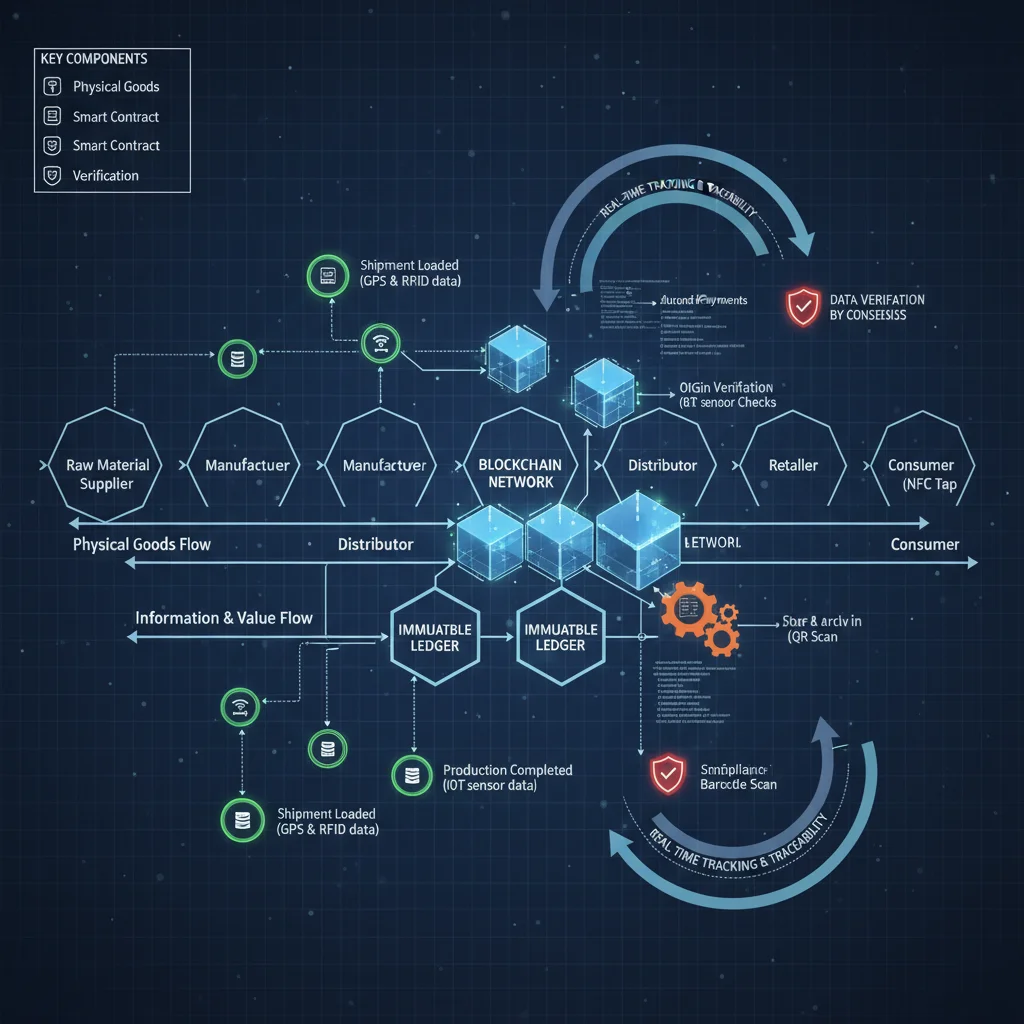
- Data Standardization: Establish common data standards and protocols across all participants. This is critical for ensuring that information (e.g., product IDs, batch numbers, shipment details) is consistent and interoperable across the blockchain network.
- Integration with ERP/SCM Systems: Integrate the blockchain platform with your existing Enterprise Resource Planning (ERP) and Supply Chain Management (SCM) systems. This often involves using APIs to feed data from physical events (e.g., scanning a product, shipping a container) onto the blockchain.
- Develop Smart Contracts: Design and implement smart contracts to automate processes and enforce business rules. For example, a smart contract could automatically release payment to a supplier once a shipment is verified as received and inspected.
- IoT Integration: Consider integrating Internet of Things (IoT) devices (e.g., GPS trackers, temperature sensors) to automatically capture real-time data and feed it to the blockchain. This enhances the accuracy and timeliness of verifiable information, further strengthening fraud prevention for the blockchain supply chain.
- Security Protocols: Implement robust cybersecurity measures to protect the integrity of data entering and residing on the blockchain. While blockchain itself is secure, the entry points and associated systems need protection.
Phase 3: Scaling and Continuous Improvement
Once the pilot is successful, the focus shifts to expanding the blockchain solution across more product lines and partners, and continuously refining its capabilities.
- Expand Network: Gradually onboard more suppliers, logistics partners, and customers into the blockchain network. The value of a blockchain supply chain grows exponentially with the number of participants.
- Monitor and Analyze: Continuously monitor the performance of the blockchain solution. Analyze data to identify new insights, further optimize processes, and detect emerging fraud patterns.
- Regulatory Compliance: Ensure that your blockchain implementation remains compliant with all relevant U.S. and international regulations, especially concerning data privacy and cross-border data transfer.
- Iterate and Innovate: Blockchain technology is evolving rapidly. Stay abreast of new developments and be prepared to iterate on your solution, incorporating new features and functionalities to maintain a competitive edge.
Benefits Beyond Fraud Reduction: The Holistic Impact of Blockchain
While the primary focus for U.S. businesses adopting blockchain is often fraud reduction and increased transparency, the technology delivers a cascade of additional benefits that can significantly enhance overall supply chain performance and competitiveness. Achieving a 10% fraud reduction by 2026 is a significant milestone, but the ripple effects of a robust blockchain supply chain extend far wider.
Enhanced Efficiency and Cost Savings
- Reduced Administrative Burden: Automation through smart contracts and the elimination of manual record-keeping can drastically reduce administrative tasks, paperwork, and associated costs.
- Faster Settlements: Automated payments triggered by smart contracts can accelerate payment cycles, improving cash flow for all parties in the supply chain.
- Streamlined Auditing: The immutable and easily accessible ledger simplifies auditing processes, cutting down on time and resources required for compliance checks and investigations.
- Optimized Inventory Management: Real-time visibility into product movement allows for more accurate demand forecasting and inventory optimization, reducing carrying costs and waste.
Improved Product Quality and Safety
- Authenticity Verification: Consumers can verify the authenticity of products, boosting confidence and brand loyalty. This is particularly crucial for industries like pharmaceuticals, luxury goods, and organic foods.
- Recall Management: In the event of a product recall, a blockchain supply chain enables rapid and precise identification of affected batches and their distribution paths, minimizing public health risks and financial damage.
- Ethical Sourcing: Businesses can provide verifiable proof of ethical sourcing practices, from fair labor conditions to sustainable raw materials, meeting growing consumer and regulatory demands.
Stronger Relationships and Trust
- Increased Collaboration: A shared, transparent ledger fosters greater collaboration and trust among supply chain partners, as everyone operates from the same, verified data.
- Dispute Resolution: The immutable record provides undeniable evidence in case of disputes, leading to faster and fairer resolutions.
- Brand Reputation: Demonstrating a commitment to transparency, ethical practices, and fraud prevention significantly enhances a company’s brand reputation and attracts socially conscious consumers.

Addressing Challenges and Mitigating Risks in Blockchain Adoption
While the benefits of a blockchain supply chain are compelling, U.S. businesses must also be prepared to navigate potential challenges. Proactive planning and risk mitigation strategies are crucial for successful implementation.
Key Challenges
- Interoperability: Integrating blockchain solutions with diverse legacy systems and ensuring seamless data exchange between different blockchain networks can be complex.
- Scalability: As the volume of transactions grows, ensuring the blockchain network can handle the load efficiently without compromising speed or cost is a critical consideration.
- Data Privacy: While transparency is a core feature, businesses must carefully manage what data is shared and with whom, especially concerning proprietary information and compliance with regulations like GDPR or CCPA.
- High Initial Investment: The upfront costs associated with developing or adopting blockchain infrastructure, integrating it with existing systems, and training personnel can be substantial.
- Lack of Standardization: The blockchain industry is still evolving, and a lack of universal standards can lead to fragmentation and integration difficulties.
- Ecosystem Development: The success of a blockchain supply chain often depends on the willingness of multiple partners to adopt the technology. Building this ecosystem and achieving consensus can be a significant hurdle.
Mitigation Strategies
- Phased Rollout: As discussed, starting with a pilot project allows businesses to learn, adapt, and refine their strategy before a full-scale deployment, managing investment and risk.
- Strategic Partnerships: Collaborate with experienced blockchain solution providers and technology partners who can offer expertise in integration, development, and ongoing support.
- Permissioned Blockchains: Opt for permissioned blockchains that offer greater control over participant access, data visibility, and governance, addressing privacy concerns.
- Industry Consortia: Participate in industry-specific blockchain consortia to leverage shared resources, best practices, and work towards common standards.
- Clear Governance Model: Establish a robust governance model for the blockchain network, defining roles, responsibilities, and decision-making processes among all participants.
- Talent Development: Invest in training existing staff or hiring new talent with expertise in blockchain technology, data analytics, and cybersecurity.
The Future of U.S. Supply Chains: A 10% Fraud Reduction by 2026
The vision of reducing fraud in U.S. supply chains by 10% by 2026 through blockchain implementation is ambitious but entirely achievable. This goal requires a concerted effort from businesses across various sectors, supported by technological innovation and a willingness to embrace change. The adoption of blockchain supply chain solutions is not merely a technological upgrade; it represents a fundamental shift towards a more transparent, secure, and resilient global trade ecosystem.
As more U.S. companies realize the profound benefits – from combating counterfeiting and ensuring ethical sourcing to streamlining operations and building stronger partnerships – the momentum for blockchain adoption will only grow. The early adopters will gain a significant competitive advantage, positioning themselves as leaders in trust, efficiency, and sustainability.
Key Drivers for Achieving the 2026 Goal
- Increased Awareness and Education: Continued efforts to educate businesses and consumers about the benefits and capabilities of blockchain in supply chains.
- Technological Maturity: Ongoing advancements in blockchain scalability, interoperability, and user-friendliness will make adoption easier and more cost-effective.
- Regulatory Support: As governments and regulatory bodies gain a deeper understanding of blockchain, supportive policies and frameworks will emerge, fostering wider adoption.
- Collaborative Ecosystems: The formation of more industry-specific blockchain consortia and platforms will reduce individual development costs and accelerate network effects.
- Consumer Demand: Growing consumer demand for authentic, ethically sourced, and transparent products will push businesses to adopt technologies that provide verifiable proof.
U.S. businesses have a unique opportunity to lead this transformation. By strategically investing in blockchain supply chain solutions, they can not only protect their bottom line from the ravages of fraud but also build a future where trust, transparency, and efficiency are the cornerstones of global commerce. The journey to a 10% fraud reduction by 2026 begins now, with informed decisions and bold implementation.
Conclusion
The challenges facing modern supply chains are complex and multifaceted, but the advent of blockchain technology offers a powerful and comprehensive solution. For U.S. businesses, embracing blockchain supply chain transparency is no longer a futuristic concept but a strategic imperative. By understanding its core principles, carefully planning its implementation, and proactively addressing potential challenges, companies can unlock unprecedented levels of security, efficiency, and trust.
The ambitious target of reducing fraud by 10% in U.S. supply chains by 2026 is within reach. This will not only safeguard revenues and enhance brand reputation but also contribute to a more ethical and sustainable global economy. The journey requires collaboration, innovation, and a commitment to leveraging technology for good. As smart contracts automate processes, immutable ledgers verify authenticity, and decentralized networks foster trust, U.S. businesses are poised to redefine the future of their supply chains, creating robust, resilient, and transparent operations that benefit everyone involved.