CDPA Amendments 2026: Essential Business Compliance Guide

Navigating the Future: Essential Business Compliance with CDPA Amendments 2026
The landscape of data privacy is in constant flux, and businesses operating in or interacting with Virginia consumers are bracing for significant changes. The Virginia Consumer Data Protection Act (CDPA), a landmark piece of legislation, is set to undergo crucial amendments, with a critical implementation deadline looming in Q3 2026. These CDPA Amendments 2026 are not merely minor tweaks; they represent a deepening commitment to consumer rights and a broadened scope of business obligations. For organizations that collect, process, or store personal data of Virginia residents, understanding and proactively preparing for these changes is paramount to ensure continued legal compliance, maintain consumer trust, and avoid potentially steep penalties. This comprehensive guide will dissect the upcoming amendments, outline the essential steps businesses must take, and provide a roadmap for successful implementation well before the deadline.
Understanding the CDPA: A Brief Recap
Before diving into the specifics of the CDPA Amendments 2026, it’s essential to recap the foundational principles of the Virginia Consumer Data Protection Act. Enacted in March 2021 and effective January 1, 2023, the CDPA was one of the first comprehensive state-level privacy laws in the United States, following in the footsteps of California’s CCPA. It grants Virginia consumers several fundamental rights concerning their personal data, including the right to access, delete, correct, and opt-out of the sale of their personal data and targeted advertising. Businesses falling under the CDPA’s jurisdiction (those that conduct business in Virginia or produce products or services targeted to Virginia residents and meet certain processing thresholds) are designated as either ‘controllers’ or ‘processors’ and are tasked with upholding these rights through transparent practices, robust security measures, and clear privacy policies.
The CDPA’s initial framework established a baseline for data protection, requiring businesses to:
- Obtain consent for processing sensitive data.
- Provide a clear and accessible privacy notice.
- Implement reasonable security practices.
- Conduct data protection assessments for certain high-risk processing activities.
- Offer mechanisms for consumers to exercise their data rights.
While these foundational requirements remain, the upcoming CDPA Amendments 2026 are expected to refine, expand, and potentially introduce new obligations, making prior compliance efforts a stepping stone rather than a finish line. Businesses must therefore evolve their privacy programs to meet these enhanced standards.
Key Areas of Focus for the CDPA Amendments 2026
While the precise legislative language for all CDPA Amendments 2026 is still being finalized and interpreted, several key areas are widely anticipated to be subject to modification or increased scrutiny. Businesses should proactively monitor these domains:
1. Enhanced Definition of Personal Data and Sensitive Data
One of the most common evolutions in data privacy legislation involves refining the definitions of what constitutes ‘personal data’ and ‘sensitive data.’ The CDPA Amendments 2026 might expand these definitions to include new categories of information or clarify existing ambiguities, bringing more types of data under the protective umbrella of the law. This could impact how businesses classify and handle data, requiring updated data inventories and classification schemes.
2. Stricter Consent Requirements
Consent for data processing, especially for sensitive data and certain types of data sharing, is a cornerstone of privacy laws. The CDPA Amendments 2026 could introduce stricter requirements for obtaining valid consent, moving towards more granular, explicit, or affirmative consent models. This might necessitate re-evaluating consent management platforms, updating website pop-ups and forms, and ensuring clear, unambiguous language is used to inform consumers about data processing activities.
3. Expanded Consumer Rights and Access Mechanisms
Consumer rights are at the heart of the CDPA. While the current law grants rights to access, delete, correct, and opt-out, the CDPA Amendments 2026 could expand these rights further. This might include new rights, such as the right to data portability in a more standardized format, or a more streamlined process for exercising existing rights. Businesses will need to ensure their mechanisms for handling Data Subject Access Requests (DSARs) are robust, efficient, and capable of accommodating any new or modified rights.
4. Increased Transparency Obligations
Transparency is crucial for building consumer trust. The CDPA Amendments 2026 are likely to impose greater transparency obligations on businesses regarding their data collection, processing, and sharing practices. This could mean more detailed privacy notices, clearer explanations of data retention policies, and specific disclosures about third-party data sharing. Businesses should review and update their privacy policies, terms of service, and internal data handling documentation to reflect these enhanced transparency requirements.
5. Accountability and Data Protection Assessments (DPAs)
The current CDPA mandates Data Protection Assessments (DPAs) for certain high-risk processing activities. The CDPA Amendments 2026 might broaden the scope of activities requiring DPAs or introduce more prescriptive requirements for conducting and documenting these assessments. This emphasizes the principle of accountability, requiring businesses to demonstrate their compliance efforts proactively. Organizations should plan to review their DPA processes and potentially expand their scope to cover new or re-evaluated processing activities.
6. Vendor and Third-Party Data Sharing
The sharing of data with third-party vendors and service providers is a common business practice. The CDPA Amendments 2026 could introduce stricter requirements for vendor due diligence, contractual obligations related to data protection, and liability for data breaches involving third parties. Businesses should review all contracts with data processors and other third parties to ensure they align with the updated CDPA requirements and adequately protect consumer data.
7. Enforcement Mechanisms and Penalties
While the CDPA already includes provisions for enforcement by the Virginia Attorney General, the CDPA Amendments 2026 could potentially strengthen these mechanisms, clarify enforcement guidelines, or even revise the penalty structure for non-compliance. Businesses must understand that non-compliance can lead to significant financial repercussions and reputational damage, making proactive preparation even more critical.
Strategic Implementation: A Roadmap for Compliance by Q3 2026
Achieving compliance with the CDPA Amendments 2026 by Q3 2026 requires a structured, multi-faceted approach. Businesses should consider the following strategic steps:
Step 1: Form a Dedicated Compliance Task Force
Designate a cross-functional team responsible for overseeing CDPA compliance. This team should include representatives from legal, IT, marketing, product development, and customer service departments. Their collective expertise will be crucial in understanding the nuances of the amendments and implementing necessary changes across the organization.
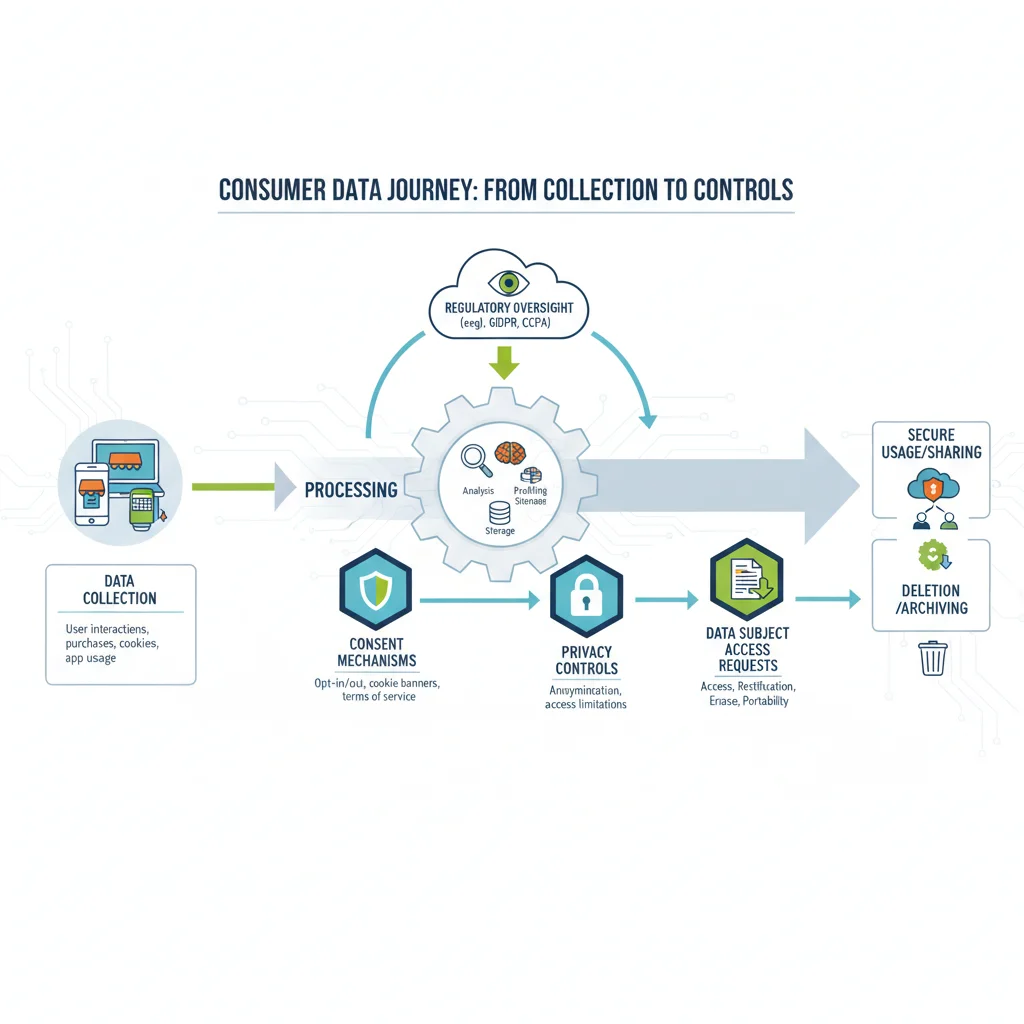
Step 2: Conduct a Comprehensive Data Inventory and Mapping Exercise
Before you can protect data effectively, you need to know what data you have, where it resides, and how it flows through your organization. This involves:
- Identifying all personal data collected: This includes customer information, employee data, website analytics, and any other data that can identify an individual.
- Mapping data flows: Document how data is collected, stored, processed, used, shared, and ultimately deleted.
- Classifying data: Distinguish between general personal data and sensitive data, as the latter often requires stricter handling.
This exercise will help you pinpoint areas where your current practices might fall short of the new CDPA Amendments 2026.
Step 3: Review and Update Privacy Policies and Notices
Your public-facing privacy policy and any internal data processing notices must be updated to reflect the CDPA Amendments 2026. Ensure they are:
- Clear and concise: Easy for the average consumer to understand.
- Comprehensive: Detail what data is collected, why, how it’s used, who it’s shared with, and how consumers can exercise their rights.
- Accessible: Prominently displayed on your website and other relevant platforms.
Step 4: Enhance Consent Management Systems
If the CDPA Amendments 2026 introduce stricter consent rules, your current mechanisms may be insufficient. Implement or upgrade a robust consent management platform (CMP) that:
- Obtains explicit, unambiguous consent where required.
- Allows consumers to easily withdraw consent.
- Records and logs consent choices for audit purposes.
- Supports granular consent preferences.
Step 5: Strengthen Data Subject Access Request (DSAR) Processes
Consumers must be able to exercise their rights to access, delete, correct, and opt-out of their data. Your DSAR process should be:
- User-friendly: Provide clear instructions and accessible channels for submitting requests.
- Efficient: Establish clear internal workflows and timelines for responding to requests within the legally mandated period.
- Secure: Verify the identity of the requester to prevent unauthorized access to personal data.
Step 6: Bolster Data Security Measures
While the CDPA already requires reasonable security practices, the CDPA Amendments 2026 might implicitly or explicitly raise the bar. Regularly review and update your data security infrastructure to protect personal data from unauthorized access, loss, or disclosure. This includes:
- Encryption of data at rest and in transit.
- Access controls and authentication mechanisms.
- Regular security audits and penetration testing.
- Incident response plans.
Step 7: Re-evaluate Vendor and Third-Party Contracts
Any third party that processes data on your behalf must also comply with the CDPA. Review all contracts to ensure they include:
- Specific data protection clauses aligned with the CDPA Amendments 2026.
- Clear instructions on how data can be processed.
- Provisions for audits and security assessments.
- Liability clauses for data breaches.
Consider conducting due diligence on new vendors to assess their privacy and security posture.
Step 8: Conduct Data Protection Assessments (DPAs)
For any new or significantly changed data processing activities, especially those involving sensitive data or high-risk profiling, conduct thorough DPAs. Document your assessments, identify risks, and implement mitigation strategies. Be prepared for the possibility that the CDPA Amendments 2026 may expand the types of activities requiring DPAs.
Step 9: Employee Training and Awareness
Your employees are your first line of defense in data privacy. Implement regular training programs to educate all staff members, especially those handling personal data, about the CDPA, the upcoming CDPA Amendments 2026, and their role in maintaining compliance. Training should cover data handling policies, security best practices, and how to identify and report potential data breaches.
Step 10: Establish a Continuous Monitoring and Audit Program
Compliance is not a one-time event but an ongoing process. Establish a system for continuously monitoring your data processing activities, reviewing compliance with internal policies and the CDPA, and conducting regular internal and external audits. This proactive approach will help identify and address potential compliance gaps before they lead to violations.

The Costs of Non-Compliance with CDPA Amendments 2026
Ignoring the CDPA Amendments 2026 can be a costly mistake. While the exact penalty structure might see revisions, the current CDPA allows for civil penalties of up to $7,500 per violation. For businesses handling large volumes of consumer data, these penalties can quickly escalate into millions of dollars. Beyond financial repercussions, non-compliance can lead to:
- Reputational Damage: Data breaches and privacy violations erode consumer trust, leading to negative publicity and a damaged brand image.
- Loss of Customer Loyalty: Consumers are increasingly privacy-conscious and are more likely to support businesses that prioritize their data rights.
- Legal Fees and Litigation: Responding to enforcement actions and potential class-action lawsuits can incur significant legal expenses.
- Operational Disruption: Dealing with a compliance investigation or data breach can divert valuable resources and disrupt normal business operations.
The investment in proactive compliance with the CDPA Amendments 2026 is far less than the potential costs of non-compliance.
Leveraging Technology for CDPA Compliance
In today’s digital age, technology plays a pivotal role in achieving and maintaining data privacy compliance. Businesses should explore and leverage various technological solutions to streamline their efforts for the CDPA Amendments 2026:
- Privacy Management Software: These platforms can automate DSAR responses, manage consent, conduct data mapping, and help with DPA documentation.
- Data Loss Prevention (DLP) Tools: DLP solutions help identify, monitor, and protect sensitive data in use, in motion, and at rest, preventing unauthorized transfers.
- Identity and Access Management (IAM) Systems: IAM solutions ensure that only authorized individuals have access to personal data, crucial for maintaining security.
- Secure Data Storage and Archiving Solutions: Implement secure databases and cloud storage solutions that offer robust encryption and access controls.
- Automated Data Discovery Tools: These tools can help identify personal data across various systems, making the data inventory process more efficient.
By strategically deploying these technologies, businesses can significantly reduce the manual effort involved in compliance and enhance their overall data protection posture in anticipation of the CDPA Amendments 2026.
The Broader Context: CDPA and the Evolving Privacy Landscape
It’s important to view the CDPA Amendments 2026 not in isolation, but as part of a larger trend in global data privacy legislation. Laws like GDPR in Europe, CCPA/CPRA in California, and similar statutes emerging in other US states (e.g., Colorado, Utah, Connecticut) all share common principles: consumer control over personal data, transparency, accountability, and robust security. Businesses that develop a comprehensive, adaptable privacy program will be better positioned to comply not only with the CDPA but also with other current and future privacy regulations.
The harmonization of certain privacy principles across different jurisdictions also presents an opportunity. Efforts made to comply with the CDPA Amendments 2026 can often be leveraged to meet requirements in other states or even internationally, creating efficiencies in compliance efforts. This holistic approach to privacy management is increasingly becoming a business imperative, moving beyond mere legal obligation to a core component of corporate responsibility and brand value.
Conclusion: Proactive Preparation is Key for CDPA Amendments 2026
The upcoming CDPA Amendments 2026 represent a significant milestone in consumer data privacy. For businesses, the Q3 2026 deadline is not a distant future but an immediate call to action. Proactive preparation, thorough planning, and strategic implementation are crucial for navigating these changes successfully. By understanding the potential scope of the amendments, dedicating resources to compliance, and leveraging appropriate technologies, businesses can not only avoid penalties but also build stronger, more trustworthy relationships with their consumers. Start your compliance journey today to ensure your organization is fully prepared for the evolving demands of the Virginia Consumer Data Protection Act.