Cybersecurity Mandates for Critical Infrastructure: 5 Immediate Actions for 2026 Compliance

The digital age has brought unprecedented convenience and efficiency, but it has also ushered in an era of complex and persistent cyber threats. For critical infrastructure organizations, the stakes are astronomically high. A successful cyberattack on sectors like energy, water, transportation, or healthcare could lead to widespread disruption, economic collapse, and even loss of life. Recognizing this escalating danger, governments and regulatory bodies worldwide are enacting stringent cybersecurity mandates, with many key deadlines converging around 2026. This article delves into the crucial area of Critical Infrastructure Cybersecurity, outlining five immediate and actionable steps organizations must take to ensure compliance and build robust defenses against the evolving threat landscape.
The urgency cannot be overstated. The window for proactive preparation is rapidly closing. Ignoring these mandates or delaying action is not merely a risk to compliance; it’s a risk to national security, public safety, and the foundational services our societies depend upon. This comprehensive guide will equip you with the knowledge and strategic imperatives to navigate the complex world of Critical Infrastructure Cybersecurity and achieve 2026 compliance.
Understanding the Evolving Landscape of Critical Infrastructure Cybersecurity Mandates
Before diving into specific actions, it’s vital to grasp the regulatory environment shaping Critical Infrastructure Cybersecurity. While specific mandates vary by region and sector, common themes emerge: enhanced risk assessments, improved incident reporting, supply chain security, and the adoption of recognized cybersecurity frameworks. In the United States, directives from the Cybersecurity and Infrastructure Security Agency (CISA) and sector-specific regulations (e.g., NERC CIP for the electricity sector, TSA Security Directives for pipelines and rail) are driving significant changes. In Europe, the NIS2 Directive is expanding the scope and strengthening the requirements for essential entities and important entities, impacting a broader range of critical infrastructure and services. Similar initiatives are underway in Canada, Australia, and other nations, all aimed at bolstering defenses against sophisticated nation-state actors and cybercriminal groups.
These mandates are not a one-time checklist; they represent a continuous journey of improvement and adaptation. They demand a fundamental shift in how organizations perceive, prioritize, and manage cybersecurity. The focus is moving beyond mere IT security to encompass Operational Technology (OT) and Industrial Control Systems (ICS), which are the very heart of critical infrastructure operations. The convergence of IT and OT environments, while offering efficiencies, also introduces new attack vectors and complexities that traditional cybersecurity models may not adequately address. Therefore, a holistic approach to Critical Infrastructure Cybersecurity is absolutely essential.
The High Stakes of Non-Compliance and Cyber-Attacks
Failure to comply with these mandates carries severe consequences, including hefty fines, reputational damage, and legal liabilities. However, the impact of a successful cyber-attack on critical infrastructure far outweighs the penalties for non-compliance. Imagine a prolonged power outage across a major metropolitan area, a disruption to clean water supply, or a compromise of hospital systems. Such scenarios are not theoretical; they have occurred and continue to pose an existential threat. The economic fallout alone can be staggering, let alone the potential for public panic and loss of trust. Therefore, the drive for compliance should be viewed not just as a regulatory burden, but as a critical investment in resilience and societal stability. Proactive measures in Critical Infrastructure Cybersecurity are a form of national and economic defense.
Immediate Action 1: Conduct a Comprehensive OT/ICS Risk Assessment and Gap Analysis
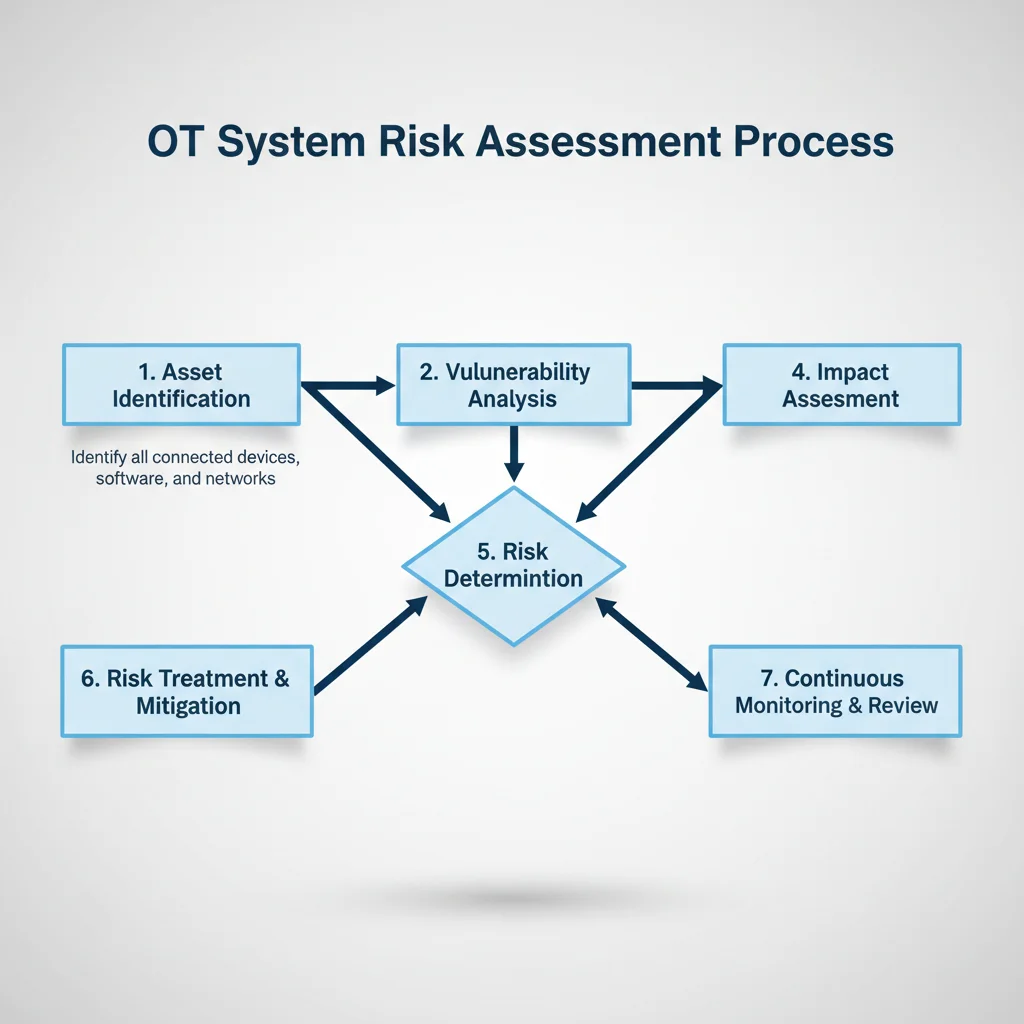
The first and arguably most critical step for any critical infrastructure organization is to understand its current cybersecurity posture, particularly within its Operational Technology (OT) and Industrial Control Systems (ICS) environments. Traditional IT risk assessments often fall short in these specialized domains due to the unique characteristics of OT/ICS: legacy systems, real-time operational requirements, proprietary protocols, and the physical consequences of cyber incidents. A comprehensive OT/ICS risk assessment goes beyond mere vulnerability scanning; it involves a deep dive into the architecture, interdependencies, and operational context of these systems.
Key Components of an Effective OT/ICS Risk Assessment:
- Asset Identification and Inventory: You cannot protect what you don’t know you have. This involves creating a detailed, up-to-date inventory of all OT/ICS assets, including PLCs, RTUs, HMIs, control servers, network devices, and their firmware/software versions. This inventory should also map the criticality of each asset to overall operational continuity.
- Threat Modeling and Scenario Planning: Identify potential threat actors (nation-states, cybercriminals, insiders) and their likely attack vectors against your specific OT/ICS environment. Develop realistic attack scenarios, considering both IT-to-OT and OT-specific attack paths. This helps prioritize defenses against the most probable and impactful threats to Critical Infrastructure Cybersecurity.
- Vulnerability Analysis: Beyond technical vulnerabilities, assess operational vulnerabilities, such as unpatched systems, insecure configurations, weak access controls, and reliance on outdated protocols. Consider both known CVEs and zero-day potential.
- Impact Analysis: Quantify the potential operational, safety, environmental, financial, and reputational impacts of various cyber incidents. This helps in justifying investments and prioritizing mitigation efforts.
- Control Effectiveness Review: Evaluate the effectiveness of existing security controls against identified risks. Are they properly implemented? Are they monitored? Are they aligned with industry best practices and emerging mandates?
Following the risk assessment, a gap analysis should compare your current state against the requirements of relevant 2026 mandates (e.g., CISA directives, NERC CIP, NIS2, etc.) and recognized frameworks like NIST CSF or IEC 62443. This will highlight specific areas where your organization falls short and provide a clear roadmap for remediation. This foundational step is indispensable for building a robust Critical Infrastructure Cybersecurity program.
Immediate Action 2: Implement Robust Network Segmentation and Access Controls
One of the most effective strategies for enhancing Critical Infrastructure Cybersecurity is robust network segmentation. The principle is simple: limit the spread of an attack by isolating critical systems. For OT/ICS environments, this means creating clear, defensible boundaries between IT networks, business networks, and various operational zones. The ‘flat network’ architecture, where IT and OT systems freely communicate, is a relic of the past and a significant vulnerability.
Key Elements of Effective Network Segmentation and Access Controls:
- Purdue Model Implementation: Adopt and rigorously implement network segmentation based on models like the Purdue Enterprise Reference Architecture. This typically involves multiple layers of defense, with firewalls, demilitarized zones (DMZs), and data diodes separating IT, enterprise, manufacturing, control, and safety systems. Each zone should have specific communication rules and security policies.
- Micro-Segmentation: Extend segmentation within OT zones to isolate individual devices or groups of devices. This minimizes the lateral movement of an attacker even if they breach a segment, confining the damage to a smaller area.
- Strict Access Control (Zero Trust Principles): Implement the principle of least privilege for all users and devices accessing OT/ICS networks. This means granting only the necessary permissions for the shortest possible time. Multi-factor authentication (MFA) should be mandatory for all remote and privileged access.
- Secure Remote Access: For remote access to OT/ICS, utilize secure VPNs with strong encryption, multi-factor authentication, and strict monitoring. Consider jump servers or secure access gateways that provide an additional layer of control and auditing.
- Network Monitoring and Anomaly Detection: Continuously monitor network traffic within and between segments for unusual activity. Industrial intrusion detection systems (IDS) and firewalls specifically designed for OT environments can detect anomalies that indicate a potential breach or attack.
By segmenting networks and enforcing stringent access controls, organizations significantly reduce their attack surface and limit the potential impact of a successful breach. This is a foundational pillar of any effective Critical Infrastructure Cybersecurity strategy and directly addresses many upcoming compliance requirements.
Immediate Action 3: Strengthen Supply Chain Cybersecurity and Vendor Risk Management
The SolarWinds attack and numerous other incidents have starkly highlighted the critical vulnerability introduced by supply chains. Critical infrastructure organizations rely heavily on external vendors for hardware, software, services, and operational support. A weakness in a third-party vendor’s cybersecurity posture can easily become a gateway into your own systems, undermining even the most robust internal defenses. Upcoming mandates place a strong emphasis on supply chain risk, requiring organizations to extend their cybersecurity diligence beyond their immediate perimeter.
Essential Steps for Supply Chain Cybersecurity and Vendor Risk Management:
- Comprehensive Vendor Due Diligence: Before engaging with any vendor, especially those providing services or products for OT/ICS environments, conduct thorough cybersecurity assessments. This should include reviewing their security policies, incident response plans, compliance certifications, and track record.
- Contractual Security Requirements: Embed specific, enforceable cybersecurity clauses into all vendor contracts. These clauses should outline minimum security standards, incident notification requirements, audit rights, and liability provisions. Ensure vendors understand and commit to maintaining robust Critical Infrastructure Cybersecurity.
- Software Bill of Materials (SBOMs): Request and utilize SBOMs for all software components, especially those deployed in OT/ICS. SBOMs provide transparency into the software’s composition, allowing organizations to identify potential vulnerabilities stemming from open-source libraries or third-party components. Many mandates are now requiring SBOMs.
- Continuous Vendor Monitoring: Vendor relationships are not a one-time assessment. Implement a program for continuous monitoring of vendor security posture, including regular reassessments, security questionnaires, and vulnerability disclosures.
- Incident Response Collaboration: Establish clear protocols for communication and collaboration with vendors in the event of a cyber incident, both within your organization and within the vendor’s own systems. Understanding their incident response capabilities is crucial.
- Secure Development Lifecycle (SDL) for Software Vendors: For vendors developing custom software or firmware for your OT/ICS, ensure they follow a secure development lifecycle, incorporating security from the design phase onwards.
Addressing supply chain risks requires a proactive, collaborative, and continuous effort. Neglecting this area leaves a massive opening for adversaries to compromise your Critical Infrastructure Cybersecurity.
Immediate Action 4: Enhance Threat Detection, Incident Response, and Recovery Capabilities
No matter how strong your preventative measures, it’s a matter of ‘when,’ not ‘if,’ an organization will face a cyber incident. Therefore, robust threat detection, a well-defined incident response plan, and proven recovery capabilities are paramount for Critical Infrastructure Cybersecurity. Upcoming mandates increasingly emphasize the ability to rapidly detect, respond to, and recover from cyberattacks, minimizing their impact and ensuring business continuity.
Key Strategies for Enhanced Threat Detection, Incident Response, and Recovery:
- OT-Specific Monitoring and Detection: Implement Security Information and Event Management (SIEM) solutions and Industrial Intrusion Detection Systems (IIDS) specifically tailored for OT environments. These tools can monitor proprietary protocols, detect anomalous behavior in control systems, and identify indicators of compromise (IoCs) relevant to industrial operations.
- 24/7 Security Operations Center (SOC) or Managed Detection and Response (MDR): Establish or outsource a 24/7 monitoring capability to ensure constant vigilance. A dedicated SOC or an MDR service specializing in OT can provide the expertise and resources needed to detect and analyze threats around the clock.
- Comprehensive Incident Response Plan (IRP): Develop, document, and regularly update an IRP specifically for OT/ICS incidents. This plan should clearly define roles and responsibilities, communication protocols (internal and external, including regulatory bodies), containment strategies, eradication steps, and recovery procedures.
- Regular Testing and Drills: The IRP is only as good as its last test. Conduct tabletop exercises, simulations, and live drills to practice incident response scenarios. This helps identify weaknesses in the plan, train personnel, and improve coordination. Include scenarios that test the transition from IT to OT incident response.
- Robust Backup and Recovery Strategy: Implement a comprehensive backup and recovery strategy for all critical OT/ICS data, configurations, and software. Ensure backups are isolated, immutable, and regularly tested for restorability. This is crucial for rapid recovery from ransomware or other destructive attacks.
- Cybersecurity Awareness and Training: Human error remains a leading cause of breaches. Implement continuous cybersecurity awareness training for all employees, from the plant floor to senior management, with a specific focus on OT security best practices, phishing awareness, and reporting suspicious activity.
Investing in these capabilities ensures that when an incident occurs, your organization can respond effectively, minimize downtime, and restore operations swiftly, thereby strengthening your overall Critical Infrastructure Cybersecurity posture.

Immediate Action 5: Invest in Continuous Improvement and Executive Buy-in
Achieving 2026 compliance for Critical Infrastructure Cybersecurity is not a destination but an ongoing journey. The threat landscape is constantly evolving, with new vulnerabilities emerging and adversaries developing more sophisticated techniques. Therefore, a commitment to continuous improvement, backed by strong executive buy-in, is essential for long-term resilience.
Pillars of Continuous Improvement and Executive Buy-in:
- Dedicated Budget and Resources: Cybersecurity, especially for critical infrastructure, requires significant and sustained investment. Executive leadership must allocate adequate budget for technology, personnel, training, and external expertise. This investment should be viewed as a strategic imperative, not merely an IT cost.
- Cybersecurity Governance Framework: Establish a clear governance structure for cybersecurity, defining roles, responsibilities, and accountability across the organization. This includes regular reporting to the board or executive committee on cybersecurity posture, risks, and compliance status.
- Regular Audits and Assessments: Beyond the initial risk assessment, conduct periodic internal and external audits to verify compliance, identify new vulnerabilities, and assess the effectiveness of security controls. Independent third-party assessments can provide objective insights and validate your security posture against industry benchmarks and regulatory requirements.
- Threat Intelligence Integration: Integrate relevant threat intelligence feeds into your security operations. Understanding current and emerging threats specific to your sector and OT/ICS environments allows for proactive defense and informed decision-making.
- Active Participation in Information Sharing: Engage with sector-specific Information Sharing and Analysis Centers (ISACs) and other industry forums. Sharing threat intelligence, best practices, and lessons learned with peers can significantly enhance collective Critical Infrastructure Cybersecurity.
- Talent Development and Retention: The cybersecurity talent gap is a significant challenge. Invest in training and upskilling your existing workforce, and actively recruit and retain skilled cybersecurity professionals. Foster a culture of security awareness across the organization.
- Technology Roadmapping: Develop a strategic roadmap for cybersecurity technology investments, ensuring that solutions are aligned with evolving threats, compliance mandates, and operational needs. Regularly evaluate new technologies that can enhance your defensive capabilities.
Executive buy-in is the linchpin that holds these efforts together. Without leadership understanding the gravity of cyber risks and actively championing cybersecurity initiatives, even the best technical plans will falter. It transforms cybersecurity from a technical problem into a core business strategy for protecting vital assets and ensuring operational continuity. This continuous commitment is the ultimate safeguard for Critical Infrastructure Cybersecurity.
Conclusion: Securing Our Future Through Proactive Critical Infrastructure Cybersecurity
The 2026 cybersecurity mandates for critical infrastructure are not just regulatory hurdles; they are a call to action. They represent a global recognition that the digital vulnerabilities of our essential services pose an existential threat. The five immediate actions outlined in this article – conducting comprehensive risk assessments, implementing robust network segmentation and access controls, strengthening supply chain security, enhancing threat detection and incident response, and fostering continuous improvement with executive buy-in – form the bedrock of a resilient Critical Infrastructure Cybersecurity strategy.
The time for deliberation is over; the time for decisive action is now. Organizations that proactively embrace these changes will not only achieve compliance but will also significantly enhance their resilience, protect their operations, and contribute to the overall security and stability of our interconnected world. The future of our critical infrastructure, and by extension, our societies, depends on our collective commitment to strong and adaptive cybersecurity defenses. By acting immediately and strategically, critical infrastructure organizations can turn the challenge of 2026 compliance into an opportunity to build a more secure and reliable future.