Achieving 95% Digital Accessibility by 2026: A Comprehensive Guide to ADA Compliance

In an increasingly interconnected world, digital platforms have become the cornerstone of daily life, commerce, education, and communication. From online banking to e-learning, and from social media to essential government services, the digital realm offers unparalleled opportunities. However, for a significant portion of the population, these opportunities remain out of reach due to inaccessible design. This is precisely why the focus on digital accessibility compliance has intensified, culminating in new mandates aimed at achieving a staggering 95% compliance across digital platforms by mid-2026.
This ambitious target reflects a global shift towards a more inclusive digital ecosystem, where everyone, regardless of ability, can access and interact with information and services online. For businesses, organizations, and developers, this isn’t just a regulatory hurdle; it’s an ethical imperative and a strategic advantage. Non-compliance can lead to significant legal repercussions, reputational damage, and, most importantly, the exclusion of a valuable user base.
This comprehensive guide will delve into the intricacies of these new accessibility standards, outline the roadmap to achieving 95% digital accessibility compliance by mid-2026, and provide actionable strategies for implementing robust, inclusive digital experiences. We’ll explore the foundational principles, key regulations like the Americans with Disabilities Act (ADA) and Web Content Accessibility Guidelines (WCAG) 2.2, and practical steps to integrate accessibility into every stage of your digital development lifecycle.
Understanding the Mandate: Why 95% Compliance by Mid-2026?
The push for 95% digital accessibility compliance by mid-2026 isn’t arbitrary. It stems from a growing recognition that digital exclusion is a form of discrimination. The Americans with Disabilities Act (ADA), enacted in 1990, prohibits discrimination against individuals with disabilities in all areas of public life. While initially focused on physical spaces, court rulings and evolving interpretations have increasingly applied ADA principles to the digital domain, asserting that websites and digital platforms are ‘places of public accommodation’.
The 95% target signifies a mature phase in digital accessibility. It acknowledges that while striving for 100% perfection is ideal, it can be an ongoing, iterative process, especially for complex platforms. The 95% benchmark provides a realistic yet challenging goal, pushing organizations to prioritize and integrate accessibility deeply rather than treating it as an afterthought. This target is often aligned with international best practices and emerging global standards, aiming for a harmonized approach to digital inclusion.
The timeline — mid-2026 — provides a clear window for organizations to assess their current accessibility posture, plan necessary remediation, and implement sustainable practices. This period allows for strategic investment in tools, training, and talent to ensure that accessibility becomes an inherent part of digital product development and maintenance.
The Role of WCAG 2.2 in Achieving Digital Accessibility Compliance
At the heart of most digital accessibility standards, including those influencing ADA interpretations, are the Web Content Accessibility Guidelines (WCAG). Developed by the World Wide Web Consortium (W3C), WCAG provides a globally recognized framework for making web content more accessible to people with a wide range of disabilities. The latest iteration, WCAG 2.2, builds upon previous versions (2.0 and 2.1) by introducing new success criteria to address evolving technologies and user needs.
WCAG 2.2 is structured around four foundational principles, often referred to by the acronym POUR:
- Perceivable: Information and user interface components must be presentable to users in ways they can perceive. This means providing text alternatives for non-text content, captions for audio and video, and ensuring sufficient contrast.
- Operable: User interface components and navigation must be operable. This includes making all functionality available from a keyboard, giving users enough time to read and use content, and avoiding content that causes seizures.
- Understandable: Information and the operation of user interface must be understandable. This involves making text readable and understandable, making web pages appear and operate in predictable ways, and helping users avoid and correct mistakes.
- Robust: Content must be robust enough that it can be interpreted reliably by a wide variety of user agents, including assistive technologies. This means maximizing compatibility with current and future user agents.
Each principle is supported by guidelines and specific, testable success criteria categorized into three conformance levels: A (lowest), AA, and AAA (highest). For achieving 95% digital accessibility compliance, the industry standard and often the legal expectation is WCAG 2.2 Level AA. This level strikes a balance between comprehensive accessibility and practical implementability for most organizations.
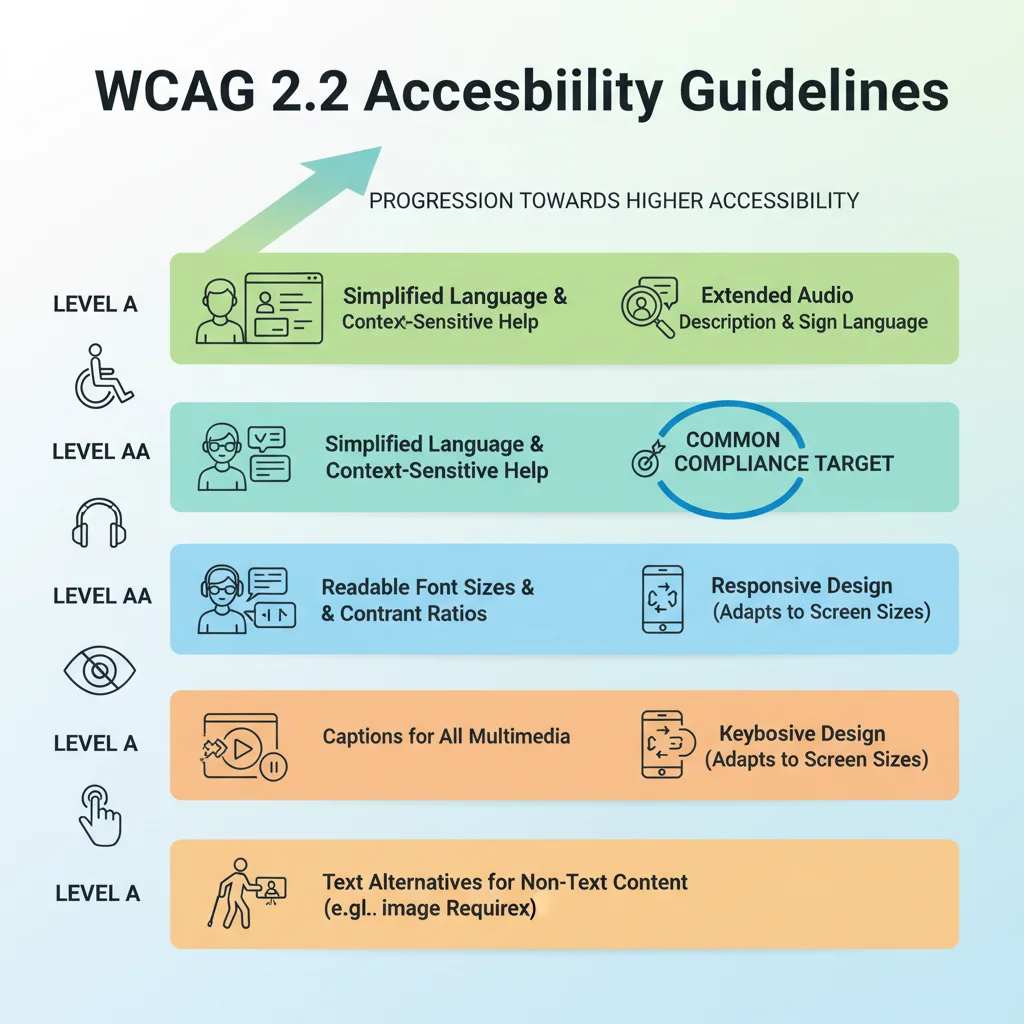
New criteria in WCAG 2.2, such as ‘Dragging Movements’ and ‘Target Size’, specifically address accessibility for users with motor impairments and cognitive disabilities, enhancing the overall inclusivity of digital platforms. Understanding and meticulously applying these guidelines is paramount for any entity aiming for the mid-2026 compliance target.
The Roadmap to 95% Digital Accessibility Compliance
Achieving 95% digital accessibility compliance by mid-2026 requires a structured, multi-faceted approach. It’s not a one-time fix but an ongoing commitment to inclusive design. Here’s a comprehensive roadmap:
Phase 1: Assessment and Audit (Now – Late 2024)
- Baseline Accessibility Audit: Conduct a thorough audit of all existing digital assets (websites, mobile apps, intranets, documents, multimedia) against WCAG 2.2 Level AA standards. This involves a combination of automated testing tools, manual expert reviews, and user testing with individuals with disabilities.
- Identify Gaps and Prioritize: Document all accessibility barriers found. Categorize them by severity, frequency, and impact on users. Prioritize remediation efforts based on these factors, focusing on critical user flows and high-traffic areas.
- Stakeholder Buy-in and Resource Allocation: Secure commitment from leadership. Establish an accessibility task force or designate an accessibility champion. Allocate necessary budget, personnel, and tools for the upcoming phases.
- Develop an Accessibility Policy: Create and publish an internal and external accessibility policy statement that outlines your organization’s commitment to accessibility and the standards it adheres to.
Phase 2: Remediation and Implementation (Early 2025 – Early 2026)
- Remediate Existing Content: Systematically address the identified accessibility issues. This might involve:
- Updating HTML structure for semantic correctness.
- Adding appropriate alt text to images and meaningful labels to form fields.
- Ensuring keyboard navigation for all interactive elements.
- Providing transcripts and captions for audio/video content.
- Improving color contrast and font legibility.
- Refactoring code to comply with ARIA (Accessible Rich Internet Applications) guidelines.
- Integrate Accessibility into Development Lifecycle (Shift-Left): Embed accessibility checks and considerations into every stage of the design and development process, from conception and wireframing to coding and testing. This is crucial for sustained digital accessibility compliance.
- Training and Education: Provide comprehensive accessibility training for all relevant teams: designers, developers, content creators, QA testers, and project managers. Foster a culture of accessibility awareness.
- Procurement Guidelines: Establish accessibility requirements for all third-party software, tools, and vendors. Ensure that any new platforms or components purchased are accessible by design.
Phase 3: Monitoring, Maintenance, and Continuous Improvement (Mid-2026 and Beyond)
- Regular Testing and Audits: Implement a schedule for ongoing accessibility testing, both automated and manual. Due to dynamic content and frequent updates, continuous monitoring is essential to maintain 95% digital accessibility compliance.
- User Feedback Mechanisms: Provide clear and accessible channels for users with disabilities to report accessibility issues. Actively solicit and respond to feedback.
- Accessibility Statement and Contact Information: Maintain an up-to-date accessibility statement on your digital platforms, detailing your efforts, conformance level, and how users can get assistance.
- Stay Updated: The digital landscape and accessibility standards evolve. Keep abreast of new WCAG versions, legal precedents, and best practices to ensure long-term compliance and continuous improvement.
Key Challenges and Solutions in Achieving Digital Accessibility Compliance
While the goal of 95% digital accessibility compliance is clear, the path is fraught with challenges. Understanding these hurdles and proactively seeking solutions is vital for success.
Challenge 1: Legacy Systems and Technical Debt
Many organizations operate on older platforms or have accumulated significant technical debt, making accessibility remediation a daunting task. Retrofitting accessibility features into complex, outdated systems can be time-consuming and expensive.
Solution: Prioritize critical user paths and high-impact areas for remediation. For very old or complex systems, consider a phased migration to more modern, accessibility-friendly frameworks. Automate as much of the testing and remediation process as possible, but always supplement with manual reviews. Document remediation efforts thoroughly to avoid reintroducing issues.
Challenge 2: Lack of Awareness and Expertise
A common barrier is the lack of understanding about what accessibility entails, both at a technical and empathic level. Developers might not know how to code accessibly, designers might not consider color contrast or focus states, and content creators might overlook alt text.
Solution: Invest heavily in training and education for all teams involved in digital product creation. Bring in accessibility experts for workshops and ongoing consultation. Foster an inclusive culture where accessibility is seen as everyone’s responsibility, not just a niche task. Develop internal accessibility guidelines and checklists tailored to your organization’s specific needs.
Challenge 3: Dynamic Content and Third-Party Integrations
Modern digital platforms often rely on dynamic content, user-generated content, and numerous third-party widgets, plugins, and APIs. Ensuring accessibility across all these elements, especially those outside direct control, is a significant challenge.
Solution: Establish strict accessibility requirements for all third-party vendors and integrations. Include accessibility clauses in contracts. Regularly audit third-party components for compliance. For dynamic content, design robust content management systems (CMS) that encourage or enforce accessible content creation (e.g., requiring alt text fields). Implement client-side accessibility checks where possible.
Challenge 4: Budget and Resource Constraints
Accessibility remediation and ongoing maintenance require financial investment and dedicated personnel, which can be a hurdle for organizations with limited resources.
Solution: Frame accessibility as an investment, not an expense. Highlight the business benefits: expanded market reach, improved SEO, reduced legal risk, and enhanced brand reputation. Start with a minimum viable accessibility (MVA) approach, focusing on WCAG Level AA for critical paths, and gradually expand. Leverage open-source accessibility tools and community resources. Seek executive sponsorship to secure necessary funding.

The Business Case for Digital Accessibility Compliance
Beyond legal obligations and ethical responsibilities, there’s a compelling business case for achieving 95% digital accessibility compliance. Embracing accessibility can significantly benefit your organization in multiple ways:
Expanded Market Reach and Customer Loyalty
Globally, over one billion people live with some form of disability. By making your digital platforms accessible, you open your services and products to a vast, underserved market. This not only increases your potential customer base but also fosters loyalty among users who appreciate your commitment to inclusion. Accessible platforms often provide a better user experience for everyone, not just those with disabilities.
Enhanced Brand Reputation and Corporate Social Responsibility (CSR)
Organizations that prioritize accessibility are viewed more positively by the public. It demonstrates a commitment to corporate social responsibility and inclusive values, which can enhance brand image, attract top talent, and differentiate you from competitors. In an era where consumers increasingly value ethical brands, accessibility can be a powerful differentiator.
Reduced Legal Risk and Costs
The number of accessibility-related lawsuits continues to rise. Non-compliance with ADA and similar regulations can result in costly litigation, significant fines, and expensive remediation efforts under duress. Proactive investment in accessibility is far more cost-effective than reactive measures in response to a lawsuit. Achieving 95% digital accessibility compliance significantly mitigates these risks.
Improved SEO and Discoverability
Many accessibility best practices overlap with good SEO practices. For example, using semantic HTML, providing alt text for images, offering clear headings, and ensuring keyboard navigability all contribute to a better understanding of your content by search engines. An accessible website is often a more search-engine-friendly website, leading to higher rankings and increased organic traffic.
Innovation and Usability for All
Designing for accessibility often sparks innovation. When you consider the needs of diverse users, you’re prompted to think creatively about user interfaces and interactions. Features developed for accessibility (e.g., captions, voice control, customizable text sizes) often benefit a much broader audience, improving overall usability for everyone in various contexts (e.g., noisy environments, small screens, temporary impairments).
Looking Ahead: Sustaining Digital Accessibility Beyond 2026
Achieving 95% digital accessibility compliance by mid-2026 is a significant milestone, but it’s not the finish line. Accessibility is an ongoing journey of continuous improvement. The digital landscape is constantly evolving with new technologies, devices, and user expectations. Therefore, maintaining and enhancing accessibility requires persistent effort.
Organizations should aim to embed accessibility into their core organizational DNA. This means establishing dedicated accessibility teams or roles, fostering a culture of empathy and inclusion, and making accessibility a key performance indicator (KPI) for digital projects. Regular training, updated guidelines, and consistent testing will be crucial to staying ahead of the curve.
Furthermore, engaging with the accessibility community, participating in industry forums, and keeping abreast of legislative changes and technological advancements will ensure that your digital platforms remain at the forefront of inclusive design. The goal is not just to meet a compliance target but to truly create a digital world where everyone has equal access and opportunity.
Conclusion
The journey towards 95% digital accessibility compliance by mid-2026 is a monumental undertaking, but one that promises immense rewards. It’s a call to action for every organization to re-evaluate their digital presence through the lens of inclusion. By understanding the mandate, embracing WCAG 2.2 as a guiding framework, following a structured roadmap, and proactively addressing challenges, businesses can transform their digital platforms into beacons of accessibility.
The benefits extend far beyond avoiding legal pitfalls; they encompass expanding market reach, enhancing brand reputation, fostering innovation, and ultimately, contributing to a more equitable and accessible digital society for all. The time to act is now, laying the groundwork for a truly inclusive digital future that benefits everyone, everywhere.