Digital Services Act 2026: E-commerce Impact & Compliance Guide

The Impact of the 2026 Digital Services Act on E-commerce Platforms: Key Regulatory Shifts to Watch
Navigating the New Era of Online Regulation and Its Financial Implications
The digital landscape is constantly evolving, and with it, the regulatory frameworks governing online activities. Few legislative acts have generated as much discussion and anticipation in the e-commerce sector as the European Union’s Digital Services Act (DSA). Fully applicable from February 17, 2024, for very large online platforms and very large online search engines, and for all other online intermediaries by February 17, 2026, the DSA is poised to fundamentally reshape how e-commerce platforms operate within the EU. This comprehensive guide delves into the core tenets of the Digital Services Act, exploring its far-reaching impact on e-commerce platforms, outlining the crucial regulatory shifts, and shedding light on the financial consequences businesses must prepare for.
Understanding the Digital Services Act: A New Era for Online Responsibility
The Digital Services Act is a landmark piece of legislation from the European Union, designed to create a safer, more predictable, and more transparent online environment. It aims to modernize the existing legal framework, primarily the e-Commerce Directive from 2000, by addressing the challenges posed by the rapid growth of digital services, particularly online platforms. The DSA introduces a broad range of new obligations for digital service providers, categorized based on their size and nature, with more stringent rules for larger platforms.
Key Objectives of the Digital Services Act:
- Combatting Illegal Content: The DSA introduces robust mechanisms for platforms to tackle illegal content, including illegal goods, services, and hate speech. This involves new notice-and-action procedures and enhanced cooperation with national authorities.
- Protecting Fundamental Rights: It strengthens safeguards for users’ fundamental rights online, including freedom of expression and data protection.
- Improving Transparency: The act mandates greater transparency regarding content moderation practices, online advertising, and recommender systems.
- Enhancing Accountability: It establishes clear accountability frameworks for online platforms, ensuring they take responsibility for the content and activities occurring on their services.
- Fostering Innovation: While imposing obligations, the DSA also aims to create a level playing field and foster innovation within the digital single market.
For e-commerce platforms, the implications are profound. The DSA moves beyond simply holding platforms liable for illegal content they are aware of, introducing a proactive duty of care and imposing a range of operational and procedural changes. This shift signifies a move towards greater responsibility for platforms in curating and managing their online ecosystems.
Who Does the Digital Services Act Apply To? Categorization of Online Services
The Digital Services Act adopts a tiered approach, meaning obligations vary depending on the type and size of the online service provider. This categorization is crucial for e-commerce platforms to understand their specific responsibilities:
1. Intermediary Services:
- Conduit Services: These are services that transmit information provided by a recipient of the service, such as internet access providers.
- Caching Services: Services that store information temporarily to make onward transmission more efficient, like content delivery networks.
- Hosting Services: Services that store information provided by a recipient of the service at their request, including cloud computing and web hosting services.
2. Online Platforms:
This category is most relevant to e-commerce. Online platforms are hosting services that store and disseminate information to the public, at the request of a recipient of the service. This includes social media platforms, online marketplaces, app stores, and collaborative economy platforms. Most e-commerce businesses operating as marketplaces fall into this category.
3. Very Large Online Platforms (VLOPs) and Very Large Online Search Engines (VLOSEs):
These are online platforms or search engines that have 45 million or more average monthly active recipients of the service in the EU. VLOPs and VLOSEs face the most stringent obligations under the Digital Services Act due to their systemic impact and reach. Many major global e-commerce players will undoubtedly fall into this category.
E-commerce businesses must accurately assess their classification under the DSA to determine the full scope of their compliance obligations. Misclassification can lead to significant penalties, making a thorough understanding of these categories paramount.
Key Regulatory Shifts for E-commerce Platforms Under the Digital Services Act
The Digital Services Act introduces a multitude of new regulations that will profoundly impact the day-to-day operations and strategic planning of e-commerce platforms. Here are some of the most significant shifts:
1. Enhanced Transparency and Accountability:
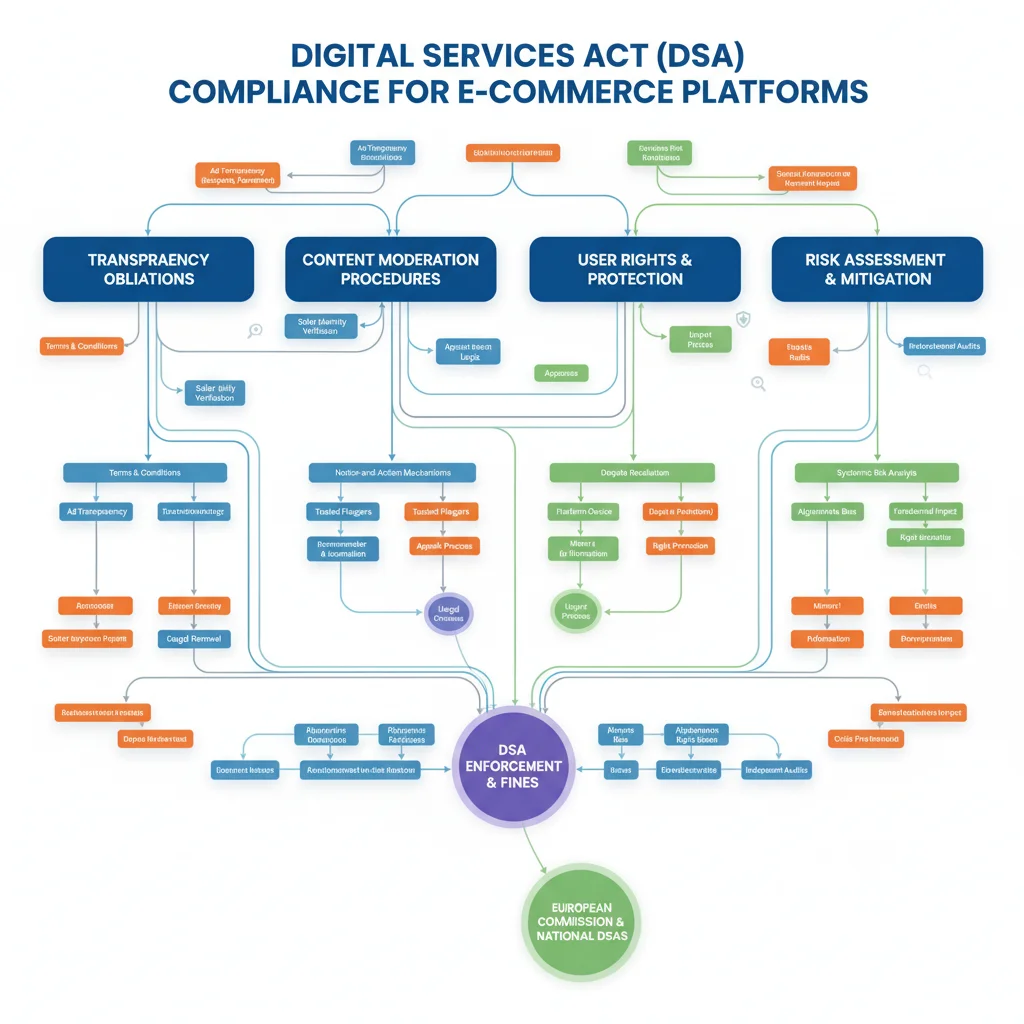
- Notice-and-Action Mechanisms: All hosting services, including e-commerce platforms, must establish easy-to-use mechanisms for users and trusted flaggers to notify them of illegal content. Platforms must then process these notices promptly and diligently, providing reasons for their decisions.
- Statement of Reasons: Platforms must provide clear and specific reasons to users when they restrict content (e.g., removal, disabling access, demonetization) or suspend accounts. This enhances transparency and allows users to understand the basis for such actions.
- Internal Complaint-Handling System: Online platforms must provide an internal system for users to lodge complaints against content moderation decisions, ensuring a fair and timely review process.
- Transparency Reports: Platforms will be required to publish regular transparency reports detailing their content moderation activities, including the number of pieces of illegal content removed, the types of complaints received, and the accuracy of automated moderation tools.
2. Due Diligence for Online Marketplaces:
The DSA places specific and extensive obligations on online marketplaces to ensure that consumers can purchase safe and legal products. This is a critical area for e-commerce platforms.
- Traceability of Traders: Marketplaces must collect and verify specific information about the traders using their services, including their identity, contact details, and self-certification of compliance with applicable EU product safety laws. This ‘Know Your Business Customer’ (KYBC) principle aims to prevent the sale of counterfeit or unsafe goods.
- Product Safety Information: Platforms must design their interfaces to ensure that traders provide essential product safety information to consumers.
- Information to Consumers: Marketplaces must inform consumers when they become aware that a product or service offered by a specific trader is illegal.
- Cooperation with Authorities: Enhanced cooperation with market surveillance authorities is mandated to facilitate the removal of unsafe products.
3. Restrictions on Targeted Advertising:
The DSA introduces significant restrictions on targeted advertising practices, particularly for vulnerable groups.
- Prohibition of Targeting Minors: Platforms are prohibited from presenting targeted advertising based on profiling using personal data of minors.
- Sensitive Data Prohibition: Targeted advertising based on special categories of personal data (e.g., ethnic origin, political opinions, health) is also prohibited.
- Transparency for Ads: Users must be clearly informed that content is an advertisement, who the advertiser is, and what parameters were used for targeting.
4. Risk Assessments and Mitigation for VLOPs/VLOSEs:
Very Large Online Platforms and Search Engines face additional obligations, including:
- Systemic Risk Assessments: They must conduct annual assessments of systemic risks arising from their services, such as the spread of illegal content, negative effects on fundamental rights, or harm to public health.
- Risk Mitigation Measures: Based on these assessments, VLOPs/VLOSEs must implement reasonable, proportionate, and effective mitigation measures.
- Crisis Response Mechanism: They must have a crisis response mechanism in place to address serious societal harms.
5. User Empowerment and Control:
The DSA enhances user rights by providing them with more control over their online experience:
- Choice over Recommender Systems: Users of VLOPs/VLOSEs must be offered at least one option for recommender systems not based on profiling.
- Right to Appeal: Users have the right to appeal content moderation decisions and seek out-of-court dispute resolution.
These regulatory shifts represent a fundamental change in the operational demands on e-commerce platforms. Compliance will require significant investment in technology, personnel, and process redesign.
Financial Impact of the Digital Services Act on E-commerce Platforms
The financial implications of the Digital Services Act for e-commerce platforms are substantial and multifaceted. Businesses need to factor in both direct compliance costs and potential penalties for non-compliance.
1. Compliance Costs:
- Technology Investment: Platforms will need to invest in new tools and systems for content moderation, notice-and-action mechanisms, user complaint handling, and transparency reporting. This includes AI-powered solutions for detection and improved data management systems.
- Personnel and Training: There will be a need to hire and train more staff for content moderation, legal compliance, customer support (for complaint handling), and data verification (for KYBC obligations).
- Legal and Consulting Fees: Engaging legal experts to interpret the DSA, audit current practices, and ensure compliance will incur significant costs.
- Process Redesign: Existing workflows for onboarding sellers, managing product listings, handling user reports, and addressing advertising will need to be re-engineered to align with DSA requirements.
- Audits and Reporting (for VLOPs): VLOPs will face additional costs associated with independent audits of their risk management systems and the preparation of extensive transparency reports.
2. Revenue Shifts and Business Model Adjustments:
- Advertising Revenue: Restrictions on targeted advertising, particularly concerning minors and sensitive data, could impact advertising revenue for platforms heavily reliant on these models. Platforms may need to diversify their advertising strategies or invest in privacy-preserving ad technologies.
- Seller Onboarding and Retention: The stringent KYBC requirements might deter some smaller or less established sellers from joining platforms, potentially affecting the breadth of offerings and associated commission revenues. Marketplaces might need to offer more support to help sellers comply.
- Operational Overhead: Increased operational overhead due to enhanced content moderation, user support, and due diligence processes will directly impact profit margins.
3. Penalties for Non-Compliance:
The DSA includes significant penalties for non-compliance, designed to act as a strong deterrent:
- Fines: For most infringements, penalties can reach up to 6% of a service provider’s global annual turnover in the preceding financial year. For VLOPs and VLOSEs, this could amount to billions of Euros.
- Periodic Penalty Payments: Non-compliance with remedies or requests from coordinators can result in periodic penalty payments of up to 5% of the average daily global turnover.
- Reputational Damage: Beyond financial penalties, non-compliance can lead to severe reputational damage, eroding user trust and potentially impacting market share.
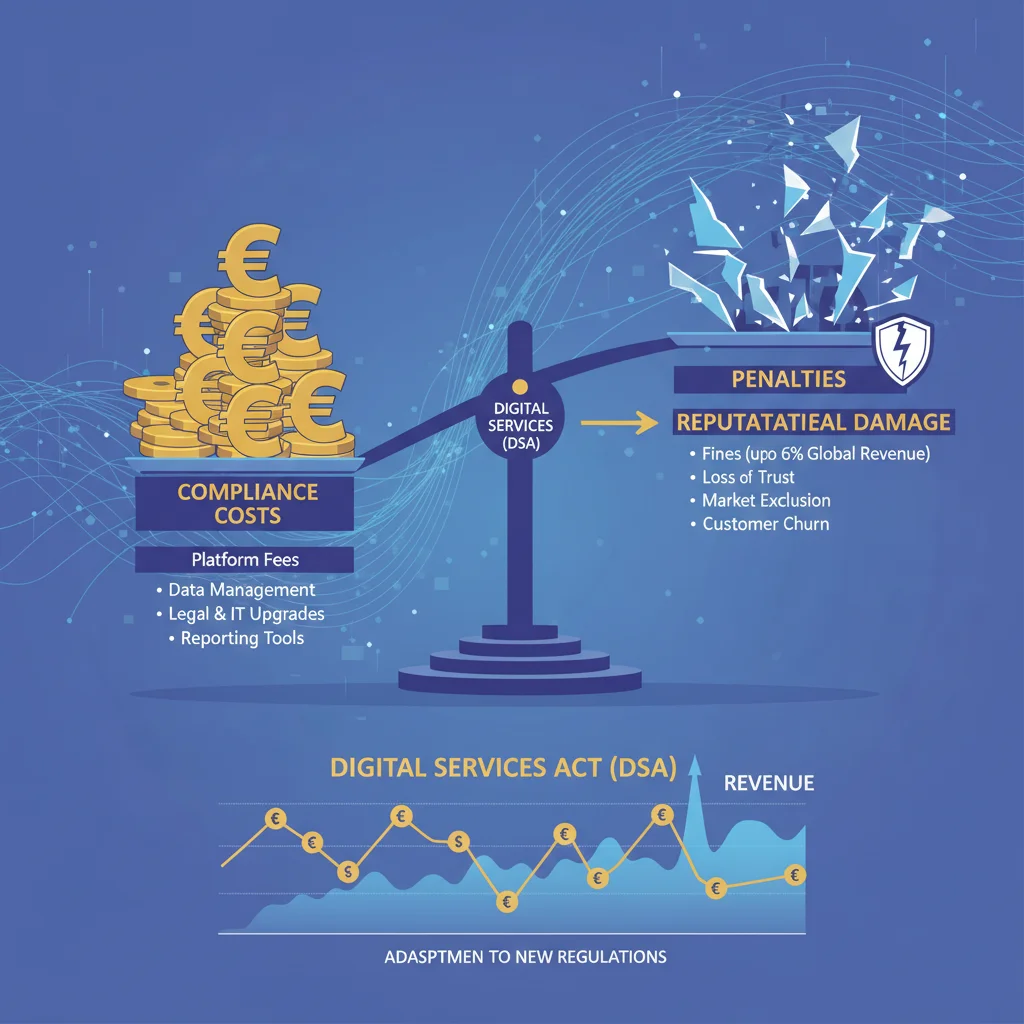
The financial burden will vary significantly depending on the size and current operational maturity of the e-commerce platform. Smaller platforms might find it challenging to meet the new requirements without substantial investment, while larger platforms, though having more resources, face higher potential fines due to their larger turnover.
Preparing for 2026: A Roadmap for E-commerce Compliance
With the full application of the Digital Services Act for all online intermediaries approaching in February 2026, e-commerce platforms must act decisively to ensure compliance. Here’s a strategic roadmap:
1. Conduct a DSA Compliance Audit:
Start by thoroughly assessing your current operations against the requirements of the Digital Services Act. Identify gaps in your content moderation policies, terms and conditions, user complaint mechanisms, advertising practices, and, for marketplaces, seller onboarding and traceability procedures. Determine your classification under the DSA (hosting service, online platform, VLOP).
2. Update Terms and Conditions and Internal Policies:
Revise your terms of service to reflect the new obligations, particularly regarding content moderation, user rights, and dispute resolution. Develop clear internal policies for handling illegal content, managing user complaints, and ensuring transparency.
3. Implement Robust Notice-and-Action Mechanisms:
Establish or enhance user-friendly systems for reporting illegal content and provide clear channels for communication. Ensure your team is equipped to process these notices promptly and provide reasoned decisions.
4. Strengthen Seller Traceability (for Marketplaces):
If you operate an online marketplace, implement robust KYBC procedures to collect and verify trader information. This will require developing new data collection processes and potentially integrating with identity verification services.
5. Re-evaluate Advertising Strategies:
Review your advertising practices to ensure compliance with the DSA’s restrictions on targeted advertising, especially concerning minors and sensitive data. Invest in privacy-preserving advertising solutions and enhance transparency for users regarding ad targeting.
6. Enhance Transparency Reporting:
Prepare to publish regular transparency reports. Start collecting the necessary data on content moderation actions, complaints, and other relevant metrics now.
7. Invest in Technology and Training:
Allocate resources for technological upgrades to support new compliance requirements. Train your legal, operations, content moderation, and customer support teams on the nuances of the DSA.
8. Establish Internal Complaint Handling Systems:
Develop an effective and fair internal complaint-handling system for users to challenge content moderation decisions, ensuring timely review and communication.
9. Prepare for Risk Assessments (for VLOPs):
If classified as a VLOP, begin preparing for annual systemic risk assessments, identifying potential harms, and developing mitigation strategies.
10. Stay Informed and Seek Expert Advice:
The regulatory landscape can be complex. Continuously monitor guidance from the European Commission and national Digital Services Coordinators. Engage legal experts specializing in EU digital law to ensure your compliance strategy is sound.
The Long-Term Vision: A Safer and More Accountable Digital Space
The Digital Services Act represents a significant step towards creating a more responsible and accountable online environment. While the immediate focus for e-commerce platforms is on compliance and mitigating financial risks, the long-term vision is one where online spaces are safer for consumers, fairer for businesses, and more transparent in their operations. By embracing these changes proactively, e-commerce platforms can not only avoid penalties but also build greater trust with their users, enhance their brand reputation, and contribute to a healthier digital ecosystem.
The journey to full DSA compliance will require dedication, strategic investment, and a cultural shift towards greater responsibility. However, the rewards of a more regulated, trustworthy, and user-centric online marketplace are substantial, paving the way for sustainable growth in the evolving digital economy. The Digital Services Act is not merely a set of rules; it’s a blueprint for the future of online commerce in the EU, and understanding its intricacies is vital for any platform aiming for success in this new era.