The 5-Year Horizon: Rebalancing Your Investment Portfolio for Peak Performance Through 2031

In the dynamic world of finance, maintaining an optimal investment portfolio requires more than just making initial smart choices. It demands ongoing vigilance, strategic adjustments, and a clear understanding of your long-term goals. As we look towards the horizon of 2031, a critical practice for any savvy investor is proactive investment portfolio rebalancing. This isn’t just about tweaking a few numbers; it’s about ensuring your portfolio remains aligned with your risk tolerance, financial objectives, and the ever-shifting economic landscape. The next five years promise to bring their own unique set of challenges and opportunities, making a well-executed rebalancing strategy indispensable.
Many investors mistakenly believe that once a portfolio is set, it can be left untouched. However, market fluctuations, economic cycles, and even personal life changes can significantly alter your portfolio’s original asset allocation. Without regular investment portfolio rebalancing, your risk exposure might drift, potentially leading to suboptimal returns or, worse, exposing you to greater losses than you’re comfortable with. This comprehensive guide will delve into the nuances of rebalancing, providing you with actionable insights to navigate the period leading up to 2031 effectively.
Understanding the Core Concept of Investment Portfolio Rebalancing
At its heart, investment portfolio rebalancing is the process of realigning the weightings of a portfolio of assets. This is done by periodically buying or selling assets in a portfolio to maintain an original or desired level of asset allocation. For instance, if your target allocation is 60% stocks and 40% bonds, and a strong bull market causes your stocks to grow to 70% of your portfolio, rebalancing would involve selling some stocks and buying more bonds to bring the allocation back to your 60/40 target. This seemingly simple act is profoundly impactful for several reasons.
Firstly, it helps in maintaining your desired risk level. As certain asset classes outperform others, they can come to dominate your portfolio, increasing its overall risk profile. By rebalancing, you systematically trim back assets that have performed well (selling high) and add to those that have underperformed (buying low), often seen as a contrarian investment strategy. This disciplined approach prevents your portfolio from becoming overly concentrated in one area, thereby mitigating risk. Over the next five years, with potential market volatility and shifting economic conditions, maintaining this risk equilibrium through consistent investment portfolio rebalancing will be paramount.
Secondly, rebalancing can enhance long-term returns. While it might seem counterintuitive to sell winning assets, this practice forces you to lock in gains and redeploy capital into other areas that may be undervalued. This systematic approach can lead to better risk-adjusted returns over time compared to a ‘set it and forget it’ strategy. For the period leading up to 2031, where global markets are expected to continue their evolution, a disciplined rebalancing strategy can capture opportunities and protect against unforeseen downturns.
Why the 5-Year Horizon (2026-2031) Demands Strategic Rebalancing
The next five years are poised to be a period of significant change and opportunity. Geopolitical shifts, technological advancements, evolving consumer behaviors, and potential economic cycles will all play a role in shaping market performance. For investors aiming for peak performance through 2031, a static portfolio is a recipe for missed opportunities and increased vulnerability. Strategic investment portfolio rebalancing becomes a proactive measure to adapt to these changes.
Economic Forecasts and Market Trends
Forecasting the market five years out is challenging, but general trends can be identified. We might see continued innovation in artificial intelligence, renewable energy, and biotechnology, potentially leading to significant growth in these sectors. Conversely, traditional industries might face headwinds. Interest rate policies from central banks around the globe will continue to influence bond markets and borrowing costs, impacting various asset classes differently. Inflationary pressures, supply chain dynamics, and labor market conditions will also be crucial factors.
As these economic forces unfold, different asset classes will experience varying levels of performance. A portfolio heavily weighted in a sector that suddenly faces a downturn can suffer significantly. Regular investment portfolio rebalancing allows you to capitalize on emerging sectors while trimming exposure to those that may be overvalued or facing structural challenges. This forward-looking approach ensures your portfolio remains agile and responsive to the prevailing economic winds.
Personal Financial Evolution
Beyond market dynamics, your personal financial situation is unlikely to remain static over five years. Life events such as career changes, marriage, starting a family, purchasing a home, or nearing retirement all impact your financial goals and risk tolerance. For example, as you approach retirement, you might want to shift your portfolio from higher-risk growth assets to more stable income-generating assets. A young professional with a long investment horizon might tolerate more volatility for higher potential returns.
These personal milestones should trigger a review of your investment strategy and, consequently, your investment portfolio rebalancing needs. Your investment objectives at the beginning of 2026 might be vastly different by 2031. Regular rebalancing ensures your portfolio evolves with you, always serving your current and future financial aspirations.
Methods and Frequency of Investment Portfolio Rebalancing
There are generally two main approaches to investment portfolio rebalancing: time-based and threshold-based. Each has its merits and can be adapted to suit individual preferences and market conditions.
Time-Based Rebalancing
This method involves rebalancing your portfolio at fixed intervals, regardless of market performance. Common intervals include annually, semi-annually, or quarterly. For the 2026-2031 horizon, an annual review is often a good starting point, allowing you to make adjustments without overreacting to short-term market noise. The benefit of time-based rebalancing is its simplicity and discipline. It removes emotion from the decision-making process, forcing you to stick to your strategy.
When implementing time-based rebalancing, choose a consistent date each year. This could be at the end of the calendar year, the beginning of the new year, or perhaps tied to a specific financial planning event. The predictability of this method makes it easy to incorporate into your financial routine.
Threshold-Based Rebalancing
Threshold-based rebalancing, also known as percentage-based rebalancing, involves adjusting your portfolio only when an asset class deviates by a certain percentage from its target allocation. For example, if your target allocation for stocks is 60%, you might decide to rebalance only if stocks rise to 65% or fall to 55%. This method is more reactive to market movements and can be more tax-efficient, as it avoids unnecessary trades during periods of stable performance.
The challenge with threshold-based rebalancing is determining the appropriate deviation percentage. A too-small threshold might lead to excessive trading and transaction costs, while a too-large threshold might allow your portfolio to drift too far from its target risk profile. A common range for thresholds is 5% to 10% deviation from the target allocation. This approach requires more monitoring but can be highly effective in volatile markets.
Hybrid Approaches
Some investors opt for a hybrid approach, combining elements of both time-based and threshold-based rebalancing. For instance, you might decide to review your portfolio annually (time-based) but only execute trades if an asset class has drifted by more than a certain percentage (threshold-based). This offers a balance between discipline and responsiveness, making it a robust strategy for navigating the period through 2031.
Key Considerations for Investment Portfolio Rebalancing Through 2031
As you plan your investment portfolio rebalancing strategy for the next five years, several critical factors warrant your attention.
1. Your Risk Tolerance and Investment Horizon
Your risk tolerance is a fundamental determinant of your asset allocation. Are you comfortable with significant market fluctuations for potentially higher returns, or do you prioritize capital preservation? Your investment horizon – the length of time you plan to invest – also plays a crucial role. A longer horizon typically allows for greater risk-taking, as there’s more time to recover from downturns. As 2031 approaches, assess if your risk tolerance has changed and adjust your target allocations accordingly. If you are nearing retirement, a more conservative stance might be appropriate.
2. Asset Classes and Diversification
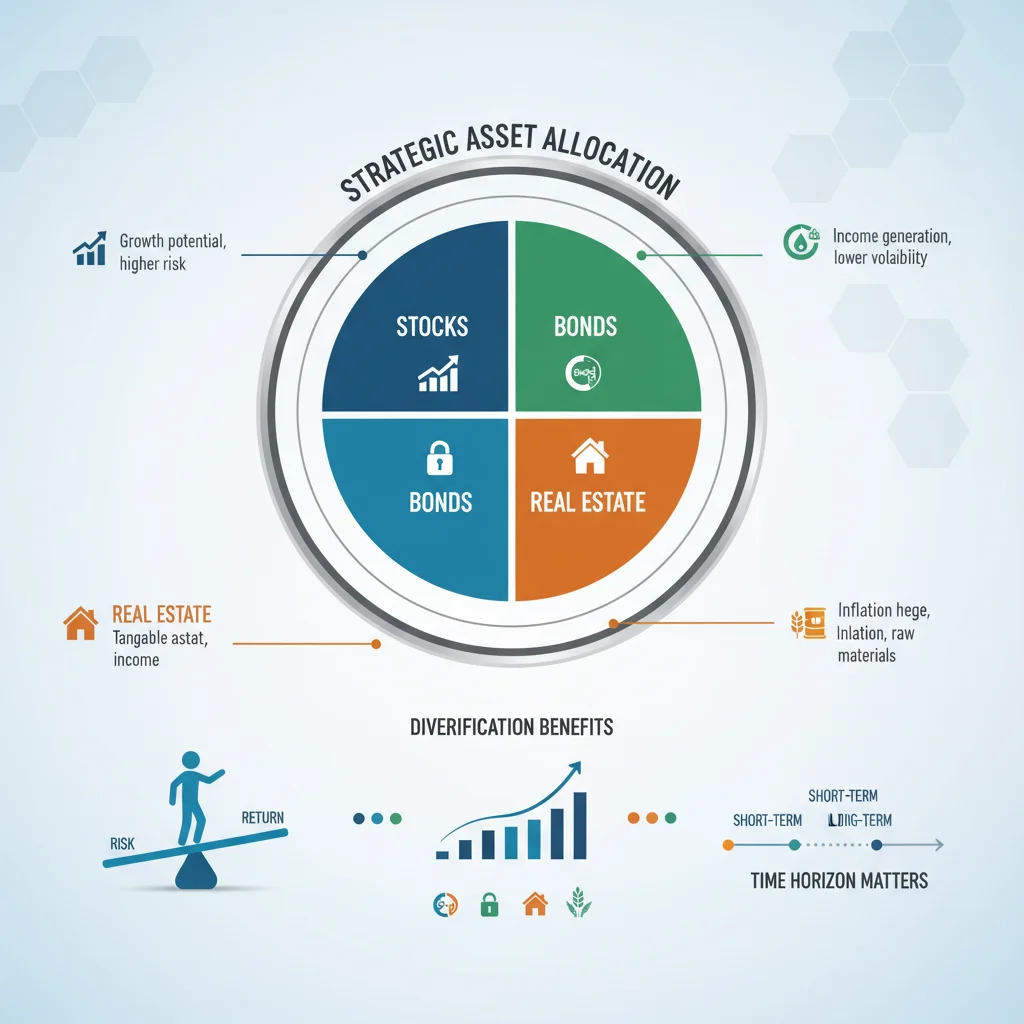
A well-diversified portfolio across various asset classes is the cornerstone of sound investing. Consider a mix of:
- Equities (Stocks): Offering growth potential, but with higher volatility.
- Fixed Income (Bonds): Providing stability and income, often counterbalancing stock market swings.
- Real Estate: Can offer income and appreciation, often acting as an inflation hedge.
- Commodities: Such as gold or oil, can act as inflation hedges or portfolio diversifiers.
- Alternative Investments: Including private equity, hedge funds, or cryptocurrencies, for those with higher risk tolerance and understanding.
During your investment portfolio rebalancing, evaluate if your current diversification remains optimal given market conditions and your goals. Are you overexposed to a particular sector? Are there emerging opportunities in other asset classes that you should consider?
3. Tax Implications of Rebalancing
One of the most significant considerations, particularly for taxable accounts, is the tax implications of selling assets. Selling appreciated assets can trigger capital gains taxes, which can erode your returns. To mitigate this, consider:
- Tax-Loss Harvesting: Selling investments at a loss to offset capital gains and potentially reduce taxable income.
- Rebalancing within Tax-Advantaged Accounts: If you have retirement accounts (e.g., 401(k), IRA), rebalancing within these accounts typically doesn’t trigger immediate tax consequences, making them ideal for adjustments.
- Using New Contributions: Instead of selling assets, you can rebalance by directing new contributions towards underperforming asset classes. This is a tax-efficient way to bring your portfolio back into alignment.
Always consult with a tax professional to understand the specific implications of your rebalancing strategy.
4. Transaction Costs and Fees
Each time you buy or sell an investment, you might incur transaction costs, such as brokerage commissions or expense ratios for ETFs/mutual funds. While these costs have generally decreased over time, frequent rebalancing, especially with small amounts, can eat into your returns. Factor these costs into your decision-making, particularly when setting your rebalancing thresholds.
5. Market Volatility and Emotional Biases
The period leading up to 2031 could present periods of significant market volatility. It’s crucial to stick to your rebalancing plan and avoid making impulsive decisions based on fear or greed. Emotional biases can derail even the best-laid plans. A systematic approach to investment portfolio rebalancing helps to counteract these biases, forcing a disciplined approach to buying low and selling high.
Practical Steps for Investment Portfolio Rebalancing Towards 2031
Implementing an effective investment portfolio rebalancing strategy involves several practical steps:
Step 1: Define Your Target Asset Allocation
Before you can rebalance, you need a clear target. Based on your risk tolerance, investment horizon, and financial goals for 2031, determine the ideal percentage allocation for each asset class (e.g., 60% stocks, 30% bonds, 10% real estate). This target allocation is your blueprint.
Step 2: Choose Your Rebalancing Method and Frequency
Decide whether you’ll use a time-based, threshold-based, or hybrid approach. For the 2026-2031 period, an annual review with a 5-10% threshold for adjustments is often a balanced strategy. Mark these dates or set up alerts to remind you when to review your portfolio.
Step 3: Calculate Your Current Asset Allocation
At your chosen rebalancing interval, calculate the current market value of each asset class in your portfolio. This will reveal how much your portfolio has drifted from your target allocation.
Step 4: Identify Deviations and Plan Trades
Compare your current allocation to your target allocation. Identify which asset classes are overweight (exceeded their target percentage) and which are underweight (fallen below their target percentage). Plan the necessary trades to bring your portfolio back into alignment. For example, if stocks are 70% of your portfolio but your target is 60%, you’ll need to sell enough stocks to reduce their weighting and use those proceeds to buy into underweight asset classes like bonds.

Step 5: Execute the Trades (Mindful of Taxes and Costs)
Execute the planned buys and sells. Be mindful of transaction costs and, if applicable, tax implications. Prioritize rebalancing within tax-advantaged accounts first, and consider using new contributions to rebalance in taxable accounts to minimize capital gains.
Step 6: Document and Review
Keep a record of your rebalancing activities, including the date, the assets traded, and the reasons for the adjustments. This documentation can be valuable for future reviews and tax purposes. Periodically review your overall investment plan to ensure it still aligns with your evolving financial situation and the economic outlook for 2031.
Advanced Rebalancing Strategies for the Next Five Years
For more experienced investors, or those with complex portfolios, consider these advanced strategies:
Dollar-Cost Averaging into Underweight Assets
Instead of making a lump-sum purchase to rebalance underweight assets, you can use dollar-cost averaging by investing a fixed amount regularly over a period (e.g., several months). This can smooth out the impact of market volatility and reduce the risk of buying at a peak.
Glide Path Strategy for Retirement
If retirement is within the 2026-2031 horizon, consider a ‘glide path’ strategy. This involves gradually and systematically shifting your asset allocation towards more conservative investments as you approach your retirement date. This is a pre-planned form of rebalancing designed to reduce risk as your investment horizon shortens.
Factor-Based Rebalancing
Beyond traditional asset classes, some investors consider ‘factors’ such as value, growth, momentum, or low volatility. Factor-based rebalancing involves adjusting exposure to these factors based on market conditions and your investment philosophy. This is a more sophisticated approach and typically requires a deeper understanding of market dynamics.
The Role of Professional Advice in Rebalancing Through 2031
While the principles of investment portfolio rebalancing are straightforward, executing them effectively can be complex, especially with significant assets or unique financial situations. A qualified financial advisor can be an invaluable partner in this process. They can help you:
- Define Realistic Goals: Help you clarify your financial objectives for 2031 and beyond.
- Assess Risk Tolerance Accurately: Provide objective assessments of your risk capacity and tolerance.
- Develop an Optimal Asset Allocation: Create a personalized asset allocation strategy tailored to your needs.
- Implement a Disciplined Rebalancing Schedule: Ensure you stick to your plan and avoid emotional decisions.
- Minimize Tax Implications: Offer strategies for tax-efficient rebalancing.
- Stay Informed: Provide insights into market trends and economic forecasts that might impact your portfolio.
For many, the peace of mind and potential for optimized returns that come from professional guidance far outweigh the costs.
Conclusion: Your Path to Peak Performance Through 2031
The journey to financial success over the next five years, culminating in 2031, will undoubtedly present its share of ups and downs. However, by embracing the discipline of investment portfolio rebalancing, you equip yourself with a powerful tool to navigate these market fluctuations with confidence. This isn’t just about maintaining your current wealth; it’s about actively optimizing your assets for peak performance, mitigating risks, and seizing new opportunities as they arise.
Remember, a well-structured rebalancing strategy is not a one-time event but an ongoing commitment. It requires periodic review, thoughtful adjustment, and a steadfast adherence to your long-term financial goals. By consistently reviewing your asset allocation, understanding the economic landscape, and adapting to your personal circumstances, you can ensure your investment portfolio remains a strong engine driving you towards your financial aspirations in 2031 and well beyond. Start planning your rebalancing strategy today, and set your portfolio on the path to enduring success.