Cloud Spend Optimization: Save 20% Annually by 2026

In the rapidly evolving landscape of the U.S. tech industry, cloud computing has become the backbone of innovation, scalability, and operational efficiency. However, with great power comes great responsibility – and often, significant expenditure. As companies increasingly rely on cloud infrastructure, managing and optimizing these costs has transitioned from a mere IT concern to a critical financial imperative. For U.S. tech companies, the goal is not just to use the cloud, but to optimize cloud spend effectively, aiming for substantial annual savings and a positive financial impact. This comprehensive guide outlines a strategic 5-step plan designed to help U.S. tech companies achieve a remarkable 20% annual reduction in cloud spending by 2026.
The Imperative to Optimize Cloud Spend in the U.S. Tech Sector
The allure of the cloud is undeniable: unparalleled flexibility, rapid deployment, and reduced upfront capital expenditure. Yet, many organizations find themselves grappling with escalating monthly bills, often due to inefficient resource allocation, lack of visibility, and a reactive approach to cost management. The U.S. tech sector, characterized by its dynamic growth and competitive environment, faces unique pressures. Talent acquisition costs are high, market demands are fluid, and investor expectations for profitability are immense. In this context, the ability to optimize cloud spend isn’t just about cutting costs; it’s about reallocating resources to fuel innovation, enhance competitive advantage, and ultimately, bolster the bottom line.
Understanding the Cloud Cost Challenge
Cloud costs are notoriously complex. Factors contributing to this complexity include:
- On-Demand Nature: Easy provisioning can lead to over-provisioning if not managed judiciously.
- Diverse Services: The myriad of services offered by major cloud providers (AWS, Azure, GCP) each come with their own pricing models, making holistic cost tracking difficult.
- Decentralized Management: In large organizations, different teams or departments may manage their own cloud resources, leading to siloed spending and a lack of centralized oversight.
- Lack of Visibility: Without proper tools and processes, understanding where cloud dollars are actually going can be a daunting task.
- Underutilized Resources: Instances running 24/7 that are only needed for a few hours, or storage volumes provisioned but never fully utilized, contribute significantly to waste.
Addressing these challenges requires a systematic and proactive approach. The 5-step plan presented here provides a roadmap for U.S. tech companies to gain control over their cloud expenditures and achieve substantial savings.
Step 1: Comprehensive Cloud Spend Assessment and Discovery
The first and most crucial step to optimize cloud spend is to understand your current state. You cannot manage what you do not measure. This phase involves a deep dive into your existing cloud infrastructure, resource utilization, and expenditure patterns.
Gathering Data and Gaining Visibility
Start by collecting all relevant data. This includes:
- Detailed Billing Records: Analyze your cloud provider’s billing reports. These often contain granular data on service usage, costs per resource, and regional breakdowns.
- Resource Inventory: Catalog all active cloud resources across all accounts and subscriptions. This includes virtual machines, databases, storage buckets, network components, and serverless functions.
- Utilization Metrics: Collect metrics on CPU, memory, network I/O, and disk usage for all compute resources. For storage, track data transfer and access patterns.
- Tagging and Metadata: Assess the current state of your tagging strategy. Consistent tagging is fundamental for cost allocation and visibility.
Identifying Waste and Inefficiencies
With the data in hand, begin identifying areas of waste:
- Idle Resources: Locate instances, databases, or storage that are provisioned but not actively used or are significantly underutilized.
- Over-provisioned Resources: Identify compute instances or database tiers with much higher capacity than their actual workload demands.
- Orphaned Resources: Discover unattached storage volumes, old snapshots, or unassociated IP addresses left behind after resource termination.
- Development/Test Environments: Assess if these environments are running 24/7 when they only need to be active during business hours.
- Data Transfer Costs: Analyze egress charges, which can sometimes be surprisingly high, especially when transferring data between regions or out of the cloud.
- Licensing Costs: Review any software licenses bundled with cloud services that might be redundant or unnecessary.
Tools like cloud cost management platforms, native cloud provider cost explorers, and third-party FinOps solutions can greatly assist in this discovery phase, providing dashboards and reports that highlight anomalies and potential savings.
Step 2: Strategic Planning and Goal Setting for Cloud Cost Optimization
Once you have a clear picture of your current cloud spend, the next step is to formulate a strategic plan. This involves setting realistic savings goals, prioritizing initiatives, and defining clear ownership.
Defining Savings Targets and KPIs
Based on your assessment, set specific, measurable, achievable, relevant, and time-bound (SMART) goals. For instance, a goal might be: "Reduce EC2 instance costs by 15% within the next six months by rightsizing and scheduling." The overarching goal for this guide is to optimize cloud spend by 20% annually by 2026.
Key Performance Indicators (KPIs) to track include:
- Cost per Unit: Cost per customer, per transaction, per active user.
- Resource Utilization Rate: Percentage of CPU, memory, or storage actually used.
- Savings Achieved: Actual dollar amount saved compared to baseline.
- Reserved Instance/Savings Plan Coverage: Percentage of eligible spend covered by commitment-based discounts.
- Cost Anomaly Detection Rate: How quickly and effectively cost spikes are identified and addressed.
Establishing a FinOps Culture and Governance
Effective cloud cost optimization is not a one-time project; it’s an ongoing practice that requires cultural shift. Adopt a FinOps (Cloud Financial Operations) framework, which brings together finance, technology, and business teams to make data-driven spending decisions. This involves:
- Cross-Functional Team: Create a dedicated FinOps team or designate FinOps champions within existing teams.
- Clear Roles and Responsibilities: Define who is accountable for reporting, analyzing, and acting on cloud cost data.
- Budget Allocation and Chargeback: Implement mechanisms for allocating cloud costs back to the specific departments or projects that consume them, fostering a sense of ownership.
- Policy & Governance: Establish policies for resource provisioning, tagging, and cost management.
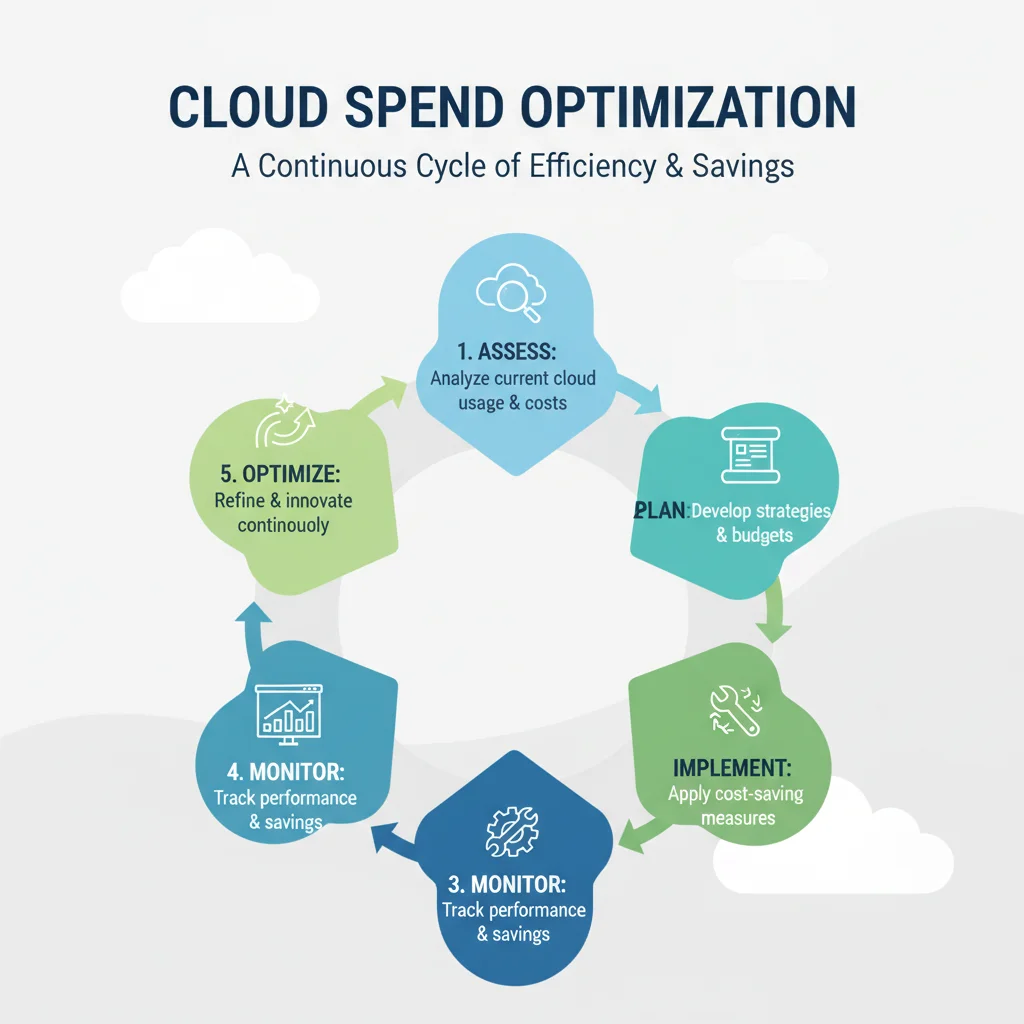
Step 3: Implementation of Optimization Strategies
This is where the rubber meets the road. Based on your assessment and plan, execute concrete strategies to optimize cloud spend.
Rightsizing and Resource Optimization
- Rightsizing Instances: Adjust the size of compute instances (VMs, containers) and database services to match actual workload requirements. Many instances are over-provisioned, leading to unnecessary costs.
- Auto-Scaling: Implement auto-scaling groups to automatically adjust compute capacity based on demand, ensuring you only pay for what you need.
- Scheduling Resources: For non-production environments (dev, test, staging), schedule instances to power down during off-hours or weekends.
- Storage Tiering and Lifecycle Management: Move infrequently accessed data to cheaper storage tiers (e.g., S3 Glacier, Azure Archive Storage) and implement lifecycle policies to automatically delete or archive old data.
- Serverless Computing: Evaluate if serverless functions (AWS Lambda, Azure Functions, Google Cloud Functions) can replace always-on instances for certain workloads, as they are billed per execution.
Leveraging Discount Models and Commitments
Cloud providers offer significant discounts for commitment:
- Reserved Instances (RIs): Purchase RIs for predictable, long-running workloads. These offer substantial discounts (up to 75%) compared to on-demand pricing.
- Savings Plans: More flexible than RIs, Savings Plans offer discounts (up to 66%) in exchange for a commitment to a consistent amount of compute usage (e.g., $10/hour) over a 1-year or 3-year term.
- Spot Instances: For fault-tolerant or flexible workloads, Spot Instances can offer massive discounts (up to 90%) by utilizing unused cloud capacity.
- Volume Discounts and Enterprise Agreements: Negotiate with your cloud provider for better rates based on your overall spend or enter into enterprise agreements for bundled services and support.
Network and Data Transfer Optimization
- Content Delivery Networks (CDNs): Use CDNs to cache content closer to users, reducing egress costs from your primary cloud region.
- Data Compression: Compress data before transfer to minimize bandwidth usage.
- Inter-Region Data Transfer: Minimize data transfer between different cloud regions unless absolutely necessary, as these costs can add up.
Step 4: Continuous Monitoring and Reporting
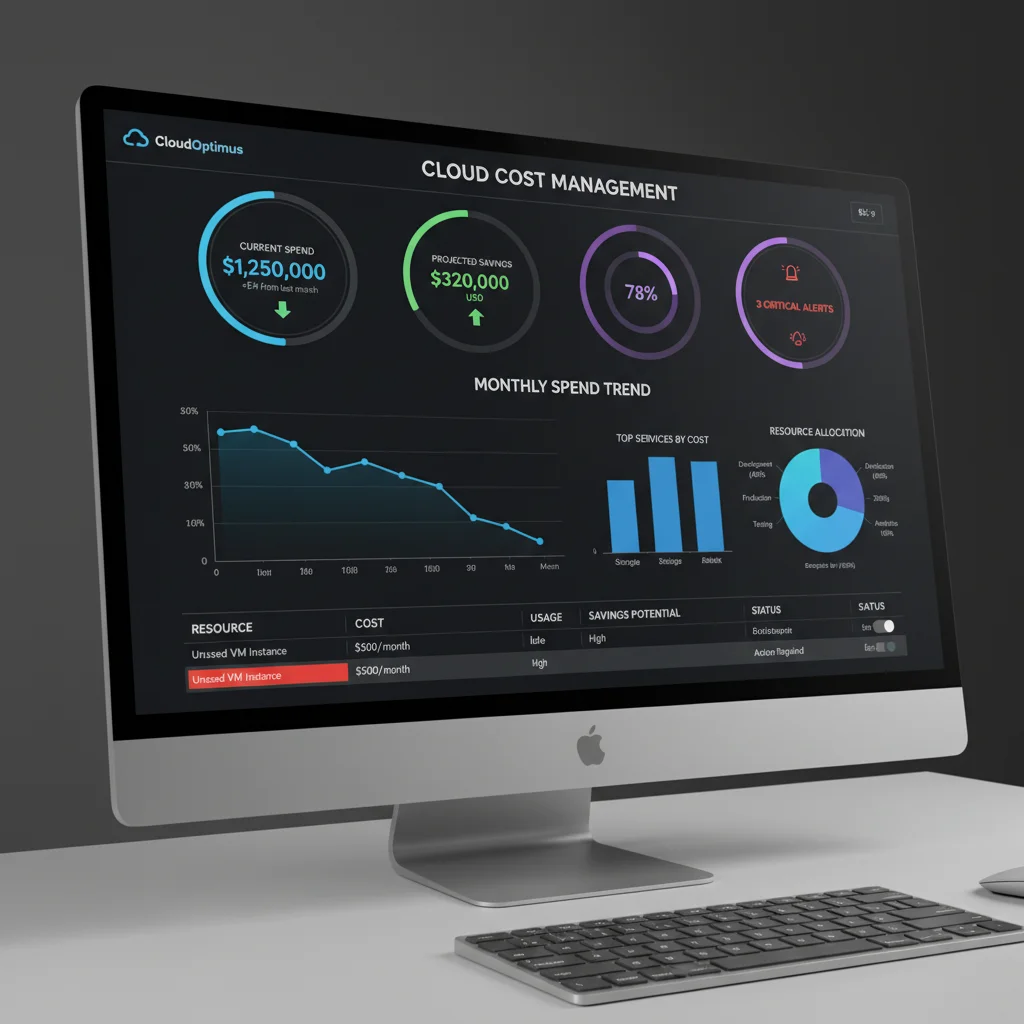
Optimization is not a one-time event. To sustain savings and adapt to changing needs, continuous monitoring and robust reporting are essential. This step ensures that your efforts to optimize cloud spend yield long-term results.
Establishing Real-time Cost Visibility
Implement tools and processes for real-time tracking of cloud costs. This includes:
- Cloud Provider Dashboards: Utilize native cost management tools (AWS Cost Explorer, Azure Cost Management, Google Cloud Billing reports) to get an overview of spending.
- Third-Party FinOps Platforms: Invest in dedicated FinOps platforms that offer advanced analytics, anomaly detection, forecasting, and recommendations across multi-cloud environments.
- Custom Dashboards: Create custom dashboards that display key cost metrics relevant to your business units or projects.
Anomaly Detection and Alerting
Set up alerts to notify relevant teams of unexpected cost spikes or deviations from budgeted spending. Early detection of anomalies can prevent significant financial waste. These alerts should be configured for:
- Daily/Weekly Spend Thresholds: If daily spend exceeds a certain percentage above the average.
- Resource Spikes: Sudden increases in usage for specific services.
- Budget Overruns: When projected spend is about to exceed a defined budget.
Regular Reporting and Communication
Generate regular reports for various stakeholders, including:
- Executive Summaries: High-level overview of total spend, savings achieved, and compliance with budgets for leadership.
- Departmental Reports: Detailed breakdown of cloud costs for each business unit, promoting accountability.
- Technical Reports: Granular data on resource utilization, potential rightsizing opportunities, and commitment coverage for engineering teams.
Regular communication of these reports fosters a cost-aware culture and ensures that everyone understands the financial impact of their cloud usage.
Step 5: Iterative Optimization and Automation
The final step in our journey to optimize cloud spend is to embrace an iterative approach, continuously refining your strategies and automating where possible. The cloud environment is dynamic, and your optimization efforts must be too.
Refining Strategies Based on Performance
Regularly review the effectiveness of your implemented optimization strategies. Are the reserved instances being fully utilized? Are your auto-scaling policies appropriately configured? Are there new services or pricing models from cloud providers that could offer further savings?
- Quarterly Reviews: Conduct comprehensive reviews of your cloud spending, comparing actuals against budgets and identifying new areas for optimization.
- Performance Tuning: Continuously fine-tune resource configurations based on evolving workload patterns.
- Technology Adoption: Stay abreast of new cloud services and features that can improve efficiency or reduce costs.
Automating Optimization Tasks
Manual optimization can be time-consuming and prone to human error. Automate as many repetitive tasks as possible:
- Automated Rightsizing: Use tools that automatically recommend or even implement rightsizing suggestions based on historical usage data.
- Scheduled Shutdowns: Automate the stopping and starting of non-production environments using scripts or cloud provider services (e.g., AWS Instance Scheduler, Azure Automation).
- Lifecycle Policies: Automate the movement of data between storage tiers and the deletion of old data.
- Commitment Management: Automate the analysis of RI/Savings Plan utilization and recommendations for future purchases.
- Anomaly Remediation: In some cases, automated actions can be triggered in response to cost anomalies, such as scaling down resources or sending notifications to stop runaway processes.
Fostering a Culture of Cost-Aware Innovation
Ultimately, the goal is to embed cost awareness into the development lifecycle. Encourage engineers to think about cost implications from the design phase. This means:
- Cost-Aware Architecture: Design applications with cost efficiency in mind, choosing appropriate services and architectures.
- Training and Education: Provide ongoing training to development and operations teams on cloud cost best practices.
- Gamification and Incentives: Consider incentives or gamification to encourage teams to find and implement cost-saving measures.
The Financial Impact: Achieving 20% Annual Savings by 2026
By diligently following these five steps, U.S. tech companies can realistically expect to optimize cloud spend and achieve significant financial benefits. A 20% annual reduction in cloud costs by 2026 is an ambitious yet attainable target for many organizations. Consider the compounding effect of such savings:
- Increased Profitability: Direct impact on net income, making the company more attractive to investors.
- Reinvestment in Innovation: Freed-up capital can be channeled into R&D, new product development, or market expansion.
- Enhanced Competitiveness: Lower operational costs allow for more competitive pricing or higher margins.
- Improved Financial Resilience: A leaner cost structure provides greater stability in fluctuating economic conditions.
The journey to optimize cloud spend is continuous, requiring commitment, collaboration, and a data-driven mindset. However, the rewards—in terms of financial health and strategic flexibility—are well worth the effort.
Conclusion: Your Roadmap to Cloud Financial Excellence
Effectively managing cloud costs is no longer optional for U.S. tech companies; it’s a strategic imperative. The path to achieving a 20% annual reduction in cloud spending by 2026 involves a structured, disciplined approach encompassing comprehensive assessment, strategic planning, diligent implementation of optimization tactics, continuous monitoring, and iterative automation. By embracing a FinOps culture and fostering cost awareness across all levels of the organization, companies can transform their cloud expenditure from a potential liability into a powerful lever for sustainable growth and innovation. Start your journey today to truly optimize cloud spend and unlock significant financial value for your enterprise.