Predictive AI for US Infrastructure: 12% Maintenance Cost Reduction

The United States, with its vast and intricate network of roads, bridges, railways, pipelines, and utility grids, faces an ongoing challenge in maintaining its critical infrastructure. Aging assets, increasing demand, and the ever-present threat of natural disasters necessitate a proactive and efficient approach to maintenance. Historically, infrastructure maintenance has often been reactive, addressing issues only after they arise, leading to costly repairs, service disruptions, and potential safety hazards. However, a revolutionary shift is underway, driven by the power of predictive AI infrastructure. This cutting-edge technology promises not just to optimize maintenance schedules but to fundamentally transform how we manage and sustain our nation’s vital assets. Our ambitious goal, backed by emerging data and successful pilot programs, is to leverage predictive AI to achieve a remarkable 12% reduction in US infrastructure maintenance costs within the next three years.
This article will delve deep into the mechanics of predictive AI infrastructure, exploring its core components, diverse applications across various infrastructure sectors, and the significant economic and operational benefits it offers. We will examine the current state of infrastructure maintenance, highlight the shortcomings of traditional approaches, and present a compelling case for the widespread adoption of AI-driven strategies. Furthermore, we will address the challenges inherent in implementing such advanced systems and outline a strategic roadmap for their successful integration, paving the way for a more resilient, efficient, and cost-effective infrastructure future for the United States.
Understanding Predictive AI Infrastructure: The Core Concept
At its heart, predictive AI infrastructure involves using artificial intelligence and machine learning algorithms to analyze vast datasets collected from sensors, historical maintenance records, weather patterns, and other relevant sources. The objective is to predict potential equipment failures or infrastructure degradation before they occur. This proactive approach stands in stark contrast to traditional preventive maintenance (scheduled inspections) or reactive maintenance (fixing things after they break).
How does it work?
- Data Collection: This is the foundational step. Modern infrastructure components are increasingly equipped with an array of sensors – accelerometers, strain gauges, temperature sensors, acoustic sensors, cameras, and more. These devices continuously collect real-time data on the performance, condition, and environmental factors affecting the infrastructure.
- Data Transmission and Storage: The collected data, often massive in volume (Big Data), is securely transmitted via IoT (Internet of Things) networks to centralized cloud platforms or edge computing devices for storage and initial processing.
- Data Analysis and Machine Learning: This is where AI truly shines. Machine learning models, trained on historical data sets that include past failures, maintenance activities, and environmental conditions, analyze the incoming real-time data. These models can identify subtle patterns, anomalies, and correlations that human operators might miss. For instance, a slight increase in vibration frequency in a bridge component, when combined with specific temperature fluctuations and traffic loads, might be a strong indicator of impending structural fatigue.
- Prediction and Anomaly Detection: Based on the learned patterns, the AI system predicts the likelihood of future failures or the rate of degradation for specific components. It can also detect anomalies in real-time data that deviate significantly from normal operating parameters, signaling an immediate problem.
- Actionable Insights and Recommendations: The output of the AI analysis isn’t just a prediction; it’s actionable intelligence. The system can recommend specific maintenance tasks, optimal timing for interventions, and even suggest resource allocation. This allows infrastructure managers to schedule maintenance precisely when it’s needed, preventing costly breakdowns and extending asset lifespans.
The Current Landscape of US Infrastructure Maintenance
The state of US infrastructure has been a perennial concern. The American Society of Civil Engineers (ASCE) consistently issues ‘D’ grades for various infrastructure categories, highlighting significant underinvestment and widespread deterioration. The cost of maintaining this aging infrastructure is astronomical, with billions spent annually on repairs that often come too late.
Traditional Maintenance Approaches: Limitations and Costs
- Reactive Maintenance (Run-to-Failure): This approach involves fixing components only after they have failed. While seemingly simple, it leads to unplanned downtime, emergency repairs, higher repair costs (often requiring more extensive work), and potential safety risks. For critical infrastructure, run-to-failure is simply not an option.
- Preventive Maintenance (Time-Based or Usage-Based): This involves scheduled maintenance at fixed intervals or after a certain amount of usage. While better than reactive, it can be inefficient. Components might be replaced too early (wasting remaining useful life) or too late (failing before the next scheduled maintenance). It doesn’t account for actual component condition or environmental stressors.
- Condition-Based Maintenance (CBM): CBM uses data from sensors to monitor the condition of assets in real-time and trigger maintenance when certain thresholds are crossed. This is a step closer to predictive maintenance but often lacks the sophisticated AI algorithms to truly predict future failures or optimize the timing of interventions beyond simple threshold alerts.
These traditional methods, while serving their purpose for decades, are increasingly inadequate for the complexity and scale of modern infrastructure. The inefficiency of these methods directly contributes to the high maintenance costs and the slow pace of infrastructure improvement across the nation.
The Promise: Reducing Maintenance Costs by 12% with Predictive AI
The 12% cost reduction target is not arbitrary; it’s an achievable goal based on successful implementations in other industries and pilot programs within infrastructure. This reduction stems from several key areas where predictive AI infrastructure offers substantial improvements.
Direct Cost Savings
- Optimized Maintenance Schedules: By predicting failures, maintenance can be scheduled precisely when needed, minimizing unnecessary interventions and maximizing the useful life of components. This reduces labor costs, material costs, and equipment downtime.
- Reduced Emergency Repairs: Proactive maintenance significantly cuts down on expensive emergency repairs, which often involve premium pricing for parts and labor, and require rapid deployment under stressful conditions.
- Extended Asset Lifespan: Early detection and intervention prevent minor issues from escalating into major problems, thereby extending the overall lifespan of infrastructure assets like bridges, pipelines, and power transformers. This defers costly replacement projects.
- Efficient Resource Allocation: AI can help optimize the deployment of maintenance crews, equipment, and spare parts, ensuring they are available where and when they are most needed, reducing logistical inefficiencies.
Indirect Benefits and Added Value
- Improved Safety: Preventing unexpected failures reduces the risk of accidents for both workers and the public.
- Minimized Disruptions: Scheduled maintenance causes less disruption to traffic, utilities, and public services compared to emergency repairs.
- Enhanced Operational Efficiency: A more reliable infrastructure network leads to smoother operations for transportation, energy distribution, and water management.
- Better Capital Planning: With accurate predictions of asset degradation, infrastructure owners can make more informed decisions about capital investments, prioritizing upgrades and replacements more effectively.
- Environmental Benefits: Optimizing asset performance and extending lifespan can lead to reduced energy consumption and less waste from premature replacements.
Real-World Applications of Predictive AI in US Infrastructure
The versatility of predictive AI infrastructure means it can be applied across virtually all sectors of US infrastructure. Here are some prominent examples:
Transportation Networks (Roads, Bridges, Railways)
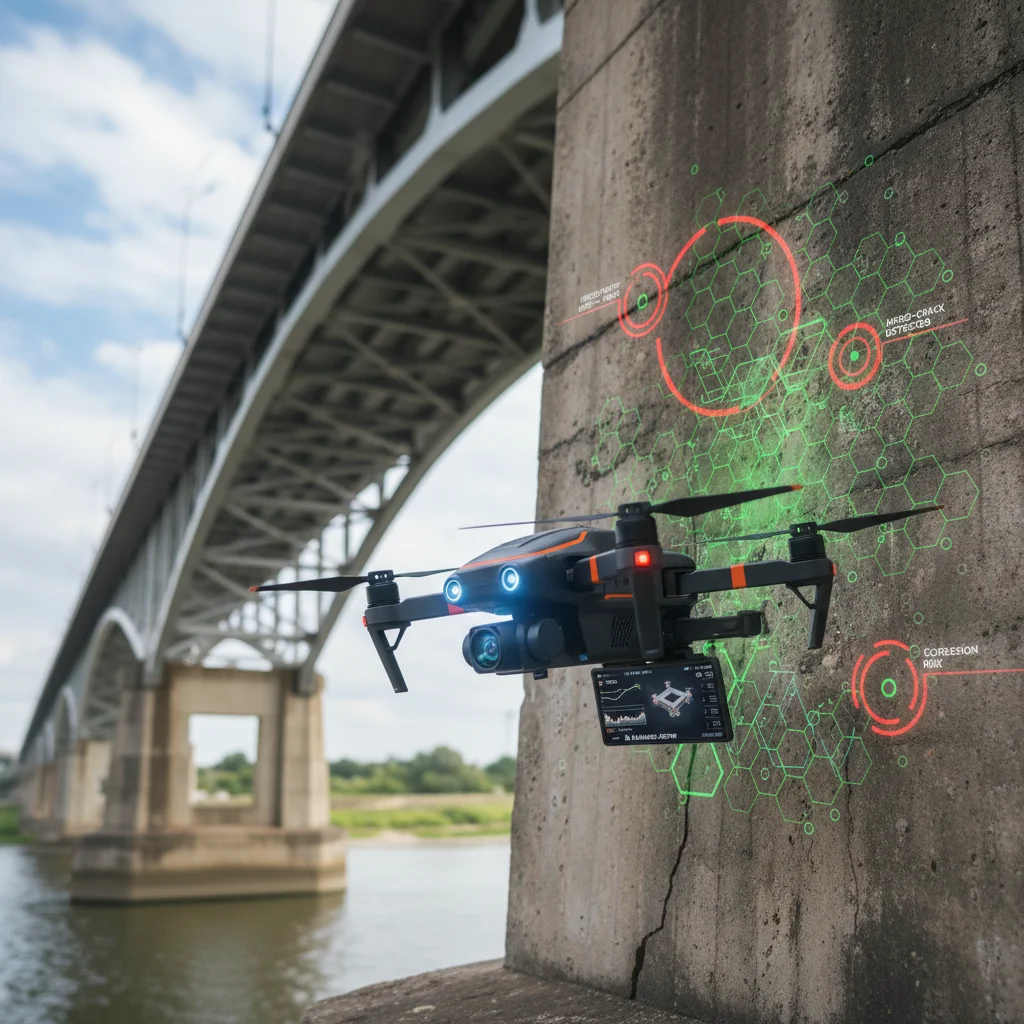
For roads, AI analyzes data from sensors embedded in pavements, traffic cameras, and even satellite imagery to predict pothole formation, cracking, and surface degradation. This allows for targeted resurfacing and repair, preventing minor distress from becoming extensive damage. For bridges, structural health monitoring systems equipped with AI can detect subtle shifts, vibrations, and corrosion indicators, predicting fatigue failures long before they become critical. Similarly, in railways, AI analyzes track conditions, wheel wear, and signaling system performance to predict derailments or signal malfunctions, leading to safer and more reliable rail transport.
Water and Wastewater Systems
Aging water pipes are a significant issue, leading to leaks, bursts, and massive water loss. Predictive AI can analyze pressure data, acoustic signatures, soil conditions, and historical leak data to identify sections of pipelines at high risk of failure. This enables proactive repair or replacement, preventing costly water main breaks and ensuring continuous service. In wastewater treatment plants, AI monitors equipment performance, predicting failures in pumps, filters, and aeration systems, thereby ensuring uninterrupted and efficient operation.
Energy Grids (Electricity, Oil, Gas)
For electricity grids, AI analyzes data from smart meters, transformers, power lines, and substations to predict equipment failures, power outages, and even potential cyber threats. It can identify overloaded circuits, deteriorating components, or vegetation encroachment before they cause widespread blackouts. In oil and gas pipelines, AI monitors pressure, flow, and material integrity, predicting corrosion, leaks, or structural weaknesses, which are critical for preventing environmental disasters and ensuring energy supply.
Public Buildings and Facilities
Beyond the large-scale networks, individual public buildings, schools, and hospitals also benefit. AI can optimize HVAC systems, predict failures in elevators, fire suppression systems, and critical building infrastructure, leading to lower operational costs, improved comfort, and enhanced safety.
Challenges and Considerations for Implementation
While the benefits of predictive AI infrastructure are compelling, its widespread adoption is not without challenges. Addressing these proactively is crucial for successful implementation and achieving the 12% cost reduction target.
Data Acquisition and Quality
The effectiveness of any AI system hinges on the quality and quantity of data it receives. Many existing infrastructure assets lack adequate sensing capabilities. Retrofitting sensors can be expensive, and ensuring continuous, reliable data streams from diverse environments (underground, underwater, remote locations) requires robust IoT infrastructure. Furthermore, data often comes from disparate sources in different formats, necessitating significant effort in data integration and cleansing.
Cybersecurity Concerns
Connecting critical infrastructure assets to networks for data transmission opens up new cybersecurity vulnerabilities. Protecting these systems from malicious attacks that could compromise data integrity or even operational control is paramount. Robust cybersecurity protocols and continuous monitoring are essential.
Initial Investment Costs
The upfront investment in sensors, IoT infrastructure, AI software, data storage, and skilled personnel can be substantial. Convincing stakeholders of the long-term return on investment, especially in public sector projects with tight budgets, requires clear economic modeling and pilot project successes.
Skill Gap and Workforce Training
Implementing and managing predictive AI infrastructure requires a new set of skills. There’s a need for data scientists, AI engineers, and maintenance personnel trained in interpreting AI insights and working with advanced technologies. Bridging this skill gap through education and training programs is vital.
Regulatory and Policy Frameworks
Existing regulations and policies might not be fully adapted to the rapid pace of technological change introduced by AI. Developing clear guidelines for data privacy, AI ethics, liability in case of AI-related failures, and standardization across different infrastructure sectors will be necessary.
Integration with Legacy Systems
Much of the US infrastructure relies on legacy systems and operational technologies. Integrating new AI platforms with these older systems can be complex and require significant customization and interoperability solutions.
A Strategic Roadmap for Achieving 12% Cost Reduction
To realize the ambitious goal of a 12% reduction in maintenance costs through predictive AI infrastructure, a multi-faceted and collaborative strategy is required. This involves government, industry, academia, and the public working in concert.
1. Pilot Programs and Scalable Deployments
Begin with well-defined pilot programs on specific, critical infrastructure assets. Document successes, learn from challenges, and use these case studies to build confidence and secure further investment. Develop modular and scalable AI solutions that can be gradually expanded across broader networks rather than attempting a ‘big bang’ deployment.
2. Investment in Smart Infrastructure Technologies
Prioritize funding for the installation of advanced sensors, IoT communication networks, and secure data storage solutions across new and existing infrastructure projects. Incentivize private sector innovation in these areas.
3. Data Standardization and Sharing
Establish common data standards and protocols to ensure interoperability and facilitate data sharing across different agencies and infrastructure types. This will create richer datasets for AI training and enable more holistic insights.
4. Workforce Development and Training
Invest in educational programs to train the next generation of infrastructure professionals in AI, data science, and advanced maintenance techniques. Retrain existing workforces to adapt to AI-driven workflows.
5. Public-Private Partnerships
Foster stronger collaborations between government entities, technology companies, and research institutions. Private companies often possess the expertise and resources to develop and implement advanced AI solutions, while public agencies provide the critical infrastructure assets and regulatory oversight.
6. Policy and Regulatory Modernization
Develop forward-thinking policies that encourage AI adoption, address cybersecurity risks, ensure data privacy, and establish clear ethical guidelines for AI use in critical infrastructure. Streamline procurement processes for innovative technologies.
7. Continuous Research and Development
Support ongoing research into more advanced AI algorithms, new sensor technologies, and more robust cybersecurity measures tailored specifically for infrastructure applications. Explore the integration of AI with other emerging technologies like digital twins and robotics for automated inspections.

The Future of US Infrastructure: Resilient, Efficient, and Smart
The integration of predictive AI infrastructure is not merely an incremental improvement; it represents a paradigm shift in how we conceive, build, and maintain our nation’s vital assets. By moving from reactive fixes to proactive, data-driven interventions, we can unlock unprecedented levels of efficiency, safety, and resilience. The projected 12% reduction in maintenance costs within three years is a significant economic benefit, freeing up billions of dollars that can be reinvested into further infrastructure upgrades, innovation, or other critical public services.
Beyond the immediate cost savings, a robust, AI-managed infrastructure will foster economic growth by reducing disruptions to commerce and transportation, attracting new businesses, and enhancing the overall quality of life for American citizens. Smart infrastructure will be more adaptable to climate change, more resistant to natural disasters, and more responsive to the evolving needs of a modern society.
The journey to a fully AI-optimized infrastructure will be complex, requiring sustained effort, significant investment, and a collaborative spirit. However, the potential rewards – a safer, more reliable, and more economically viable infrastructure network – are well worth the endeavor. The time to embrace predictive AI infrastructure is now, to build a future where our nation’s foundational assets are not just maintained, but intelligently sustained for generations to come.