Strategic Partnerships in U.S. Tech: 3 Models for Growth and Market Penetration in 2026

Strategic Partnerships in U.S. Tech: 3 Models for Growth and Market Penetration in 2026 (INSIDER KNOWLEDGE)
The U.S. tech landscape is a relentless arena of innovation, competition, and rapid evolution. As we hurtle towards 2026, the imperative for sustainable growth and robust market penetration has never been more pronounced. Companies, from agile startups to established giants, are increasingly recognizing that going it alone is not just challenging, but often suboptimal. The answer, for many, lies in the power of strategic tech partnerships. These alliances, when crafted with foresight and precision, can unlock new revenue streams, expand geographic reach, accelerate product development, and solidify competitive advantages.
In this comprehensive guide, we delve deep into three pivotal strategic partnership models that are poised to redefine success for U.S. tech companies in the coming years. We’ll explore Joint Ventures, Technology Licensing, and Channel Partnerships, offering insider knowledge and practical insights to help you navigate this complex yet rewarding terrain. Understanding these models is not merely an academic exercise; it&rsquos a strategic imperative for any tech leader aiming to thrive and dominate their niche.
The digital economy thrives on connectivity, and this extends beyond mere network infrastructure to encompass human ingenuity and collaborative spirit. The right partnership can transform a company’s trajectory, turning potential into tangible market share and innovation into impactful solutions. Let’s unpack the mechanisms, benefits, and critical considerations for each of these powerful strategic tech partnerships.
1. Joint Ventures: Synergistic Power for Ambitious Growth
A joint venture (JV) represents a powerful form of strategic tech partnerships where two or more independent companies pool resources, expertise, and capital to pursue a specific project or business activity. Unlike a merger or acquisition, a JV is typically formed for a limited duration or to achieve a defined objective, allowing entities to maintain their independence while leveraging collective strengths. In the U.S. tech sector, JVs are becoming increasingly popular for tackling large-scale initiatives, entering new markets, or developing groundbreaking technologies that might be too resource-intensive for a single entity.
Why Consider a Joint Venture in U.S. Tech?
- Shared Risk and Investment: Developing cutting-edge technology or entering saturated markets often involves substantial financial outlay and inherent risks. JVs allow partners to distribute these burdens, making ambitious projects more feasible.
- Access to Complementary Expertise: A tech company specializing in AI might partner with one strong in cybersecurity to create a secure, intelligent platform. This synergy brings together diverse skill sets and intellectual property.
- Accelerated Market Entry: For foreign tech companies looking to penetrate the competitive U.S. market, or domestic firms aiming for new geographical segments, a local partner with established networks, regulatory knowledge, and customer bases can significantly shorten the market entry timeline and reduce associated risks.
- Enhanced Innovation: The cross-pollination of ideas and R&D capabilities within a JV can spark unprecedented innovation, leading to novel products or services that neither company could have developed alone.
- Economies of Scale: By combining purchasing power or manufacturing capabilities, JVs can achieve better pricing from suppliers, optimize production, and reduce operational costs.
Key Considerations for Successful Tech Joint Ventures:
While the allure of JVs is strong, their success hinges on meticulous planning and execution. Here’s what to focus on:
- Clear Objectives and Scope: Define the JV’s purpose, goals, and duration from the outset. Ambiguity can lead to conflicts and misaligned expectations.
- Governance Structure: Establish a clear framework for decision-making, dispute resolution, and operational management. Who holds what power? How will conflicts be mediated?
- Contribution and Equity: Clearly delineate each partner’s financial, intellectual, and human capital contributions, and how these translate into equity stakes and profit sharing.
- Exit Strategy: What happens if one partner wants out, or if the JV reaches its natural conclusion? Plan for contingencies like buy-out clauses, liquidation, or conversion into a different entity.
- Cultural Alignment: Beyond business goals, ensure there’s a reasonable alignment of corporate cultures and values. Disparate working styles can cripple even the most promising strategic tech partnerships.
- Intellectual Property Rights: This is paramount in tech. Clearly define ownership, usage rights, and protection mechanisms for all IP brought into or developed within the JV.

For instance, a software company specializing in cloud infrastructure might form a JV with a hardware manufacturer to develop a fully integrated “edge computing as a service” solution. This allows them to combine their core competencies, share the significant R&D costs, and jointly target a nascent but rapidly growing market segment, securing a competitive edge by 2026. Such strategic tech partnerships are not just about adding resources; they’re about creating a whole that is greater than the sum of its parts.
2. Technology Licensing: Expanding Reach Through Innovation Sharing
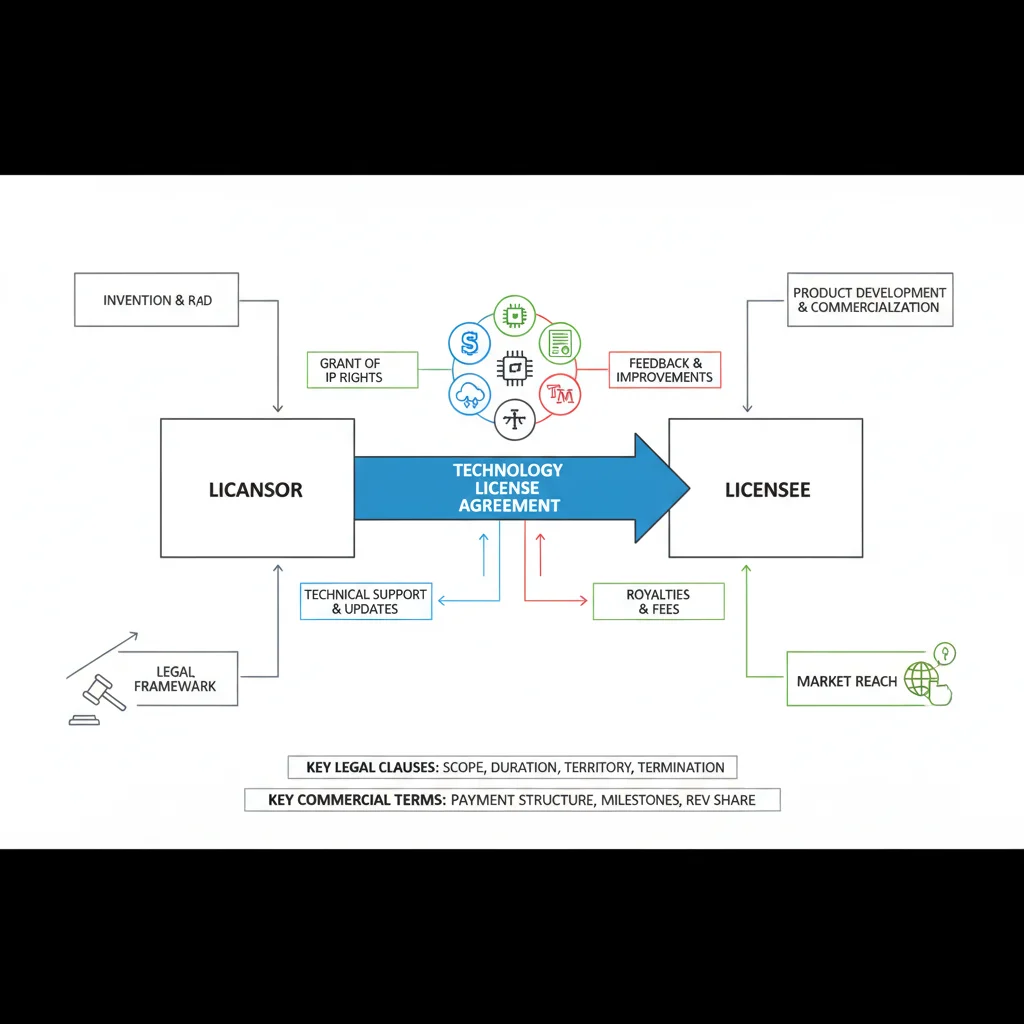
Technology licensing is a strategic tech partnerships model where the owner of intellectual property (IP) – such as patents, software, trademarks, or proprietary know-how – grants another party (the licensee) permission to use that IP for a specific purpose, usually in exchange for royalties or other fees. This model is exceptionally valuable for tech companies looking to monetize their innovations, expand their market footprint without direct investment, or gain access to complementary technologies.
Benefits of Technology Licensing in the Tech Sector:
- Revenue Generation from Existing IP: Licensing allows companies to generate passive income from technology they’ve already developed, without incurring additional manufacturing, marketing, or distribution costs.
- Market Expansion: A licensor can penetrate new geographic markets or industry verticals by partnering with licensees who have established presence and distribution channels in those areas. This is particularly effective for global market penetration without the complexities of direct foreign investment.
- Reduced R&D Costs for Licensees: For licensees, acquiring a license means gaining access to proven technology without the immense investment and risk associated with internal R&D. This accelerates time-to-market for new products or features.
- Validation and Standardization: Widespread licensing of a technology can help establish it as an industry standard, further cementing the licensor’s position as an innovator and increasing its value.
- Focus on Core Competencies: Licensors can focus their resources on developing new innovations, while licensees handle the manufacturing, distribution, and sales of products incorporating the licensed technology.
Critical Elements for Effective Technology Licensing Agreements:
A well-structured licensing agreement is the backbone of successful strategic tech partnerships in this domain:
- Scope of License: Clearly define what IP is being licensed, for what purpose, in which territories, and for how long. Is it exclusive or non-exclusive? Can the licensee sublicense?
- Royalty Structure: Establish fair and transparent payment terms, whether it’s a percentage of sales, a per-unit fee, an upfront payment, or a combination.
- Performance Milestones: Include clauses that ensure the licensee actively utilizes the technology, such as minimum sales targets or development milestones.
- Quality Control: Especially for brand-sensitive IP, the licensor must retain some control over the quality of products or services produced using their technology to protect their reputation.
- Improvements and Modifications: Address how improvements made by either party will be treated – who owns them, and whether they can be incorporated into the original license.
- Confidentiality and IP Protection: Robust clauses are essential to protect trade secrets and prevent unauthorized use or disclosure of the licensed technology.
Consider a U.S. biotech firm that develops a groundbreaking diagnostic algorithm. Instead of building out a global distribution network, they could license the algorithm to established medical device manufacturers in various countries. This allows the biotech firm to monetize its innovation globally and focus on further R&D, while the licensees leverage existing sales channels to bring the technology to market quickly. This form of strategic tech partnerships offers a capital-efficient path to global reach by 2026.
3. Channel Partnerships: Extending Sales and Distribution Reach
Channel partnerships involve collaborating with other businesses to sell or distribute your products or services. These partners, often called ‘channels,’ can include resellers, distributors, value-added resellers (VARs), system integrators, managed service providers (MSPs), or even referral partners. For U.S. tech companies, establishing robust channel strategic tech partnerships is a fundamental strategy for scaling sales, expanding into new customer segments, and achieving deeper market penetration without the overhead of building out a massive direct sales force.
The Strategic Imperative of Channel Partnerships:
- Scalability and Reach: Channels provide an immediate, expansive sales force and distribution network, allowing tech companies to reach a much larger customer base than they could independently.
- Cost-Effectiveness: Building and maintaining a direct sales team, especially across diverse geographies, is incredibly expensive. Channel partners absorb many of these costs, making market expansion more economical.
- Specialized Expertise: Many channel partners possess deep industry-specific knowledge, technical expertise, and established relationships within niche markets that a tech vendor might struggle to penetrate directly.
- Local Presence and Trust: Local partners often have a stronger rapport and trust with regional customers, which can be crucial for closing deals and providing localized support.
- Value-Added Services: VARs and system integrators can bundle a tech company’s product with their own services (e.g., implementation, customization, ongoing support), creating more comprehensive solutions for end-users and increasing the product’s perceived value.
Building and Managing Effective Channel Strategic Tech Partnerships:
Success in channel partnerships requires more than just signing agreements; it demands ongoing investment and management:
- Partner Recruitment: Identify partners whose customer base, technical capabilities, and business model align with your product and strategic goals. Quality over quantity is key.
- Comprehensive Partner Program: Develop a clear program outlining incentives (commissions, rebates), training, marketing support, technical resources, and certification requirements.
- Enablement and Training: Equip partners with the knowledge and tools they need to successfully sell, implement, and support your product. This includes sales training, technical workshops, and marketing collateral.
- Communication and Support: Maintain open lines of communication, provide dedicated partner managers, and offer readily accessible technical and sales support.
- Performance Management: Establish clear KPIs and regularly review partner performance. Provide feedback, recognize top performers, and address underperformance proactively.
- Conflict Resolution: Have mechanisms in place to handle potential channel conflicts, especially if you also maintain a direct sales force.
Consider a SaaS company offering an innovative CRM platform. By partnering with MSPs and system integrators, they can leverage these partners’ existing client relationships and technical implementation skills to rapidly onboard new businesses across various sectors. The MSPs benefit by offering a valuable solution to their clients, while the SaaS company gains significant market share without needing to hire a vast implementation team. This symbiotic relationship is a hallmark of successful strategic tech partnerships designed for aggressive scaling by 2026.
The “Insider Knowledge” Edge: Beyond the Models
While understanding these three strategic tech partnerships models is crucial, true insider knowledge goes beyond definitions. It encompasses the nuanced factors that determine whether an alliance merely exists or truly thrives.
Data-Driven Partner Selection:
In 2026, relying on gut feelings for partner selection is a recipe for failure. Leverage analytics, market intelligence, and predictive modeling to identify partners whose customer demographics, technology stack, and growth trajectories align perfectly with yours. Look for complementary data sets that, when combined, offer a richer understanding of the market and customer behavior.
Agile Partnership Agreements:
The tech world moves fast. Rigid, multi-year contracts can become outdated quickly. Consider “agile” partnership agreements that include regular review cycles, performance-based renewal clauses, and flexibility to adapt to changing market conditions or technological advancements. This ensures that strategic tech partnerships remain relevant and mutually beneficial.
Ecosystem Thinking:
No company operates in a vacuum. Successful U.S. tech companies often build not just individual partnerships, but entire ecosystems of collaborators. Think about how your joint ventures can feed into your licensing strategy, or how your channel partners can also become sources of innovation or early adopters for your new licensed technologies. This interconnected thinking creates a network effect, amplifying growth and resilience.
Focus on “Win-Win-Win” Scenarios:
The best strategic tech partnerships create value not just for the two primary partners, but also for the end-customer. When the customer experiences enhanced value – whether through a more integrated solution, better support, or access to cutting-edge technology – the partnership’s longevity and success are virtually guaranteed. Always ask: “How does this partnership ultimately benefit our shared customer?”
Leveraging AI and Automation in Partnership Management:
As the complexity and number of strategic tech partnerships grow, manual management becomes unsustainable. Implement AI-powered tools for partner relationship management (PRM), automated contract lifecycle management, and performance analytics. This frees up human resources to focus on strategic relationship building rather than administrative tasks, ensuring that your strategic tech partnerships are optimized for maximum efficiency and impact.
Navigating Regulatory and Compliance Landscapes:
The U.S. tech regulatory environment is constantly evolving, particularly concerning data privacy (e.g., CCPA, state-specific laws), antitrust concerns, and intellectual property protection. Any strategic tech partnerships, especially JVs and licensing agreements, must be meticulously vetted for compliance to avoid costly legal challenges. “Insider knowledge” here means staying ahead of regulatory changes and building compliance frameworks directly into your partnership agreements.
Measuring ROI Beyond Revenue:
While revenue generation is a primary driver, the ROI of strategic tech partnerships extends beyond the balance sheet. Consider metrics like accelerated time-to-market, enhanced brand reputation, access to new talent pools, reduction in R&D costs, and increased customer lifetime value. A holistic view of ROI provides a more accurate picture of a partnership’s true value and helps justify continued investment.
The Future is Collaborative: Strategic Tech Partnerships in 2026 and Beyond
The trajectory of the U.S. tech industry points unequivocally towards a future defined by collaboration. The speed of technological advancement, the global nature of markets, and the increasing complexity of customer demands mean that no single entity, no matter how large or innovative, can dominate indefinitely without strategic allies. The three models – Joint Ventures, Technology Licensing, and Channel Partnerships – represent proven pathways for achieving significant growth and market penetration.
By 2026, companies that master the art and science of forming and nurturing these strategic tech partnerships will be the ones leading their respective sectors. They will be the ones bringing transformative innovations to market faster, reaching diverse customer segments more effectively, and building resilient business models capable of weathering economic shifts and competitive pressures.
The decision to engage in strategic tech partnerships is not one to be taken lightly. It requires careful consideration, due diligence, and a commitment to mutual success. However, the rewards – in terms of accelerated growth, expanded reach, and enhanced innovation – are too substantial to ignore. Equip your organization with the insights and frameworks necessary to forge these powerful alliances, and position yourself at the forefront of the U.S. tech revolution.
Embrace the collaborative spirit, strategically align with complementary forces, and unlock unprecedented opportunities for growth and market leadership in the dynamic U.S. tech ecosystem. The time to build these foundational strategic tech partnerships for 2026 is now.