Top 5 Edge AI Processors for U.S. Supply Chains: 2026 Performance
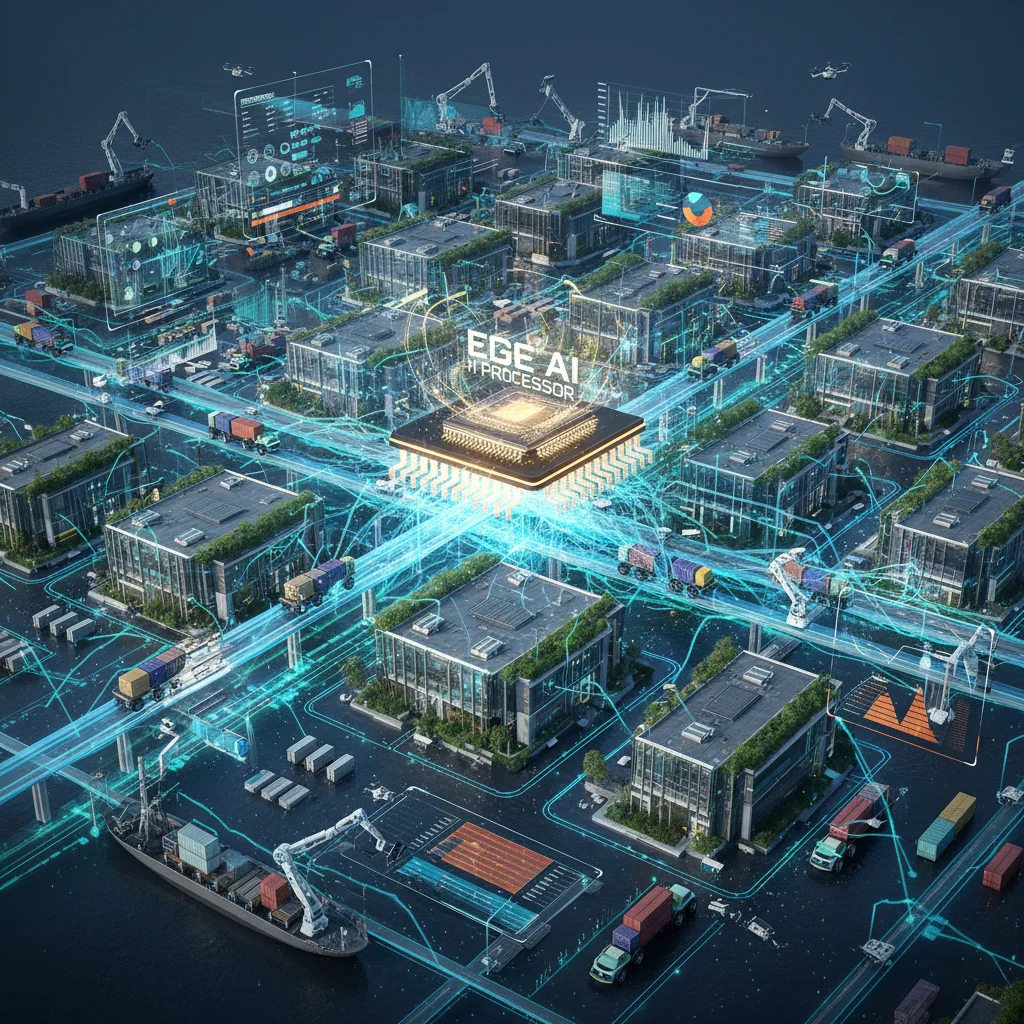
The landscape of global commerce is in constant flux, driven by technological advancements that redefine efficiency and operational capabilities. In the United States, supply chains, the very backbone of its economy, are undergoing a profound transformation. At the heart of this revolution lies Artificial Intelligence (AI), particularly at the ‘edge’ – the point where data is generated and acted upon. The demand for real-time data analysis, predictive maintenance, and autonomous decision-making in logistics, manufacturing, and distribution has never been more critical. This necessitates the deployment of powerful, efficient, and specialized hardware: Edge AI Processors.
By 2026, the capabilities of these processors will be paramount in determining the agility and competitiveness of U.S. supply chains. This comprehensive guide delves into the top 5 Edge AI Processors that are poised to dominate the market, offering a detailed performance comparison and insights into their potential impact on real-time data analysis within complex logistical networks. Understanding these technological marvels is not just about staying current; it’s about strategizing for future resilience and innovation.
The Imperative of Edge AI in Modern Supply Chains
Before we dive into specific hardware, it’s crucial to grasp why Edge AI Processors are becoming indispensable. Traditional cloud-based AI, while powerful, introduces latency. For supply chains dealing with perishable goods, just-in-time inventory, or autonomous robotic operations, even milliseconds of delay can translate into significant losses or operational bottlenecks. Edge AI brings computation closer to the data source, enabling instantaneous insights and actions.
Key Benefits of Edge AI in Supply Chains:
- Reduced Latency: Critical for real-time decision-making in autonomous vehicles, robotics, and quality control.
- Enhanced Security: Processing data locally reduces the need to transmit sensitive information to the cloud, minimizing exposure to cyber threats.
- Lower Bandwidth Consumption: Only processed insights or critical alerts need to be sent to the cloud, reducing network strain and costs.
- Improved Reliability: Edge systems can operate autonomously even with intermittent cloud connectivity.
- Cost Efficiency: Long-term operational costs can be reduced by optimizing data transfer and cloud computing resources.
The U.S. supply chain, characterized by its vast geographical spread and diverse operational requirements, stands to gain immensely from these advantages. From smart warehouses optimizing picking routes to intelligent transportation systems predicting traffic and managing fleets, Edge AI Processors are the engines driving this efficiency.
Criteria for Evaluating Top Edge AI Processors
Selecting the best Edge AI Processors for supply chain applications involves a multi-faceted evaluation. Our comparison for 2026 focuses on several critical metrics:
- AI Performance (TOPS): Tera Operations Per Second, a measure of raw AI computational power.
- Power Efficiency (TOPS/W): How much AI performance is delivered per watt of power consumed, crucial for battery-powered devices and sustainable operations.
- Connectivity Options: Support for 5G, Wi-Fi 6E, Ethernet, and other industrial communication protocols.
- Form Factor and Ruggedization: Suitability for harsh industrial environments, including temperature tolerance, vibration resistance, and size.
- Software Ecosystem & Tools: Availability of robust SDKs, frameworks (TensorFlow, PyTorch), and development tools for easier deployment and integration.
- Cost-Effectiveness: The overall value proposition, considering performance, features, and price.
- Scalability: The ability to scale solutions from small deployments to large, complex networks.
With these criteria in mind, let’s explore the contenders that are set to redefine real-time data analysis in U.S. supply chains.
The Top 5 Edge AI Processors for U.S. Supply Chains in 2026
1. NVIDIA Jetson Orin Series (Specifically, Orin AGX and Orin Nano)
NVIDIA has been a long-standing leader in AI computing, and its Jetson platform continues to evolve, pushing the boundaries of edge AI. The Orin series, particularly the AGX and Nano variants, are designed for scalable AI performance, making them ideal for diverse supply chain needs.
- AI Performance: The Jetson AGX Orin can deliver up to 275 TOPS, while the Orin Nano offers up to 40 TOPS. This range allows for deployment in everything from complex autonomous mobile robots (AMRs) and automated guided vehicles (AGVs) to smaller, sensor-driven logistics devices.
- Power Efficiency: Excellent TOPS/W ratio, with configurable power modes to optimize for performance or energy consumption, crucial for battery-operated devices in warehouses or last-mile delivery.
- Connectivity: Comprehensive I/O, including multiple Gigabit Ethernet ports, PCIe Gen4, USB 3.2, and support for various wireless modules, ensuring seamless integration into existing and future industrial networks.
- Software Ecosystem: NVIDIA’s CUDA-X stack, TensorRT, and DeepStream SDK provide a rich development environment, enabling rapid prototyping and deployment of AI models for tasks like object detection, predictive maintenance, and quality inspection.
- Supply Chain Application: Ideal for robotic arms in manufacturing, autonomous forkllifts, drone-based inventory management, and intelligent video analytics for security and operational efficiency. Their ability to handle multiple concurrent AI pipelines makes them perfect for complex, multi-sensor applications.
2. Intel Movidius Myriad X VPU (and next-gen iterations)
Intel’s Movidius line, particularly the Myriad X VPU (Vision Processing Unit) and its anticipated successors, focuses on highly efficient AI inference, especially for vision-centric tasks. Intel’s continuous innovation in this space promises even more powerful and efficient versions by 2026.
- AI Performance: Current Myriad X offers around 4 TOPS, but future generations are expected to significantly increase this while maintaining ultra-low power consumption. It excels at accelerating neural network inference for image and video analytics.
- Power Efficiency: Renowned for its industry-leading power efficiency, making it suitable for edge devices where power is a constraint, such as handheld scanners, smart cameras, and embedded sensors.
- Connectivity: Designed for integration into various host systems, offering flexible interfaces like PCIe and USB.
- Software Ecosystem: Supported by Intel’s OpenVINO toolkit, which optimizes deep learning models for Intel hardware, providing developers with tools for model conversion, optimization, and deployment across diverse Intel platforms.
- Supply Chain Application: Perfect for smart cameras performing quality checks on production lines, package inspection, inventory tracking via visual recognition, and personnel safety monitoring. Its low power profile makes it ideal for IoT devices that need to operate for extended periods without external power.
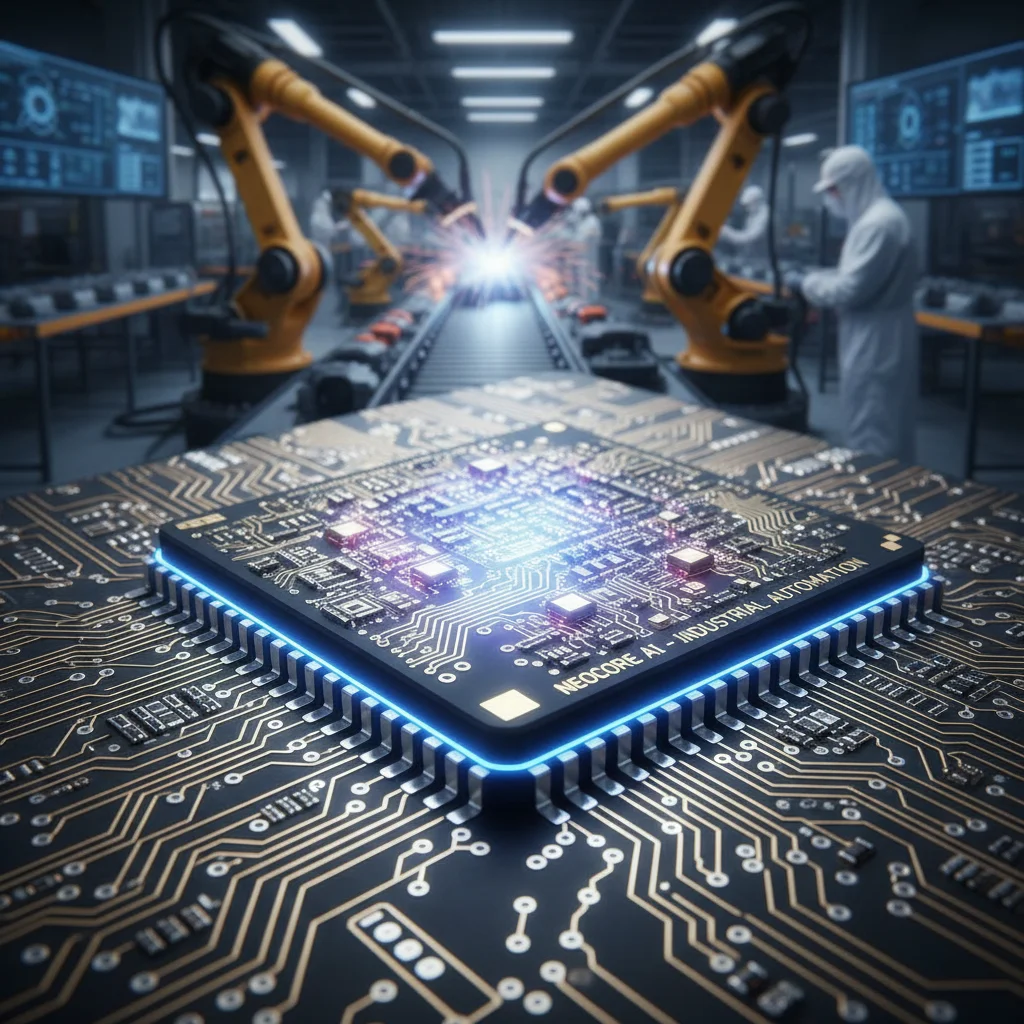
3. Google Edge TPU (Tensor Processing Unit)
Google’s Edge TPU is a purpose-built ASIC (Application-Specific Integrated Circuit) designed for high-performance machine learning inference at the edge. Its focus on TensorFlow Lite models makes it a strong contender for environments deeply integrated with Google’s AI ecosystem.
- AI Performance: Offers 4 TOPS with a single core, specifically optimized for TensorFlow Lite models. Its strength lies in its specialized architecture for accelerating neural networks.
- Power Efficiency: Extremely power-efficient, consuming very little power while delivering significant inference performance, making it suitable for power-sensitive edge devices.
- Connectivity: Available in various form factors (M.2, mini-PCIe, USB) allowing flexible integration into existing hardware systems.
- Software Ecosystem: Seamless integration with TensorFlow Lite, making it straightforward for developers already using Google’s AI frameworks to deploy models to the edge.
- Supply Chain Application: Excellent for predictive maintenance on machinery, anomaly detection in logistics data streams, localized demand forecasting, and real-time object classification for sorting and packing. Its ease of integration with TensorFlow models reduces development cycles.
4. Qualcomm Snapdragon Platforms (Industrial & IoT Variants)
While often associated with mobile devices, Qualcomm’s Snapdragon platforms have been increasingly tailored for industrial IoT and edge AI applications. Their integrated AI Engines offer robust performance for diverse workloads.
- AI Performance: Newer Snapdragon platforms designed for industrial applications can deliver tens of TOPS, combining CPU, GPU, and dedicated AI accelerators (Hexagon DSP) for heterogeneous computing.
- Power Efficiency: Highly optimized for power consumption, drawing from Qualcomm’s extensive experience in mobile platforms where battery life is paramount.
- Connectivity: Leading-edge connectivity features, including integrated 5G, Wi-Fi 6E, Bluetooth 5.x, and robust GNSS capabilities, which are critical for connected supply chain assets like tracking devices, smart sensors, and autonomous vehicles.
- Software Ecosystem: Qualcomm AI Engine Direct SDK provides tools for optimizing and deploying AI models across the platform’s heterogeneous compute units.
- Supply Chain Application: Ideal for smart logistics gateways, connected material handling equipment, IoT sensors with on-device intelligence, and edge servers requiring advanced wireless communication. Their robust connectivity makes them perfect for distributed supply chain networks.
5. NXP i.MX 8M Plus
NXP’s i.MX 8M Plus is a powerful System-on-Chip (SoC) designed for industrial and automotive applications, featuring an integrated Neural Processing Unit (NPU). It offers a balance of general-purpose processing and dedicated AI acceleration.
- AI Performance: Features an NPU delivering up to 2.3 TOPS, specifically for machine learning inference, alongside powerful ARM Cortex-A53 cores for general-purpose computing.
- Power Efficiency: Good balance of performance and power consumption, suitable for always-on industrial applications.
- Connectivity: Rich set of interfaces including multiple Gigabit Ethernet, PCIe, USB 3.0, and support for various wireless modules, making it highly versatile for industrial connectivity.
- Software Ecosystem: NXP provides extensive software support, including an AI/ML development environment that integrates with popular frameworks like TensorFlow Lite, making it accessible for industrial developers.
- Supply Chain Application: Suited for industrial control systems, smart manufacturing lines, human-machine interface (HMI) devices with AI capabilities, and edge gateways collecting and processing data from multiple sensors. Its integrated vision processing capabilities are excellent for industrial inspection and monitoring.
Performance Comparison at a Glance (Estimated for 2026)
While exact specifications for 2026 iterations are subject to change, the trends indicate a continuous push for higher TOPS, better power efficiency, and richer software ecosystems. The following table provides a generalized comparison based on current trajectories and expected advancements:
| Processor | Typical AI Performance (TOPS) | Power Efficiency (TOPS/W) | Key Strengths | Ideal Supply Chain Use Case |
|---|---|---|---|---|
| NVIDIA Jetson Orin Series | 40-300+ | High | Scalable performance, rich software, GPU compute | Autonomous robotics, complex vision systems |
| Intel Movidius Myriad X (Next-Gen) | 5-20+ | Very High | Ultra-low power, vision acceleration | Smart cameras, embedded sensor analytics |
| Google Edge TPU | 4-10+ | High | TensorFlow Lite optimization, dedicated ASIC | Predictive maintenance, localized forecasting |
| Qualcomm Snapdragon (Industrial) | 10-50+ | High | Integrated 5G/Wi-Fi, heterogeneous compute | Connected logistics, smart gateways, IoT |
| NXP i.MX 8M Plus | 2-5+ | Medium-High | Integrated NPU, industrial grade, general compute | Industrial control, HMI, edge gateways |
Note: TOPS values are indicative and depend on specific model variants and configurations.
Challenges and Future Outlook for Edge AI in Supply Chains
While the promise of Edge AI Processors is immense, challenges remain. These include the complexity of deploying and managing AI models at scale across distributed edge devices, ensuring data privacy and security, and the need for skilled personnel to develop and maintain these systems. Standardization of edge AI platforms and interoperability will also be crucial for widespread adoption.
Looking towards 2026 and beyond, we can expect several key trends:
- Increased Specialization: Processors will become even more specialized for specific AI workloads (e.g., natural language processing at the edge, advanced sensor fusion).
- Enhanced Security Features: Hardware-level security will become standard, with trusted execution environments and secure boot mechanisms.
- Better Energy Harvesting: Development of ultra-low-power processors that can operate on harvested energy, enabling truly autonomous and maintenance-free edge devices.
- AI-as-a-Service at the Edge: Emergence of more managed services that simplify the deployment and management of edge AI solutions.
- Quantum-Resistant Cryptography: As quantum computing advances, edge devices will need to incorporate cryptographic measures resistant to quantum attacks.
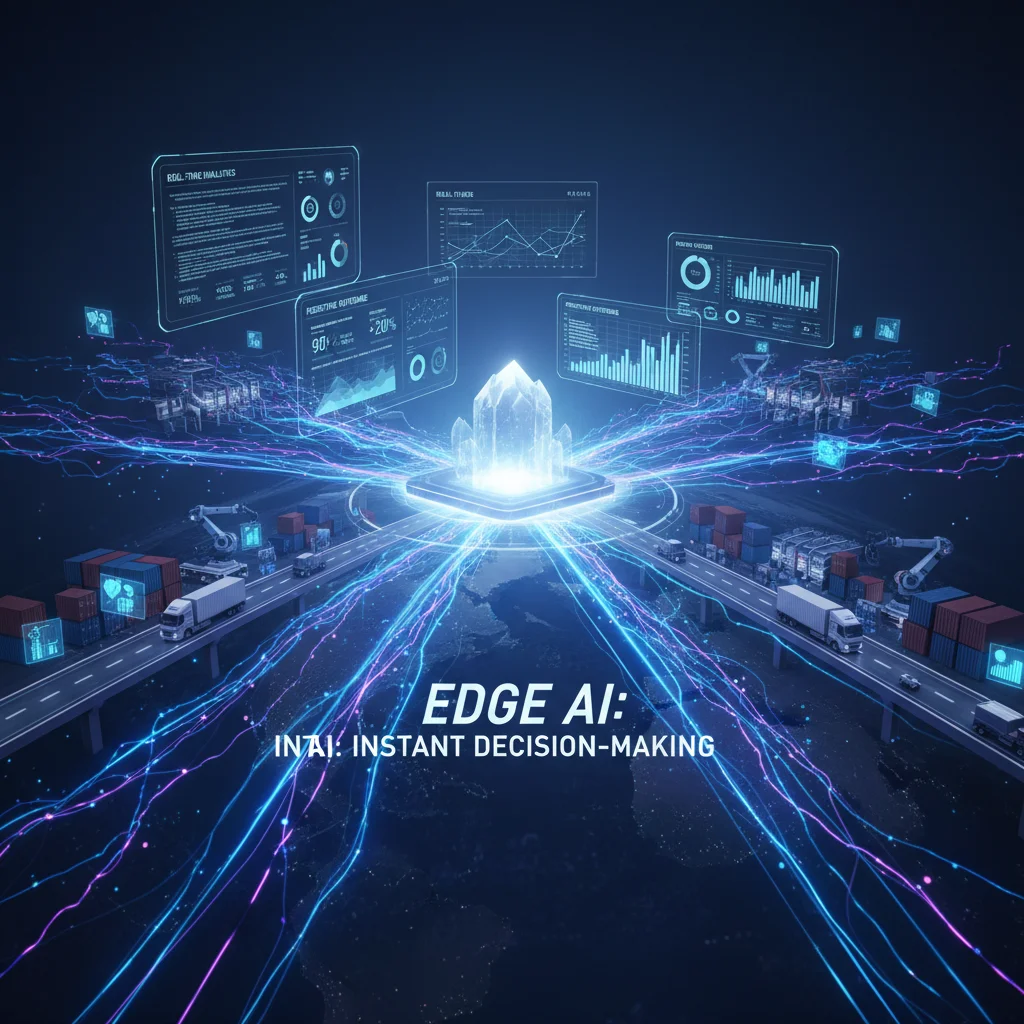
Strategic Implementation of Edge AI Processors
For U.S. businesses looking to leverage these advanced Edge AI Processors, a strategic approach is vital. It’s not merely about purchasing the most powerful chip but about aligning technology with specific business needs and operational challenges. Consider starting with pilot programs in critical areas such as:
- Predictive Maintenance: Deploying edge AI to monitor machinery health and predict failures before they occur, reducing downtime.
- Automated Quality Control: Using vision-based AI on the edge to inspect products for defects in real-time on the production line.
- Inventory Optimization: Implementing smart sensors and AI to get real-time stock levels, prevent stockouts, and optimize warehouse layouts.
- Fleet Management: Equipping vehicles with edge AI for route optimization, driver behavior analysis, and predictive vehicle maintenance.
- Security and Safety: Utilizing edge AI for real-time threat detection, access control, and worker safety monitoring in industrial environments.
The choice of processor will heavily depend on the specific application’s requirements for latency, power consumption, computational intensity, and environmental robustness. A careful cost-benefit analysis, considering both hardware and software integration costs, is essential for successful deployment.
Conclusion
The future of U.S. supply chains is undeniably intertwined with the evolution and adoption of Edge AI Processors. By 2026, these powerful, efficient, and intelligent chips will be the unsung heroes enabling unprecedented levels of automation, real-time decision-making, and operational resilience. NVIDIA’s scalable Jetson Orin, Intel’s power-efficient Movidius, Google’s specialized Edge TPU, Qualcomm’s connected Snapdragon platforms, and NXP’s robust i.MX 8M Plus each offer unique advantages for different facets of the supply chain.
Businesses that proactively understand, evaluate, and integrate these cutting-edge processors will be best positioned to navigate the complexities of global commerce, optimize their operations, and gain a significant competitive edge. The era of intelligent, autonomous, and hyper-efficient supply chains is not a distant dream; it’s being built today, one powerful Edge AI Processor at a time.
Embracing these technologies is more than an upgrade; it’s a strategic imperative for any organization aiming for sustained growth and leadership in the dynamic economic landscape of the United States.