Achieve 4% Yield: Adapting Your US Bond Portfolio to Policy Shifts

The landscape of the US bond market is in a constant state of flux, influenced by a myriad of factors ranging from Federal Reserve policy shifts to global economic events. For investors seeking a consistent and attractive return, particularly a 4% yield, understanding and adapting to these changes is not merely advantageous but absolutely critical. Recent policy shifts, characterized by fluctuating interest rates and evolving inflation expectations, have significantly reshaped the dynamics of fixed-income investments. This comprehensive guide delves into the intricacies of adapting your US bond portfolio yield in the current economic climate, providing actionable strategies to navigate challenges and capitalize on opportunities to achieve that desirable 4% yield.
Understanding the Current Economic Climate and Policy Shifts
Before diving into specific strategies, it’s essential to grasp the broader economic context. The Federal Reserve, as the central bank of the United States, plays a pivotal role in shaping the bond market through its monetary policy decisions. These decisions, primarily concerning the federal funds rate, directly influence short-term interest rates and, by extension, longer-term bond yields. In recent times, we’ve witnessed periods of aggressive rate hikes aimed at combating inflation, followed by pauses and discussions around potential rate cuts. Each of these shifts sends ripples through the bond market, affecting bond prices and yields.
The Impact of Inflation and Interest Rates on Your US Bond Portfolio Yield
Inflation, the rate at which the general level of prices for goods and services is rising, erodes the purchasing power of future fixed payments from bonds. When inflation is high, investors demand higher yields to compensate for this erosion, leading to higher nominal interest rates. Conversely, a decrease in inflation expectations can lead to lower bond yields. The Federal Reserve’s primary mandate often involves balancing inflation control with economic growth. Their policy responses to inflation directly impact the yield curve and, consequently, the attractiveness of different bond maturities.
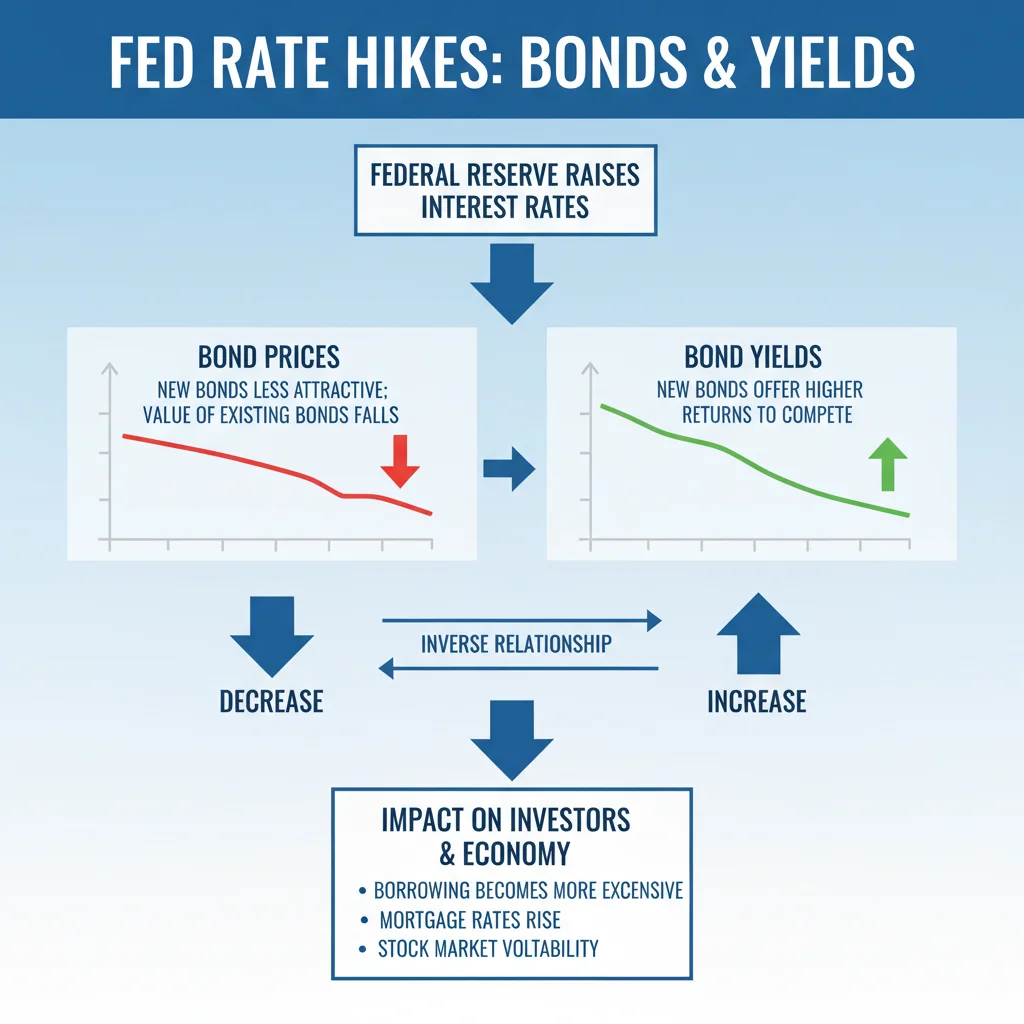
Interest rates and bond prices have an inverse relationship. When interest rates rise, newly issued bonds offer higher yields, making older, lower-yielding bonds less attractive. To sell these older bonds, their prices must fall. Conversely, when interest rates fall, existing bonds with higher yields become more desirable, driving up their prices. For investors aiming for a specific US bond portfolio yield, this dynamic means that active management and an understanding of future rate expectations are paramount.
Deconstructing the 4% Yield Target: Is It Realistic?
A 4% yield in the current environment is an ambitious yet achievable target for a well-constructed US bond portfolio yield. Historically, bond yields have fluctuated significantly. During periods of ultra-low interest rates, a 4% yield was often only attainable by taking on significant credit risk or extending duration considerably. However, with recent policy shifts leading to higher benchmark rates, a 4% yield has become more accessible across various segments of the bond market, albeit still requiring careful consideration of risk and diversification.
Factors Influencing Attainable Yields
- Credit Risk: Bonds issued by entities with lower credit ratings (e.g., high-yield corporate bonds) typically offer higher yields to compensate investors for the increased risk of default.
- Duration: Longer-duration bonds (those with longer maturities) are generally more sensitive to interest rate changes and often offer higher yields as compensation for this interest rate risk.
- Market Segment: Different segments of the bond market (e.g., U.S. Treasuries, corporate bonds, municipal bonds, mortgage-backed securities) offer varying yields based on their unique risk profiles and liquidity characteristics.
- Economic Outlook: The overall economic outlook, including expectations for growth, inflation, and monetary policy, heavily influences prevailing bond yields.
Achieving a 4% US bond portfolio yield requires a strategic blend of these factors, balancing the pursuit of higher income with prudent risk management.
Key Strategies for Adapting Your US Bond Portfolio for a 4% Yield
1. Diversification Across Bond Sectors and Maturities
Diversification is the cornerstone of any robust investment strategy, and it’s particularly crucial for a bond portfolio. Relying too heavily on one type of bond or maturity exposes your portfolio to undue risk. To target a 4% US bond portfolio yield, consider diversifying across:
- U.S. Treasuries: While often offering lower yields, Treasuries provide unparalleled safety and liquidity, acting as a ballast in volatile markets.
- Investment-Grade Corporate Bonds: These bonds, issued by financially sound companies, offer higher yields than Treasuries without venturing into high-yield territory.
- High-Yield Corporate Bonds (Junk Bonds): For investors willing to take on more risk, high-yield bonds can significantly boost portfolio yield. However, they are more susceptible to economic downturns and company-specific risks.
- Municipal Bonds: For high-income earners, the tax-exempt status of municipal bonds can make their after-tax yield highly attractive, potentially surpassing taxable equivalents.
- Mortgage-Backed Securities (MBS): These securities, often backed by government agencies, can offer competitive yields, though they come with prepayment risk.
Diversifying maturities (e.g., a bond ladder) can help manage interest rate risk. A bond ladder involves staggering bond maturities over time, allowing you to reinvest maturing principal at prevailing rates, which can be beneficial in a rising rate environment and provide consistent income.
2. Focus on Shorter to Medium Duration Bonds (Strategic Duration Management)
In an environment of uncertain interest rate trajectories, managing duration is paramount. Shorter-duration bonds (1-5 years) are less sensitive to interest rate fluctuations than longer-duration bonds. While they may offer slightly lower yields, their price stability can be a significant advantage, especially if rates continue to rise or remain volatile. However, to reach a 4% US bond portfolio yield, solely focusing on very short-duration bonds might be challenging. A balanced approach often involves a mix of short and medium-duration bonds (5-10 years), which can offer a better yield without taking on excessive interest rate risk.
3. Exploring Credit Quality Beyond Pure Treasuries
While U.S. Treasuries are the safest bond investment, their yields are typically lower. To achieve a 4% US bond portfolio yield, investors often need to move up the credit risk spectrum. This doesn’t necessarily mean diving headfirst into junk bonds. Investment-grade corporate bonds, issued by companies with strong financial health, offer a step-up in yield compared to Treasuries. These bonds are rated BBB- or higher by agencies like S&P and Fitch, or Baa3 or higher by Moody’s. By selectively investing in high-quality corporate bonds, you can enhance your portfolio’s yield without taking on undue default risk.
4. Utilizing Bond ETFs and Mutual Funds for Broader Exposure
For many investors, especially those with smaller portfolios or less time for active management, bond exchange-traded funds (ETFs) and mutual funds offer an excellent way to gain diversified exposure to the bond market. These funds hold a basket of bonds, providing instant diversification across various issuers, maturities, and credit qualities. There are specific bond ETFs and mutual funds designed to target certain durations, credit qualities, or even specific yield objectives. When selecting these funds, pay close attention to their expense ratios, underlying holdings, and their sensitivity to interest rate changes (often measured by the fund’s average duration). Look for funds that align with your target US bond portfolio yield and risk tolerance.
5. Considering Inflation-Protected Securities (TIPS)
In an environment where inflation remains a concern, Treasury Inflation-Protected Securities (TIPS) can be a valuable addition to a US bond portfolio yield strategy. TIPS are government bonds whose principal value adjusts with inflation, as measured by the Consumer Price Index (CPI). This adjustment means that both the principal and the interest payments increase with inflation, providing a hedge against rising prices. While their nominal yield might appear lower than conventional Treasuries, their inflation protection can preserve real purchasing power, making them attractive for long-term investors worried about inflationary pressures.
6. Active Management and Rebalancing
The bond market is dynamic, and a set-it-and-forget-it approach is unlikely to consistently deliver a 4% US bond portfolio yield. Active management and periodic rebalancing are essential. This involves regularly reviewing your portfolio’s holdings, assessing their performance against your yield target, and making adjustments as economic conditions and policy shifts dictate. For instance, if interest rates have risen significantly, you might consider selling lower-yielding bonds and reinvesting in higher-yielding new issues or funds. Conversely, if rates are expected to fall, extending duration selectively could lock in higher yields for longer.
Risks Associated with Achieving a 4% US Bond Portfolio Yield
While a 4% yield is attractive, it’s crucial to acknowledge the associated risks. Pursuing higher yields often means taking on greater risk. These risks include:
- Interest Rate Risk: The risk that rising interest rates will cause the value of your existing bonds to fall. This risk is higher for longer-duration bonds.
- Credit Risk (Default Risk): The risk that the bond issuer will be unable to make its promised interest payments or repay the principal. This risk is higher for lower-rated corporate bonds and high-yield bonds.
- Inflation Risk: The risk that inflation will erode the purchasing power of your bond’s fixed payments. While TIPS mitigate this, other bonds are vulnerable.
- Liquidity Risk: The risk that you may not be able to sell a bond quickly at a fair price, especially for less common or thinly traded bonds.
- Reinvestment Risk: The risk that when your bonds mature, you may have to reinvest the principal at lower interest rates, leading to a reduced income stream.
A balanced approach to achieving your US bond portfolio yield target means understanding and mitigating these risks through careful selection and diversification.
Implementing Your Strategy: Practical Steps
Step 1: Assess Your Risk Tolerance and Time Horizon
Your personal risk tolerance and investment time horizon are fundamental to constructing an appropriate bond portfolio. If you have a low risk tolerance, you might lean more towards investment-grade bonds and shorter durations, even if it means a slightly lower average yield. A longer time horizon might allow for more exposure to medium-duration bonds or even some higher-yield segments, as you have more time to recover from potential fluctuations.
Step 2: Research and Select Bond Investments
Once you understand your risk profile, begin researching specific bond investments. For individual bonds, look at credit ratings, maturity dates, coupon rates, and yield-to-maturity. For bond funds, examine their holdings, expense ratios, historical performance, and management team. Tools like bond screeners offered by brokerage firms can help filter bonds based on your criteria for achieving your desired US bond portfolio yield.
Step 3: Build Your Portfolio Gradually
Instead of investing all your capital at once, consider building your bond portfolio gradually. This dollar-cost averaging approach can help mitigate the impact of market timing, especially in volatile interest rate environments. It allows you to average out your purchase prices over time, potentially leading to a more consistent overall yield.
Step 4: Monitor and Adjust Regularly
The bond market is not static. Set a schedule to review your bond portfolio at least quarterly or semi-annually. Pay attention to economic indicators, Federal Reserve announcements, and changes in credit ratings of your bond holdings. Be prepared to make adjustments, rebalancing your portfolio to maintain your desired risk-return profile and continue targeting that 4% US bond portfolio yield.

The Role of Economic Indicators in Your Bond Strategy
Staying informed about key economic indicators is crucial for anticipating market shifts and adapting your US bond portfolio yield strategy. Here are some indicators to watch:
- Inflation Data (CPI, PCE): These reports provide insights into inflationary pressures, which directly influence the Fed’s monetary policy decisions and bond yields.
- Employment Data (Non-Farm Payrolls, Unemployment Rate): Strong employment figures can signal economic growth, potentially leading to higher interest rates as the Fed might become more hawkish.
- GDP Growth: Gross Domestic Product reports indicate the overall health of the economy. Robust growth can lead to higher bond yields.
- Federal Reserve Statements and Minutes: Pay close attention to FOMC statements, press conferences, and meeting minutes for clues about future interest rate policy.
- Yield Curve: The shape of the yield curve (the relationship between short-term and long-term bond yields) can be a powerful economic predictor, often signaling recessions when it inverts.
By integrating these economic insights into your decision-making, you can make more informed choices about duration, credit quality, and sector allocation within your US bond portfolio yield.
Advanced Considerations for Maximizing Yield
Tax Efficiency
For taxable accounts, considering tax-efficient investments can significantly enhance your after-tax US bond portfolio yield. Municipal bonds, as mentioned, offer tax-exempt interest at the federal level and sometimes at the state and local levels if you reside in the issuing state. Another strategy is to hold higher-yielding, taxable bonds in tax-advantaged accounts like IRAs or 401(k)s, where earnings grow tax-deferred or tax-free.
Bond Futures and Options
For sophisticated investors, bond futures and options can be used for hedging purposes or to express views on interest rate movements. These instruments carry significant risk and are generally not recommended for novice investors. However, they can be powerful tools for managing interest rate risk or enhancing yield for those with the expertise.
Global Bond Exposure (with caution)
While this guide focuses on the US bond portfolio yield, some investors might consider a small allocation to global bonds for further diversification and potentially higher yields. However, this introduces currency risk and different geopolitical risks, requiring careful consideration and expertise.
Conclusion: A Proactive Approach to Your US Bond Portfolio Yield
Adapting your US bond portfolio yield in the face of recent policy shifts and an evolving economic climate is an ongoing process that demands diligence, informed decision-making, and a proactive approach. Achieving a 4% yield requires a thoughtful strategy that balances diversification, duration management, credit quality assessment, and a keen eye on economic indicators.
By understanding the nuances of interest rate movements, inflation’s impact, and the various segments of the bond market, investors can construct a resilient portfolio designed not only to generate attractive income but also to withstand market volatility. Remember, the goal isn’t just to chase the highest yield, but to achieve a sustainable and risk-adjusted US bond portfolio yield that aligns with your overall financial objectives. Regular review and adjustment are key to navigating the complexities of the bond market and staying on track towards your 4% yield target.
The journey to a robust 4% US bond portfolio yield is one of continuous learning and adaptation. By implementing the strategies outlined in this guide, you can position your fixed-income investments for success in today’s dynamic economic landscape.