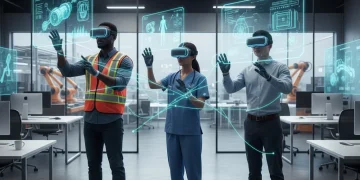
Advanced Robotics in US Manufacturing: Boosting Productivity by 25% with 2026 Implementations
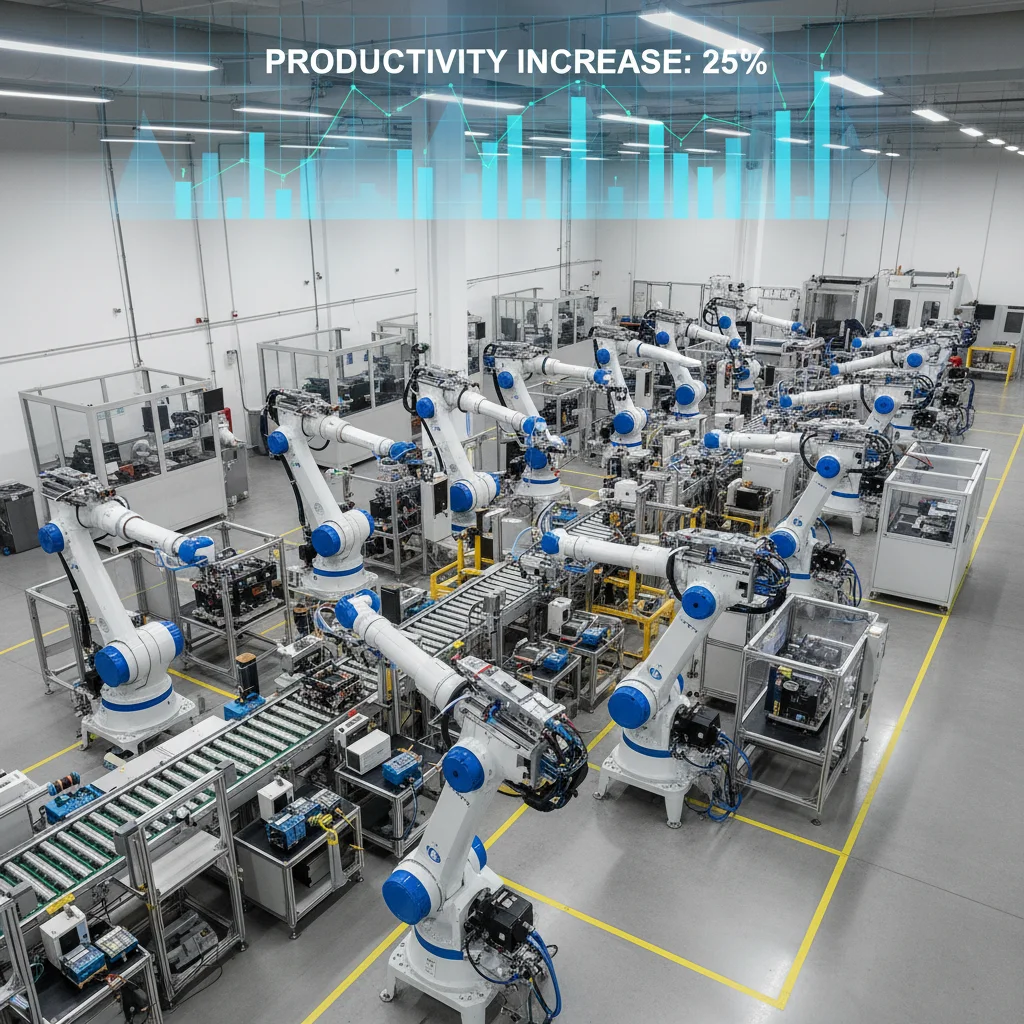
The landscape of US manufacturing is undergoing a profound transformation, driven by the relentless march of technological innovation. At the forefront of this revolution is the widespread adoption of advanced robotics. These sophisticated machines are no longer confined to merely performing repetitive, dangerous tasks; they are evolving into intelligent, adaptable, and collaborative partners, fundamentally reshaping how goods are produced. The implications are staggering, with projections indicating a substantial 25% boost in productivity across US manufacturing by 2026 due to these implementations. This isn’t just about efficiency; it’s about competitiveness, innovation, and the future of industrial prowess.
For decades, robotics have been a staple in certain sectors of manufacturing, particularly in automotive assembly lines. However, what we are witnessing now is a paradigm shift. Advanced robotics, powered by artificial intelligence, machine learning, and enhanced sensor technology, are becoming more accessible, versatile, and capable of handling complex, non-linear tasks. This evolution is enabling their integration into a broader spectrum of industries, from electronics and aerospace to food processing and pharmaceuticals. The promise of this technological wave is not just incremental improvement, but a significant leap forward in operational efficiency, quality control, and overall economic output for the United States.
As we delve deeper into this topic, we will explore the specific technologies driving this surge, the tangible benefits manufacturers can expect, the challenges that need to be addressed, and the strategic roadmap for successful implementation. Understanding the nuances of US manufacturing robotics is crucial for businesses aiming to stay competitive in an increasingly globalized and automated world.
The Rise of Advanced Robotics: A Technological Deep Dive
The term ‘advanced robotics’ encompasses a broad array of sophisticated systems that go far beyond traditional industrial robots. These systems are characterized by their enhanced capabilities, often incorporating elements of artificial intelligence, advanced sensory perception, and human-robot collaboration. Understanding these core technologies is key to appreciating their transformative potential in US manufacturing.
Collaborative Robots (Cobots): The New Workforce Partners
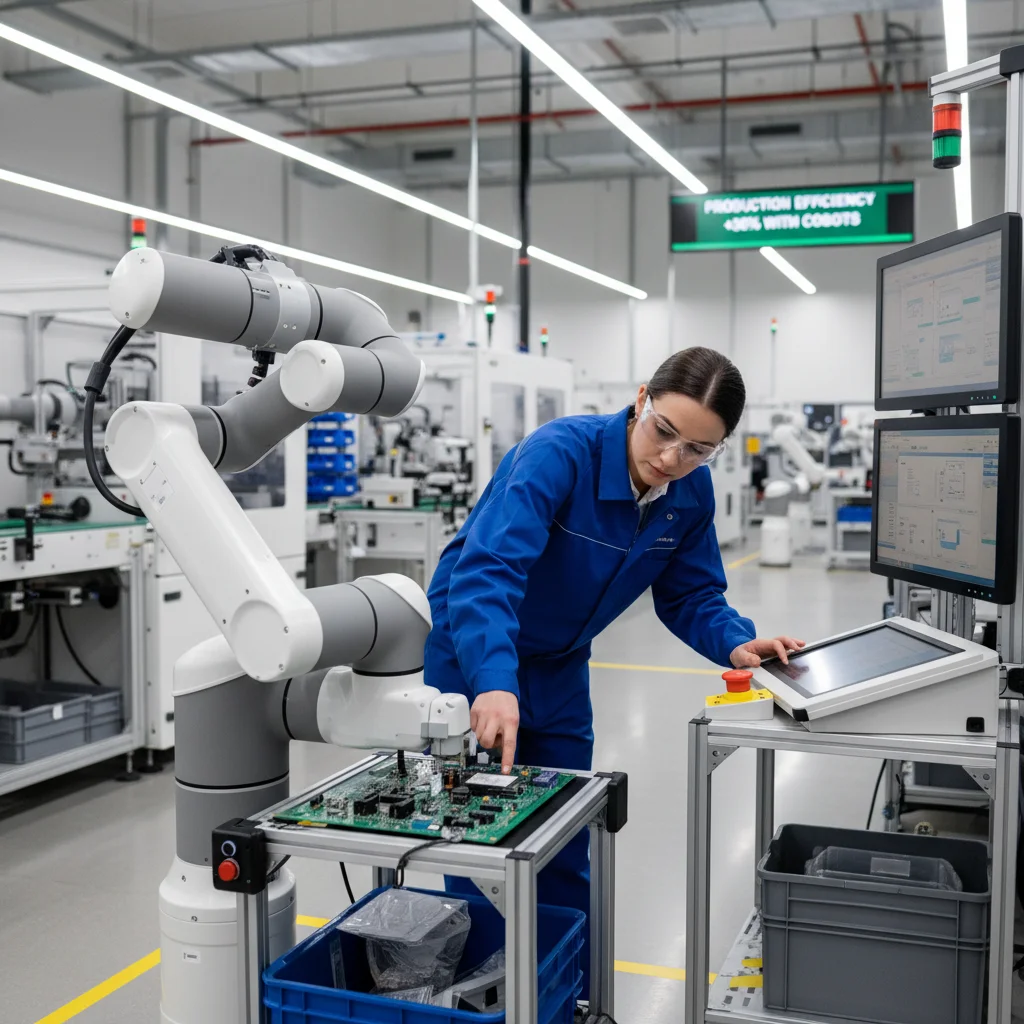
Perhaps one of the most significant developments in US manufacturing robotics is the advent of collaborative robots, or cobots. Unlike their caged industrial counterparts, cobots are designed to work safely alongside human employees, often without the need for extensive safety guarding. Equipped with advanced sensors, force-feedback technology, and intuitive programming interfaces, cobots can detect human presence and adjust their movements to prevent collisions. This allows for seamless integration into existing workflows, augmenting human capabilities rather than replacing them entirely. Imagine a cobot handling the heavy lifting or repetitive assembly tasks, while a human worker focuses on quality inspection, problem-solving, or intricate finishing touches. This synergy is a powerful driver of productivity and operational flexibility.
AI and Machine Learning: The Brains Behind the Brawn
The true intelligence of advanced robotics stems from the integration of Artificial Intelligence (AI) and Machine Learning (ML). These technologies enable robots to learn from their environment, adapt to changing conditions, and make autonomous decisions. For instance, AI-powered vision systems allow robots to identify and sort complex parts, inspect for defects with unprecedented accuracy, and even learn new tasks through demonstration rather than explicit programming. ML algorithms can optimize robot movements, predict maintenance needs, and improve overall operational efficiency over time. This level of cognitive ability transforms robots from mere tools into intelligent assets capable of continuous improvement.
Advanced Vision Systems and Sensors: Enhanced Perception
Modern robots are equipped with an array of sophisticated sensors, including 2D and 3D vision systems, force/torque sensors, and tactile sensors. These allow robots to perceive their surroundings with remarkable detail, enabling them to handle variations in part placement, recognize different components, and perform intricate manipulations that were once exclusive to human dexterity. For example, a robot with advanced vision can pick randomly oriented parts from a bin (bin picking), a task notoriously difficult for older robotic systems. This enhanced perception significantly broadens the scope of tasks that US manufacturing robotics can undertake, leading to greater automation of complex processes.
Mobile Robotics and AGVs/AMRs: Flexible Logistics
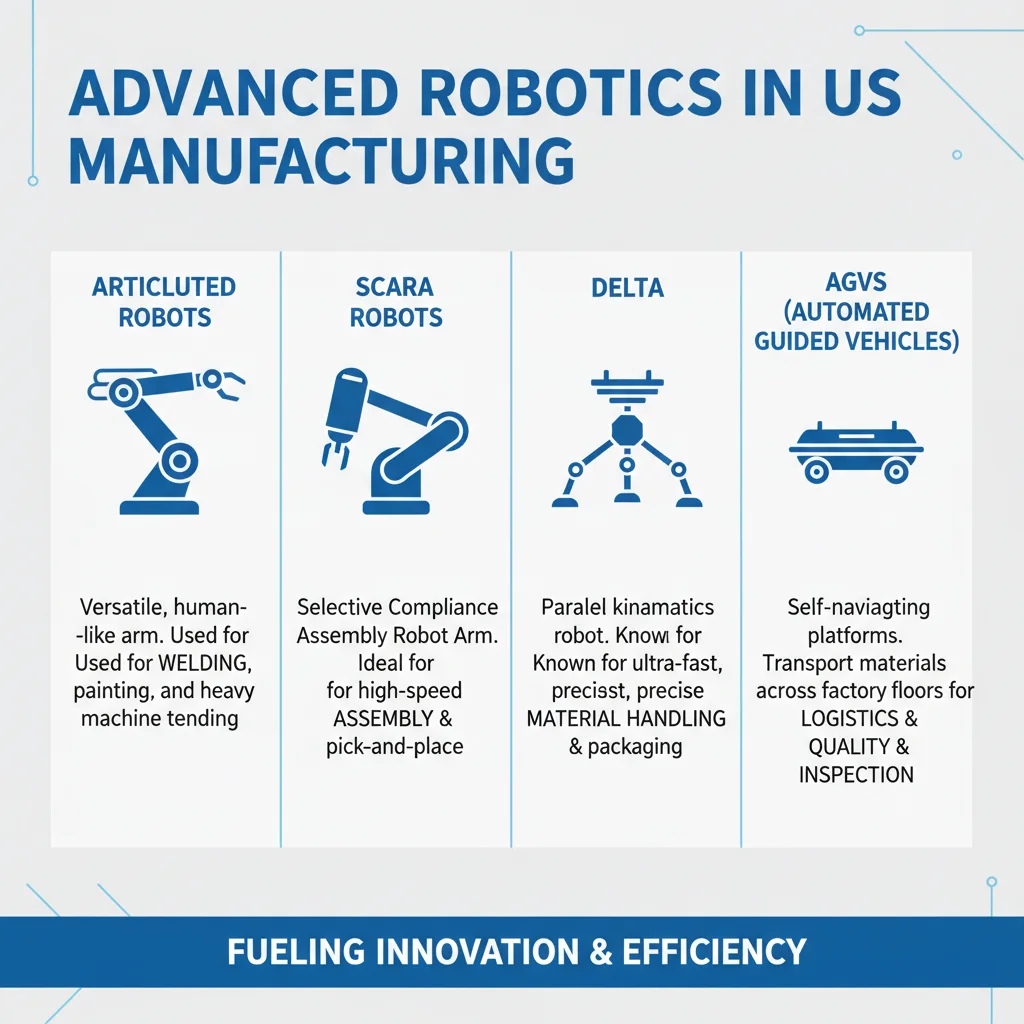
Beyond the fixed robotic arms, the rise of Automated Guided Vehicles (AGVs) and Autonomous Mobile Robots (AMRs) is revolutionizing internal logistics within manufacturing facilities. These mobile robots can transport materials, tools, and finished products across the factory floor, optimizing material flow and reducing human travel time. AMRs, in particular, use sophisticated navigation software and sensors to autonomously map their environment and find the most efficient routes, even in dynamic and changing layouts. This flexibility in material handling is critical for achieving the kind of productivity gains targeted by 2026 implementations.
The Productivity Promise: How Robotics Drives 25% Growth
The projected 25% productivity boost in US manufacturing is not an arbitrary figure; it’s an aggregation of numerous efficiency gains across various operational facets. Advanced robotics contribute to this growth through several key mechanisms:
Increased Throughput and Speed
Robots can operate continuously, 24/7, without fatigue, breaks, or sick days. They perform tasks with consistent speed and precision, leading to significantly higher production rates compared to manual labor. This increased throughput directly translates to greater output and the ability to meet higher market demands, a critical factor for boosting overall US manufacturing productivity.
Enhanced Quality and Reduced Waste
The precision and repeatability of robotic systems are unparalleled. This leads to a dramatic reduction in errors, defects, and rework. Advanced vision systems can inspect products with microscopic accuracy, identifying flaws that might be missed by the human eye. By minimizing scrap and ensuring consistent product quality, manufacturers not only save on material costs but also enhance brand reputation and customer satisfaction. This directly contributes to a more efficient and productive operation.
Optimized Resource Utilization
Robots can be programmed to optimize the use of materials, energy, and floor space. For example, robotic welding can apply precise amounts of material, reducing waste. Their compact designs and ability to work in confined spaces can maximize the utilization of valuable factory floor real estate. This optimization of resources is a cornerstone of lean manufacturing and a key driver for productivity improvements.
Improved Safety and Ergonomics
By automating dangerous, repetitive, or ergonomically challenging tasks, advanced robotics significantly improve workplace safety. This reduces the incidence of injuries, lowers insurance costs, and creates a healthier work environment for human employees. When workers are freed from strenuous tasks, they can be redeployed to more value-added roles, indirectly boosting overall productivity and job satisfaction. This aspect of US manufacturing robotics is often overlooked but incredibly impactful.
Greater Flexibility and Agility
Modern robots are highly adaptable. With quick reprogramming and retooling, they can be switched between different tasks or product lines with minimal downtime. This flexibility is crucial in today’s rapidly changing market, allowing manufacturers to quickly respond to new product demands, customize orders, and introduce variations without major reconfigurations. This agility is a significant competitive advantage and a direct contributor to the projected productivity gains.
Challenges and Considerations for 2026 Implementations
While the benefits of advanced US manufacturing robotics are clear, the path to widespread implementation by 2026 is not without its challenges. Addressing these considerations proactively will be crucial for successful adoption.
Initial Investment Costs
The upfront cost of purchasing, integrating, and programming advanced robotic systems can be substantial. Small and medium-sized enterprises (SMEs) may find these costs prohibitive. However, falling robot prices, coupled with increasing government incentives and financing options, are making robotics more accessible. Furthermore, the long-term return on investment (ROI) often far outweighs the initial outlay, especially when considering the productivity gains and cost reductions.
Skills Gap and Workforce Training
The introduction of advanced robotics requires a workforce with new skills. While some jobs may be automated, new roles in robot programming, maintenance, data analysis, and human-robot collaboration will emerge. Bridging this skills gap through targeted training programs, educational partnerships, and reskilling initiatives is paramount. Investing in the existing workforce to adapt to these new technologies is essential for a smooth transition and continued productivity growth.
Integration Complexity
Integrating new robotic systems into existing manufacturing infrastructure can be complex. It requires careful planning, specialized engineering expertise, and often, modifications to factory layouts and IT systems. Interoperability between different robotic brands and legacy systems can also pose a challenge. Manufacturers need to consider a holistic approach to integration, often working with experienced system integrators.
Cybersecurity Risks
As manufacturing systems become more connected, they also become more vulnerable to cyber threats. Robots connected to networks can be targets for malicious attacks, potentially disrupting production or compromising sensitive data. Robust cybersecurity protocols and continuous monitoring are essential to protect these advanced systems and ensure operational integrity.
Ethical and Societal Implications
The increasing automation of tasks raises important questions about job displacement and the future of work. While robotics often create new, higher-skilled jobs, the transition needs to be managed carefully to ensure a just and equitable economic shift. Policy makers, industry leaders, and educators must collaborate to address these broader societal impacts.
Strategic Roadmap for US Manufacturing Robotics Adoption
To achieve the ambitious 25% productivity boost by 2026, US manufacturers need a clear and strategic roadmap for integrating advanced robotics. This involves a phased approach, careful planning, and a commitment to continuous improvement.
Phase 1: Assessment and Pilot Programs
The first step is to conduct a thorough assessment of current manufacturing processes to identify areas where robotics can deliver the most significant impact. This includes identifying repetitive, dangerous, or bottleneck tasks. Following this, pilot programs should be initiated to test robotic solutions on a smaller scale. This allows manufacturers to gain experience, refine processes, and demonstrate ROI before a broader rollout. Focusing on specific applications of US manufacturing robotics that yield quick wins can build momentum.
Phase 2: Workforce Development and Training
Simultaneously, an aggressive workforce development program must be implemented. This includes training existing employees in robot operation, programming, and maintenance. Partnerships with vocational schools, community colleges, and universities can help develop a pipeline of skilled talent. Investing in human capital is as crucial as investing in the technology itself.
Phase 3: Scalable Integration and Infrastructure Upgrade
Once pilot programs prove successful, manufacturers can move towards scalable integration. This involves upgrading IT infrastructure, ensuring robust network connectivity, and implementing data analytics platforms to monitor robot performance and optimize operations. A modular approach to integration can allow for flexibility and easier expansion in the future. This phase will heavily rely on seamless integration of new US manufacturing robotics into existing systems.
Phase 4: Continuous Optimization and Innovation
The journey doesn’t end with implementation. Manufacturers must establish a culture of continuous optimization, leveraging data from their robotic systems to identify areas for further improvement. This includes exploring new robotic applications, integrating emerging technologies like AI and machine learning more deeply, and staying abreast of the latest advancements in US manufacturing robotics. Regular performance reviews and adaptation are key to sustaining long-term productivity gains.
Impact on the US Economy and Global Competitiveness
The widespread adoption of advanced US manufacturing robotics is not merely an internal factory improvement; it has profound implications for the broader US economy and its standing in the global arena. The projected 25% productivity boost signifies a substantial economic uplift.
Reshoring and Nearshoring Initiatives
Increased automation makes US manufacturing more competitive on a global scale. The cost advantages of offshore labor diminish when robots can perform tasks more efficiently and consistently at home. This can accelerate reshoring and nearshoring initiatives, bringing manufacturing jobs and supply chains back to the United States, thereby strengthening domestic industries and reducing reliance on volatile international supply chains. This revitalization of US manufacturing is a direct benefit of robust robotics integration.
Innovation and New Industry Creation
The robotics revolution fosters innovation not only in manufacturing processes but also in the development of new robotic technologies and services. This creates new industries, research opportunities, and high-tech jobs in areas like AI development, robotics engineering, and advanced materials. The US can position itself as a global leader in robotics innovation, driving economic growth and technological advancement.
Higher Wages and Improved Living Standards
While some fear job displacement, the historical trend with technological advancements suggests a shift towards higher-skilled, higher-paying jobs. As robots take over mundane tasks, human workers can transition to roles that require critical thinking, creativity, and problem-solving. This shift, coupled with increased productivity, can lead to higher wages and an overall improvement in living standards for the American workforce. The focus of US manufacturing robotics is not just on output, but on creating a more valuable and skilled workforce.
Strengthening Supply Chain Resilience
Recent global events have highlighted the fragility of extended supply chains. By increasing domestic manufacturing capabilities through robotics, the US can build more resilient and localized supply chains. This reduces vulnerability to geopolitical disruptions, natural disasters, and pandemics, ensuring a more stable and predictable flow of goods for consumers and businesses alike. This strategic advantage, powered by US manufacturing robotics, is invaluable.
The Future of US Manufacturing: Beyond 2026
Looking beyond the 2026 projections, the evolution of US manufacturing robotics is set to continue at an accelerated pace. We can anticipate even more sophisticated systems, deeper integration of AI, and entirely new manufacturing paradigms.
Hyper-Personalization and Mass Customization
Robots, combined with advanced data analytics and flexible production lines, will enable hyper-personalization of products at scale. Consumers will be able to order highly customized goods, manufactured efficiently and economically, leading to a new era of consumer-centric production. This level of customization, powered by advanced US manufacturing robotics, will redefine market expectations.
Self-Optimizing Factories
The concept of a ‘lights-out’ factory, where production runs autonomously with minimal human intervention, will become more prevalent. Factories will become increasingly self-optimizing, with AI algorithms constantly analyzing data from robotic systems, adjusting parameters, and even predicting and preventing failures before they occur. This will lead to unprecedented levels of efficiency and reliability.
Digital Twins and Predictive Maintenance
The use of digital twins – virtual replicas of physical assets and processes – will become standard. These digital twins, fed by real-time data from robotic systems, will allow manufacturers to simulate production, test changes, and predict maintenance needs with extreme accuracy, further boosting operational uptime and efficiency. This predictive capability is a significant leap forward for US manufacturing robotics.
Advanced Human-Robot Interfaces
The interaction between humans and robots will become even more intuitive and seamless. Voice commands, gesture control, and augmented reality interfaces will simplify robot programming and supervision, making advanced robotics accessible to a broader range of workers. This will further enhance the collaborative potential of US manufacturing robotics.
Conclusion: A New Era for US Manufacturing
The integration of advanced robotics into US manufacturing is not just a trend; it is a fundamental shift that promises to redefine industrial capabilities and economic prosperity. The projected 25% productivity boost by 2026 is a testament to the transformative power of these technologies. From collaborative robots and AI-driven intelligence to enhanced vision systems and mobile automation, the tools are in place to usher in a new era of efficiency, quality, and innovation.
While challenges such as initial investment, skill gaps, and integration complexities demand careful consideration, the strategic advantages far outweigh the hurdles. By embracing a proactive approach to workforce development, phased implementation, and continuous innovation, US manufacturers can secure a leading position in the global industrial landscape. The future of US manufacturing is undeniably robotic, and the journey towards a more productive, resilient, and competitive industrial base is well underway. The time to invest in US manufacturing robotics is now, to reap the benefits of this technological revolution.