Web3 for US Businesses: Unlocking Competitive Edge by 2026

Demystifying Web3: Practical Applications for US Businesses to Gain a 10% Competitive Edge in 2026
The business landscape is in a constant state of evolution, driven by technological advancements that redefine how industries operate, interact with customers, and generate value. In this era of rapid digital transformation, a new paradigm is emerging: Web3. For US businesses, understanding and strategically implementing Web3 technologies isn’t just about staying current; it’s about securing a tangible, competitive edge, potentially as significant as 10% or more, by 2026. This comprehensive guide aims to demystify Web3, dissect its practical applications, and illuminate the path for American enterprises to leverage these innovations for unprecedented growth and market leadership.
Many still view Web3 with a mix of curiosity and skepticism, often associating it solely with volatile cryptocurrencies or abstract concepts. However, at its core, Web3 represents the next iteration of the internet, built on decentralized blockchain technology. It promises a more open, trustless, and user-centric digital experience, shifting power from centralized entities back to individuals and communities. For businesses, this translates into opportunities for enhanced transparency, security, efficiency, and novel forms of customer engagement and value creation. The time for US businesses to explore and integrate Web3 is not in the distant future; it is now, to strategically position themselves for a significant competitive advantage in the coming years.
Understanding the Web3 Paradigm for US Businesses
Before diving into specific applications, it’s crucial for US business leaders to grasp the fundamental shift that Web3 represents. Unlike Web1 (static web pages) and Web2 (interactive, platform-centric web), Web3 is characterized by decentralization, ownership, and an emphasis on user control. This is primarily achieved through technologies like blockchain, cryptocurrencies, non-fungible tokens (NFTs), and decentralized autonomous organizations (DAOs).
The Core Pillars of Web3: Blockchain, Cryptography, and Decentralization
At the heart of Web3 lies blockchain technology. Imagine a distributed, immutable ledger that records transactions across a network of computers. This shared database is inherently transparent and resistant to tampering, as any change must be validated by the network. For US businesses, this offers unprecedented levels of trust and security in data management, supply chain tracking, and financial transactions.
Cryptography plays a vital role in securing these transactions and ensuring the privacy of participants. It allows for secure communication and verification without relying on central authorities. This cryptographic security is what underpins digital asset ownership and identity in the Web3 space.
Decentralization is the guiding principle. Instead of data and control residing with a single company (like Facebook or Google in Web2), Web3 aims to distribute these across a network. This means no single point of failure, increased resilience, and a more equitable distribution of power. For US businesses, this can translate into more robust infrastructure, reduced reliance on third-party intermediaries, and new models of collaborative governance.
Why Web3 is Not Just Hype for American Enterprises
While the Web3 space has seen its share of speculative bubbles, the underlying technological advancements are robust and offer genuine solutions to existing business challenges. For US businesses, particularly those operating in highly regulated industries or those seeking to innovate their customer engagement models, Web3 provides a framework for:
- Enhanced Data Security and Integrity: Blockchain’s immutable nature makes data breaches and manipulation significantly harder.
- Increased Operational Efficiency: Smart contracts can automate agreements and processes, reducing manual intervention and error.
- New Revenue Streams and Business Models: NFTs, tokenization, and DAOs open doors to novel ways of creating, distributing, and monetizing products and services.
- Greater Transparency and Trust: Decentralized ledgers build trust among stakeholders, from suppliers to consumers.
- Empowered Customer Relationships: Giving users more control over their data and enabling direct participation in brand decisions can foster deeper loyalty.
The competitive edge for US businesses by 2026 will come from early adopters who move beyond theoretical understanding to practical, value-generating implementations of Web3. This proactive approach will allow them to carve out new market niches, optimize existing operations, and attract a new generation of digitally native consumers.
Practical Web3 Applications for US Businesses
The theoretical benefits of Web3 are compelling, but its true power lies in its practical applications. Here, we explore specific ways US businesses can integrate Web3 technologies to achieve a 10% competitive advantage by 2026.
1. Revolutionizing Supply Chain Management and Traceability
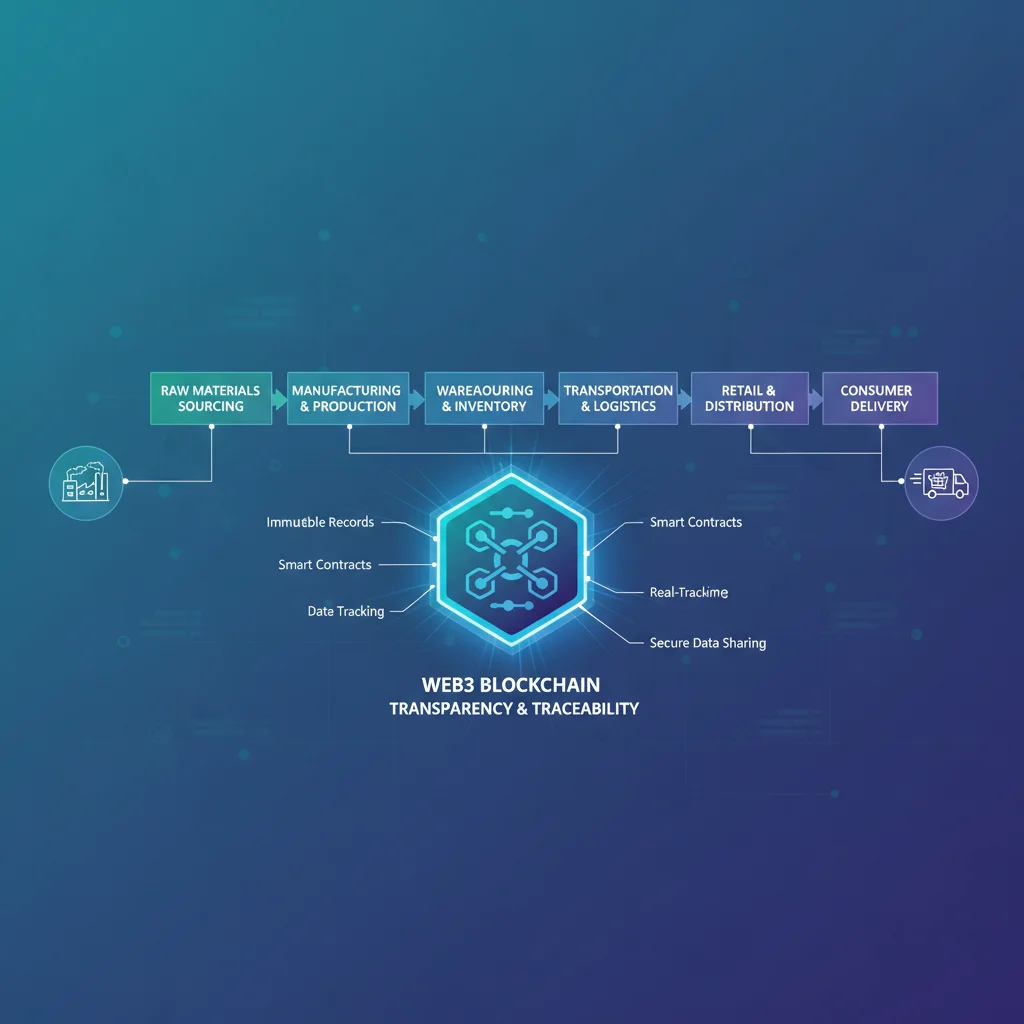
One of the most immediate and impactful applications of Web3 for US businesses is in supply chain management. The current global supply chains are often opaque, prone to fraud, and lack real-time visibility. Blockchain technology offers a powerful solution.
By recording every step of a product’s journey on a blockchain – from raw material sourcing to manufacturing, shipping, and retail – businesses can create an immutable and transparent ledger. This allows for:
- Enhanced Traceability: Consumers can scan a QR code to see the entire history of a product, verifying its authenticity and origin. This is particularly valuable for industries like food and beverage, pharmaceuticals, and luxury goods, where counterfeiting is a significant issue.
- Fraud Prevention: The immutability of blockchain makes it incredibly difficult to tamper with records, significantly reducing fraud and unauthorized product diversion.
- Improved Efficiency: Real-time tracking and automated smart contracts can streamline logistics, reduce delays, and optimize inventory management.
- Ethical Sourcing Verification: Businesses can prove ethical sourcing practices and sustainable production methods, appealing to a growing segment of conscious consumers.
Imagine a US coffee company that can prove every bean in its blend was ethically sourced and transported under optimal conditions, all verifiable by consumers on a public blockchain. This level of transparency builds immense trust and brand loyalty, differentiating them from competitors and contributing to a competitive edge.
2. Enhancing Customer Loyalty and Engagement with NFTs
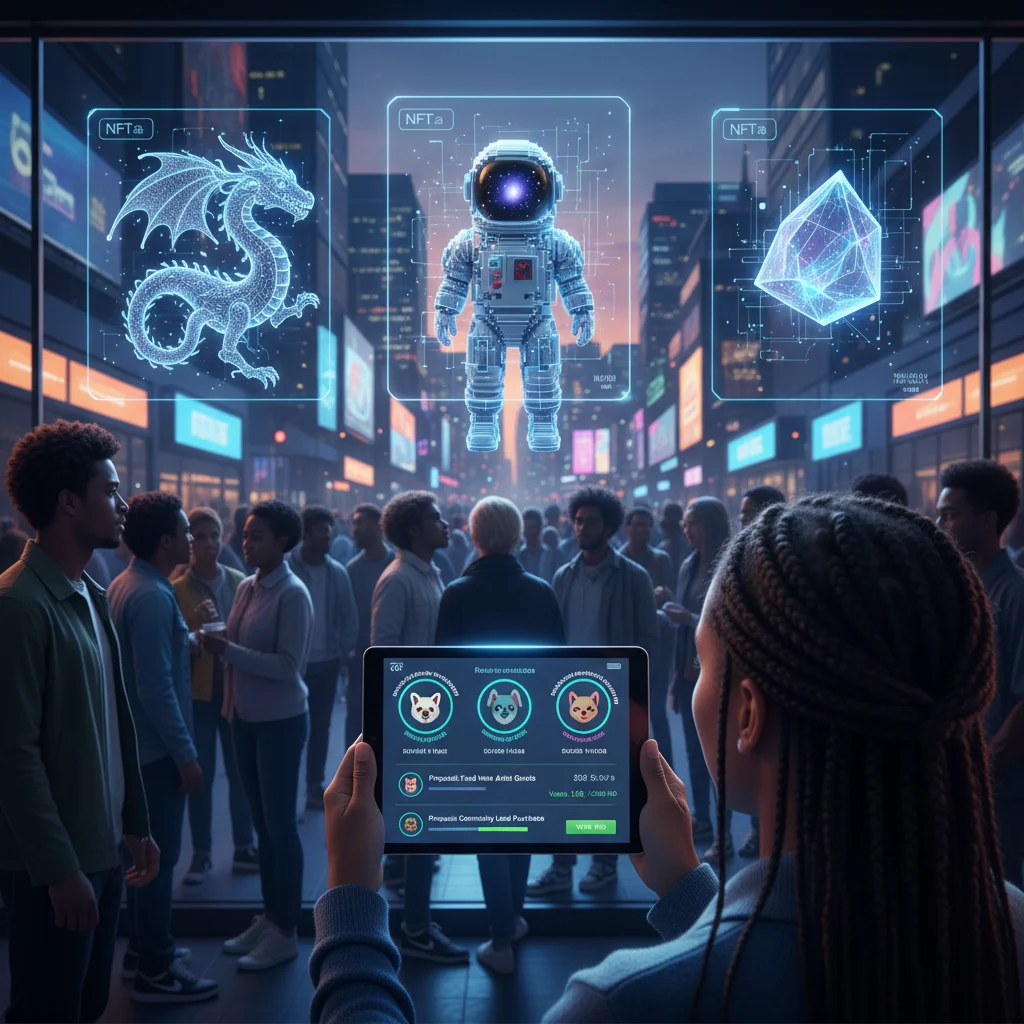
Non-Fungible Tokens (NFTs) have moved beyond digital art and collectibles to become a powerful tool for customer engagement and loyalty programs. For US businesses, NFTs offer a new dimension to brand interaction and value creation.
- Digital Collectibles and Brand Assets: Businesses can create unique, verifiable digital assets that customers can own. These could be special edition digital art, virtual merchandise, or unique experiences that build a deeper connection with the brand.
- Token-Gated Experiences: NFTs can act as access passes to exclusive content, events, or communities. Imagine an NFT that grants holders early access to new product releases, VIP customer service, or invitations to exclusive industry gatherings.
- Revitalized Loyalty Programs: Traditional points-based loyalty programs often lack excitement and transferability. NFT-based loyalty programs can offer unique, tradable rewards that hold real value, fostering greater engagement and retention. Customers could earn NFTs for purchases, referrals, or brand advocacy, which they can then trade or redeem for premium experiences.
- Community Building: NFTs can foster strong, engaged communities around a brand. Holders of certain NFTs might form a DAO (Decentralized Autonomous Organization) to collectively influence brand decisions, product development, or marketing strategies, creating a sense of ownership and shared purpose.
A US fashion brand, for example, could issue NFTs that grant holders lifetime discounts, access to private fashion shows, or even voting rights on upcoming design choices. This creates a highly engaged and loyal customer base that feels invested in the brand’s success, providing a significant competitive advantage over traditional loyalty models.
3. Decentralized Finance (DeFi) for Business Operations
While often associated with individual investors, the principles of Decentralized Finance (DeFi) offer robust applications for US businesses, particularly in areas of fundraising, payments, and treasury management.
- Efficient Fundraising: Businesses can explore tokenization as a new way to raise capital. Security Token Offerings (STOs) allow for fractional ownership of assets or equity, opening up investment opportunities to a broader pool of investors and potentially reducing the costs and complexities associated with traditional venture capital or IPOs.
- Streamlined Cross-Border Payments: Traditional international payments can be slow and expensive. DeFi solutions leverage stablecoins and blockchain networks to facilitate faster, cheaper, and more transparent cross-border transactions, benefiting US businesses with international suppliers or customers.
- Improved Treasury Management: Businesses can utilize DeFi protocols for yield generation on idle assets, potentially earning higher returns than traditional banking options. However, this area requires careful risk assessment and regulatory compliance.
- Decentralized Lending and Borrowing: Access to capital through decentralized lending platforms, while still nascent for large enterprises, could offer alternative financing options with greater flexibility and transparency in the future.
A US-based tech startup looking for seed funding could issue security tokens representing a share of their future revenue, attracting a global investor base more efficiently than traditional methods. This innovative approach to fundraising can accelerate growth and outpace competitors relying solely on conventional financing.
4. Data Ownership and Monetization
In the Web2 world, users generate vast amounts of data, which is then collected and monetized by centralized platforms. Web3 flips this model, empowering individuals and businesses with greater control and ownership over their data.
- User-Centric Data Models: US businesses can build platforms where users explicitly consent to data usage and are compensated for their data contributions. This builds trust and can lead to higher quality, more accurate data.
- Secure Data Sharing: Blockchain can facilitate secure and auditable sharing of sensitive data between business partners, without reliance on a central intermediary. This is vital for collaborative projects, data analytics consortia, and secure information exchange.
- Personalized Experiences with Privacy: By leveraging zero-knowledge proofs and other cryptographic techniques, businesses can offer highly personalized services based on user data, without actually requiring direct access to that sensitive information, thus preserving privacy.
Imagine a US healthcare provider using Web3 to allow patients to securely share their anonymized health data for medical research, receiving compensation in return, while maintaining complete control over their personal health records. This model could revolutionize medical research and patient engagement, offering a significant competitive edge in data-driven healthcare.
5. Decentralized Autonomous Organizations (DAOs) for Governance and Collaboration
DAOs are organizations whose rules are encoded as computer programs, transparent, controlled by the organization’s members, and not influenced by a central government or entity. For US businesses, DAOs offer a powerful model for internal governance, external collaboration, and community building.
- Transparent Internal Governance: Large enterprises can experiment with DAOs for specific departments or projects, allowing stakeholders (employees, shareholders) to vote on proposals, budget allocations, or strategic decisions in a transparent and auditable manner.
- Collaborative Ecosystems: Businesses can form DAOs with partners, suppliers, or even customers to jointly develop products, manage shared resources, or govern industry standards. This fosters a highly collaborative and equitable ecosystem.
- Community-Driven Product Development: By giving a community of users or developers a stake in the project through a DAO, businesses can harness collective intelligence and drive innovation more effectively.
A US software company could establish a DAO for its open-source project, allowing contributors to vote on feature development, bug fixes, and resource allocation. This decentralized governance model can attract top talent and foster a highly engaged community, accelerating product development and outperforming competitors with traditional, hierarchical structures.
Overcoming Challenges and Navigating the Web3 Landscape
While the opportunities are vast, US businesses must also be aware of the challenges associated with Web3 adoption. Navigating this new landscape requires strategic planning and a clear understanding of the potential hurdles.
Regulatory Uncertainty
The regulatory environment for Web3 technologies in the US is still evolving. Businesses must stay abreast of developments from agencies like the SEC, CFTC, and Treasury, particularly concerning cryptocurrencies, NFTs, and security tokens. Consulting with legal experts specializing in blockchain and digital assets is paramount to ensure compliance and mitigate risks.
Technical Complexity and Talent Gap
Implementing Web3 solutions requires specialized technical expertise in blockchain development, cryptography, and smart contract auditing. There is currently a significant talent gap in these areas. US businesses will need to invest in training existing staff, hiring new talent, or partnering with specialized Web3 development firms to bridge this gap.
Scalability and Interoperability
Early blockchain networks faced challenges with scalability (transaction speed and volume) and interoperability (ability to communicate with other blockchains). While significant progress has been made with Layer 2 solutions and cross-chain bridges, businesses need to carefully select the right blockchain infrastructure that meets their performance requirements and can integrate with existing systems.
Security Risks and User Experience
While blockchain offers enhanced security, the Web3 ecosystem is not immune to risks. Smart contract vulnerabilities, phishing attacks, and private key management issues are real concerns. Businesses must prioritize robust security audits, implement best practices for digital asset management, and design user interfaces that are intuitive and secure for non-technical users.
Cultural Shift and Adoption
Adopting Web3 often requires a significant cultural shift within an organization, moving towards more decentralized, transparent, and community-driven models. Educating employees, stakeholders, and customers about the benefits and mechanics of Web3 is crucial for successful integration and widespread adoption.
Building a Web3 Strategy for a 10% Competitive Edge by 2026
To gain a significant competitive edge by 2026, US businesses need a structured approach to Web3 adoption:
- Educate and Assess: Start by educating leadership and key stakeholders on Web3 fundamentals. Conduct a thorough assessment of current business processes and identify areas where Web3 can offer tangible improvements in efficiency, security, or customer engagement.
- Start Small with Pilot Projects: Don’t attempt a full-scale overhaul immediately. Begin with pilot projects in specific, low-risk areas. For example, a small-scale NFT loyalty program or a blockchain-based tracking system for a single product line.
- Partner Strategically: Collaborate with experienced Web3 development firms, blockchain consultants, or participate in industry consortia. Leveraging external expertise can accelerate adoption and mitigate risks.
- Focus on Value, Not Hype: Ensure every Web3 initiative is tied to clear business objectives and delivers measurable value. Avoid implementing technology for technology’s sake.
- Prioritize Security and Compliance: Integrate security best practices from the outset and ensure all Web3 activities comply with current and anticipated regulations.
- Foster a Culture of Innovation: Encourage experimentation and learning within the organization. The Web3 space is rapidly evolving, and adaptability is key.
- Measure and Iterate: Continuously monitor the performance of Web3 initiatives, gather feedback, and be prepared to iterate and refine your strategy based on results and market developments.
The Future is Decentralized: Securing Your Business’s Position
The transition to Web3 is not a fleeting trend but a fundamental shift in the architecture of the internet and, consequently, the global economy. For US businesses, the opportunity to gain a 10% competitive edge by 2026 is real and attainable for those willing to embrace this decentralized future.
From revolutionizing supply chains with unparalleled transparency to fostering deep customer loyalty through innovative NFT programs, and exploring new avenues for finance and governance with DeFi and DAOs, Web3 offers a suite of tools for significant transformation. The businesses that proactively explore, experiment, and strategically integrate these technologies will be the ones that define the next generation of market leadership.
The journey into Web3 may seem complex, but the rewards for pioneering US businesses are substantial. By focusing on practical applications, understanding the underlying technologies, and navigating the challenges with a strategic mindset, American enterprises can not only adapt to the future but actively shape it, securing their place at the forefront of innovation and competitive advantage for years to come.